
Reviewed · OLD TOWN & HISTORY TOURS
Walking Tour of Split with a ‘Magister’ of History
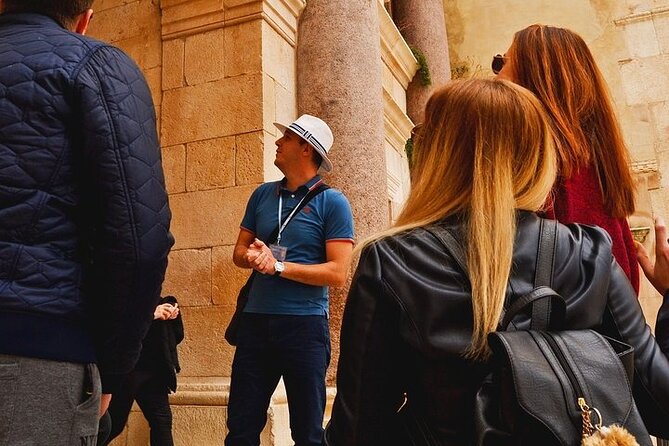
Split becomes much easier to understand when you see how a Roman emperor’s retirement palace turned into a living city. On this walking tour, historian Toni Šare links Diocletian’s world with medieval, Venetian, and modern Split, using his own 3D reconstructions to show what has vanished.
I like the careful look at small details, from errors in the Roman Temple of Jupiter to the surviving road beneath the Silver Gate. I also like that Toni grew up in Split, studied and taught history, and brings local life into the story. The main drawback is that the tour does not enter museums or paid sights, so you will need separate tickets for the Cathedral and Temple if you want to go inside.
In This Review
- Key points to know before you book
- Why this Split walk is more than a Roman ruins tour
- Starting at the Riva and the Brass Gate
- Seeing the Peristyle as a Roman square
- The Cathedral of Saint Domnius and a Roman mausoleum
- Small Roman mistakes at the Temple of Jupiter
- The Silver Gate, the old road, and medieval reuse
- Grgur Ninski and the Croatian story
- Entering the Vestibulum and Diocletian’s private quarters
- Noble palaces, Renaissance courtyards, and Venetian Split
- Game of Thrones locations, if the group wants them
- The Golden Gate and Split’s changing defenses
- Finishing at the Old Town Hall and Pjaca
- What the $34.83 price really buys you
- Timing, weather, and who will enjoy it most
- Should you book Toni’s Split history walk?
- FAQ
- How long does the Walking Tour of Split with a Magister of History last?
- Who leads the tour?
- What language is the tour offered in?
- Where does the tour begin?
- Where does the tour end?
- Are admission tickets included?
- What is the cancellation policy?
Key points to know before you book
- Toni Šare leads the walk: His background in history and personal connection to Split shape the tour.
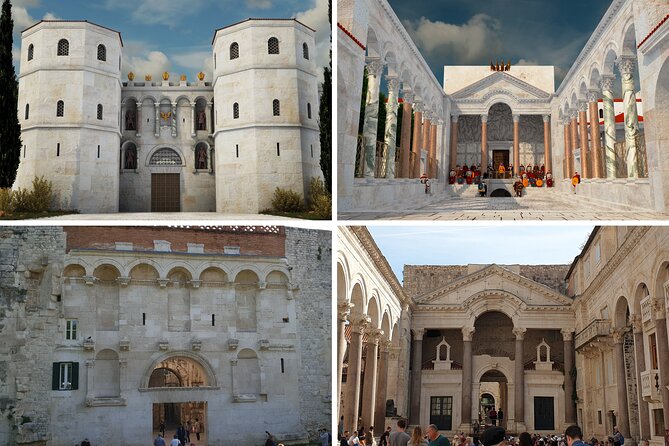
- The 3D palace images add real value: You can compare today’s stone walls with Toni’s reconstructions of Diocletian’s original residence.
- The route covers several eras: Roman, medieval, Renaissance, Venetian, and early modern Split all appear along the way.
- The tour lasts about 1 hour 45 minutes: That gives you a solid introduction without taking up half your day.
- You finish at Pjaca: The Old Town Hall and Narodni trg make a useful place to continue exploring.
- You stay outside paid attractions: The price is lower, but interior visits are not part of the experience.
Why this Split walk is more than a Roman ruins tour
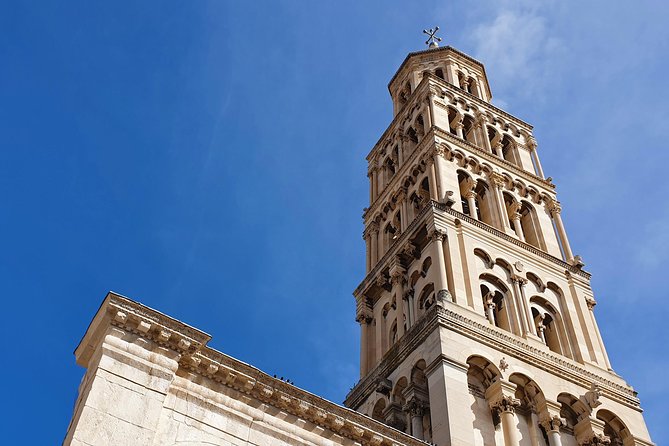
Many visitors first see Split as a collection of old stones inside Diocletian’s Palace. That misses the point. The palace is not an isolated archaeological site. It is the center of the modern city, with homes, cafés, shops, churches, courtyards, and narrow lanes built into and around the Roman walls.
Toni’s tour helps you read those layers. He explains how the emperor’s residence changed after Diocletian’s time, how Christians reused the mausoleum, how medieval residents adapted Roman defenses, and how Renaissance noble families left their mark.
That broad view is one of the tour’s strongest features. You are not just told when a building was made. You learn how the people of Split kept using, altering, and sometimes removing older structures.
The group size can reach 18 people. That is still small enough for a walking tour to feel manageable, but it is not a private lesson. If you want more room for questions or a slower pace, ask about the private option. The standard group format makes more sense for most budgets, especially at $34.83 per person.
More old town history walks in Split:
- Split: Old Town and Diocletian Palace Walking Tour
★ 4.9 · 4,727 reviews - Split Walking Tour with Professor of History
★ 5.0 · 926 reviews - Split: Diocletian Palace & Old Town Guided Walking Tour
★ 4.7 · 882 reviews
Starting at the Riva and the Brass Gate
The meeting point is the Brass Gate, also called Porta Aenea, at Obala Hrvatskog narodnog preporoda 22. This is on the Riva, Split’s waterfront promenade and a natural starting point for understanding the city.
Spend a moment looking toward the southern wall of Diocletian’s Palace. From the water, the palace wall has a strong defensive feel, yet it was also part of an emperor’s private seaside residence. Toni uses models and graphic material here to introduce the palace before taking you inside its streets.
This opening is useful because the palace can feel confusing at ground level. You see fragments, walls, and doorways, but not always the original plan. The waterfront view gives you a clear sense of scale and helps you picture the relationship between the palace and the sea.
The Riva is also a practical meeting place. It is near public transportation, and the exact starting point is supplied when you book. Arrive ready to walk, since the experience moves through stone lanes, squares, and palace remains rather than following a smooth sightseeing path.
Seeing the Peristyle as a Roman square
The Peristyle is the central square of Diocletian’s Palace and one of Split’s main public spaces. It is also where Toni’s visual material becomes especially useful.
Some Roman structures here are remarkably well preserved, but the square does not look exactly as it did in the fourth century. Toni’s 3D reconstructions help you separate original Roman forms from later changes. You can look at the surviving columns and stonework while seeing how the space once worked as part of an imperial complex.
The stop lasts about 10 minutes. That may sound short, but the route includes many points of explanation, and the Peristyle is only one part of the story. If you are the kind of person who wants to stand still for a long time and photograph every column, you may wish for more free time after the walk.
Still, the brief stop works well as an introduction. You get the main structure, the historical purpose, and a visual guide for the rest of the palace.
The Cathedral of Saint Domnius and a Roman mausoleum
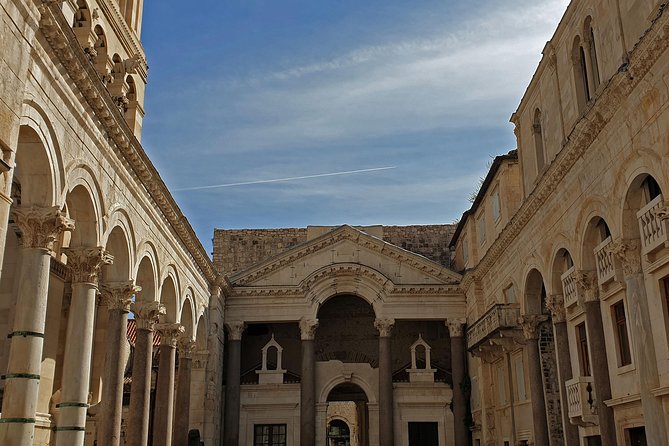
The Cathedral of Saint Domnius occupies what was originally Diocletian’s mausoleum. It is one of the best-preserved Roman structures in Split, and it continues to serve a religious purpose today.
Toni explains how a tomb for an emperor became a Christian cathedral. He also covers the bell tower and the changes that came with the building’s new use. This is a key moment in the tour because it shows how one structure can carry different meanings across time.
You do not enter the cathedral on this walk, and the admission fee is not included. That keeps the tour focused and avoids turning the group into an indoor visit, but you should plan another visit if you want to see the interior.
The outside explanation still gives you a useful framework. Once you understand the original function of the building, its later Christian use makes more sense.
More walking tours in Split:
- Walking Tour of Split and Diocletian’s Palace
★ 5.0 · 2,588 reviews - Krka Waterfalls tour with Trogir Walking tour and Krka panoramic boat cruise
★ 5.0 · 1,659 reviews - Split & Diocletian’s Palace Walking Tour
★ 5.0 · 1,125 reviews - From Split: Krka Waterfalls Cruise & Trogir Walking Tour
★ 4.7 · 681 reviews
Small Roman mistakes at the Temple of Jupiter
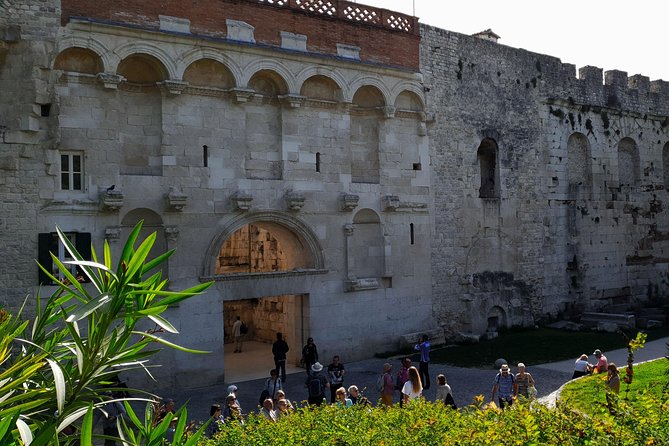
The Temple of Jupiter is often presented as one of the best-preserved late Roman temples in the world. Toni adds a more human detail: he points out construction anomalies and mistakes made by the Roman builders.
That approach is refreshing. Ancient monuments can seem too perfect and distant when they are described only as masterpieces. Seeing flaws in the work makes the builders feel like real people solving problems on a job site.
The tour does not enter the temple, and admission is not included. Toni explains the relevant features from outside, so you will get the historical and architectural background without an interior visit.
For you, the value here is not simply the temple itself. It is the habit of looking closely. Toni encourages you to notice details that are easy to miss when you are walking through the palace on your own.
The Silver Gate, the old road, and medieval reuse
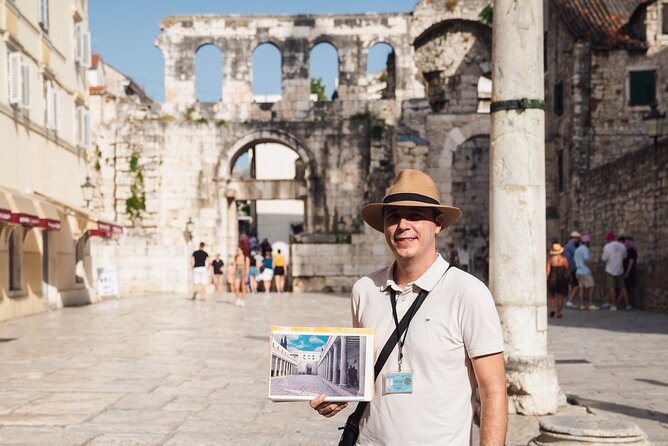
At the Eastern, or Silver, Gate, Toni shows one of the best views of the palace area. The Cathedral is visible on one side, the gate on the other, and below lies the only preserved part of the original Roman road.
This is a compact stop, lasting about five minutes, but it brings several ideas together. You can see the palace as a planned complex, then see how later residents continued to use its gates and walls.
The route also explains how the medieval city adapted Roman defenses. Some features were kept because they were useful. Others were removed when they no longer served a purpose. That practical reuse is one of the most interesting parts of Split. The old city is not frozen in one period. It changed because people needed homes, streets, defenses, and public spaces.
Grgur Ninski and the Croatian story
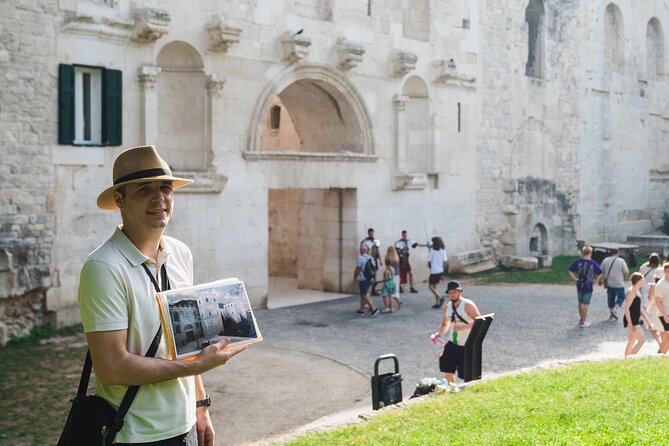
The statue of Grgur Ninski is a recognizable Split landmark. Toni explains what the figure represents and why he matters to Croatian language and culture during the early medieval period.
This stop adds a national and cultural layer to a route that might otherwise lean heavily toward Roman architecture. It also shows that Split’s story is not just about emperors and stone buildings.
The stop lasts about five minutes. You will have time to understand the statue’s meaning, but this is not a long art lecture. Toni’s explanation places the monument within the wider story of Croatian identity and the medieval city.
Entering the Vestibulum and Diocletian’s private quarters
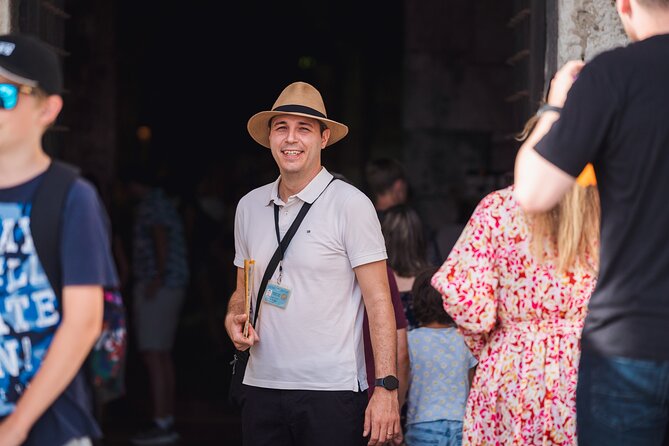
The Vestibulum was an ancient entrance to Diocletian’s private residence. From here, Toni leads you around the remains of the emperor’s living area.
This section is where the 3D reconstructions can make the largest difference. Today, you see partial walls and reused structures. Toni’s images help you picture the palace during its original period, before later residents altered it and before refugees took over parts of the complex.
The value is visual as much as historical. A guide can tell you that this was once a grand residence, but a reconstruction gives you a clearer sense of volume, decoration, and purpose.
You should also expect the tour to pause for questions. Several people who have taken the walk found Toni willing to explain details after the formal tour ended. That matters if you want more than a memorized speech.
Noble palaces, Renaissance courtyards, and Venetian Split
As you move through the Old Town, Toni points out noble palaces and other buildings from periods often overlooked by visitors. Split is famous for its Roman remains, but medieval and Renaissance structures fill the same streets.
The City Museum of Split is housed in one of the city’s well-preserved Renaissance noble palaces. You do not enter the museum itself, but you visit the courtyard to see the palace from within. Toni uses this setting to explain Split’s Venetian past and the kind of architecture that appeared during that period.
This is a smart addition to the route. Without it, you might assume every old wall belongs to Diocletian’s age. The courtyard helps you identify later design choices and see how elite families shaped the city after the Roman period.
The tour also passes various noble palaces along the way. These stops are not given separate long visits, so keep your eyes open and listen for the small details. The walk rewards attention more than speed.
Game of Thrones locations, if the group wants them
Split has become familiar to many people through Game of Thrones filming locations. Toni points out locations along the route if the group is interested, and the walk passes a fan shop.
This part is optional in spirit. If you care about the show, it adds a fun layer to the old streets. If you do not, the main historical route remains the focus.
I like this flexible approach because it lets Toni respond to the group without turning the entire tour into a television-themed outing. You can enjoy the filming references while still learning about the actual city.
The Golden Gate and Split’s changing defenses
The Golden Gate is the main entrance to Diocletian’s Palace and the best-preserved of the four palace gates. It is also the most decorated, making it one of the route’s strongest visual stops.
From here, you can see the northern wall and how the medieval city continued to use Roman structures for defense. Toni explains which features were retained and which were taken away because they no longer served a purpose.
This is an ideal place to understand the city as a working settlement. The Romans built the palace, but later residents made it useful for their own needs. The Golden Gate is not only an attractive monument. It is evidence of repeated adaptation.
The stop lasts around 15 minutes, giving Toni enough time to explain the gate, the wall, and the transition from Roman imperial residence to medieval urban stronghold.
Finishing at the Old Town Hall and Pjaca
The walk ends at Narodni trg, commonly called Pjaca or Piazza Square. This has been Split’s main square since medieval times.
The 14th-century Old Town Hall and other historic structures surround the square. It is a sensible place to finish because you can easily reach other parts of the Old Town from here. Toni’s choice of endpoint also gives you a chance to continue exploring without being left at an awkward edge of the city.
If you take the tour early in your stay, Pjaca is a useful orientation point. You can return to the palace, find the Riva, or continue toward other parts of central Split. Several people who enjoyed the walk used the information to decide which places deserved a closer look later in the day.
What the $34.83 price really buys you
At $34.83 per person, this is not the cheapest way to wander through Split. You can walk through the Old Town without paying anything, and you can read basic facts in a guidebook.
The difference is the interpretation. Toni connects Roman remains with later Croatian, Venetian, religious, and local history. His 3D reconstructions are also something you would not get from simply following signs around the palace.
The price includes the guide and the visual demonstrations, but not museum or paid-site admission. That is important. You are paying for a guided outdoor experience, not a package that covers every entrance fee.
For most people, the value is strongest if you are new to Split, enjoy history, or want context before exploring alone. If you already know the palace well and prefer independent wandering, the cost may feel less necessary.
Group discounts are available, and a private tour upgrade gives you a more personal format. The standard group can include up to 18 people, while the tour length remains around 1 hour 40 minutes to 1 hour 50 minutes.
Timing, weather, and who will enjoy it most
You can book the walk in English, and confirmation arrives at booking. The route is on foot, and most people can participate. Service animals are allowed, and the meeting point is near public transportation.
Summer heat is worth considering. An evening departure can be a good choice, and a morning tour lets you use the rest of the day to revisit places that caught your attention. The tour requires good weather, so a poor-weather cancellation leads to another date or a full refund.
I would choose this experience if you want:
- A clear introduction to Split before exploring alone
- Roman history joined to medieval and Venetian history
- A guide who can answer questions beyond a fixed script
- Visual help picturing the original palace
- A route that includes both major monuments and easy-to-miss details
I would look elsewhere if you want to enter the Cathedral, Temple of Jupiter, museums, or other paid sites during the walk. This is an outdoor history walk, not an admission-based sightseeing package.
Should you book Toni’s Split history walk?
I recommend booking it if you want to understand what you are seeing instead of simply passing through old streets. Toni Šare brings together local experience, historical study, modern context, humor, and his own palace reconstructions.
The strongest reason to go is his ability to connect the pieces. You see an emperor’s mausoleum, a medieval statue, a Renaissance courtyard, a Venetian palace, and a modern filming location, then understand how they share one city.
Book it near the start of your time in Split, ideally in the morning or during a cooler evening. Skip it only if you want a strictly independent walk or need interior admission included. At $34.83, it is a fair buy for a focused introduction led by someone who clearly cares about Split and its past.
FAQ
How long does the Walking Tour of Split with a Magister of History last?
The tour lasts approximately 1 hour 40 minutes to 1 hour 50 minutes.
Who leads the tour?
The guide is Toni Šare, owner of DiocleSpot Tours.
What language is the tour offered in?
The tour is offered in English.
Where does the tour begin?
It begins at the Brass Gate, also called Porta Aenea, at Obala Hrvatskog narodnog preporoda 22 in Split.
Where does the tour end?
It ends at Narodni trg, also called Pjaca or Piazza Square, near the 14th-century Old Town Hall.
Are admission tickets included?
No. The tour does not enter museums or paid sites. Admission to the Cathedral of Saint Domnius and Temple of Jupiter is not included.
What is the cancellation policy?
You can cancel at least 24 hours before the start time for a full refund. Changes or cancellations made less than 24 hours before the start time are not accepted for a refund. If poor weather causes the tour to be canceled, you will be offered another date or a full refund.
Just added around Split
- Kayaking & Zipline Šibenik – Čikola Canyon★ 5.0 · 3 reviews
- Krka National Park & Zipline Šibenik – Čikola Canyon★ 5.0 · 3 reviews
- Split: Small-Group Half Day Sailing Trip★ 5.0 · 3 reviews
- Rafting River Cetina from Makarska Riviera including transfer★ 5.0 · 3 reviews
- From Split: Krka National Park & Waterfalls Private Day Trip★ 5.0 · 3 reviews
- Split Bike and Wine Experience★ 5.0 · 3 reviews
- Split and Salona Cultural Heritage Day Tour from Trogir★ 4.0 · 3 reviews
- Krka Waterfalls, Lake Cruise & Skradin★ 5.0 · 3 reviews
Old Town & History Tours, compared.



Diocletian Palace & Old Town Guided Walking Tour
Read our review →

Diocletian’s Palace and Old Town SMALL GROUP Walking Tour
Read our review →

Split History and Gastro Small-Group Tour with Food and Drinks
Read our review →
PREMIUM Emperor’s Walking Tour for History Lovers + Museum
Read our review →Browse the lists this tour appears in