

Reviewed · DIOCLETIAN PALACE TOURS
Split: Diocletian Palace & Old Town Guided Walking Tour
Diocletian’s Palace is not a fenced-off ruin. It is the working heart of Split, with cafés, shops, apartments, lanes, and laundry tucked into a Roman emperor’s retirement palace. This 50-minute walking tour gives you the basic map and the stories you need before exploring on your own.
I like the route’s compact size and its focus on the palace’s best-known spaces, including the Peristyle and the four ancient gates. I also like the guides’ mix of history and practical advice. Ina, Natasa, Darko, and Tin are repeatedly praised for clear storytelling, humor, patience, and useful suggestions for what to see afterward.
The main drawback is the short duration. You get a sharp introduction, not a slow archaeological study, and the busy streets can make it hard to hear at times. One booking also suggested that a microphone would help.
In This Review
- Key points at a glance
- Why Diocletian’s Palace is different from a normal ruin
- Starting on the Riva and finding the group
- Entering through the Bronze, Silver, Golden, and Iron Gates
- The cellars and the Peristyle courtyard
- The emperor’s private rooms and observatory
- St. Domnius, the mausoleum, and the bell tower
- Medieval lanes, the Town Hall, and Fruit Square
- The guides make the short format work
- What $17 gets you
- How to prepare for the cobblestones and sun
- Who should book this Split walking tour
- Should you book it?
- FAQ
- How long does the walking tour last?
- Where does the tour start?
- Which languages are available?
- What does the tour include?
- Is the tour wheelchair accessible?
- Can I cancel or pay later?
Key points at a glance

- Roman palace turned city center: Walk through a fourth-century imperial complex that still functions as Split’s Old Town.
- A quick, well-planned route: In less than an hour, you cover the Peristyle, cellars, private areas, four gates, Fruit Square, and the Town Hall.
- Strong local guiding: Guides such as Ina, Natasa, Darko, and Tin explain archaeology and daily life with humor and patience.
- A useful first activity: Take the tour early in your stay to understand Split’s layout before returning to places that catch your eye.
- Good value at $17: The price is reasonable for a live guide and a focused introduction, especially on a short visit.
- Prepare for old streets: Comfortable shoes are essential, and you must manage uneven cobbles and 15 to 30 steps.
Why Diocletian’s Palace is different from a normal ruin
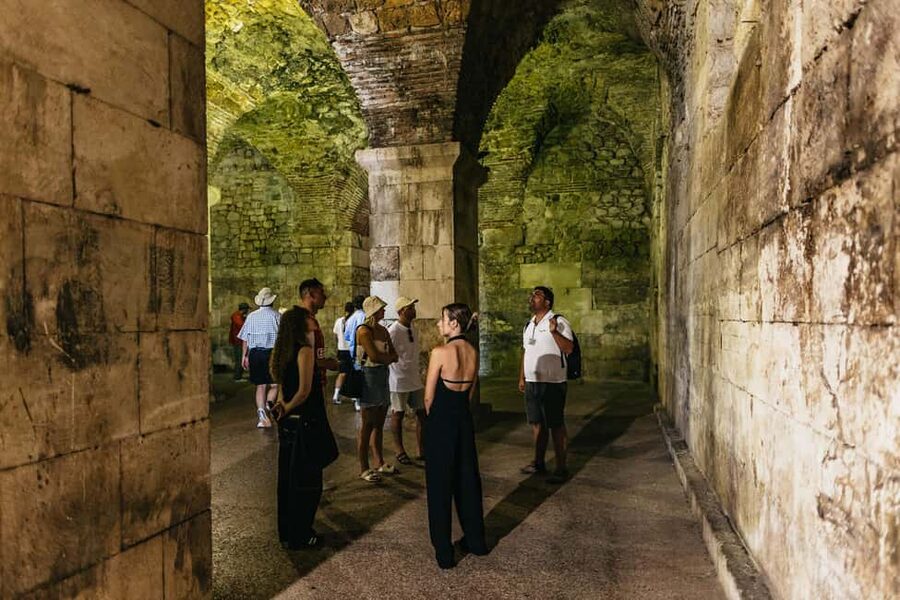
The first thing to understand is that Diocletian’s Palace is not simply a monument you enter, inspect, and leave. The palace forms much of central Split. Roman walls and underground rooms sit beside medieval buildings, Venetian-era details, modern shops, and everyday city life.
Emperor Diocletian built the complex in the fourth century AD as a place for his retirement. Its scale and fortified gates tell you that this was both a home and a defensive compound. The palace was divided between private imperial quarters and ceremonial spaces, and the tour helps you see how those functions fit together.
I find a guided visit especially useful here because the remains are not always easy to read. A stone wall may look plain until you learn whether it belonged to a gate, a courtyard, a basement, or a private room. The guide supplies the connections, so you are not left staring at scattered blocks and guessing.
The tour also explains how later generations adapted the palace instead of preserving it as a museum. That idea comes through clearly in the way homes and businesses occupy the old structure. You are seeing a place that has changed purpose many times while remaining part of daily life.
More ways into Diocletian’s Palace:
- Split: Old Town and Diocletian Palace Walking Tour
★ 4.9 · 4,727 reviews - Walking Tour of Split and Diocletian’s Palace
★ 5.0 · 2,588 reviews - Split & Diocletian’s Palace Walking Tour
★ 5.0 · 1,125 reviews
Starting on the Riva and finding the group
The meeting point is Apodos Travel Agency, near Split’s Riva promenade. Look for an open-top red bus and staff wearing red or white shirts. They connect you with the walking guide.
This is practical, since the Riva is an easy landmark on the waterfront, but give yourself time to find the right spot. One person had trouble locating the meeting point because the sightseeing bus was delayed, and another specifically advised looking for the red city sightseeing bus stop. The instructions are clear once you know what to seek, but the area can feel busy during the day.
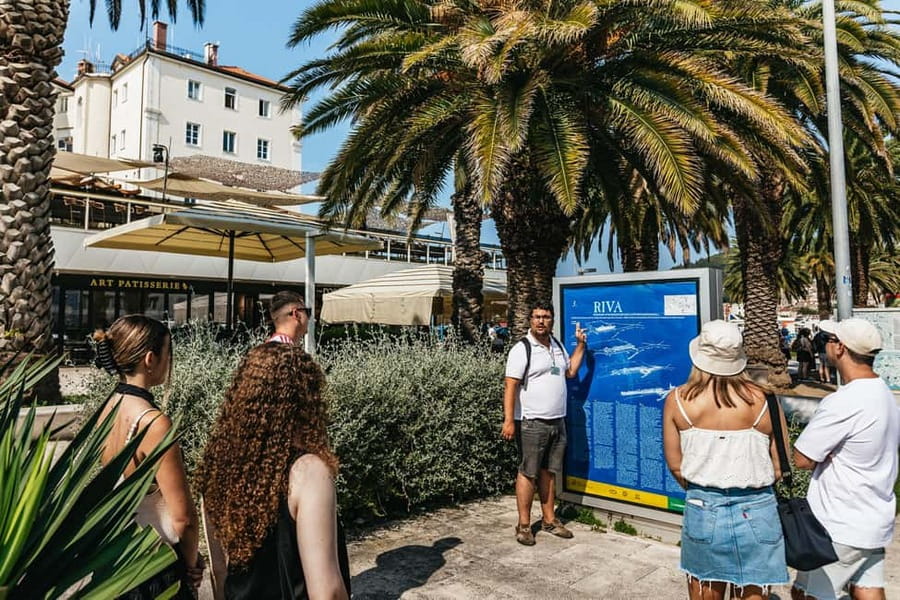
The Riva is a fitting place to begin. Palm trees, cafés, bright light, and the Adriatic set a relaxed scene before you turn inland toward the stone lanes. The opening also gives you a useful sense of Split’s geography: the waterfront, the palace, and the Old Town are closely tied together.
Do not expect transportation to the meeting point. You arrange your own way there, and meals, drinks, souvenirs, and personal spending are not included.
Entering through the Bronze, Silver, Golden, and Iron Gates
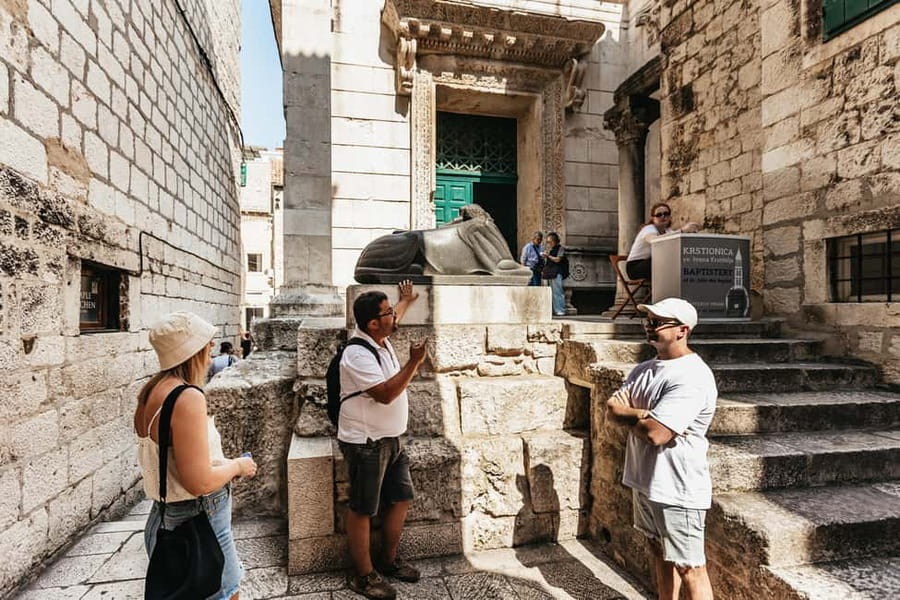
The palace had four principal entrances, and the route includes the Bronze, Silver, Golden, and Iron Gates. Each one offered a different connection between the imperial complex and the world outside its walls.
Seeing all four gates gives the tour a helpful structure. Instead of treating the palace as one large block, you begin to understand it as a designed compound with controlled entry points. The names also make the palace easier to navigate later, when you return without a guide.
The Bronze Gate connects with the waterfront and is a natural part of the approach from the Riva. The Silver, Golden, and Iron Gates lead through other sides of the palace and into different parts of the Old Town. The value here is less about lingering at each doorway and more about understanding how the complex was organized.
The gates can be crowded, and the stone surfaces are uneven. Keep your group in sight, especially if you are walking with children or someone who moves slowly. One guide, Tin, was praised for watching the people at the back, but you should still take responsibility for staying together.
The cellars and the Peristyle courtyard
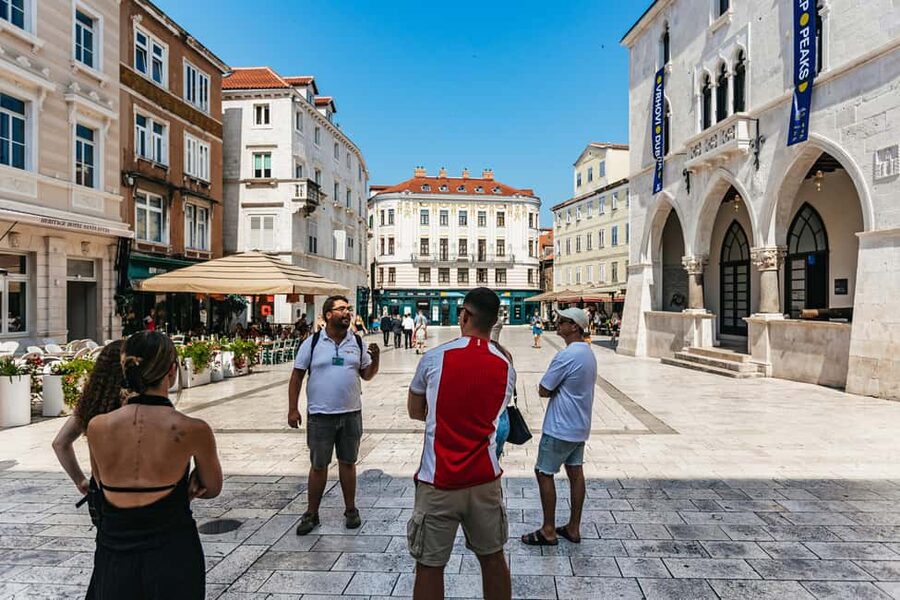
The palace cellars are among the most useful stops because they preserve the shape of the rooms above. They show how the imperial residence was supported and help you picture the palace as a functioning home rather than only a ceremonial backdrop.
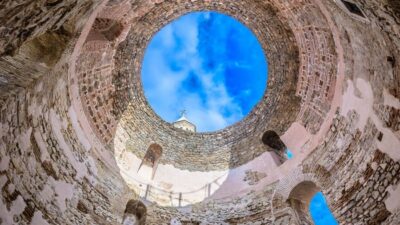
The route then reaches the Peristyle, the grand central courtyard. This is the palace’s visual center, framed by columns and monumental stonework. It is the place where the imperial character of the complex becomes easiest to grasp.
Your guide explains the setting while you stand in the courtyard, so you can connect the architecture with Diocletian’s role and the later changes to the city. The included access to the Peristyle is important because this is one of the spaces most visitors want to understand, not simply photograph.
Expect other people here. The Peristyle is a public part of Split’s Old Town, not a private attraction reserved for one tour group. The guide’s job is to find a workable place for the group and keep the explanation moving. A small group of about 15 was specifically described as manageable, while a microphone could make listening easier when the square is noisy.
More old town history walks in Split:
- Walking Tour of Split with a ‘Magister’ of History
★ 5.0 · 1,122 reviews - Split Walking Tour with Professor of History
★ 5.0 · 926 reviews - Split: History and Heritage Walking Tour
★ 4.9 · 650 reviews - Diocletian’s Palace and Old Town SMALL GROUP Walking Tour
★ 5.0 · 502 reviews
The emperor’s private rooms and observatory
The walk continues into areas linked with Diocletian’s private chambers and his former observatory. These spaces add a personal side to the story. The palace was not only a fortress or public stage. It was also intended as the emperor’s residence.
The mention of a private observatory is a distinctive part of this tour. It gives the route a detail beyond the usual gate-and-courtyard circuit and helps show the range of activities planned inside the complex.
Some archaeological remains can be difficult to interpret without help. This is where a guide with an archaeology or art history background can make a real difference. Natasa was praised for her art history expertise, while Ina was often singled out for her interest in history and archaeology. You are not simply given dates. The better guides explain how structures and later changes affected the city.
The private areas are also a reminder that Diocletian’s Palace was built for one of Rome’s most powerful figures. Its surviving walls may look worn, but the original ambition was enormous. A short tour cannot cover every room, so think of this stop as a clear introduction rather than a complete examination.
St. Domnius, the mausoleum, and the bell tower
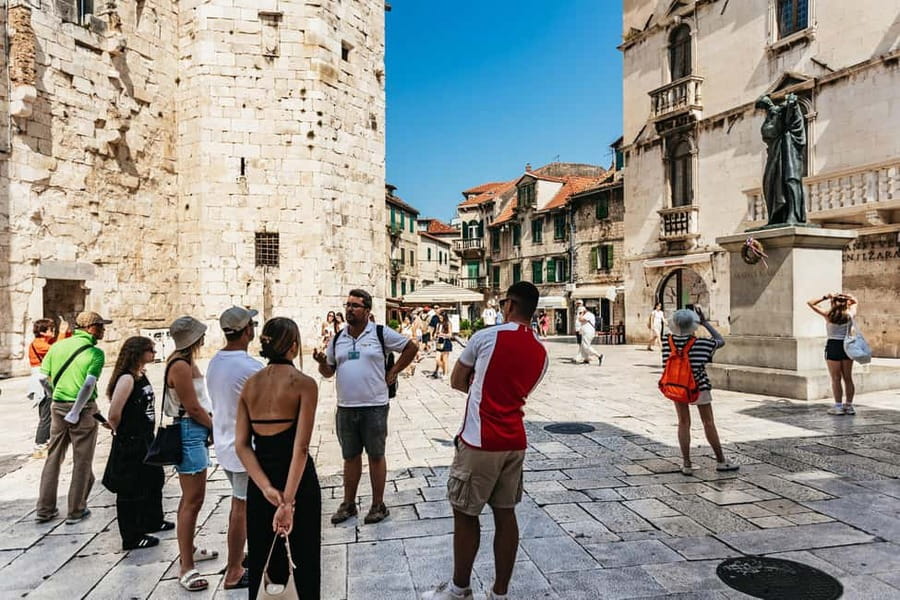
The Cathedral of St. Domnius, known locally as Sv. Duje, occupies Diocletian’s former mausoleum. That change in use is one of Split’s most striking historical turns. A building created for an emperor’s burial became a Christian cathedral, and the Roman structure remains central to the city’s identity.
The tour presents the cathedral as part of the story of adaptation. You see how Roman foundations and later religious use overlap within the Old Town. The supplied details also include a climb of the bell tower for views over the city and harbor.
Because the experience is advertised at 50 minutes, do not assume you will have a long, unhurried visit inside every site. The route moves quickly, and the bell tower portion may leave limited time for a leisurely climb or extended viewing. If panoramic photographs are a priority, confirm the exact timing when you book.
Still, even a brief explanation of the mausoleum’s conversion adds weight to the walk. You begin to see Split not as a collection of separate attractions, but as one place repeatedly reshaped by changing beliefs, rulers, and communities.
Medieval lanes, the Town Hall, and Fruit Square
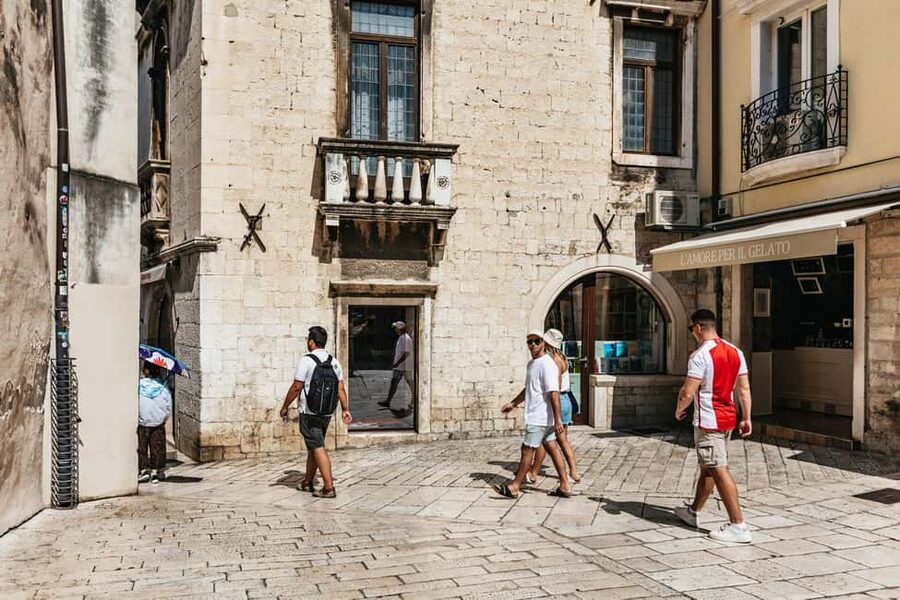
After the palace’s Roman core, the route threads through the Old Town’s narrower streets. This is where Split feels most like a living neighborhood. Roman stone sits beside medieval construction, later Venetian influence, and modern businesses.
The 15th-century Town Hall is one of the less obvious stops. It helps broaden the tour beyond Diocletian himself and shows that Split’s story continued long after the Roman period. Your guide also points out the baroque monuments of Fruit Square, another place where later architecture gives the walk a different mood.
These stops matter because the palace is often treated as the whole story. It is not. The Roman emperor established the starting point, but medieval residents, Venetian builders, religious communities, and modern citizens shaped the city you see now.
The route is also well suited to orientation. A first visit to Split can feel confusing because the streets twist through and around the old walls. After this walk, you will have reference points for returning to the Riva, the gates, the Peristyle, the cathedral, and Fruit Square.
The guides make the short format work
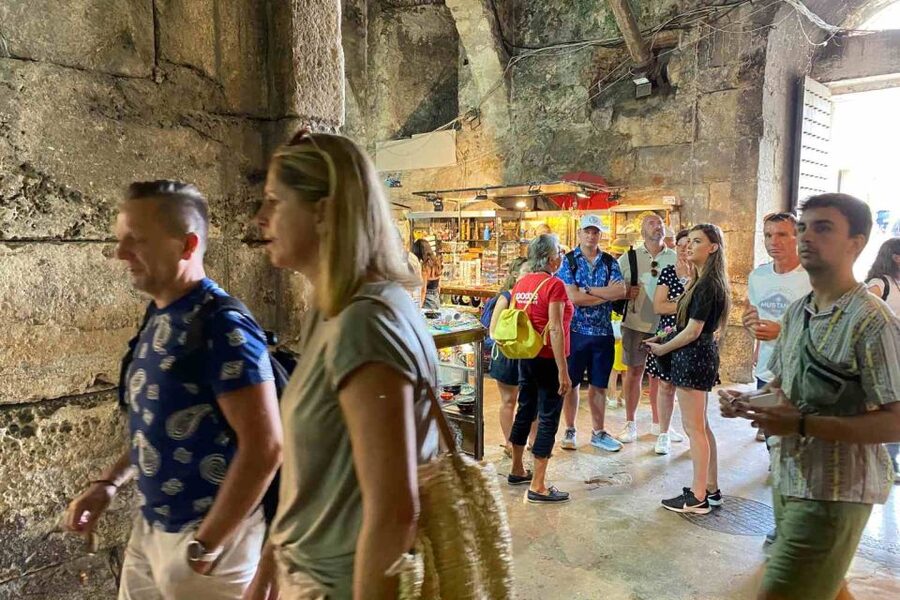
The strongest part of this experience is the guiding. Ina appears often in the tour feedback, with praise for her clear explanations, warmth, humor, and willingness to answer extra questions after the walk. Natasa is noted for her enthusiasm, art history background, and patient answers. Darko brings historical passion and humor, while Tin is praised for confident explanations, strong English, and attention to the whole group.
Those details matter because a 50-minute tour leaves little room for rambling. The best guide keeps the route moving while giving you enough context to understand each stop. You can expect a condensed presentation rather than a lecture packed with every date in Split’s past.
Several guides also offer suggestions for what to do after the walk. That can be useful if you have only a short stay or are visiting from another island. One person who came from Sutivan appreciated the shorter option and used the tour as an introduction before continuing through the area.
Language choices are English, Spanish, and Italian. The experience has a strong accessibility note, since it is listed as wheelchair accessible, but the route still includes uneven cobblestones and 15 to 30 steps. A guide helped one group find paths with few or no steps for strollers and wheelchairs, though you should discuss your needs in advance rather than rely on every section being step-free.
What $17 gets you
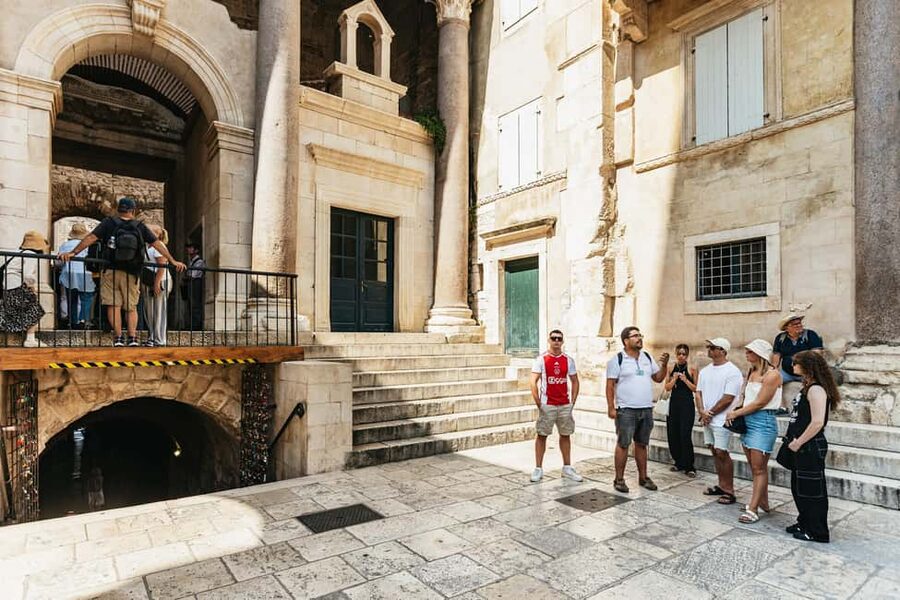
At $17 per person, this is a fair price for a live, local introduction to Split. You are paying for a guide who explains the palace, not simply for entry into a monument. That distinction matters because the Old Town itself is a public urban area, and much of the value comes from knowing what you are looking at.
The price works best for first-time visitors, cruise passengers, and people with only a few hours in the city. It also makes sense at the start of a longer stay, when a quick orientation can help you choose where to return.
The tradeoff is depth. If you want a detailed examination of Roman engineering, a long cathedral visit, or extensive time in the cellars, this tour may feel too brief. You would need more time on your own afterward.
The booking terms are traveler-friendly. You can cancel up to 24 hours before the tour for a full refund, and you can reserve now and pay later. The activity is also listed as skip-the-ticket-line, which can save time, though the walk still takes place in a busy public center.
How to prepare for the cobblestones and sun
Wear comfortable shoes. This is a walking route over uneven stone and cobblestones, with 15 to 30 steps required to take part.
Bring water, a camera, sunglasses, and a hat on sunny days. On windy days, long sleeves are advised. Split’s stone streets can reflect strong sunlight, while exposed waterfront areas may feel cooler when the wind comes through.
The duration is listed as 50 minutes, while the detailed itinerary describes the palace portion as about one hour. Plan for a compact tour lasting roughly an hour, and avoid scheduling something immediately afterward if timing is critical.
The route can work for families because it is short enough for young children, and one guide helped a group with toddlers, strollers, and wheelchairs. Even so, the uneven ground and steps mean that the experience is not effortless for everyone.
Who should book this Split walking tour
I would choose this tour if you want a clear first look at Split without spending half a day indoors. It suits people who like history in manageable portions, visitors arriving by ferry or cruise ship, and anyone who wants a guide to explain why ordinary streets are built into an imperial palace.
It is also a good match for curious travelers who like to ask questions. The guides are repeatedly praised for taking questions seriously, including questions about difficult historical details and local life.
I would think twice if you dislike group walks, need a silent environment, or want to study every archaeological feature at length. Crowds can make listening harder, and the short format requires a brisk pace.
Should you book it?
Book this tour if you want an affordable, well-organized introduction to Diocletian’s Palace and Split Old Town. The route covers the major Roman landmarks, adds medieval and Venetian context, and gives you practical bearings for the rest of your visit.
The 4.7 rating from 882 reviews supports the value of the experience, especially for the guides’ storytelling and the efficient route. Just keep your expectations sensible: this is a concise city orientation, not a full archaeological course. Wear good shoes, arrive early enough to find the red bus and staff, and save time afterward to revisit the places that interest you most.
FAQ
How long does the walking tour last?
The activity is advertised as 50 minutes. The detailed palace itinerary describes about one hour, so plan for a compact tour of roughly an hour.
Where does the tour start?
It starts at Apodos Travel Agency near Split’s Riva promenade. Look for an open-top red bus and staff wearing red or white shirts, who will connect you with the guide.
Which languages are available?
Live tours are available in English, Spanish, and Italian.
What does the tour include?
It includes a guided tour of Diocletian’s Palace and Split Old Town, access to the Peristyle courtyard, the palace cellars, the emperor’s private areas and observatory, the Bronze, Silver, Golden, and Iron Gates, the 15th-century Town Hall, and Fruit Square.
Is the tour wheelchair accessible?
The activity is listed as wheelchair accessible. However, you must be able to manage uneven cobblestones and 15 to 30 steps. A guide may help identify paths with fewer or no steps for strollers and wheelchairs.
Can I cancel or pay later?
You can cancel up to 24 hours in advance for a full refund. The reserve-now, pay-later option lets you book without paying immediately.
More Walking Tours in Split
- Krka Waterfalls tour with Trogir Walking tour and Krka panoramic boat cruise
★ 5.0 · 1,659 reviews - From Split: Krka Waterfalls Cruise & Trogir Walking Tour
★ 4.7 · 681 reviews - SPLIT-PRIVATE Walking Tour of Diocletian’s Palace & Old Town
★ 5.0 · 467 reviews - SPLIT-PREMIUM Emperor’s Walking Tour for History Lovers + Museum
★ 5.0 · 333 reviews
Just added around Split
- Kayaking & Zipline Šibenik – Čikola Canyon★ 5.0 · 3 reviews
- Krka National Park & Zipline Šibenik – Čikola Canyon★ 5.0 · 3 reviews
- Split: Small-Group Half Day Sailing Trip★ 5.0 · 3 reviews
- Rafting River Cetina from Makarska Riviera including transfer★ 5.0 · 3 reviews
- From Split: Krka National Park & Waterfalls Private Day Trip★ 5.0 · 3 reviews
- Split Bike and Wine Experience★ 5.0 · 3 reviews
- Split and Salona Cultural Heritage Day Tour from Trogir★ 4.0 · 3 reviews
- Krka Waterfalls, Lake Cruise & Skradin★ 5.0 · 3 reviews
Diocletian Palace Tours, compared.


Walking Tour of Split and Diocletian’s Palace
Read our review →
Game of Thrones Tour with Diocletian’s Palace Cellar
Read our review →
Diocletian’s Palace and Old Town SMALL GROUP Walking Tour
Read our review →

Browse the lists this tour appears in