
Reviewed · OLD TOWN & HISTORY TOURS
Walking tour of Split old town and craft beer tasting
Split’s ancient palace is not a quiet museum. It is the heart of modern Split, with homes, cafés, shops, and daily life packed into Roman walls. This evening walk connects that living old town with a very modern finish: craft beer at Leopolds.
I like the small group of no more than eight, which gives you a better chance to ask questions than on a large city walk. I also like the mix of the Peristyle, Vestibule, palace cellars, and local beer, since you get both major monuments and a taste of how Split enjoys itself today.
The main point to consider is time. Two hours moves quickly through a large, layered site, and drinks at Leopolds are not included in the $30.04 price. You will need to choose between lingering over the ruins and saving enough time for the beer stop.
In This Review
- Key points at a glance
- Why this Split tour works so well
- Starting on the Riva, Split’s waterfront living room
- Under the palace in the preserved cellars
- The Peristyle and the emperor’s public stage
- The Vestibule, where stone turns into sound
- Triklinij and the Roman dining room
- Mausoleum, cathedral, and a chocolate surprise
- The Golden Gate and the palace as a fortress
- Gregory of Nin and Split’s lucky toe
- Pjaca and Fruit’s Square, two different faces of old Split
- Finishing at Leopolds Craft Beer Bar
- Price, timing, and group size
- Who should book this Split experience?
- Should you book it?
- FAQ
- How long does the walking tour last?
- What time does the tour begin?
- Where does the tour begin and end?
- Are drinks included in the price?
- How many people can join the tour?
- Is the tour offered in English?
Key points at a glance

- Roman palace and modern city in one walk: See how Diocletian’s residence became Split’s working old town.
- An intimate evening group: The tour accepts a maximum of eight participants and starts at 6:00 pm.
- Major palace landmarks: Visit the Riva, cellars, Peristyle, Vestibule, Triklinij, Golden Gate, and nearby historic squares.
- A local guide leads the way: The guide is a licensed Split resident, and Darijo is specifically praised for his explanations and conversation.
- Craft beer finishes the route: End at Leopolds Craft Beer Bar, where Split’s brewing scene takes over from Roman stone.
- Budget for drinks: Beer and other drinks are extra, so the advertised price covers the guided walk rather than the tasting itself.
Why this Split tour works so well
Many visitors see Diocletian’s Palace as a collection of ruins. This tour gives you a better way to read it. You begin at the waterfront, move through the palace’s ceremonial and military spaces, then end in a bar that represents present-day Split.
That change of mood is the clever part. The Roman emperor Diocletian built a fortified retirement residence, but the palace later became the core of a medieval and modern city. You will see laundry, doorways, squares, shops, and cafés occupying spaces that once served an emperor and his court.
The evening departure also makes sense. At 6:00 pm, the walk is positioned as a gentle transition from sightseeing into an evening drink. The listed duration is about two hours, with roughly 30 minutes at Leopolds and the remaining time spread across several outdoor stops.
This is not a private tour, but eight people is still a useful limit. You should find it easier to hear the guide in narrow streets and easier to ask about details such as Roman street planning, local traditions, or the changes made to the palace over time.
More old town history walks in Split:
- Split: Old Town and Diocletian Palace Walking Tour
★ 4.9 · 4,727 reviews - Walking Tour of Split with a ‘Magister’ of History
★ 5.0 · 1,122 reviews - Split Walking Tour with Professor of History
★ 5.0 · 926 reviews
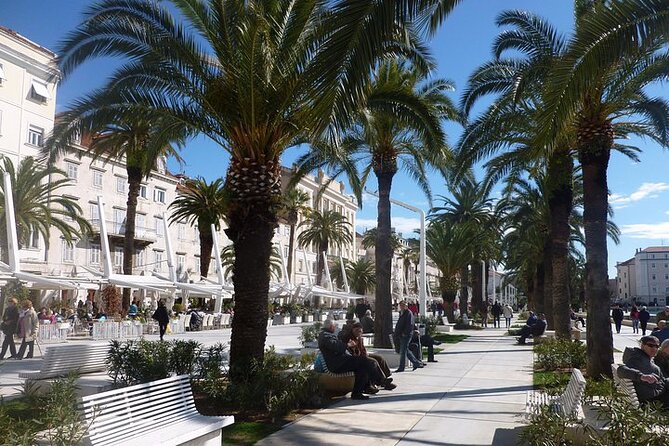
Starting on the Riva, Split’s waterfront living room
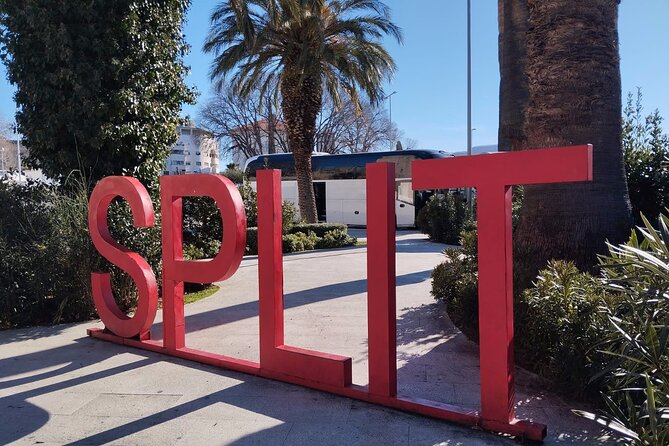
The tour begins by the Split sign on the Riva Harbor. Your first lesson is about the waterfront itself, not just the buildings around it.
The Riva began as the palace’s waterfront. Today, it is described as a kind of living room for local residents, a place with a social role far beyond its original Roman purpose. That opening gives you an important key for the rest of the walk: Split’s old town is not separated from daily life. The ancient setting is still used.
The stop lasts about 10 minutes and has no admission charge. Use this time to get oriented and listen for the guide’s explanation of how the promenade changed over the centuries. Since the walk starts at 6:00 pm, you will also be seeing the city at the point when a historical outing begins to feel like an evening in town.
Under the palace in the preserved cellars
From the waterfront, you head into the central part of Diocletian’s Palace substructures, commonly called the palace cellars. These vaulted rooms are among the strongest parts of the experience because they make the palace’s scale easier to understand.
The cellars are considered the best-preserved vaulted complex of late antiquity. That matters because the rooms below give you a direct sense of the building’s original plan. They were not designed as a random maze. Their layout reflects the organization above them and helps explain how the palace was constructed.
The supplied schedule does not give a separate time for this cellar visit, so the guide may keep it concise as part of the route. If the lower rooms are a major reason you want to visit Split, keep that in mind. This is a city walk with several stops, not a long specialist tour of the substructures.
Still, even a short explanation here can sharpen everything you see afterward. Once you understand that the palace was planned as a fortified residence, the gates, streets, courtyards, and ceremonial rooms make more sense.
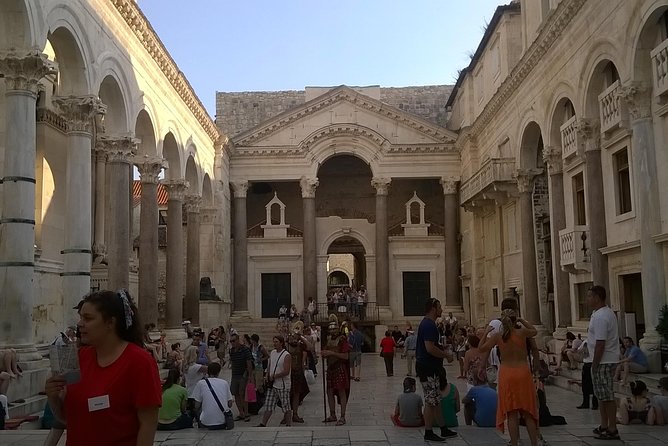
The Peristyle and the emperor’s public stage
The Peristyle is the tour’s grandest Roman setting. Surrounded by columns, this square was designed to impress anyone approaching the emperor’s residential quarters.
Your guide explains the role of the Protiron and Vestibule, including the ceremonial image of the emperor appearing as visitors arrived. You also hear how the Roman Cardo and Decumanus, the main north-south and east-west streets, were altered through later architectural periods.
This is where the palace’s layers become visible. Roman planning is still present, but later generations changed the setting and made it part of a Christian and medieval city. You are not simply looking at one period frozen in place. You are watching a site adapt.
The scheduled stop is about 15 minutes. That is enough for a clear introduction and some questions, but not enough for every column, doorway, or later building detail. I would pay close attention to the guide’s explanation of how the streets functioned. It will help you make sense of the route to come.
More walking tours in Split:
- Walking Tour of Split and Diocletian’s Palace
★ 5.0 · 2,588 reviews - Krka Waterfalls tour with Trogir Walking tour and Krka panoramic boat cruise
★ 5.0 · 1,659 reviews - Split & Diocletian’s Palace Walking Tour
★ 5.0 · 1,125 reviews - Split: Diocletian Palace & Old Town Guided Walking Tour
★ 4.7 · 882 reviews
The Vestibule, where stone turns into sound
A short walk from the Peristyle brings you to the Vestibule, a circular building with an open ceiling. It served as a lobby leading toward Diocletian’s residential quarters, so its purpose was to create an impressive entrance.
The building’s shape and acoustics are the real attractions. The open roof changes the quality of sound, and the space is often used by klapa singing groups. Klapa is a Dalmatian a cappella tradition protected as UNESCO world heritage.
The tour allows about 10 minutes here. You may not hear a performance during your visit, and the experience does not promise one. Even without music, the guide’s explanation of the acoustics and the building’s original role helps you appreciate why the Vestibule still has an effect on people entering it.
This is a good example of the tour’s balance. You get architecture, imperial ceremony, and a link to a living local tradition in one compact stop.
Triklinij and the Roman dining room
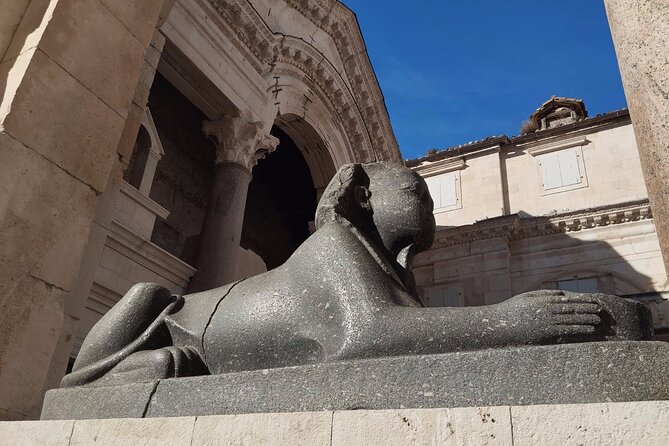
At Triklinij, you step into what remains of an imperial dining room. The guide explains Roman dining customs, including what people ate and how meals were arranged.
The stop also covers the Roman use of the vomitorium, a subject that often attracts attention because later explanations have turned it into a popular misconception. The guide uses the subject to explain the phrase Carpe Diem and the habits associated with elite Roman dining.
You have about 10 minutes here. The room itself is less visually complete than the Peristyle or Vestibule, so the value depends on the explanation. If you enjoy social history, this may be one of the more memorable stops because it shows how people used the palace, not just what it looked like.
Mausoleum, cathedral, and a chocolate surprise
The route also explains how Diocletian’s Mausoleum became a cathedral. That change tells you a great deal about the palace’s later life. A building created for an emperor’s burial was given a new religious purpose, while its bell tower became one of the most elegant on the Dalmatian coast.
The itinerary does not list a separate timed stop or an included interior visit here. You should therefore treat this part as an exterior explanation unless your guide says otherwise. An interior visit to one nearby ancient monument is available for an additional fee, so admission costs may apply if you want to go inside.
The walk also includes a small Split chocolate producer with an unusual Guinness world record for the largest chocolate slab in the world. It is an unexpected modern detail in a route otherwise dominated by Roman stone, medieval streets, and Venetian architecture.
That contrast is useful. Split’s old town is not only about emperors and churches. Local businesses continue to add new stories to the same compact center.
The Golden Gate and the palace as a fortress
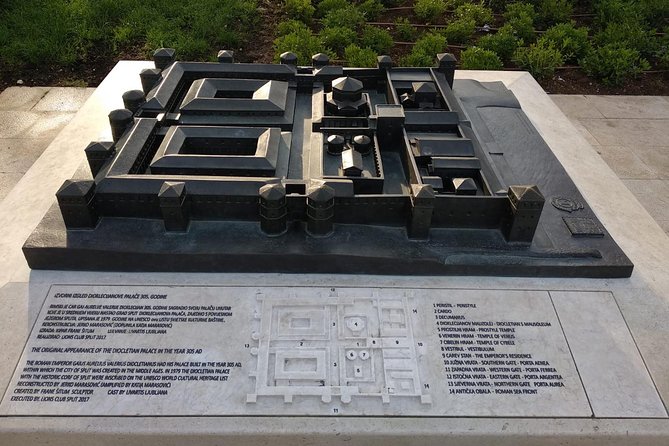
At the Golden Gate, you see the palace in its military role. Diocletian’s residence was also built as a fortified camp, and the propugnaculum helped control entry.
The gate is monumental, but the surrounding wall may be even more valuable for understanding the site. It is described as the best-preserved section of the palace wall, giving you a clearer view of the defensive design.
This stop lasts about 10 minutes and has no separate admission fee. The guide’s job here is to explain why access was controlled and how the palace differed from a simple seaside villa. The walls and gates remind you that Diocletian’s retirement home was also a protected imperial compound.
If you are interested in military architecture, this is one of the strongest parts of the walk. If you prefer interiors, the cellars and cathedral explanation may hold more appeal.
Gregory of Nin and Split’s lucky toe
The statue of Gregory of Nin is a quick but enjoyable stop. Created by Ivan Meštrović, one of the best-known sculptors associated with Croatia, it gives you a chance to connect the old town with a major work of modern Croatian art.
A local legend says that touching the statue’s golden toe brings good luck and helps make a wish come true. You can take a photo and add your own hand to the polished toe, as countless other visitors have done.
The stop lasts about five minutes. It is brief, but that is appropriate for a statue stop near the main route. The real value is the combination of art, local custom, and a quick break from Roman archaeology.
Pjaca and Fruit’s Square, two different faces of old Split
Pjaca, also known as People’s Square, is the main square of the old town. Its name changed several times, reflecting the political and social shifts that shaped Split.
You will examine the layers of architecture around the square and hear about its difficult past. The 10-minute stop is a chance to see how a public space can change meaning while remaining central to city life.
Fruit’s Square, officially Trg Brace Radic, offers a different mood. Here, the focus is on the finest example of Baroque architecture in Split. The guide also explains how the Venetian Republic defended Split against attacks from the Ottoman Empire and introduces Marko Marulić, often called the father of Croatian literature.
These two squares help widen the tour beyond Diocletian. The palace is the headline attraction, but Split’s identity was shaped by later powers, writers, merchants, and defenders. You get a short lesson in Venetian influence and Croatian culture before heading to the final stop.
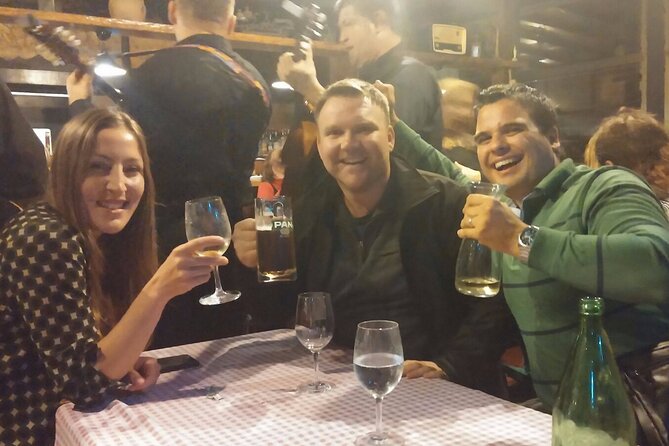
Finishing at Leopolds Craft Beer Bar
The tour ends at Leopolds Craft Beer Bar on Dosud Street. It is described as one of Split’s leading craft beer destinations, a pub that brews its own beer and pushes beyond standard bar offerings.
This final 30 minutes is meant for tasting and conversation. Your guide introduces local craft beer, and you can ask questions about the brewing scene before choosing what to drink. Beer and other drinks are not included in the tour price, so expect to pay separately at the bar.
That extra cost is worth considering when comparing this experience with a standard palace walk. The $30.04 fee covers a licensed local guide, the historical route, and the transition to a craft beer venue. It does not cover admission to optional interiors or your drinks.
I like this ending because it gives the history somewhere to go. You have spent the walk seeing how Split reused an ancient palace. At Leopolds, you see a newer local tradition taking shape inside the same city.
Price, timing, and group size
At $30.04 per person, this is a reasonable price if you want a guided introduction to Diocletian’s Palace plus a social finish. The value is strongest for a first visit, when context can help you understand why the cellars, Peristyle, gates, and squares fit together.
The price is less attractive if you want long visits inside paid monuments or a substantial beer package. Drinks are extra, and the optional interior visit also costs more. You are paying primarily for the guide’s time and the carefully linked route.
The walk begins at 6:00 pm and lasts about two hours. It is offered in English, includes a mobile ticket, and accepts up to eight people. The activity is near public transportation, service animals are allowed, and most people can take part.
The experience is often booked well ahead, with an average booking lead time of 53 days. If your dates are fixed, booking early is sensible. Free cancellation is available until 24 hours before the start time. Changes or cancellations inside that window are not accepted for a refund, and the tour requires a minimum number of participants.
Who should book this Split experience?
I would choose this tour if you want a compact introduction to Split with a local guide and do not want to spend your whole evening in an archaeological site. It suits first-time visitors, couples, solo visitors, and small groups who like history but also want a drink and conversation afterward.
It is also a good match if you enjoy asking questions. Darijo is specifically praised for explaining Diocletian’s Palace, answering questions, and keeping the conversation going. The maximum group size gives that style of guiding room to work.
You may want another option if you need a long, highly detailed palace study, guaranteed monument interiors, or drinks included in the advertised price. The schedule covers many stops, so some explanations will be brief.
Should you book it?
Book this tour if you want to understand Split’s old town quickly and finish with a local craft beer. The route includes the palace’s most important public spaces, useful context on later Croatian and Venetian history, and a small-group format that keeps the walk personal.
Skip it if your main goal is an extended visit inside every paid monument or a formal beer tasting with all drinks covered. For most visitors seeking a two-hour orientation with a social ending, the combination is practical, well-priced, and pleasantly different from a standard palace tour.
FAQ
How long does the walking tour last?
The experience lasts approximately two hours, including the historic walking route and the final stop at Leopolds Craft Beer Bar.
What time does the tour begin?
The tour starts at 6:00 pm.
Where does the tour begin and end?
The meeting point is by the Split sign at 21000, Grad, Split, Croatia. The tour ends at Leopolds Craft Beer Bar, Dosud ul 5, 21000 Split.
Are drinks included in the price?
No. Beers and other drinks are not included, so you pay for them separately at Leopolds Craft Beer Bar.
How many people can join the tour?
The tour has a maximum of eight participants.
Is the tour offered in English?
Yes. The experience is offered in English and includes a professional, licensed guide who lives in Split.
More Drinking Tours in Split
- Tower Pub Crawl in Split
★ 4.5 · 418 reviews - From Split: Brač Island Beach Bar and Pool Party
★ 4.5 · 87 reviews - Omiš, Croatia: Cetina River Glassboat Cruise And Beer Garden
★ 4.3 · 61 reviews - Bike, Beer & Poljud Stadium Tour
★ 5.0 · 9 reviews
Just added around Split
- Kayaking & Zipline Šibenik – Čikola Canyon★ 5.0 · 3 reviews
- Krka National Park & Zipline Šibenik – Čikola Canyon★ 5.0 · 3 reviews
- Split: Small-Group Half Day Sailing Trip★ 5.0 · 3 reviews
- Rafting River Cetina from Makarska Riviera including transfer★ 5.0 · 3 reviews
- From Split: Krka National Park & Waterfalls Private Day Trip★ 5.0 · 3 reviews
- Split Bike and Wine Experience★ 5.0 · 3 reviews
- Split and Salona Cultural Heritage Day Tour from Trogir★ 4.0 · 3 reviews
- Krka Waterfalls, Lake Cruise & Skradin★ 5.0 · 3 reviews
Old Town & History Tours, compared.


Walking Tour of Split with a ‘Magister’ of History
Read our review →

Diocletian Palace & Old Town Guided Walking Tour
Read our review →

Diocletian’s Palace and Old Town SMALL GROUP Walking Tour
Read our review →

Split History and Gastro Small-Group Tour with Food and Drinks
Read our review →Browse the lists this tour appears in