
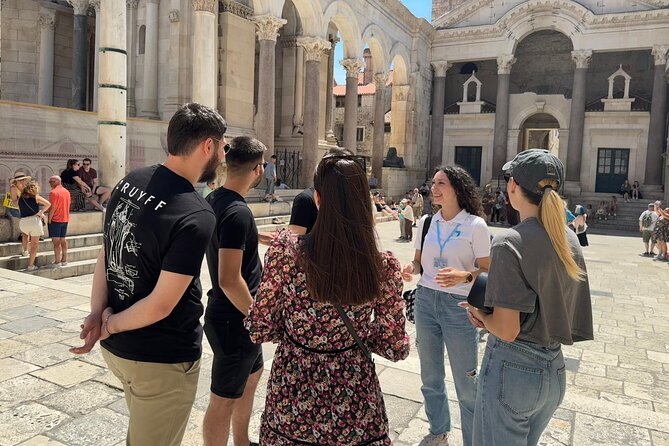
Reviewed · OLD TOWN & HISTORY TOURS
Split Walking Tour: History, Legends & Tales
Split’s Roman palace is not a museum sealed behind glass. It is the living center of town, with homes, shops, cafés, churches, and narrow lanes fitted into walls built for Emperor Diocletian more than 1,700 years ago. This 1.5-hour walking tour connects that ancient palace to modern Split through its main squares, gates, and stories.
I like the local point of view, especially because the guide was born and raised in Split and can speak about present-day life as well as emperors and stonework. I also like the small-group format and the sensible route, which gives a first-time visitor a clear map of the Old Town.
The main drawback is that entrance tickets to cultural and religious sites are not included. The tour stays mostly outdoors, so you will need comfortable shoes and a backup plan for poor weather.
In This Review
- Key points to know before booking
- Starting beside the Split model on the Riva
- The Riva, where modern Split meets Roman walls
- Diocletian’s Palace and 1,700 years of adaptation
- Vestibul, the Palace’s dramatic entry space
- Peristil, the grand central square
- The Golden Gate and the north side of the Palace
- People’s Square and the medieval layer
- Fruit Square and the final look at old Split
- What $28 buys you in Split
- Timing, walking comfort, and weather
- Who will get the most from this walking tour?
- Should you book Split Walking Tour: History, Legends & Tales?
- FAQ
- How long does the Split walking tour last?
- What language is the tour conducted in?
- Where does the tour begin?
- How will I recognize the guide?
- Where does the tour end?
- Is the tour suitable for children?
- Are entrance tickets included?
- Is the tour suitable for wheelchair users?
- What happens if bad weather cancels the tour?
Key points to know before booking
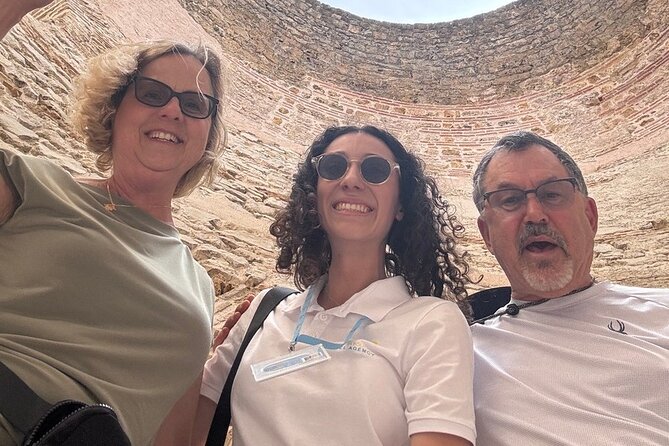
- A Split-born guide leads the way: Lucija has been praised for answering questions about daily life in Split, not just repeating dates and names.
- The route covers the Old Town essentials: You see the Riva, Diocletian’s Palace, Vestibul, Peristil, Golden Gate, People’s Square, and Fruit Square.
- The Palace is still part of city life: You walk through a UNESCO World Heritage Site that functions as a real neighborhood, not a single historic building.
- It is a useful first tour: The route gives you basic orientation before you return on your own to explore interiors and side streets.
- The price is $28 per person: That is fair for a live, English-language introduction lasting 90 minutes, especially if you want context before sightseeing alone.
- Plan for an outdoor walk: Comfortable shoes matter, wheelchair users cannot be accommodated, and weather can cause a cancellation or rescheduling.
Starting beside the Split model on the Riva
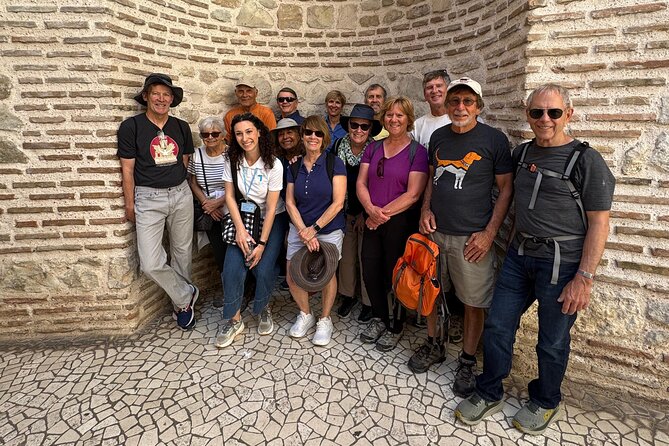
The tour begins at Obala Hrvatskog narodnog preporoda 22, on Split’s waterfront promenade, known as the Riva. Look for the model of Split and a guide holding a Tour4You sign. This is a practical meeting point because the Riva is easy to recognize and puts you right beside the Old Town.
Starting here gives the tour a useful sense of place. Before you enter the Palace, you can see how the historic core meets the harbor and modern waterfront. The opening explanation helps you understand that Split grew around Diocletian’s retirement residence, rather than around a later medieval town that simply happened to contain Roman ruins.
You will want to arrive with shoes suited to uneven paving. The Old Town’s stone streets can be hard underfoot, and the experience involves steady walking rather than a seated talk.
More old town history walks in Split:
- Split: Old Town and Diocletian Palace Walking Tour
★ 4.9 · 4,727 reviews - Walking Tour of Split with a ‘Magister’ of History
★ 5.0 · 1,122 reviews - Split Walking Tour with Professor of History
★ 5.0 · 926 reviews
The Riva, where modern Split meets Roman walls
The guided walk begins along the Riva, a broad public promenade lined with cafés and views toward the water. It is not the oldest part of the route, but it is a smart starting point because it shows how Split works today.
From here, the guide can explain the city’s transformation from an imperial residence into a living urban center. That change is the key idea of the tour. Diocletian built for retirement and display, but later generations adapted the walls, rooms, and entrances for ordinary city life.
I like this opening because it prevents the Palace from feeling like a collection of unrelated ruins. You begin with the connection between waterfront, palace, and town, then move into the tighter streets where the old plan becomes easier to read.
Diocletian’s Palace and 1,700 years of adaptation
Diocletian’s Palace is the central subject of the walk. You will hear how the complex served as the emperor’s luxurious residence and how its walls and architecture have survived through major changes in the city.
The useful point here is scale. You are not visiting one isolated monument. The Palace is a large historic complex woven into the center of Split, and the route lets you see several of its key spaces in sequence.
A guide adds real value in a place like this because the surviving stonework can be difficult to interpret on your own. An arch, wall, or passage may look simple until you learn what it once connected and how later residents used it. The walk focuses on explanation, legends, and the city’s transformation, rather than asking you to inspect ruins without context.
You should keep your expectations clear. This is an outdoor orientation tour, not a full archaeological visit. If you want to enter religious or cultural sites, you will need to pay separately and return at your own pace.
Vestibul, the Palace’s dramatic entry space

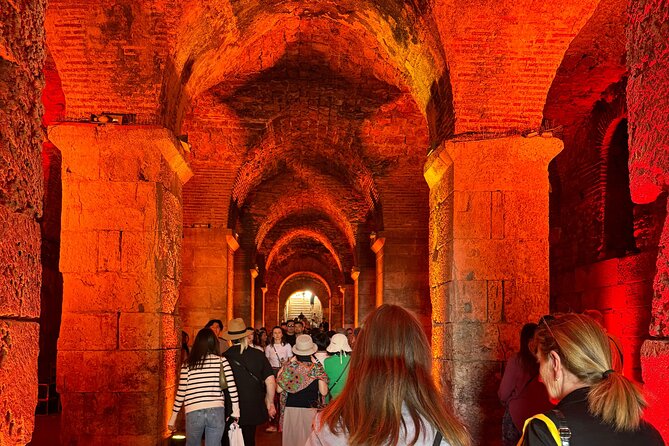
Vestibul is one of the most striking stops on the route. Its name refers to an entrance hall, and the space gives you a strong sense of the ceremonial side of Diocletian’s residence.
Here, the guide can help you picture the difference between an emperor’s private retreat and a normal town street. The architecture was meant to impress, and the transition from open public areas into the Palace interior had a clear symbolic purpose.
For you, this stop is valuable because it links the Palace’s design to Diocletian’s status. You are not simply looking at old stone. You are seeing how architecture controlled movement and shaped the first impression of anyone approaching the imperial quarters.
The stop is guided rather than treated as a long independent visit. If the building is open and you want more time inside, ask the guide for information about visiting later. Entrance fees are not part of the $28 tour price.
More walking tours in Split:
- Walking Tour of Split and Diocletian’s Palace
★ 5.0 · 2,588 reviews - Krka Waterfalls tour with Trogir Walking tour and Krka panoramic boat cruise
★ 5.0 · 1,659 reviews - Split & Diocletian’s Palace Walking Tour
★ 5.0 · 1,125 reviews - Split: Diocletian Palace & Old Town Guided Walking Tour
★ 4.7 · 882 reviews
Peristil, the grand central square

Peristil is the architectural high point of the Palace route. This large central square was designed as a formal gathering space, and its columns and stone surfaces make the imperial plan easier to grasp.
The square also shows how the old complex has been absorbed into modern Split. Historic structures surround an active public place, so you are likely to see people using the area as part of daily town life rather than encountering a quiet archaeological site.
This is where a good guide can turn visual details into a story about power, ceremony, and later change. Lucija has been praised for combining historic explanation with more recent stories from Split. That balance suits Peristil, where ancient architecture and present-day city life occupy the same frame.
Give yourself a moment to look up and around, not only at the paving. The square makes more sense when you see its proportions and the way the surrounding buildings frame it.
The Golden Gate and the north side of the Palace
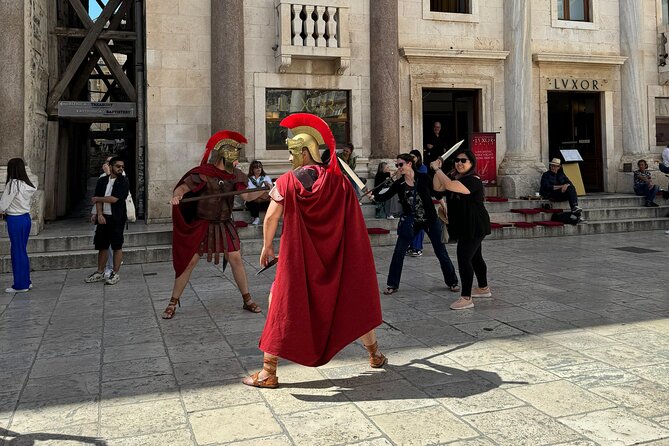
The Golden Gate, or north gate, is another major stop. It is one of the best-known entrances to Diocletian’s Palace and helps explain the original defensive layout.
The gate is useful for orientation. After walking through central spaces such as Vestibul and Peristil, you see how the Palace related to its outer walls and approaches. The route does not ask you to memorize a long list of Roman terms. Instead, it gives you physical reference points you can use later when exploring alone.
This is also a good place to listen for the legends attached to Split’s old stones. The tour title promises history, legends, and tales, so the experience is not limited to formal dates. You can expect storytelling to sit beside the architectural explanation.
The Golden Gate is a stop on a walking route, not an admission-controlled attraction included in the ticket. If you want a longer look at the area, it is easy to return after the tour because the walk ends where it began.
People’s Square and the medieval layer
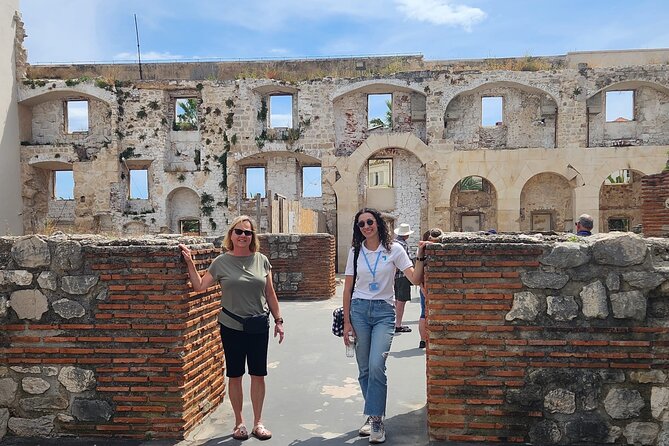
People’s Square broadens the story beyond the Roman period. The square belongs to the later life of the city and helps show how Split developed beyond the Palace’s original purpose.
This shift matters. A short tour focused only on Diocletian could leave you thinking Split is mainly a Roman site. Instead, the route shows a town shaped by many periods, with civic spaces that reflect the growth of the community around the imperial complex.
I would pay attention here to how the square feels different from the Palace’s formal spaces. The change helps you understand that Split is not frozen in Diocletian’s time. It is a city where old buildings have been reused and where history remains part of ordinary movement through town.
The stop also gives the guide room to discuss more recent events and local customs. That local angle was one of the strongest points in the feedback about Lucija, who was valued for answering questions about life in Split beyond ancient history.
Fruit Square and the final look at old Split
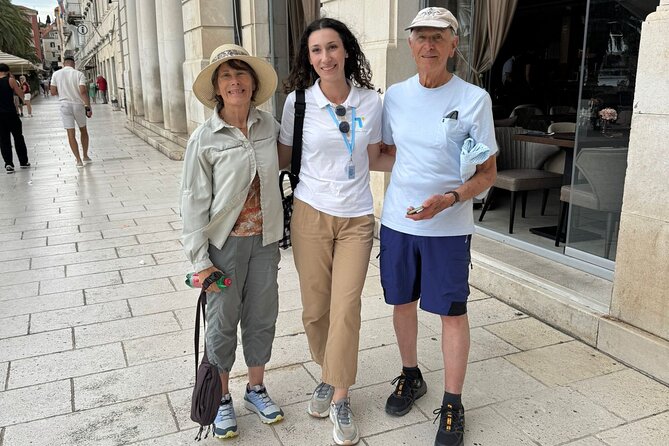
Fruit Square, known in Croatian as Voćni trg, is the last listed stop before the tour returns to the Riva. It offers another view of the Old Town’s public spaces and the way historic streets open into small squares.
The name gives the square a more everyday character than the imperial titles elsewhere on the route. That contrast is part of the pleasure of the walk. You move from the residence of an emperor to places shaped by ordinary commerce, meeting, and city life.
By this point, you should have a basic mental map of Split’s center. You have seen the waterfront, major Palace spaces, a principal gate, and later civic squares. That map is the real practical payoff. You can return to the Palace, look for a church or cultural site, and understand roughly where you are.
The activity ends back at Obala Hrvatskog narodnog preporoda 22. Since the tour returns to its starting point, it works well early in your stay, when you want to continue exploring nearby afterward.
What $28 buys you in Split
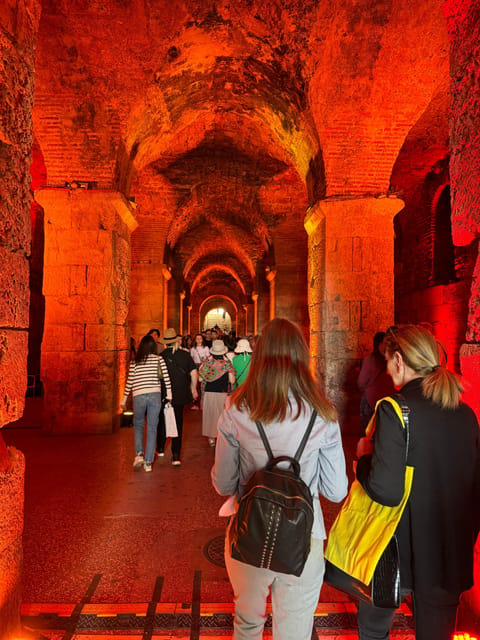
At $28 per person, this is a moderate price for a 90-minute guided walk in one of Europe’s most layered historic centers. You are paying for a licensed guide, live English commentary, and a route that links the most important public spaces.
The value is strongest if you are visiting Split for the first time. Without a guide, you can walk through the Palace and enjoy the atmosphere, but you may miss why the spaces connect or how the Roman residence became a modern town. A local guide also gives you someone to ask about daily life, local stories, and what to revisit later.
The value is less clear if you have already studied Diocletian’s Palace closely or plan to hire a private guide for a longer visit. This is a compact introduction, not an all-day archaeological service.
Remember that site and religious entrance fees are separate. That arrangement keeps the base price lower, but it means you should budget extra if you want to go inside places discussed along the way.
Timing, walking comfort, and weather
The activity lasts 1.5 hours, with starting times shown when you check availability. I would choose a morning or late-day departure if possible, especially during warm weather, though the specific start times depend on the date.
Bring comfortable shoes. The route uses cobbled and stone-paved streets, and the experience is not suitable for wheelchair users. Children can join, but an adult must accompany them throughout.
The tour operates in English. It is suitable for most travelers, but it is still worth considering your pace and interest. If you prefer long stops inside monuments, this format may feel too brisk. If you want a clear introduction before exploring independently, the length is well judged.
Weather can affect the walk. If poor conditions cause cancellation, you can reschedule or receive a full refund. You can also cancel up to 24 hours ahead for a full refund, and the reserve-now, pay-later option keeps your plans flexible.
Who will get the most from this walking tour?
I would recommend it most to first-time visitors who want to understand Split quickly. The route covers the essential landmarks without taking up half a day, leaving you time to return to favorite places or visit sites on your own.
It also suits people who care about local context. Lucija’s strength, based on the information available, is not just explaining old buildings. She can connect the past with present-day Split and answer questions about life in her hometown.
Families may find the 90-minute length manageable, provided children can handle the walking and an adult stays with them. The tour can also help cruise passengers or short-stay visitors get their bearings, though you should check the start time carefully against your schedule.
I would hesitate if you need step-free access, dislike uneven streets, or want every entrance fee included. I would also choose another format if you are looking for a private tour, a long archaeological lecture, or extensive interior visits.
Should you book Split Walking Tour: History, Legends & Tales?
Book it if you want a friendly, efficient introduction to Split led by someone connected to the city. The combination of Diocletian’s Palace, the main gates, Peristil, and later squares gives you a useful framework for the rest of your visit.
The strongest reasons to choose it are the local perspective, the small group, and the chance to ask questions in English. The main caution is practical: this is a walking overview, with additional costs for site entrances and no wheelchair access.
For $28, I consider it good value for a first morning or afternoon in Split. Take the tour early in your stay, wear sturdy shoes, and use the final half hour to mark the places you want to revisit at your own pace.
FAQ
How long does the Split walking tour last?
The tour lasts 1.5 hours. Starting times depend on availability for your chosen date.
What language is the tour conducted in?
The live tour guide operates in English.
Where does the tour begin?
It begins at Obala Hrvatskog narodnog preporoda 22, next to the model of Split on the Riva.
How will I recognize the guide?
The guide will be holding a Tour4You sign beside the model of Split.
Where does the tour end?
The activity ends back at the original meeting point on Obala Hrvatskog narodnog preporoda 22.
Is the tour suitable for children?
Children can join, but they must be accompanied by an adult for the entire tour.
Are entrance tickets included?
No. Entrance tickets to cultural and religious sites are not included. The guide provides information so you can visit those places later at your own pace.
Is the tour suitable for wheelchair users?
No. The activity is not suitable for wheelchair users.
What happens if bad weather cancels the tour?
If poor weather causes a cancellation, you can choose to reschedule or receive a full refund. You can also cancel up to 24 hours in advance for a full refund.
Just added around Split
- Kayaking & Zipline Šibenik – Čikola Canyon★ 5.0 · 3 reviews
- Krka National Park & Zipline Šibenik – Čikola Canyon★ 5.0 · 3 reviews
- Split: Small-Group Half Day Sailing Trip★ 5.0 · 3 reviews
- Rafting River Cetina from Makarska Riviera including transfer★ 5.0 · 3 reviews
- From Split: Krka National Park & Waterfalls Private Day Trip★ 5.0 · 3 reviews
- Split Bike and Wine Experience★ 5.0 · 3 reviews
- Split and Salona Cultural Heritage Day Tour from Trogir★ 4.0 · 3 reviews
- Krka Waterfalls, Lake Cruise & Skradin★ 5.0 · 3 reviews
Old Town & History Tours, compared.


Walking Tour of Split with a ‘Magister’ of History
Read our review →

Diocletian Palace & Old Town Guided Walking Tour
Read our review →

Diocletian’s Palace and Old Town SMALL GROUP Walking Tour
Read our review →

Split History and Gastro Small-Group Tour with Food and Drinks
Read our review →Browse the lists this tour appears in