
Reviewed · OLD TOWN & HISTORY TOURS
Split: Palace & Old Town Private Walking Tour-Entrance incl.
Diocletian’s Palace is not a museum sealed behind ropes. It is the heart of Split, with homes, cafés, shops, churches, and narrow lanes fitted into the old Roman walls. This private walk takes you from the Riva into that living old town, then adds the palace cellars, cathedral, baptistery, and Jupiter’s Temple.
I like the small private format, limited to 10 people, because it gives you room to ask questions and request adjustments. I also like that three key entry fees are included, saving you the trouble of buying separate tickets for the cathedral, baptistery, and cellars. The main consideration is the price: at $192 per person, this is a serious spend for 2.5 hours, especially for a solo visitor or couple.
In This Review
- Key points at a glance
- Starting on Split’s Riva
- The palace cellars reveal the imperial plan
- Peristyle: where Roman power meets modern Split
- Cathedral of Saint Domnius and the old mausoleum
- Jupiter’s Temple and the coffered ceiling
- Silver Gate, Vestibule, and the palace’s eastern side
- Fruit Square and Pjaca show later Split
- Golden Gate and Gregory of Nin
- Fishmarket and Marmontova Street
- Ending at Prokurative
- Is $192 per person a fair price?
- Practical details before you book
- Who should choose this Split walking tour?
- Should you book it?
- FAQ
- How long does the Split Palace and Old Town tour last?
- Where does the tour begin?
- Where does the tour end?
- What entrance fees are included?
- Is the tour private?
- What languages are available?
- Can the tour route be customized?
- What happens if a church service or event closes a sight?
- Is the tour wheelchair accessible?
Key points at a glance
- Roman palace at street level: Walk through Diocletian’s Palace as part of Split’s working old town, not as a detached archaeological site.
- Three included interior visits: Your admission covers the palace cellars, Cathedral of Saint Domnius, and baptistery.
- Private group of up to 10: The guide can adjust the pace and route to suit your interests and needs.
- A useful westward route: The walk moves from the Riva and southern palace gate through major Roman and medieval sights, ending at Prokurative.
- Three guide languages: Tours are offered in English, French, and German.
- One excellent practical feature: If a church service or event blocks access, the route can change, and an unavailable entrance fee is refunded.
Starting on Split’s Riva
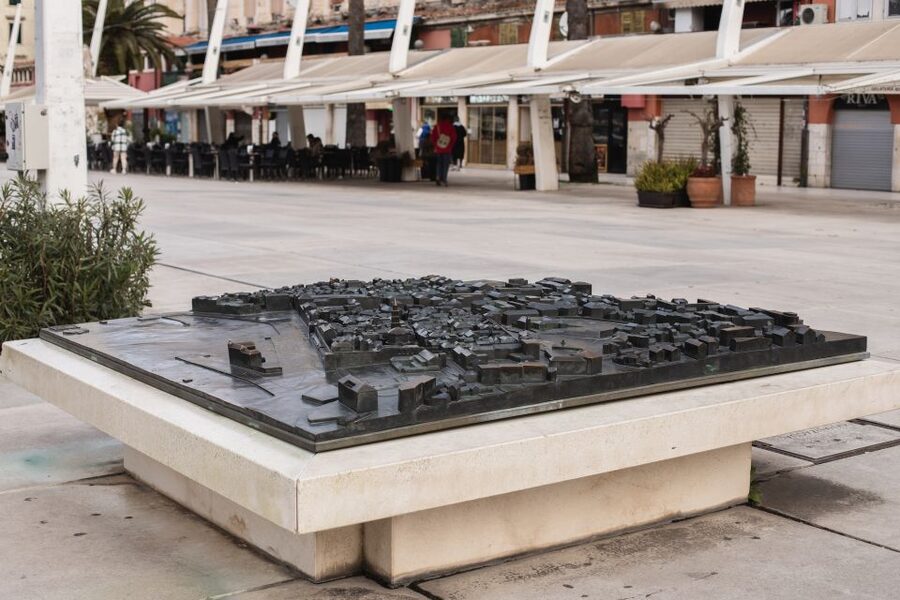
The walk begins on the Riva, Split’s waterfront promenade, beside a bronze model of the city’s historic core. This is a sensible meeting point because the model gives you a quick visual explanation of the palace before you enter it.
You then head toward the southern gate of Diocletian’s Palace. The route is on foot from the start, so wear shoes that handle stone pavement and steps. The exact meeting point can vary with the booking option, so check your confirmation closely rather than relying only on the general Riva description.
The guide leads a private group, with a maximum of 10 participants. That number is small enough for a more personal walk, though it is not the same as having a guide only for you and one companion. The experience can be customized, which matters if you want more Roman history, more medieval Split, or a slower pace inside the churches.
More old town history walks in Split:
- Split: Old Town and Diocletian Palace Walking Tour
★ 4.9 · 4,727 reviews - Walking Tour of Split with a ‘Magister’ of History
★ 5.0 · 1,122 reviews - Split Walking Tour with Professor of History
★ 5.0 · 926 reviews
The palace cellars reveal the imperial plan
The palace cellars are one of the strongest parts of the tour. After entering through the south gate, you go below street level into the underground spaces that once supported Diocletian’s residence.
These rooms help you understand the palace above. The emperor’s complex was not simply a large house. It was a fortified residence with ceremonial spaces, religious buildings, service areas, and planned entrances. The cellars give you a sense of its former scale and layout before the later city grew inside the walls.
The visit here lasts about 20 minutes. That is enough time for an introduction and a good look, but not so long that the palace’s other sights get squeezed out. The cellars are also a useful first indoor stop if the sun is strong.
Entry is included, and the tour offers skip-the-ticket-line access. That is helpful in a busy port city, where waiting to buy admission can eat into a short morning. If the cellars cannot be opened because of an event or another restriction, the entrance fee is refunded.
Peristyle: where Roman power meets modern Split
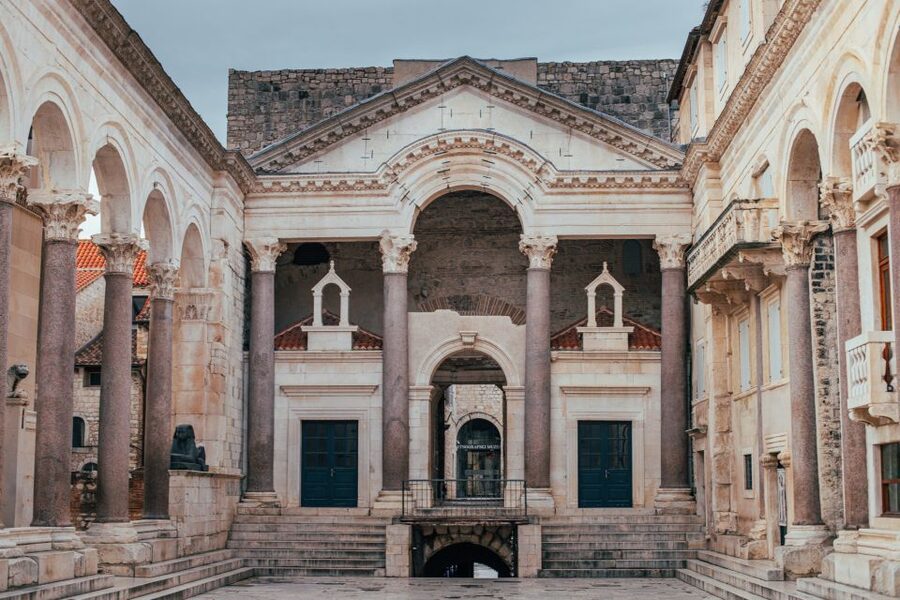
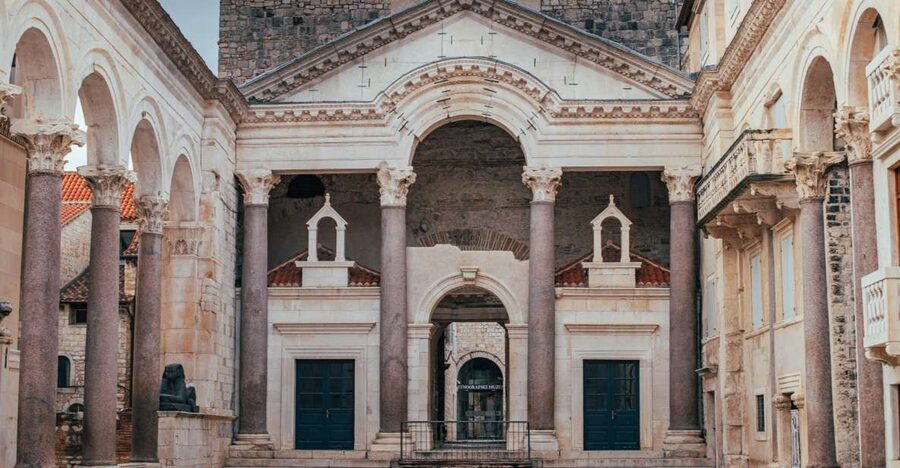
From the cellars, you climb steps to the Peristyle, the palace’s grand central court. This is the place where Diocletian presented himself as the son of Jupiter and expected subjects to worship him.
The setting makes the political message clear. You are not looking at a private corner of the palace. You are entering a ceremonial space designed to frame the emperor as more than an ordinary ruler. The columns, stone walls, and tight surrounding buildings also show how later Split grew around the Roman structure.
The route includes several short stops here, including the Vestibule, Triklinij, and Peristyle. The guide gives about 10 minutes at the Vestibule and another 10 at the Peristyle, with shorter explanations at Triklinij. These brief pauses keep the walk moving, though anyone who wants a long architectural study may find the schedule brisk.
The Peristyle is also one of the places where the modern city and ancient palace are most closely joined. You can look at Roman stonework, then continue through lanes used for ordinary daily life. That mix is the real pleasure of Split’s old center.
Cathedral of Saint Domnius and the old mausoleum
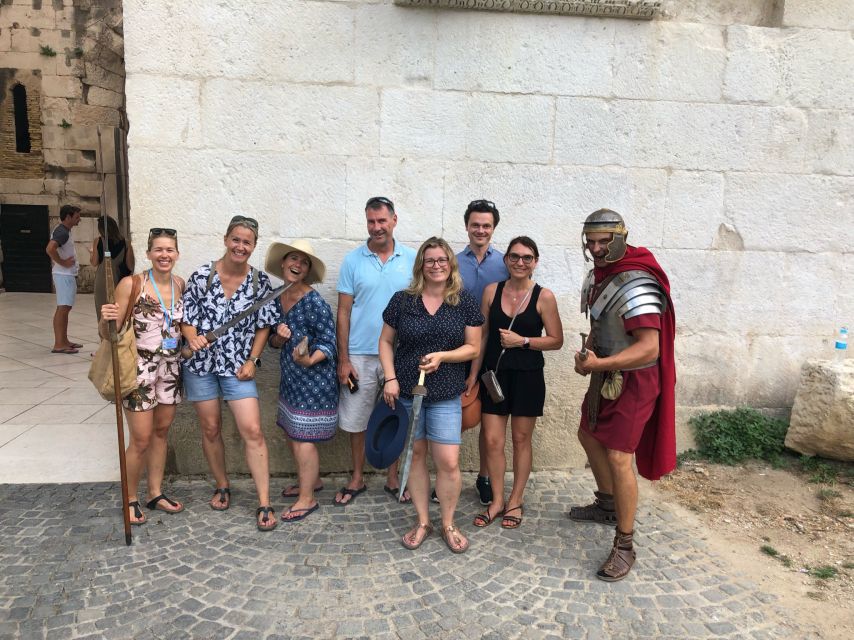
The Cathedral of Saint Domnius began as Diocletian’s mausoleum. During the Christianization of the Roman world, it was converted into a place of Christian worship. That change gives the building a double identity: it was first built to honor an emperor, then reshaped for a different faith.
The cathedral visit lasts about 20 minutes. Your guide can explain the transition without making the stop feel like a formal religious lecture. Look closely at the basic form of the building and consider its original purpose. The fact that an imperial mausoleum became a cathedral is more revealing than a long list of dates.
The cathedral is one of the included admissions, along with the baptistery and cellars. Church services or special events may prevent an interior visit. In that case, the route changes slightly and the corresponding entrance fee is refunded.
Because this is an active religious site, dress and behavior should be respectful. The tour information does not specify a dress code, so the safest approach is ordinary modest clothing and a willingness to keep quiet during services.
More walking tours in Split:
- Walking Tour of Split and Diocletian’s Palace
★ 5.0 · 2,588 reviews - Krka Waterfalls tour with Trogir Walking tour and Krka panoramic boat cruise
★ 5.0 · 1,659 reviews - Split & Diocletian’s Palace Walking Tour
★ 5.0 · 1,125 reviews - Split: Diocletian Palace & Old Town Guided Walking Tour
★ 4.7 · 882 reviews
Jupiter’s Temple and the coffered ceiling
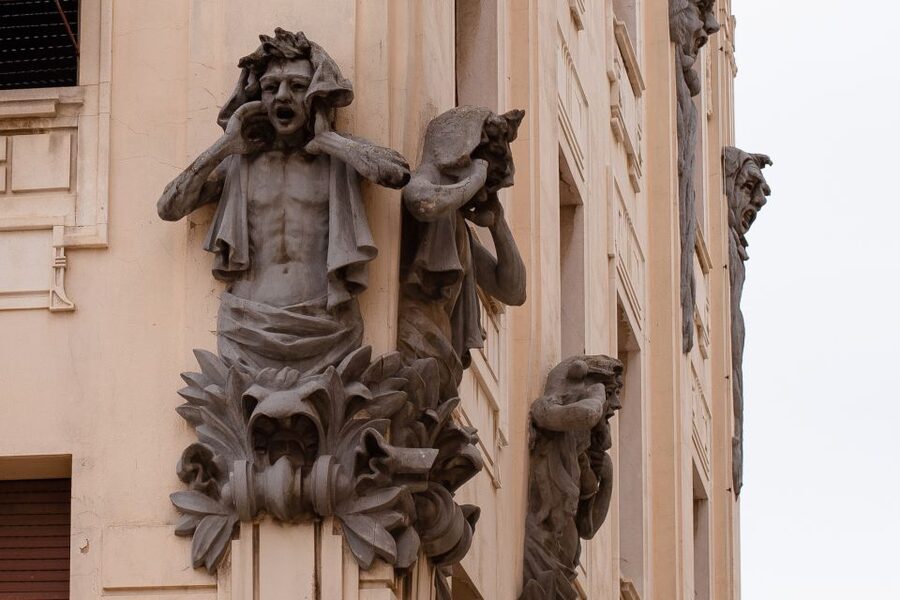
Jupiter’s Temple is a compact stop, listed at about 10 minutes. In Diocletian’s time, this was another sacred place within the palace. It gives you a direct comparison with the cathedral, which began as the emperor’s own mausoleum.
The coffered ceiling is the detail to watch for. Its recessed pattern adds depth above a relatively small interior and shows how Roman builders used decoration to give a sacred room a sense of order and importance.
The tour also includes the baptistery admission. The route description identifies the cathedral and Jupiter’s Temple separately, while the included fees name the baptistery as well. Ask your guide how the baptistery fits into the visit on your chosen date, since the exact interior sequence can change with services or events.
Silver Gate, Vestibule, and the palace’s eastern side
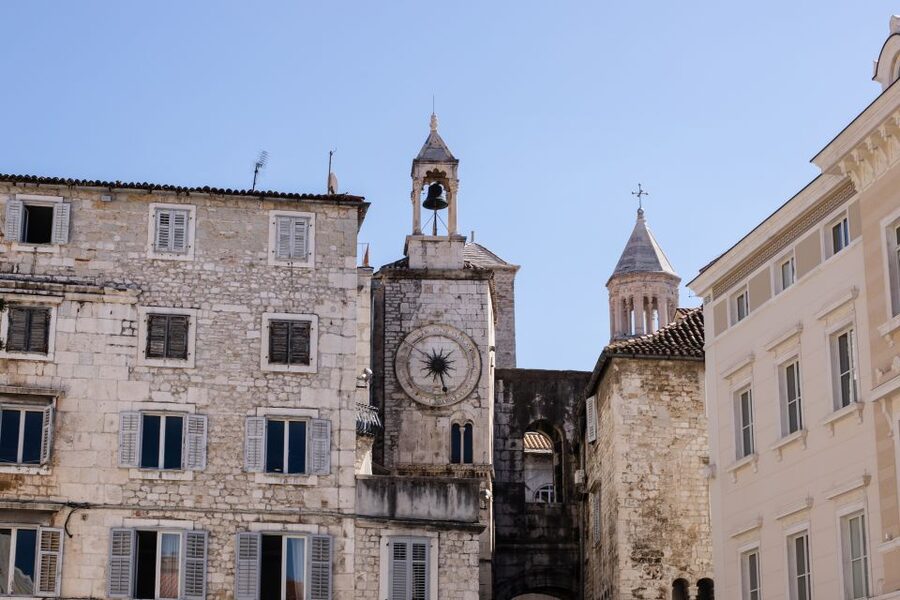
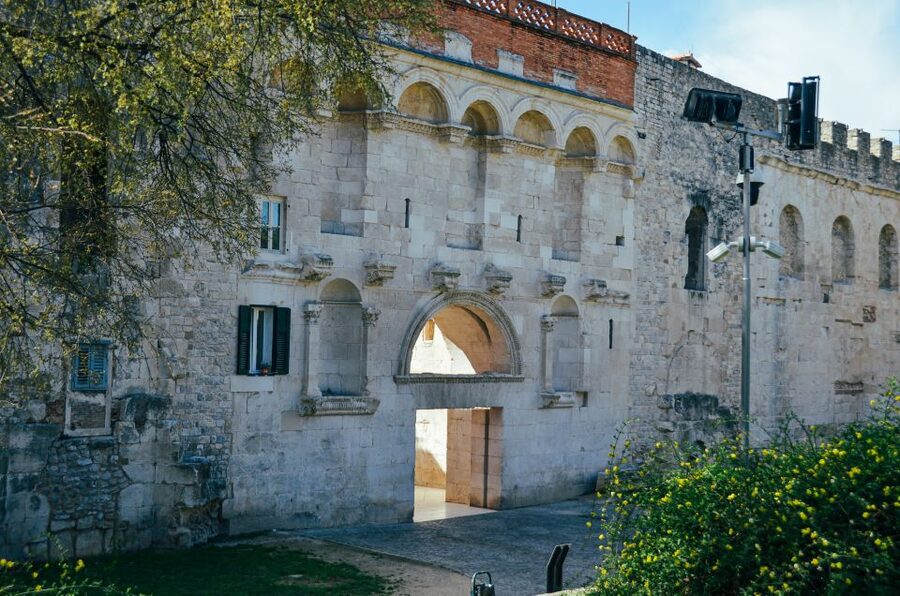
After the main imperial spaces, the guide takes you toward the Silver Gate. This is a short, five-minute explanation, but it helps you read the palace as a fortified complex with several controlled entrances.
The Vestibule follows as a longer 10-minute stop. This circular entry space once prepared visitors for the imperial rooms beyond. Its shape and position help explain the formal movement from public access to private and ceremonial areas.
These stops are not separate attractions that require much time on their own. Their value comes from the way they connect the palace together. You begin to see why the route moves through gates, courts, temples, and passageways rather than simply hopping between isolated monuments.
Fruit Square and Pjaca show later Split
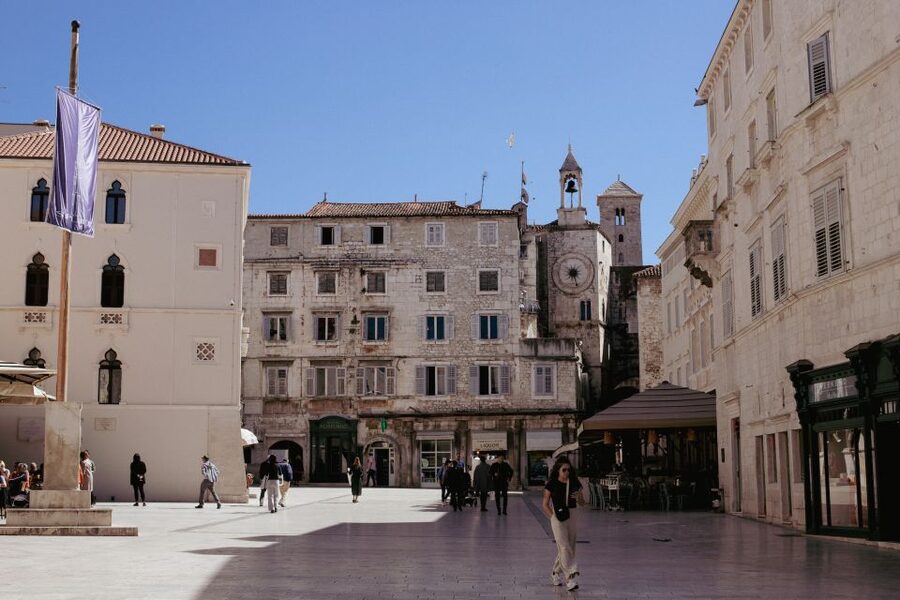
The tour then leaves the palace’s strictly Roman core and brings you into the later city. Fruit Square, or Voćni trg, receives about 10 minutes. From there, the route continues to Narodni trg, known as Pjaca, another 10-minute stop.
Pjaca has been a center of Split since the Middle Ages. Venetian palaces surround the square, and the historic town hall is here as well. This is where the tour becomes especially useful for understanding that Split did not stop being important when Rome’s imperial era ended.
The Venetian buildings give the square a different look from the Roman palace. You can compare the materials, proportions, and public spaces of two periods within a short walk. Pjaca also gives you a chance to see how Split’s civic life shifted from imperial ceremony to medieval and Venetian administration.
The City Lodge, or Loggia, is a shorter five-minute stop. It adds another piece to the story of public life in the old town. If you enjoy town halls, squares, and local government buildings, you may want to ask for a little extra time here. The standard schedule keeps it concise.
Golden Gate and Gregory of Nin
The Golden Gate is one of the better-known entrances to Diocletian’s Palace and receives about 10 minutes. Its scale and decoration make the imperial approach easier to picture, especially after seeing the less formal lanes inside the palace.
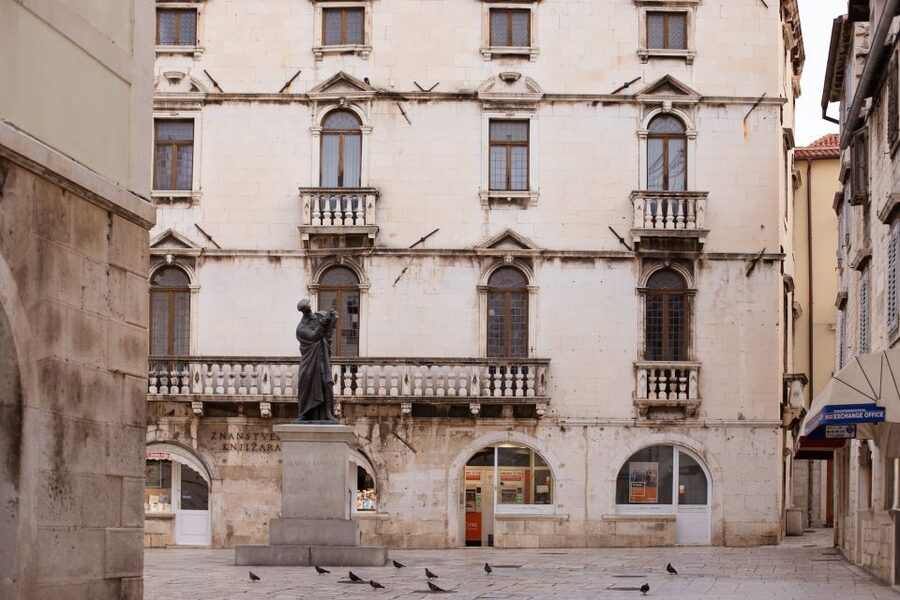
Nearby, the statue of Gregory of Nin receives about five minutes. The stop is brief, but it adds a Croatian figure to a tour otherwise dominated by Roman emperors, Christian buildings, and Venetian architecture.
This part of the route is a reminder that Split’s story is not only about the ancient palace. The city continued to change, and its public spaces carry memories from several periods. The guide’s role here is to connect those layers without turning the walk into a list of names.
Fishmarket and Marmontova Street
The route continues toward Split’s fishmarket, with about five minutes for a guided look. This is a practical city space rather than a grand monument. That makes it worthwhile: you see part of the ordinary urban life that keeps the old center functioning.
Marmontova ulica follows, also with a short five-minute explanation. These final stops widen the experience beyond the palace walls and show how the old town connects with later streets and commercial areas.
The itinerary contains many stops, but several are only five minutes long. That keeps the total tour within 2.5 hours, yet you should not expect a long pause at every location. If you prefer to linger, use the private format to ask the guide which stops can be shortened and which deserve more time.
Ending at Prokurative
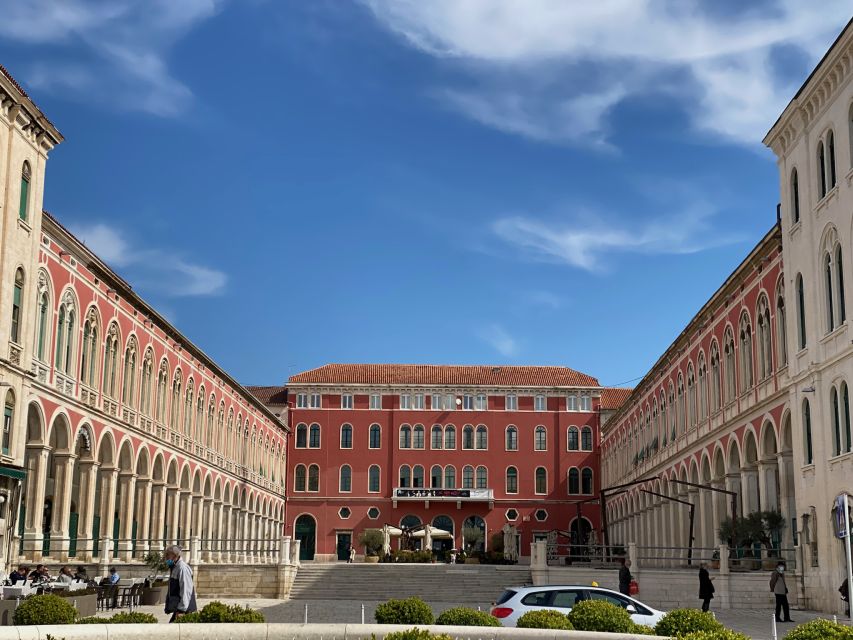
The walk ends at Trg Republike, usually called Prokurative. The square has an appearance often compared with St. Mark’s Square in Venice, and cafés and restaurants line its edges.
This is a good ending point because you are not left at an anonymous street corner. You can sit down, have a drink, or continue exploring on your own. It also leaves you on the western side of the central old town, away from the starting point on the Riva.
The activity information says the tour ends back at the meeting point, while the route specifies Prokurative as the finish. Since the start can vary by booking option, confirm the exact arrangement before setting your plans for afterward.
Is $192 per person a fair price?
At $192 per person, this tour is priced for visitors who place a high value on privacy and a guided introduction. It is not the budget choice for seeing Split’s main sights.
The value improves if you are a larger private group of up to 10 people, since the per-person cost buys a dedicated format rather than a large public walk. It also includes the cathedral, baptistery, and palace cellars, plus skip-the-line access. Those admissions and the guide’s time make the price easier to justify than a simple outdoor orientation walk.
For two people, the cost is harder to defend unless you strongly prefer a private guide or have limited time in Split. You are paying for a tailored route, direct questions, and a group size that avoids the feel of a crowded tour.
The 2.5-hour length is well suited to a cruise stop or a first morning in Split. It gives you the essential Roman and medieval sights without consuming half a day. If you want extended time inside the cathedral, detailed art discussion, or a relaxed café break during the tour, this may feel too tightly paced.
Practical details before you book
The walk is offered in English, French, and German. No individual guide name is provided, so you should not book expecting a particular person. A short note from a participant says Dinah seh is Perfect, but it does not provide enough detail to usefully assess a named guide or a specific part of the route.
The tour is partly inaccessible to wheelchair users because of steps and uneven historic spaces. The route can be adapted for special needs, but you must tell the provider in advance. Ask specifically which interior sites can be reached with your equipment before booking.
Church services, public events, and other closures can force a change. The provider says you receive a refund for an entrance fee if one of the cathedral, baptistery, or cellars cannot be visited inside. That is a fair safeguard, but it does not replace the lost sight, so keep your expectations flexible.
You can cancel up to 24 hours before the activity for a full refund, and the reserve-now-pay-later option lets you hold a place without paying immediately. Starting times vary, so check availability for the date you want.
Who should choose this Split walking tour?
I would choose this tour if you want a structured first look at Split and prefer asking a guide questions as you go. It suits couples, families, and private groups who want Roman ruins, churches, medieval squares, and later city streets in one compact route.
It is also a good fit if the palace feels confusing to you on a map. Split’s old center is a working city built into an ancient complex, and a guide can make the sequence of gates, courts, temples, and squares easier to follow.
I would look elsewhere if your priority is the lowest possible price, a slow photography walk, or a long visit inside each monument. The itinerary moves at a steady pace, with several five-minute stops, and the $192 rate is built around private service rather than bargain admission.
Should you book it?
Book this tour if you want the main story of Split explained in person, with the key paid interiors already covered and a route that reaches far beyond the palace’s central courtyard. The cellars, cathedral, Jupiter’s Temple, Pjaca, Golden Gate, fishmarket, Marmontova Street, and Prokurative give you a useful cross-section of the city.
For the best value, share it with a private group close to the 10-person limit and tell the guide in advance what matters most to you. For a couple on a tight budget, compare the price with a standard group walk. For visitors who value flexibility, historical context, and a clean introduction to Split in 2.5 hours, this is a strong choice.
FAQ
How long does the Split Palace and Old Town tour last?
The tour lasts 2.5 hours. Starting times depend on availability for your chosen date.
Where does the tour begin?
It begins on the Riva, near the bronze model of Split’s historic core, although the exact meeting point may vary with the booking option.
Where does the tour end?
The route finishes at Trg Republike, also called Prokurative. The activity information also notes that the tour ends back at the meeting point, so confirm the exact start and finish arrangement when booking.
What entrance fees are included?
Admission to the Cathedral of Saint Domnius, the baptistery, and Diocletian’s Palace cellars is included.
Is the tour private?
Yes. It is offered as a private group experience with a maximum of 10 participants.
What languages are available?
The live guide can conduct the tour in English, French, or German.
Can the tour route be customized?
Yes. The tour is individually customizable, and the route can be adapted for special needs if you notify the provider in advance.
What happens if a church service or event closes a sight?
The program may be changed slightly. If the cathedral, baptistery, or palace cellars cannot be visited inside, the related entrance fee is refunded.
Is the tour wheelchair accessible?
The site is only partly wheelchair accessible. The tour can be adapted to special needs, but you should contact the provider in advance.
Just added around Split
- Kayaking & Zipline Šibenik – Čikola Canyon★ 5.0 · 3 reviews
- Krka National Park & Zipline Šibenik – Čikola Canyon★ 5.0 · 3 reviews
- Split: Small-Group Half Day Sailing Trip★ 5.0 · 3 reviews
- Rafting River Cetina from Makarska Riviera including transfer★ 5.0 · 3 reviews
- From Split: Krka National Park & Waterfalls Private Day Trip★ 5.0 · 3 reviews
- Split Bike and Wine Experience★ 5.0 · 3 reviews
- Split and Salona Cultural Heritage Day Tour from Trogir★ 4.0 · 3 reviews
- Krka Waterfalls, Lake Cruise & Skradin★ 5.0 · 3 reviews
Old Town & History Tours, compared.


Walking Tour of Split with a ‘Magister’ of History
Read our review →

Diocletian Palace & Old Town Guided Walking Tour
Read our review →

Diocletian’s Palace and Old Town SMALL GROUP Walking Tour
Read our review →

Split History and Gastro Small-Group Tour with Food and Drinks
Read our review →Browse the lists this tour appears in