
Reviewed · DIOCLETIAN PALACE TOURS
Split: Jewish Heritage & Diocletian’s Palace Walking Tour
Split’s Jewish story is easy to miss if you stick to the usual Roman palace route. This small-group walk puts that story at the center, taking you through Diocletian’s Palace and to the Jewish cemetery, city synagogue, Jupiter’s Temple, and the statue of Grgur Ninski.
I like the limited group size of eight, which gives you a better chance to ask questions. I also like the chance to speak with local Jewish people and hear about present-day life in Split, not just ancient stones. The main drawback is the price: at $176 per person for a roughly two-hour walk, this is a costly sightseeing choice, especially since food and drinks are not included.
In This Review
- Key Points
- Why Split’s Jewish story deserves its own walk
- Starting at South Tours Travel Agency
- Walking through Diocletian’s Palace
- The Jewish cemetery and city synagogue
- Meeting local Jewish people in Split
- Grgur Ninski and Split’s public landmarks
- What $176 means in practical terms
- What the strong ratings tell you
- Who should book this walking tour?
- Should you book it?
- FAQ
- How long is the Jewish Heritage and Diocletian’s Palace Walking Tour?
- Where does the tour start and finish?
- What language is the tour offered in?
- How large is the group?
- Which Jewish heritage sites are included?
- Which other Split landmarks will I see?
- Is food or drink included?
- What should I wear?
- Can I cancel for a refund?
Key Points
- A Jewish history walk inside a Roman palace: The route connects Split’s Jewish community with the 17th-century Diocletian’s Palace.
- Small groups capped at eight: You get a more personal setting for questions and discussion.
- Important Jewish sites included: Expect the Jewish cemetery and city synagogue alongside major Split landmarks.
- Local voices add context: The experience includes a chance to speak with local Jewish people about culture and life in Split.
- More than a standard city tour: Jupiter’s Temple and Grgur Ninski’s statue broaden the route beyond Jewish heritage.
- Flexible booking terms: You can cancel up to 24 hours ahead for a full refund and reserve without paying immediately.
Why Split’s Jewish story deserves its own walk
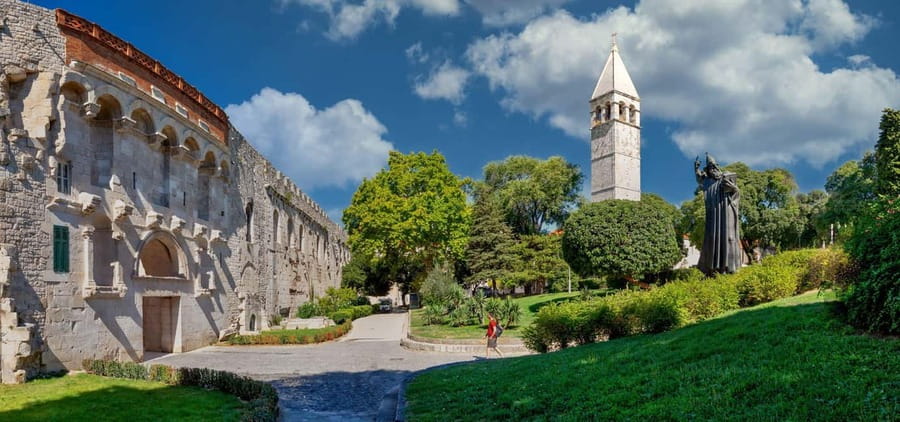
Most first-time visits to Split begin with Roman remains, medieval lanes, and the grand stone spaces of Diocletian’s Palace. Those sights matter, but they do not tell the whole story of the city.
This tour adds another layer by focusing on one of Europe’s oldest Jewish communities. You are not simply looking at old buildings. You are following the way a longstanding religious group has been part of Split’s urban life and culture.
That focus makes the experience more specific than a general introduction to Split. If you already plan to see the palace, this route lets you look at familiar streets through a different lens. If Jewish heritage is a major reason for your trip, the tour gives you a useful framework for understanding the places you visit.
The subject also makes this a good choice for repeat visitors. You may have already walked through the palace or seen the main squares, but you probably have not considered how Jewish residents fit into the city’s story. The guide’s job is to make those connections clear.
More ways into Diocletian’s Palace:
- Split: Old Town and Diocletian Palace Walking Tour
★ 4.9 · 4,727 reviews - Walking Tour of Split and Diocletian’s Palace
★ 5.0 · 2,588 reviews - Split & Diocletian’s Palace Walking Tour
★ 5.0 · 1,125 reviews
Starting at South Tours Travel Agency
The walk begins and ends at South Tours Travel Agency. That simple setup matters in a compact destination like Split, where a clear meeting point saves you from wandering around the old center looking for a guide.
Because the experience is entirely on foot, wear comfortable shoes and arrive ready to spend the full tour moving through historic streets and public spaces. No transport is provided or needed for the listed route.
The group is limited to eight participants. I consider that an important feature here. A subject involving religion, memory, and local identity works better when the guide can pause for questions instead of delivering a fixed speech to a large crowd.
The tour is offered in English with a live English-speaking local guide. No guide name is provided, so you should not book expecting a particular person. What is clear is that the tour is designed around direct explanation and conversation rather than an audio guide or self-guided route.
Walking through Diocletian’s Palace
The palace is the tour’s main historical setting. Built for the Roman emperor Diocletian, it is not merely a single building you enter and leave. It is a large historic center woven into modern Split, with lanes, courtyards, temples, and public spaces still used today.
Here, the guide links the palace to the Jewish community’s long presence in the city. That approach helps you see the palace as a living part of Split rather than an isolated Roman monument.
You can expect a mixture of guided explanation, sightseeing, walking, and photo stops. The pace should suit visitors who want context at each location, though the amount of time spent at any one stop may depend on the group and the guide.
Jupiter’s Temple is one of the listed stops. Its presence gives the route a wider religious frame. You are looking at a Roman temple while also learning about Jewish life in the same city across later centuries. That contrast is one of the tour’s useful features: Split’s religious history is not presented as a single, simple chapter.
The palace route can be uneven and crowded in places, though no specific accessibility details are provided. If you have mobility concerns, ask the provider for current route information before booking.
The Jewish cemetery and city synagogue
The Jewish cemetery is one of the most important stops for understanding the community as a real, local presence. A cemetery can tell you about family names, memory, continuity, and the passage of time in a way that a general city square cannot.
Your guide provides the historical setting for the site, helping you understand why it matters within Split’s Jewish story. The tour description does not specify the cemetery’s exact visiting rules or how long you remain there, so listen closely to the guide and follow any local instructions.
The city synagogue adds another dimension. A synagogue is both a religious space and a reminder that Jewish life in Split is not only a subject from the past. The experience includes an opportunity to speak with local Jewish people, which can give the tour a more personal and current feel.
You should wear modest clothing suitable for religious spaces. This is not a minor detail. Shoulders and knees covered is a sensible approach, and modest dress helps you enter religious sites respectfully. The supplied information does not list any specific synagogue restrictions, so your guide can clarify what is appropriate on the day.
More old town history walks in Split:
- Walking Tour of Split with a ‘Magister’ of History
★ 5.0 · 1,122 reviews - Split Walking Tour with Professor of History
★ 5.0 · 926 reviews - Split: Diocletian Palace & Old Town Guided Walking Tour
★ 4.7 · 882 reviews - Split: History and Heritage Walking Tour
★ 4.9 · 650 reviews
Meeting local Jewish people in Split
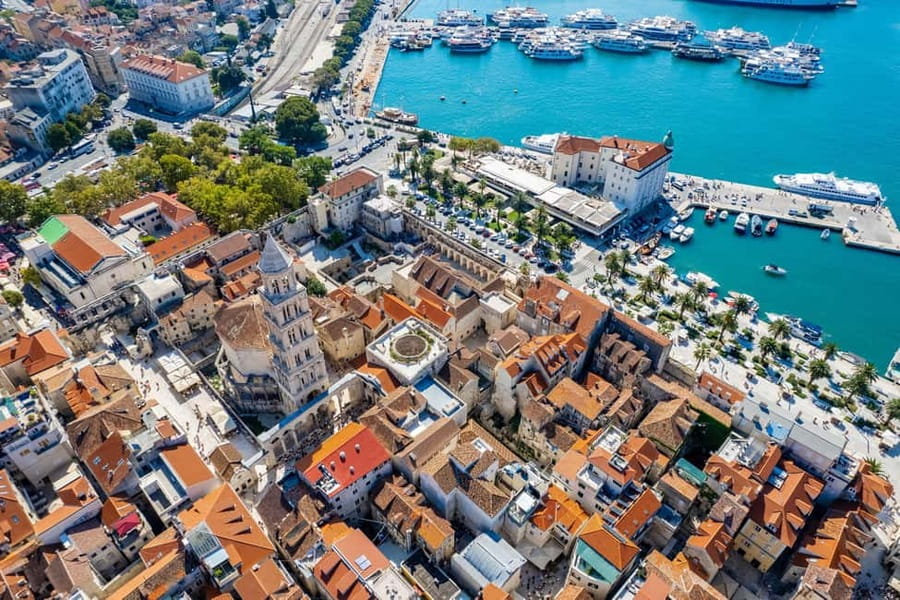
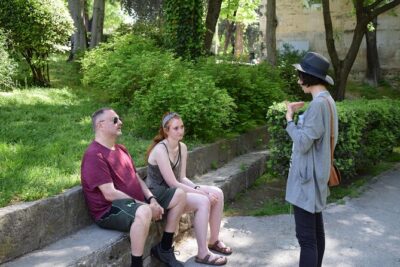
The chance to speak with local Jewish people is likely to be the most distinctive part of the experience. Many heritage tours stop at buildings and dates. This one makes room for personal voices and present-day culture.
That conversation can help you avoid treating Jewish heritage as something sealed in the past. You get a chance to hear about culture and experiences in Split from people connected to the community today.
The format is not described in detail, so you should not assume it is a long formal meeting or a private discussion. Still, its inclusion gives the tour a human element that a standard palace walk cannot provide.
This is also where the small group helps. With no more than eight participants, a conversation can feel more manageable than it would with a coachload of people. You can ask a thoughtful question, listen carefully, and give the discussion room to breathe.
If your main interest is architecture, this portion may feel less central. If you want local perspective and a better sense of how heritage shapes life now, it is a strong reason to choose this tour.
Grgur Ninski and Split’s public landmarks
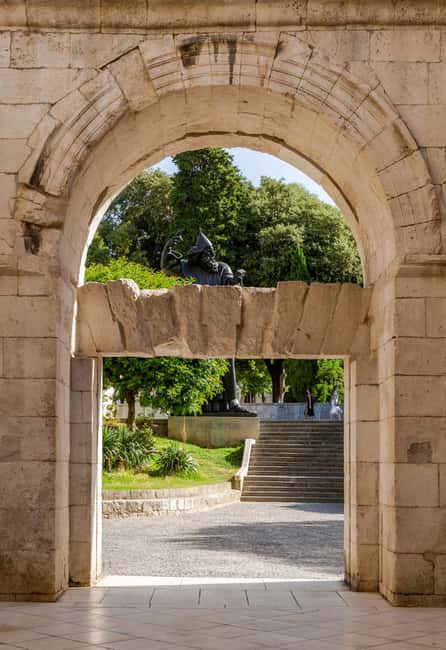
The statue of Grgur Ninski is another listed stop. The large statue is one of Split’s familiar sights, and it gives the tour a chance to connect Jewish heritage with the city’s broader public history.
You will not spend the entire walk inside religious sites. The route also brings you to well-known landmarks, making this useful for visitors who want a first look at Split as a whole.
That combination is practical. You can learn about the Jewish community while also getting oriented to the old center. The guide can point out how different periods and traditions share the same streets, monuments, and public spaces.
Do not expect every major sight in Split to be covered. The tour lasts two hours, and its subject is focused. You get selected landmarks that support the story, not a complete survey of every museum, square, and church in the city.
The provided itinerary includes a sightseeing and walking block listed as 2.5 hours, while the activity information gives a two-hour duration. Because of that small timing difference, check the available starting time and current end time when you reserve. It is wise not to schedule a tight connection immediately afterward.
What $176 means in practical terms
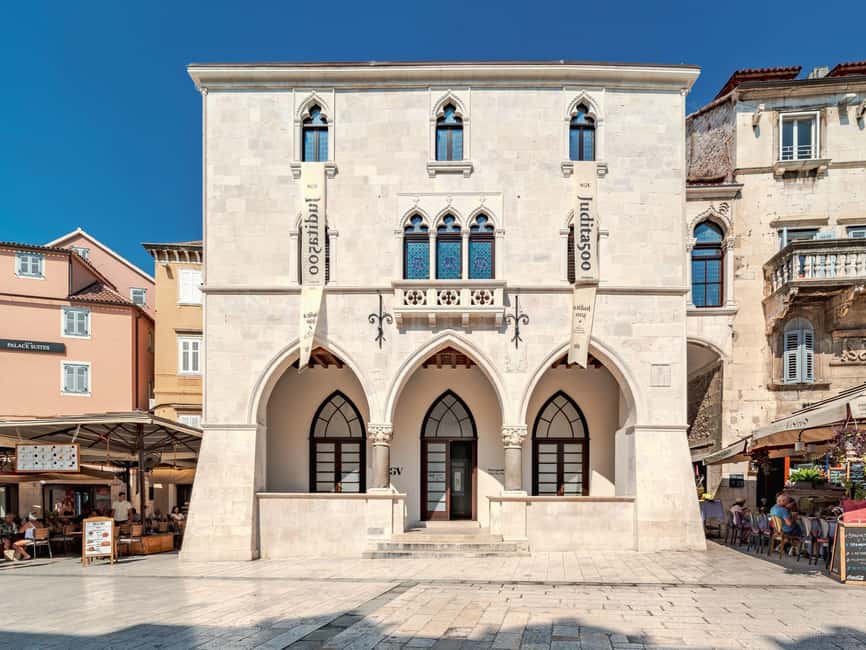
At $176 per person, this is firmly priced as a specialist experience rather than a basic city walk. The fee covers an English-speaking local guide and the two-hour walking tour. Food and drinks are not included.
The value depends on what you want from Split. If you are simply looking for a quick introduction to the palace, a less expensive general tour may make more sense. You are paying a premium here for a narrow subject, a small group, and access to local Jewish perspective.
For someone with a strong interest in Jewish heritage, the price may be easier to justify. The cemetery, synagogue, historical interpretation, and chance to speak with local Jewish people give the tour a clear purpose beyond checking off landmarks.
The cost is also more defensible for a couple or small party that values personal attention. With the group capped at eight, you are not buying a private tour, but you are avoiding the scale of a large sightseeing crowd.
Still, two hours is a short period for $176. Before booking, decide if the Jewish focus is central to your visit. If it is only a passing interest, the price may feel high. If it is the reason you are seeking this tour, the focused route could be worth it.
What the strong ratings tell you

The experience has a perfect rating from three verified bookings. That is a small sample, so I would not treat it as proof that every departure will be identical. It does, however, point to a clear pattern in the available feedback.
One guest called it the best tour of the trip. Another praised the way it matched their interests, the guide’s expertise, and the introduction to Split.
The useful point is not simply the five-star score. The praise focuses on two things: the guide’s command of the subject and the tour’s ability to suit people who specifically wanted Jewish heritage and a strong first look at Split.
That tells you how to judge the experience. It is probably a good fit when you care about the topic and want a guide-led introduction. It is less likely to satisfy you if you prefer to wander alone, spend long periods inside museums, or cover a broad list of attractions at speed.
Who should book this walking tour?
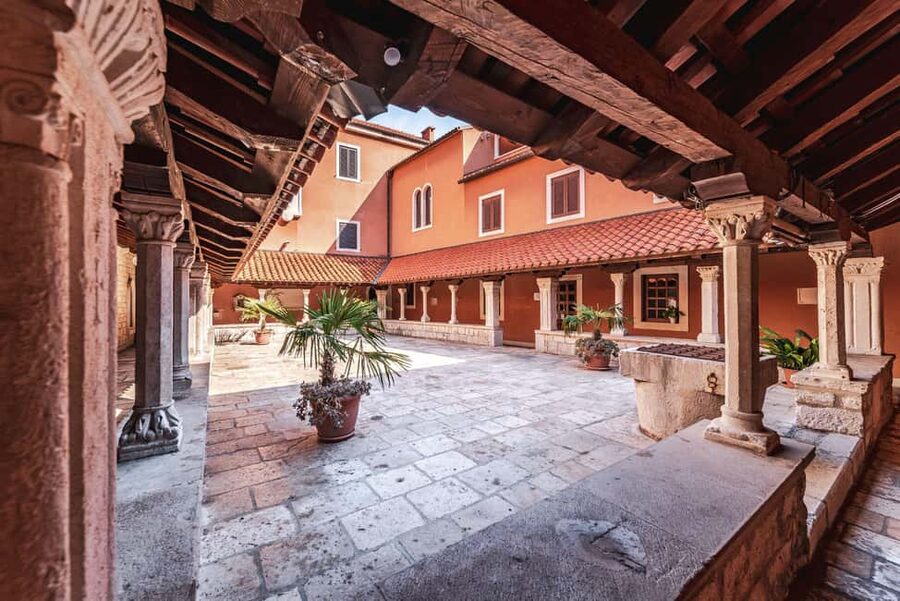
I would suggest this tour to you if Jewish heritage is an important part of your travel plans, or if you want to understand Split beyond its Roman remains.
It also suits first-time visitors who want a compact orientation to the palace and nearby landmarks. You get major sights such as Jupiter’s Temple and Grgur Ninski’s statue, but the route has a clear theme instead of trying to cover every attraction.
The small group is useful for solo visitors, couples, and people who prefer questions and discussion. It may also suit history students, heritage-minded families, and visitors who want contact with local Jewish culture.
You should think twice if the $176 price is a concern or if you want food, drinks, entrance tickets, or a longer sightseeing day included. None of those extras are part of the stated package.
Plan modest clothing for religious spaces, comfortable footwear for the walking route, and enough time before your next commitment. The tour is in English only, and the meeting point is South Tours Travel Agency.
You can reserve now and pay later, which helps if your Split schedule is still changing. Free cancellation is available up to 24 hours before the tour for a full refund.
Should you book it?
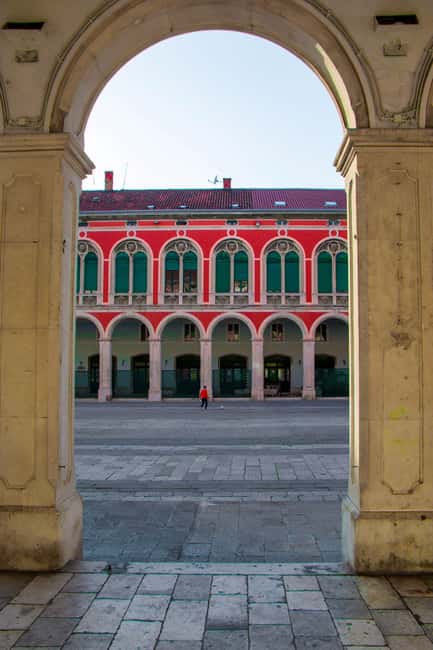
Book this tour if you want a focused Jewish heritage experience with a local guide, a small group, and a chance to hear from people connected to Split’s Jewish community.
Skip it if you only want a low-cost palace overview. At $176 for two hours, the price asks you to care about the subject. For the right reader, the cemetery, synagogue, local conversation, and Roman setting create a distinctive view of Split that a standard sightseeing walk is unlikely to provide.
FAQ
How long is the Jewish Heritage and Diocletian’s Palace Walking Tour?
The stated duration is two hours. The route details also show a sightseeing and walking period listed as 2.5 hours, so check the current timing when selecting a departure.
Where does the tour start and finish?
The tour starts and returns to South Tours Travel Agency.
What language is the tour offered in?
The tour is offered in English with a live English-speaking local guide.
How large is the group?
The experience is a small-group tour limited to eight participants.
Which Jewish heritage sites are included?
The route includes the Jewish cemetery and the city synagogue. It also connects Jewish heritage with sites in and around Diocletian’s Palace.
Which other Split landmarks will I see?
The listed landmarks include Diocletian’s Palace, Jupiter’s Temple, and the statue of Grgur Ninski, along with other city sights.
Is food or drink included?
No. Food and beverages are not included in the tour price.
What should I wear?
Wear modest clothing appropriate for religious spaces. Comfortable footwear is also sensible for the walking route.
Can I cancel for a refund?
Yes. You can cancel up to 24 hours in advance for a full refund. You can also reserve now and pay later.
More Walking Tours in Split
- Krka Waterfalls tour with Trogir Walking tour and Krka panoramic boat cruise
★ 5.0 · 1,659 reviews - From Split: Krka Waterfalls Cruise & Trogir Walking Tour
★ 4.7 · 681 reviews - Diocletian’s Palace and Old Town SMALL GROUP Walking Tour
★ 5.0 · 502 reviews - SPLIT-PRIVATE Walking Tour of Diocletian’s Palace & Old Town
★ 5.0 · 467 reviews
Just added around Split
- Kayaking & Zipline Šibenik – Čikola Canyon★ 5.0 · 3 reviews
- Krka National Park & Zipline Šibenik – Čikola Canyon★ 5.0 · 3 reviews
- Rafting River Cetina from Makarska Riviera including transfer★ 5.0 · 3 reviews
- From Split: Krka National Park & Waterfalls Private Day Trip★ 5.0 · 3 reviews
- Split: Small-Group Half Day Sailing Trip★ 5.0 · 3 reviews
- Split and Salona Cultural Heritage Day Tour from Trogir★ 4.0 · 3 reviews
- Split Bike and Wine Experience★ 5.0 · 3 reviews
- Private transfer from Split to Dubrovnik with 2h sightseeing stop in Ston★ 5.0 · 3 reviews
Diocletian Palace Tours, compared.


Walking Tour of Split and Diocletian’s Palace
Read our review →

Diocletian Palace & Old Town Guided Walking Tour
Read our review →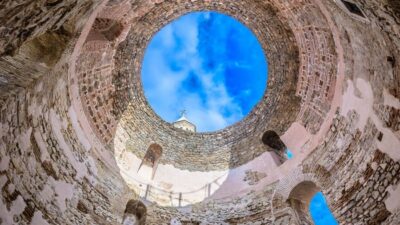
Game of Thrones Tour with Diocletian’s Palace Cellar
Read our review →
Diocletian’s Palace and Old Town SMALL GROUP Walking Tour
Read our review →
Browse the lists this tour appears in