
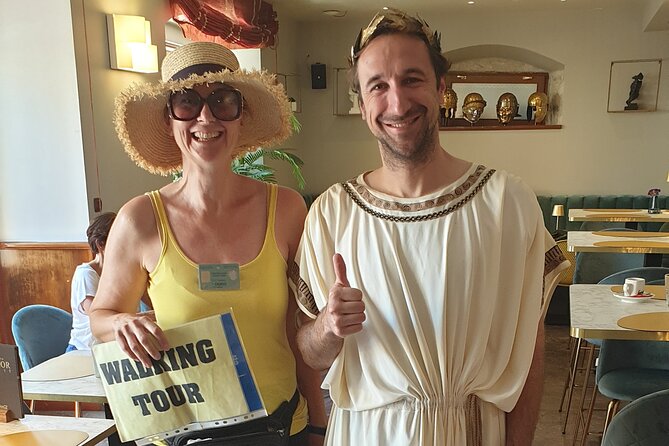
Reviewed · DIOCLETIAN PALACE TOURS
Split & Diocletian Palace Historical Walking Tour
Diocletian’s Palace is not a single monument you walk around and leave behind. It is the living center of Split, with cafés, homes, lanes, churches, shops, and Roman stone all packed into one remarkable old core. This tour gives you a useful route through that maze, from the Peristyle and underground substructures to the waterfront and Golden Gate.
I like the choice between a group of up to five and a larger group of up to 20. I also like the morning and afternoon scheduling, plus the chance to see the palace in the cooler light of an evening departure when available. The main caution is price: at $156.17 per person for about 90 minutes, this is costly, especially since the museum section of the substructures is not included and some admissions may cost extra.
In This Review
- Key points to know before booking
- Why the Peristyle makes the best opening
- Inside the palace substructures
- Riva Harbor and the palace’s southern wall
- Fruit’s Square and Split beyond the Roman palace
- The Roman temple, Vestibule, and Triklinij
- Medieval and Venetian layers inside the palace
- Gregory of Nin and the Golden Gate
- A 90-minute route with a clear limit
- Small group or regular group?
- Is $156.17 a fair price?
- Who should book this palace walk?
- Should you book the Split Palace Historical Walking Tour?
- FAQ
- Where does the tour start?
- Where does the tour end?
- How long does the tour last?
- Is the tour offered in English?
- How many people can join the tour?
- Does the tour include the museum section of the palace substructures?
- Can I cancel for a full refund?
Key points to know before booking
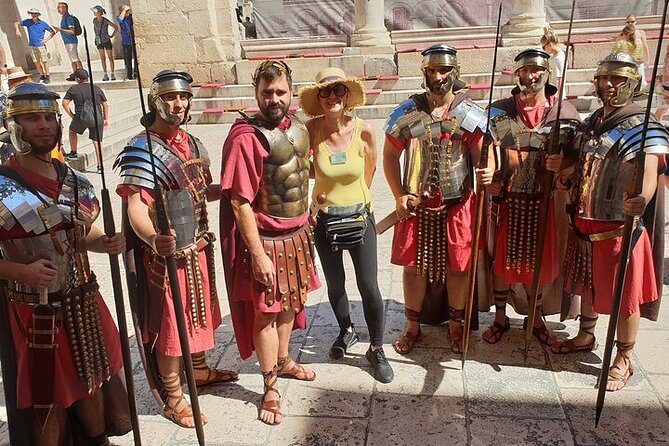
- The Peristyle is your starting point: This grand central square helps you understand how the palace’s gates, streets, temples, and imperial rooms fit together.
- The small-group option is capped at five people: It should make it easier to hear the guide and ask questions than in a group of 20.
- The route covers more than Roman ruins: You’ll see Riva Harbor, Fruit’s Square, a Venetian citadel, medieval churches, the cathedral in Diocletian’s mausoleum, and the Gregory of Nin statue.
- The palace cellars are only partly covered: The tour visits the central substructures and explains their purpose, but not the museum section.
- The guide matters a great deal: One account praised the stories and evening setting, while two others found the guide too quiet and hard to follow.
- The value depends on group size: The price is easier to justify for a very small group, but harder to defend if you receive a rushed or hard-to-hear presentation.
Why the Peristyle makes the best opening
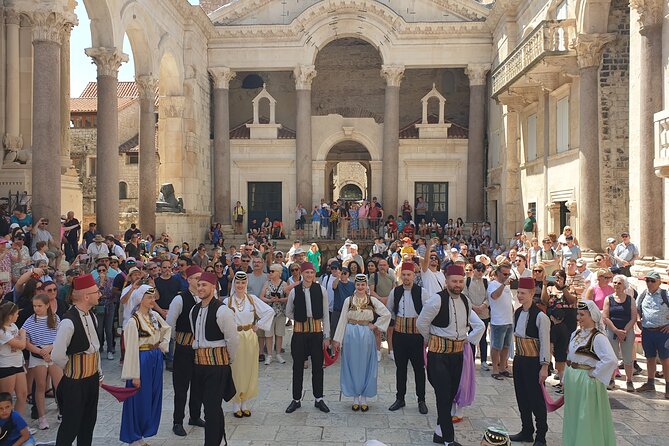
You meet on Peristil ulica, at the Peristyle, the central square of Diocletian’s Palace. This is the right place to begin because nearly every major part of the palace connects to it.
The square gives you an immediate sense of the palace’s scale and design. Rather than treating Diocletian’s residence as an isolated ruin, the guide can show you how the central court led toward the emperor’s private rooms, the entrances, the temples, and the lower halls. In about 15 minutes, you get the basic map you need for the rest of the walk.
This is also one of the strongest photo stops. You can photograph the stone columns and surrounding palace walls up close, then use the square as a reference point as you move through the old center. If you arrive early, it is worth taking a moment to look around before the explanation begins. The Peristyle works best when you first see it as a real public square, not just as an ancient backdrop.
A guide who tells clear stories can make this opening memorable. One account of an evening tour praised the number of facts and stories and found it a good way to get familiar with the area. That is exactly what this first stop should do: give you a mental key to Split before the route becomes a string of names and dates.
More ways into Diocletian’s Palace:
- Split: Old Town and Diocletian Palace Walking Tour
★ 4.9 · 4,727 reviews - Walking Tour of Split and Diocletian’s Palace
★ 5.0 · 2,588 reviews - Split & Diocletian’s Palace Walking Tour
★ 5.0 · 1,125 reviews
Inside the palace substructures
The next stop takes you below the palace into the substructures. The tour visits the central hallway and explains how these lower rooms supported the palace above and changed function over time.
This section is useful because the underground plan mirrors parts of the imperial rooms on the level above. You can better understand the construction of the palace when the guide points out how the foundations relate to the spaces once used by Diocletian. The 10-minute stop is brief, but it adds an important layer to the visit.
You should know exactly what is not included. The tour does not visit the museum portion of the substructures. You can visit that museum after the walk, but any admission or extra time there is separate from this experience. If the cellars are your main reason for booking, this limitation matters.
The substructures can also be a test of guiding skill. Underground spaces often have echoes and competing sounds, so a guide needs to face the group and speak firmly. Two accounts raised the same concern: the guide spoke too softly and often turned away, making it difficult to hear. In a group of 20, that problem could be frustrating. The small-group option gives you a better chance of staying close and asking for a point to be repeated.
Riva Harbor and the palace’s southern wall
From the palace interior, the route heads to Riva Harbor. This waterfront promenade is one of Split’s key public spaces, and the tour uses it to explain the palace’s south wall and the city’s relationship with the sea.
This stop helps connect the Roman building to modern Split. The palace was designed with a seaward side, and the waterfront lets you see how the old structure meets the harbor. You’ll also see a bronze model of Diocletian’s Palace and hear about the history of the Riva promenade.
The itinerary includes Riva Harbor twice, once for about 10 minutes and again for about 15 minutes near the end. That may reflect two parts of the route or a return to the promenade from another direction. Either way, the harbor is not just a quick photo stop. It gives the guide a place to explain the south wall, the palace’s position, and the city’s later growth.
The admission information deserves a close look here. One Riva stop is marked as free, while another says admission is not included. Since the exact cost is not provided, you should confirm what, if anything, requires payment before booking. The tour itself may simply use the public waterfront, but the wording is not perfectly clear.
Fruit’s Square and Split beyond the Roman palace
Fruit’s Square, or Trg Braće Radić, adds a Venetian and later urban layer to the walk. Here you’ll see an old Venetian citadel and the sculpture of Marko Marulić, a major figure in Croatian literature.
This is a worthwhile change of pace. The palace is the star of the tour, but Split’s character comes from the way later buildings and public spaces grew into the Roman framework. Fruit’s Square helps show that the old center is not frozen in the fourth century.
The stop lasts only about five minutes, so expect a quick explanation rather than a long visit. I would pay attention to the guide’s ability to link the square to the wider story of Split. A simple list of names will feel thin here. A good explanation should help you see why a Venetian citadel and a Croatian literary figure belong on a tour that began with a Roman emperor.
More old town history walks in Split:
- Walking Tour of Split with a ‘Magister’ of History
★ 5.0 · 1,122 reviews - Split Walking Tour with Professor of History
★ 5.0 · 926 reviews - Split: Diocletian Palace & Old Town Guided Walking Tour
★ 4.7 · 882 reviews - Split: History and Heritage Walking Tour
★ 4.9 · 650 reviews
The Roman temple, Vestibule, and Triklinij
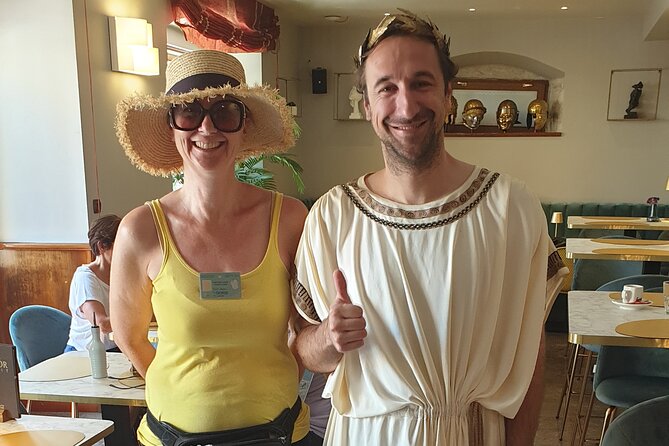
The route includes the last remaining ancient Roman temple within the palace. The information provided does not name the temple, so you should ask the guide to identify it and explain its original purpose when you arrive.
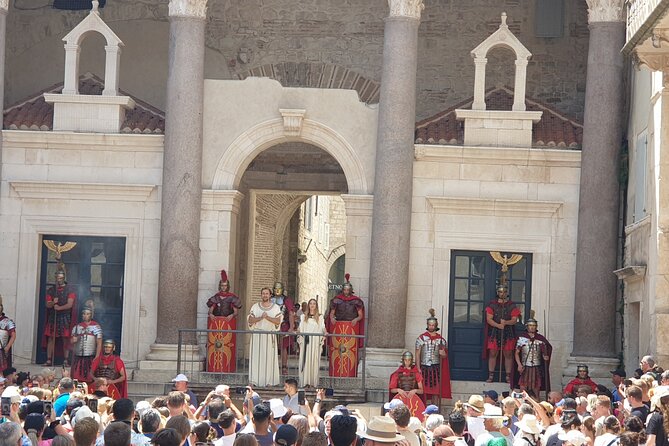
The Vestibule follows as another central stop. This circular entrance hall led toward Diocletian’s private quarters. The tour allows about five minutes here, enough for a focused explanation of its role and appearance.
The Vestibule may also offer a small cultural touch: you might hear traditional Dalmatian singing. The wording indicates that this is only a possibility, not a guaranteed performance, so treat it as an occasional extra rather than a promised part of the tour.
Triklinij brings you closer to the emperor’s private world. You’ll see remains and a partial reconstruction of Diocletian’s walkway and dining hall. The stop lasts about five minutes, which should be enough to understand the space if the guide keeps the explanation focused.
These three places are important because they move beyond the palace’s main public court. They show the ceremonial and private side of the complex. Still, the short time at each site means this is an overview. If you want long explanations at every Roman structure, a 90-minute walk may feel too compressed.
Medieval and Venetian layers inside the palace
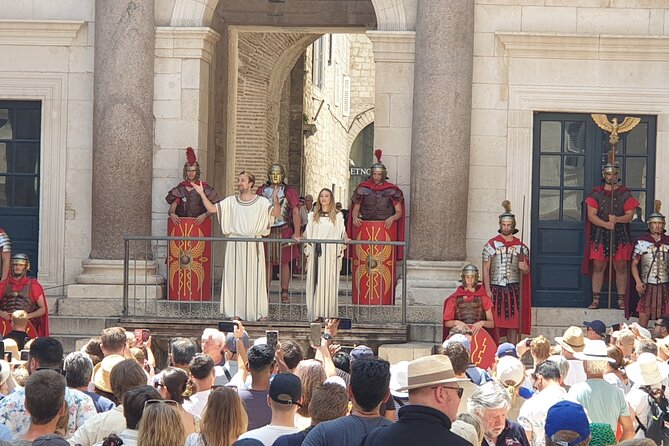
Several brief stops add later history to the Roman core. The route includes a 15th-century Venetian palace that now houses the Museum of the City, along with the cathedral located in Diocletian’s former mausoleum.
The cathedral is one of the clearest examples of how Split reused the palace. A building made for the emperor became a Christian cathedral, giving you two very different chapters of the city’s past in one place. The tour includes the cathedral as part of the route, but the information does not specify whether entry inside is included. Plan to ask before you arrive if seeing the interior is important to you.
The City Museum stop is also described without a stated visit time or admission detail. That suggests the guide may point out the building and explain its role rather than lead you through the museum galleries. If you want to visit the museum, set aside time after the walking tour and check its entrance arrangements separately.
This is one reason I see the experience as an orientation walk rather than a full monument tour. It introduces several important places, but some are presented from outside or in passing. That can be ideal on your first afternoon in Split, when you want a clear plan for what to return to later.
Gregory of Nin and the Golden Gate
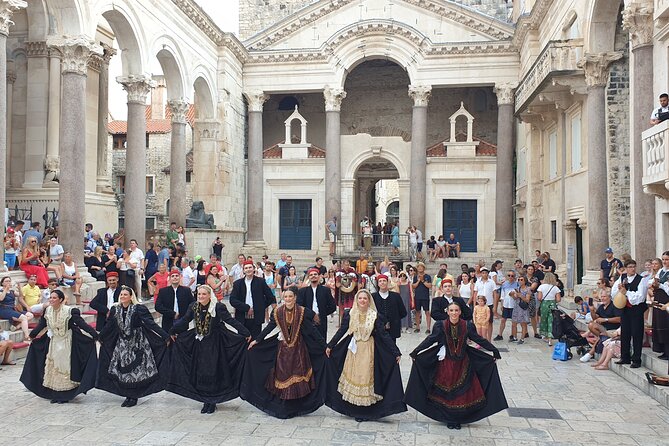
The statue of Grgur Ninski, or Gregory of Nin, is one of the route’s more memorable public-art stops. Created by Ivan Meštrović, it shows the father of the Croatian language and stands near the north gate of the palace.
The tour allows about 15 minutes here, giving the guide time to explain Gregory’s importance and the statue’s place in Croatian culture. This is a good stop for connecting architecture with national identity. You are not just looking at an old gate. You are hearing why a medieval religious figure remains important in Croatia.
The Golden Gate is the main northern entrance to Diocletian’s Palace. It is one of the strongest places to photograph the palace up close and to understand how people once entered the complex. The guide explains the gate and returns to the importance of Gregory of Nin.
The Golden Gate stop is listed as having admission not included. No price is supplied, so check the current details before assuming you can enter every area shown on the route. Even if the walk mainly views the gate from public space, the wording means you should clarify what the extra charge covers.
A 90-minute route with a clear limit
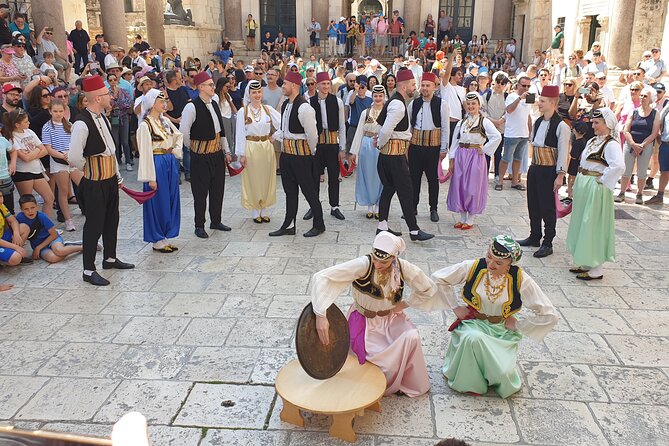
The full tour lasts about one hour and 30 minutes. That is long enough to cover the key streets and landmarks without turning the visit into an all-day commitment. It also means the pace is fairly purposeful.
I would book it early in your stay in Split. The Peristyle, palace cellars, Golden Gate, Riva, and surrounding squares can be confusing on your own, especially because the palace is part of the modern city rather than a fenced archaeological site. A good introduction can help you decide where to return for more time.
Morning and afternoon departures make the walk easier to fit into a day. An evening tour is also referenced in the available feedback, and the cooler setting could make the old center more pleasant. Confirm the current departure times when booking because the listed schedule specifically highlights morning and afternoon options.
The tour begins and ends at the Peristyle meeting point. There is no transfer service involved, and the meeting location is near public transportation. Most people can take part, and service animals are allowed.
Small group or regular group?
You can choose a small group with a maximum of five people or a regular group with a maximum of 20. This choice matters more than it might on a quiet museum tour.
A five-person group should make it easier to hear the guide, stay close in narrow palace lanes, and ask questions about the places that catch your attention. It also gives the guide a better chance to adjust the explanation to your interests. For a tour built around stories and small architectural details, that is a real benefit.
The regular option may work if the price is lower through a group discount or if you mainly want a basic introduction. But the route includes busy public areas, echoing underground rooms, and outdoor explanations near the harbor. A quiet voice or a guide who turns away from the group can make the experience hard to follow.
The feedback is mixed in a useful way. One account praised the evening setting and the guide’s many facts and stories. Two others found the presentation disappointing because the guide was not loud enough and often faced away. I would choose the small group if you care about hearing every explanation, and I would stay near the guide from the start.
Is $156.17 a fair price?
At $156.17 per person, this is expensive for a 90-minute walking tour. The price might make sense if the small-group option creates a close, tailored experience, but it is harder to justify for a regular group of up to 20.
The tour includes an educated English-speaking guide and covers many of Split’s major sights. It does not include the museum part of the substructures, and the Golden Gate and one Riva entry are marked as not included. Since the listed price is high and the extra admission costs are not stated, you should check exactly what you will pay beyond the tour fee.
Group discounts may change the calculation. If you are booking with several people, compare the regular and small-group prices rather than assuming the smaller option is automatically best. A larger group may be acceptable for a simple first look, while five people is the safer choice for a serious history-focused visit.
The rating is strong at 4.9 from 29 reviews, with 93 percent recommending the experience. That is encouraging, but the lower scores point to the key risk: the quality of the guide’s delivery. On a walking tour, clear speech is not a minor detail. It is the product.
Who should book this palace walk?
I would recommend it most to first-time visitors who want a fast, structured introduction to Split. It suits you if you prefer hearing the story of a place before exploring museums and churches on your own.
The route also works well for people who like variety. In 90 minutes, you move from Roman foundations to an imperial dining hall, a medieval cathedral, Venetian buildings, Croatian sculpture, and the modern waterfront. You will not get a full visit inside every attraction, but you will see where the important places are.
History fans should book only after checking the admission details. If you want extensive time in the substructure museum, cathedral, or City Museum, you will need extra time after the walk. This tour points you toward those places rather than replacing a full visit.
The experience is less suitable if you need a slow pace, a quiet setting, or a detailed lecture at each stop. The route is compact and busy, and the guide’s volume appears to be a real variable. Choose the group of five and confirm the departure format if that is important to you.
Should you book the Split Palace Historical Walking Tour?
Book it if you want a short introduction to Split’s Roman, medieval, Venetian, and modern sides, and if you value a guide who can connect the pieces. The Peristyle, substructures, Vestibule, Triklinij, Golden Gate, Gregory of Nin statue, and Riva give you a strong first look at the city.
I would choose the small-group format whenever possible. At this price, a group of up to five offers the best chance of hearing the guide and getting useful answers. Before paying, confirm which admissions are excluded and whether an evening departure is currently offered.
Skip it if $156.17 feels too high for 90 minutes or if your main goal is a full interior visit to the palace museums and cathedral. In that case, use the route as a map for independent exploring and spend your budget on the specific sites you most want to enter.
FAQ
Where does the tour start?
The tour starts at Peristil ulica, Peristil ul., 21000 Split, Croatia, at the Peristyle of Diocletian’s Palace.
Where does the tour end?
The activity ends back at the meeting point.
How long does the tour last?
The walking tour lasts approximately one hour and 30 minutes.
Is the tour offered in English?
Yes. The tour is offered in English.
How many people can join the tour?
You can select a small-group option with a maximum of five people or a regular tour with a maximum of 20. The overall activity limit is 20 participants.
Does the tour include the museum section of the palace substructures?
No. The route visits the central substructures and explains their construction and later functions, but it does not include the museum section. You can visit that part after the tour.
Can I cancel for a full refund?
Yes, if you cancel at least 24 hours before the experience begins. Cancellations or changes made less than 24 hours before the start time are not refunded or accepted.
More Walking Tours in Split
- Krka Waterfalls tour with Trogir Walking tour and Krka panoramic boat cruise
★ 5.0 · 1,659 reviews - From Split: Krka Waterfalls Cruise & Trogir Walking Tour
★ 4.7 · 681 reviews - Diocletian’s Palace and Old Town SMALL GROUP Walking Tour
★ 5.0 · 502 reviews - SPLIT-PRIVATE Walking Tour of Diocletian’s Palace & Old Town
★ 5.0 · 467 reviews
Just added around Split
- Kayaking & Zipline Šibenik – Čikola Canyon★ 5.0 · 3 reviews
- Krka National Park & Zipline Šibenik – Čikola Canyon★ 5.0 · 3 reviews
- From Split: Krka National Park & Waterfalls Private Day Trip★ 5.0 · 3 reviews
- Split: Small-Group Half Day Sailing Trip★ 5.0 · 3 reviews
- Rafting River Cetina from Makarska Riviera including transfer★ 5.0 · 3 reviews
- Split and Salona Cultural Heritage Day Tour from Trogir★ 4.0 · 3 reviews
- Split Bike and Wine Experience★ 5.0 · 3 reviews
- Private transfer from Split to Dubrovnik with 2h sightseeing stop in Ston★ 5.0 · 3 reviews
Diocletian Palace Tours, compared.


Walking Tour of Split and Diocletian’s Palace
Read our review →

Diocletian Palace & Old Town Guided Walking Tour
Read our review →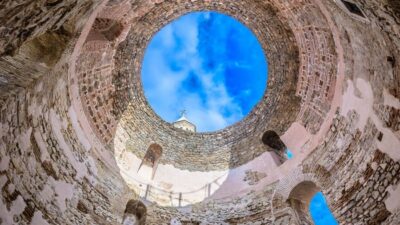
Game of Thrones Tour with Diocletian’s Palace Cellar
Read our review →
Diocletian’s Palace and Old Town SMALL GROUP Walking Tour
Read our review →

Browse the lists this tour appears in