

Reviewed · OLD TOWN & HISTORY TOURS
Šibenik: Medieval Night Walking Tour
Šibenik changes character after sunset. Its narrow lanes, stairways, covered passages, tunnels, and old stone walls feel far removed from the bright waterfront below. This one-hour walk brings you into the city’s medieval core, where darkness helps you picture a time before streetlights.
I like the focus on small, specific stories, from the medieval water cistern to the Pillar of Shame and the escape routes used by fair cheats. I also like the guide-led storytelling around St. James Cathedral, including why light mattered in its construction and why all 72 city bells once rang together.
The main limitation is the short length. At $49 per person, the price is fair if you want a lively introduction with an excellent guide, but you should not expect long interior visits to churches or museums. The route also includes many stairs and narrow streets.
In This Review
- Key points at a glance
- Why Šibenik is especially good after dark
- Meeting at St. James Cathedral
- St. James Cathedral and the meaning of light
- The Four Wells and medieval water supply
- The oldest street and Šibenik’s steep lanes
- St. Lawrence Monastery and the old town cave
- The Pillar of Shame, fairs, and city rules
- Plague, weddings, bells, and local customs
- The first doctor’s chapel and the city’s crafts
- The first public lighting lamp from 1895
- Guide Dario and the pace of the walk
- Is $49 a fair price for one hour?
- Who should book this Šibenik night tour?
- Should you book the Medieval Night Walking Tour?
- FAQ
- How long does the Šibenik Medieval Night Walking Tour last?
- Where does the tour begin?
- Where does the tour end?
- Which languages are available?
- Does the tour include entry to churches or museums?
- Can I cancel or pay later?
Key points at a glance
- A one-hour night walk: See central Šibenik after dark, when its medieval lanes take on a more atmospheric feel.
- Dario Mikulandra leads the tour: He guides in English, Croatian, and Serbo-Croatian, with a strong focus on local history and storytelling.
- The Four Wells cistern: Learn how medieval Šibenik collected and stored water.
- A town cave beside St. Lawrence Monastery: One of the route’s most unusual features, tucked into the old city.
- Cathedral stories, not a cathedral entry: Hear about the building of St. James Cathedral from the square.
- Stairs, passages, and old lanes: Wear sensible shoes and expect an active walk through the historic center.
Why Šibenik is especially good after dark
Many Dalmatian towns are best known for their sunny stone streets and seaside cafés. Šibenik offers something different at night. The old center is made for wandering, with tight lanes and stairways that turn sharply between medieval houses.
The darkness is part of the subject, not just a backdrop. You’ll hear how these streets were not lit during the Middle Ages and get a better sense of how confusing the town must have felt after sunset. A guide can point out details that would be easy to miss on a self-guided walk, especially around covered passageways, old doorways, and small churches.
The route brings you through a city said to hide more than 30 churches. You will not enter every one, of course, but the number helps explain the character of Šibenik. Religious buildings are woven into the old center rather than gathered in one formal church district.
I like this kind of evening walk because it gives you a useful first look at the city without taking up a whole night. You can use it to decide which places deserve a return visit in daylight, such as the cathedral, the medieval gardens at St. Lawrence, or the city museum.
More Walking Tours in Sibenik
- Sibenik: Guided Evening Walking Tour
★ 4.9 · 62 reviews - The Best of Sibenik Private Walking Tour
★ 5.0 · 13 reviews - Sibenik: Guided Walking Tour
★ 5.0 · 8 reviews
Meeting at St. James Cathedral
The meeting point is the main cathedral portal facing west. This is not the cathedral entrance with the lions. Look instead for the portal opposite the statue of Juraj Dalmatinac, the sculptor linked to Šibenik’s most famous church.
That detail matters. Šibenik’s cathedral square has more than one prominent entrance and several landmarks, so check the meeting instructions before you set out. The activity ends back at the same meeting point, which makes it easy to continue into the old center or return to your hotel afterward.
The cathedral itself is the first major subject. You’ll hear how its construction shaped local identity and what the building represented to the people of Šibenik. The guide also explains how light influenced the cathedral’s design, a fitting topic for a tour that takes place under the evening sky.
You should think of this as a story about the cathedral rather than a church visit. Since the walk takes place at night, church and museum entrance fees are not part of the activity, and interior access is not the focus.
St. James Cathedral and the meaning of light
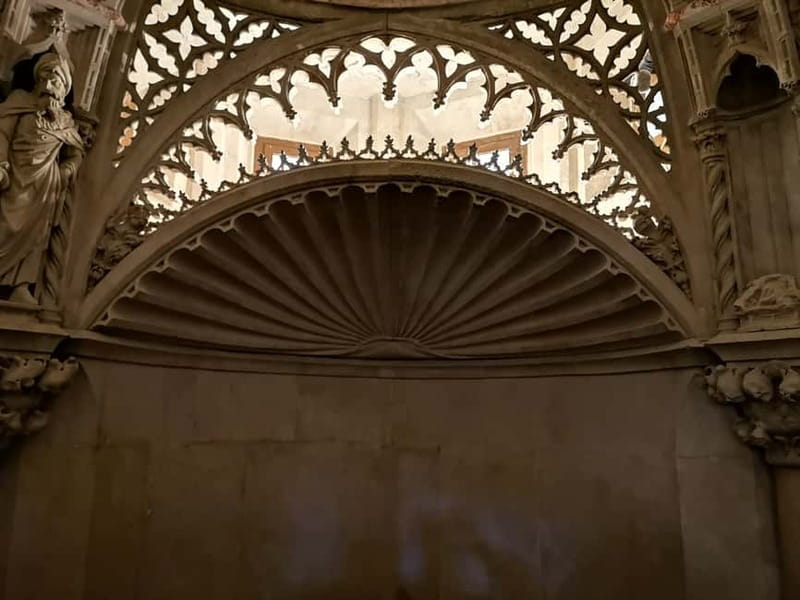
St. James Cathedral is often described as Croatia’s most beautiful cathedral, but the useful part of this stop is learning why it matters beyond appearance. The guide connects the building to the city’s medieval ambitions, its religious life, and the practical challenge of constructing a major stone church.
The tour also addresses how long the cathedral took to build and whether its construction was considered slow or remarkably quick. That gives you a better way to look at the church later. Instead of seeing only a grand façade, you’ll have questions in mind about labor, materials, time, and civic pride.
A night setting makes the subject more vivid. Light becomes something to consider, not something you take for granted. The story also includes the unusual tradition connected with midnight on December 17, when all 72 bells of Šibenik rang. That is the sort of local detail that can make a short tour memorable.
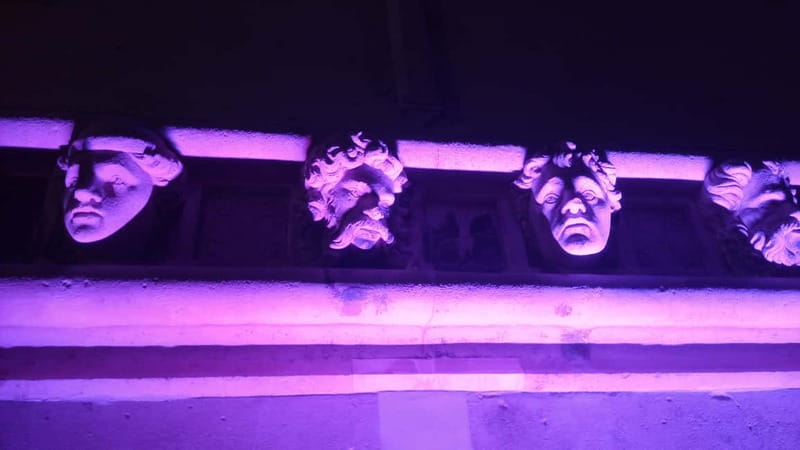
If you want to study the cathedral’s carvings, structure, or interior properly, return during the day. This walk gives you a strong introduction, but its value is in atmosphere and explanation rather than close architectural inspection.
The Four Wells and medieval water supply

The medieval cistern known as the Four Wells is one of the most practical stops on the route. Water is easy to overlook when you visit an old city, yet a reliable supply was essential to survival, especially inside a fortified town.
You’ll learn what the cistern looked like inside and how water was collected. That makes the stop more than a quick photo opportunity. It shows how medieval residents solved a basic problem with systems that were hidden beneath the streets and buildings.
This is also one of the places where a guide adds real value. A cistern can look like a plain stone structure if you do not know what you are seeing. With an explanation, it becomes evidence of how the city functioned during dry periods, sieges, and everyday life.
The stop is brief, as part of a one-hour route, but it gives the tour a welcome practical side. The cathedral tells you about civic pride. The cistern tells you how people actually lived.
More old town history walks in Sibenik:
- Private Sibenik Walking Historical Morning or Evening Tour
★ 5.0 · 93 reviews - Sibenik Private Combined Food & Drink and Historical Tour
★ 5.0 · 36 reviews - Sibenik: Stunning views, History & Tasting – Croatia in day
★ 4.9 · 9 reviews - Daily or night walking tour through Medieval Šibenik
★ 4.5 · 6 reviews
The oldest street and Šibenik’s steep lanes
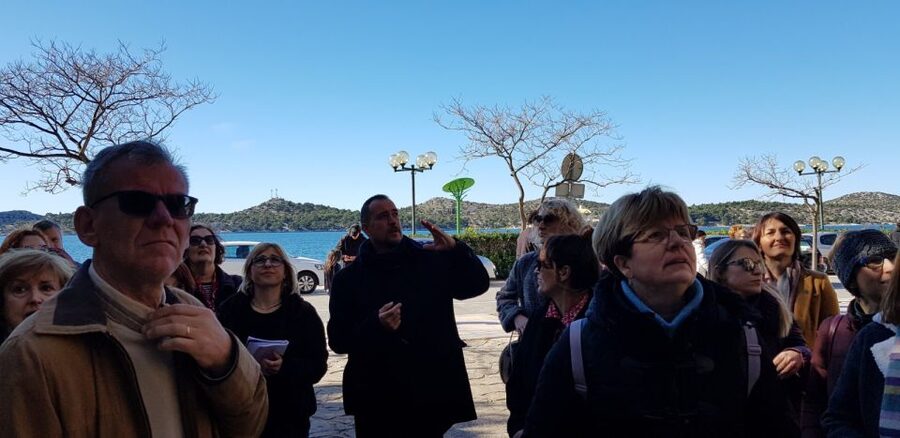
The walk continues through what is described as the oldest street in the city. Along the way, you’ll encounter narrow lanes and a multitude of stairs. This is where Šibenik feels most medieval, not because every building looks untouched, but because the street plan still demands that you move slowly and follow the contours of the hill.
The route also explains how houses were built inside the old city core. That subject helps you read the town more carefully. Tight lanes, covered passages, and houses pressed close together were not simply picturesque choices. They reflected limited space, defense, and the need to fit daily life into a compact center.
You may find the stairs tiring if you are not used to walking on uneven historic streets. The activity lasts only an hour, but the route is not a flat promenade. Comfortable shoes are a sensible choice, and you should be ready for frequent changes in direction.
For many people, this physical movement is part of the appeal. You are not just looking at a historic center from the edge. You are moving through its cramped passages and seeing how the city’s shape affects the way you walk.
St. Lawrence Monastery and the old town cave
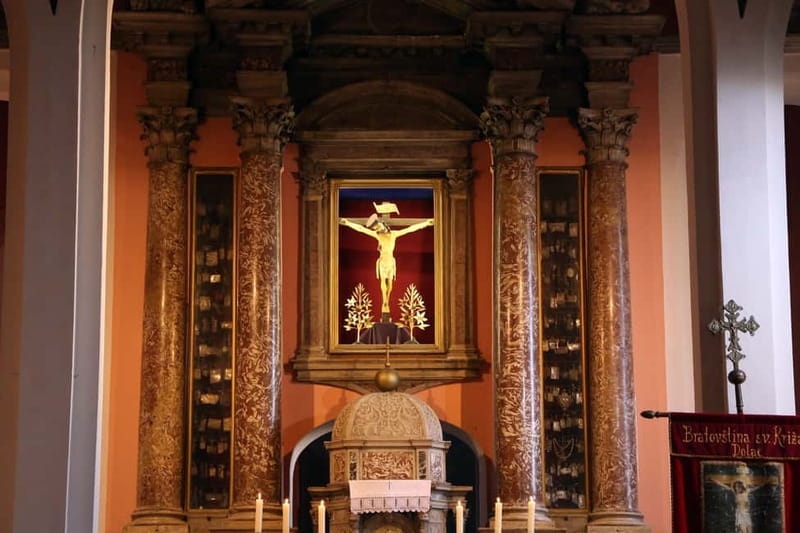
Near the Monastery of St. Lawrence, the tour visits a cave in the old town. That is an unusual feature for a city walk, especially because it appears so close to a religious complex and ordinary urban streets.
The stop adds variety to the route. You move from the cathedral’s public square to a water system, then into older lanes and a cave beside the monastery. The city begins to feel less like a collection of famous monuments and more like a place with layers of practical, religious, and private spaces.
The monastery itself is part of the story, including the nuns who prayed for the city in darkened monasteries. That detail gives you a glimpse of a side of medieval Šibenik that is easy to miss if you focus only on fortifications and grand stone buildings.
If you return in daylight, the medieval gardens at St. Lawrence are worth adding to your plan. The night walk helps you locate the monastery and understand its place in the old center, while a daytime visit should give you a better look at its setting.
The Pillar of Shame, fairs, and city rules
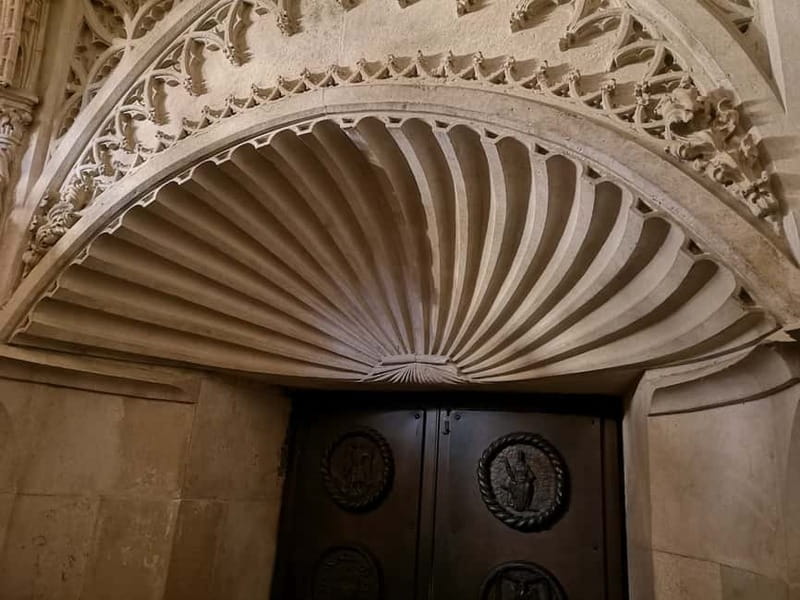
The tour moves beyond architecture into medieval behavior and punishment. You’ll see where the Pillar of Shame once stood and hear about the people who cheated at the medieval fair.
These stories are useful because they show how authorities tried to control public life. A market was not just a place to buy goods. It was also a place where disputes, fraud, and public punishment could affect the reputation of an entire community.
The guide also points out the medieval sign of the Šibenik subway. The name may sound modern, but the subject is part of the city’s network of passages and covered routes. In a compact, steep town, underground or partly hidden ways could serve practical purposes that are easy to miss from the main street.
This section should appeal to you if you prefer social history to a simple list of dates. The tour asks what people did, feared, and endured, not just which ruler ordered a building.
Plague, weddings, bells, and local customs
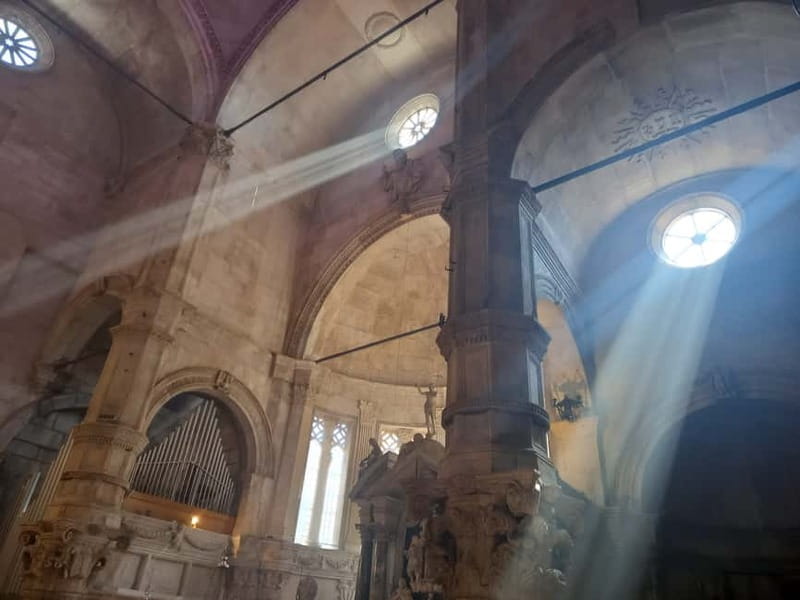
Šibenik’s past was not only grand construction and religious ceremony. The walk covers the plague that almost destroyed the city in 1649, a reminder of how quickly disease could change urban life.
You’ll also hear why there are no weddings in Šibenik during May. The supplied information does not give the reason in advance, which is part of the fun of hearing the explanation on the route. It is a distinctly local question, and one that gives the tour a more personal feel than standard monument commentary.
The December 17 bell tradition adds another calendar story. Learning why all 72 bells rang at midnight gives you a sense of how sound helped mark important moments before modern communications.
These details are especially helpful if you plan to spend more than one day in Šibenik. They give you small questions to carry into later walks, church visits, and conversations with local people.
The first doctor’s chapel and the city’s crafts
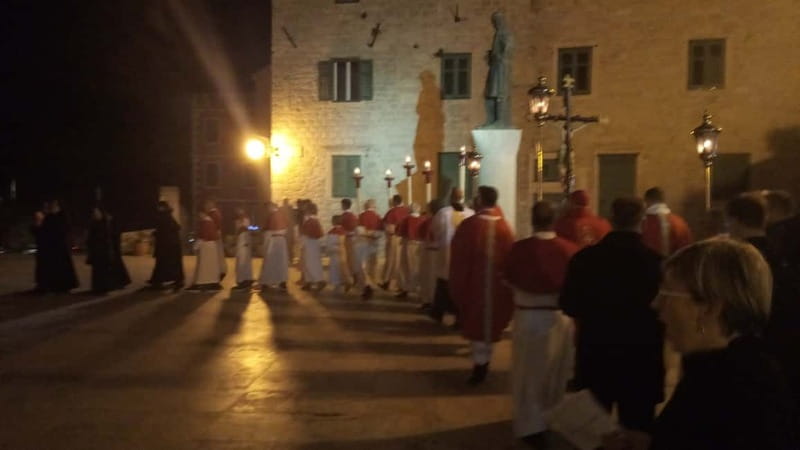
The route includes the chapel of Šibenik’s first doctor, dating from 1419. This is the kind of modest historical reference that can easily disappear beside a major cathedral, but it widens the picture of medieval city life.
Medicine, religion, trade, and craft all had a place in the old center. The tour also touches on the town’s crafts, helping you understand that Šibenik was not built only by famous architects and church officials. It depended on working people who made, repaired, traded, and maintained the city.
You’ll also see the Church of St. John and the reliefs on it. Here, the guide can help you distinguish decorative detail from historical evidence. If you return by day, you can take more time with the reliefs and look closely at the stonework.
The route’s strength is its range. In a single hour, it moves from major architecture to water supply, punishment, medicine, craft, and religious life. The drawback is that each topic receives only a short treatment, so you may leave with several subjects worth exploring further.
The first public lighting lamp from 1895
The tour ends its historical arc with Šibenik’s first public lighting lamp from 1895. It is an effective detail for a night walk because it connects medieval darkness with the arrival of modern public lighting.
Earlier in the route, you hear how the medieval streets were not lit. By the end, you are looking at a physical reminder of a city beginning to change after centuries of darkness. The lamp gives the walk a clear sense of time passing without needing a long lecture.
This is also a good example of why the evening timing matters. In daylight, you might walk past the lamp without giving it much thought. At night, with the question of visibility already part of the tour, it becomes more meaningful.
The city’s transition from medieval passageways to public lighting forms a neat thread through the experience. You start by imagining Šibenik without lamps and finish with one of the early signs of a modern town.
Guide Dario and the pace of the walk
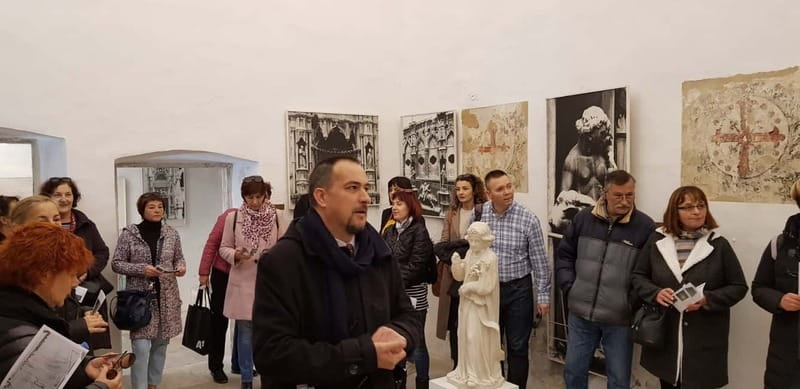
Dario Mikulandra is the named guide for this experience and the owner of Magnificat. He leads in English, Croatian, and Serbo-Croatian. His approach is described as enthusiastic, authentic, humorous, and deeply focused on Šibenik and the surrounding area.
That matters on a route with many small stops. A guide who can answer questions and connect separate stories makes the city easier to understand. Dario’s English is described as strong, so English-speaking visitors should be able to follow the historical explanations comfortably.
The walk is also suitable for families. A family with two young children enjoyed the combination of stories, streets, and sights, which suggests that the tour is not aimed only at architecture specialists. The cave, bells, secretive passages, and Pillar of Shame should give children something concrete to remember.
Still, the route has a lot packed into one hour. If you like long pauses for photographs or detailed discussion at each stop, you may find the pace brisk. If you want an evening orientation before exploring alone, the timing works well.
Is $49 a fair price for one hour?
At $49 per person, this is not the cheapest way to walk through Šibenik. The price makes more sense if you value a private-feeling historical introduction, a trained local guide, and access to stories you would probably miss while wandering alone.
You receive the guided night walk, city maps, and brochures in your own language. The activity does not add church or museum entry fees, but that is because the night route does not focus on interior visits. Factor in a separate daytime visit if entering St. James Cathedral or the city museum is important to you.
I see the strongest value in the guide rather than the number of sights. The tour covers many points, but most are viewed from the streets or explained through storytelling. You are paying for context, local details, and a carefully chosen route through the old center.
The 24-hour free cancellation policy and reserve-now, pay-later option also make it easy to fit into a flexible Dalmatian itinerary. Starting times vary, so check availability before planning dinner or another evening activity.
Who should book this Šibenik night tour?
I would choose this tour if you are staying in Šibenik and want to understand the old center before exploring it on your own. It suits first-time visitors, history fans, families, and anyone who prefers local stories to a formal lecture.
It is also a good choice during hot weather. One guide-led walk took place in the evening specifically to avoid the daytime heat, and that timing lets you explore the stone streets when the sun is no longer pressing down on them.
You may want to skip it if your priority is entering churches, museums, or the cathedral. You should also think twice if stairs and uneven old streets are difficult for you. The route is short, but the physical setting is not gentle.
For a fuller visit, pair the tour with a daytime return to St. James Cathedral, St. Lawrence’s medieval gardens, and the city museum. The night walk can give you the background, then your daylight visit can supply the close architectural look.
Should you book the Medieval Night Walking Tour?
Book it if you want a compact, story-filled introduction to Šibenik, especially with Dario Mikulandra leading in English. The best parts are the Four Wells cistern, the cave beside St. Lawrence Monastery, the old lanes and stairs, and the local stories about bells, plague, fairs, and public punishment.
At $49, the tour is best value for people who want interpretation rather than admission tickets. It will not replace a full cathedral visit or a museum afternoon, but it can make both more meaningful.
I would schedule it early in your stay, then return to the places that catch your interest. That is the smart way to use one atmospheric hour in Šibenik.
FAQ
How long does the Šibenik Medieval Night Walking Tour last?
The tour lasts one hour. Starting times vary, so check availability when booking.
Where does the tour begin?
It begins at the main entrance portal of St. James Cathedral, facing west. Meet at the portal opposite the statue of Juraj Dalmatinac, not at the cathedral doors with the lions.
Where does the tour end?
The activity ends back at the cathedral meeting point.
Which languages are available?
The live guide speaks English, Croatian, and Serbo-Croatian.
Does the tour include entry to churches or museums?
No. This is an outdoor night walk, and church and museum entrance fees are not included. The route includes the cathedral square and stories about St. James Cathedral, along with other historic sites.
Can I cancel or pay later?
You can cancel up to 24 hours in advance for a full refund. The reserve-now, pay-later option lets you book without paying immediately.
More Evening Experiences in Sibenik
- Sunset Sea Private Kayaking in Vodice
★ 5.0 · 11 reviews - Kayaking Sunset Tour
★ 5.0 · 4 reviews - Split: Illuminated Evening Guided Kayaking Tour
★ 4.8 · 1,622 reviews - Split: Stand Up Paddleboard Night Glow Tour
★ 4.9 · 916 reviews
Just added around Sibenik
- Kayaking & Zipline Šibenik – Čikola Canyon★ 5.0 · 3 reviews
- Krka National Park & Zipline Šibenik – Čikola Canyon★ 5.0 · 3 reviews
- Zipline Šibenik★ 5.0 · 3 reviews
- Panorama Tour – Eco City Tour Šibenik★ 4.5 · 4 reviews
- Panorama & Wine tour – Eco City Tour Šibenik★ 5.0 · 4 reviews
- Kayaking Sunset Tour★ 5.0 · 4 reviews
- Private tour Sibenik full day★ 5.0 · 5 reviews
- From Sibenik: Private Skradinski buk waterfall in Krka NP★ 5.0 · 5 reviews
Old Town & History Tours, compared.


Walking Tour of Split with a ‘Magister’ of History
Read our review →

Diocletian Palace & Old Town Guided Walking Tour
Read our review →

Diocletian’s Palace and Old Town SMALL GROUP Walking Tour
Read our review →

Split History and Gastro Small-Group Tour with Food and Drinks
Read our review →Browse the lists this tour appears in