
Reviewed · OLD TOWN & HISTORY TOURS
Daily or night walking tour through Medieval Šibenik
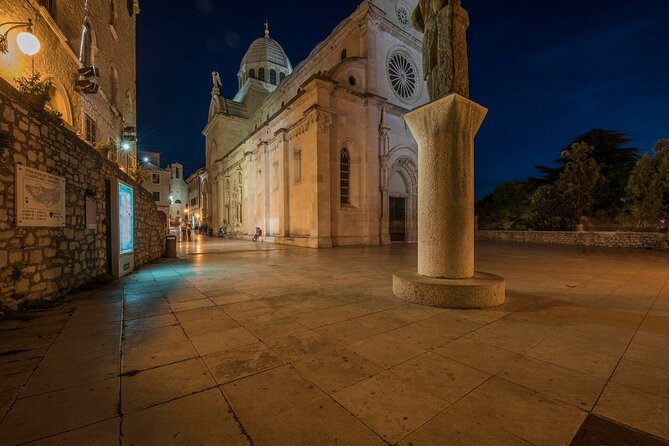
Šibenik’s old town is made for slow walking, with stone stairs, narrow passages, odd little openings, and grand churches packed into a compact hilltop center. This 90-minute tour, led by Dario Mikulandra, brings those details together, from the UNESCO-listed Cathedral of St. James to an underground water cistern built during the Middle Ages.
I like the way the tour connects beautiful buildings to practical problems. You learn not only how a cathedral was built, but also how people stored water, measured goods, marked Christmas, and lived with religious brotherhoods. I also like the small group limit of 10 people, which should make it easier to hear Dario and ask questions.
The main consideration is its strong focus on religious buildings and church history. One review found the tour more religious than expected, so if you want a broad look at medieval military history or modern Šibenik, you may find the balance a little narrow.
In This Review
- Key Points of the Šibenik Walking Tour
- Starting at the Cathedral of St. James
- St. Barbara and a Doctor’s Medieval Vow
- Four Wells and the Underground Cistern
- St. John the Baptist and Its Curious Details
- St. Francis, the Šibenik Prayer, and the Vrančić Palace
- The Church of the Holy Spirit and Medieval Brotherhoods
- Medulić Square and the Problem of Measuring Goods
- Day Walk or Evening Tour?
- What the $29.79 Price Gets You
- Who Should Book This Walk?
- Final Verdict: A Strong Introduction to Medieval Šibenik
- FAQ
- How long does the Medieval Šibenik walking tour last?
- Where does the tour begin?
- Where does the tour end?
- Is the tour offered in English?
- Can I take the tour during the day or at night?
- How many people can join the tour?
- What major landmark is included?
- Are admission tickets included at the stops?
- What is the cancellation policy?
Key Points of the Šibenik Walking Tour
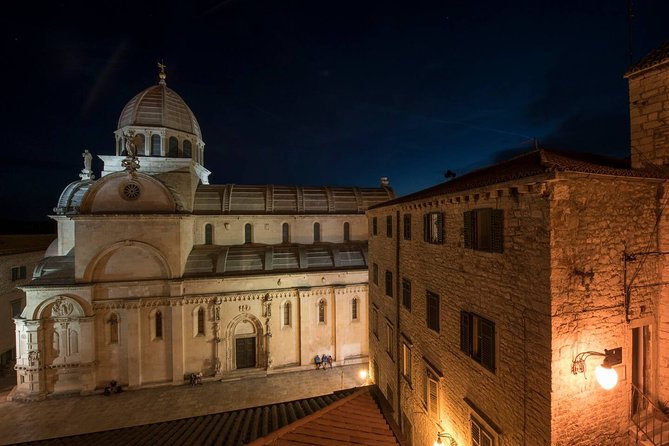
- Juraj Dalmatinac’s cathedral: Spend about 30 minutes examining the 15th and 16th-century masterpiece, its construction methods, sculpted heads, shells, and hidden signature.
- A medieval water system: Visit the Square of the Four Wells and see the old cistern, its filtration system, and the openings used to draw water.
- Day or night departures: Choose a daytime or evening walk through the old center, with the same core sights and stories.
- Small-group format: The tour accepts no more than 10 people, a useful size for narrow lanes and detailed explanations.
- Churches beyond the cathedral: See St. Barbara, St. John the Baptist, St. Francis, and the Church of the Holy Spirit.
- Odd details with real purpose: Look for medieval measuring units, a Turkish clock with one hand, iron hoops, a Renaissance fruit-and-vegetable relief, and a stone bowl for dogs.
Starting at the Cathedral of St. James
The Cathedral of St. James is the heart of this walk. You meet at Ul. Biskupa Fosca 9 and return there at the end, so the route is simple to join and easy to fit into a day of exploring Šibenik.
Allow about 30 minutes for the cathedral. That is enough time to get a clear explanation of its construction without turning the entire walk into a single-site lecture. Dario explains what came before the cathedral, how its design developed, and why 105 years of work was a normal, if lengthy, undertaking for a medieval church of this scale.
The cathedral was built entirely of stone and combines Gothic and Renaissance ideas. Its place on the UNESCO World Heritage List is important, but the tour does more than attach a famous label to the building. You learn how the structure was planned and built, and how theology shaped the arrangement of medieval churches.
I particularly like the promise of details that are easy to miss on your own. You hear why the cathedral contains so many shells and sculpted heads, why the presbytery was decorated with fruit and vegetables, and where to find Juraj Dalmatinac’s hidden signature.
Juraj Dalmatinac, the celebrated Šibenik builder associated with the cathedral, becomes one of the walk’s central characters. The guide uses the building to show how medieval craftsmen solved problems with stone, geometry, and design. That makes the cathedral more than a backdrop for photographs. You start to see it as a record of the people who designed, funded, carved, and argued over it.
If architecture interests you, this is likely the strongest section of the tour. If you prefer social history, listen for the explanations of religious symbolism and civic life, then ask Dario to connect those ideas to ordinary people in medieval Šibenik.
More Walking Tours in Sibenik
- Sibenik: Guided Evening Walking Tour
★ 4.9 · 62 reviews - Šibenik: Medieval Night Walking Tour
★ 5.0 · 19 reviews - The Best of Sibenik Private Walking Tour
★ 5.0 · 13 reviews
St. Barbara and a Doctor’s Medieval Vow
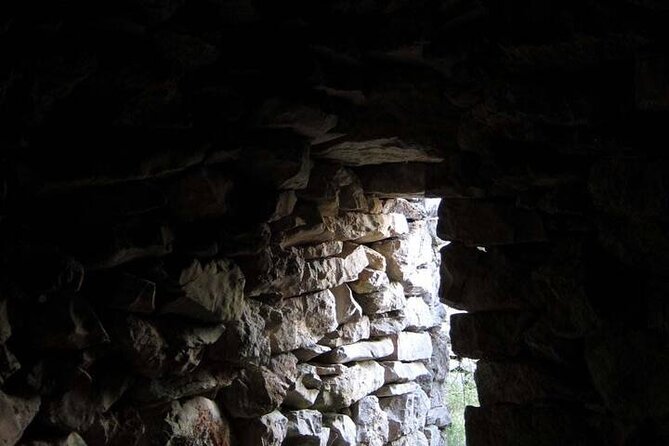
A short walk brings you to the Church of St. Barbara, a single-nave Gothic church begun around 1400. The visit lasts about 10 minutes, so expect a focused look rather than a long interior tour.
Above the main entrance is a Gothic niche containing a sculpture of St. Nicholas by Bonino of Milan. On the north wall, a Gothic window includes a sculpted work made in 1419 as a vow by the Šibenik doctor Marko.
That relief is an unusual detail. It is described as a rare medieval depiction of physicians on the eastern Adriatic coast, giving the church a connection to medicine as well as worship. This is the kind of stop that benefits from a guide because the relevant clue is easy to overlook.
The church also helps show how closely Šibenik was tied to wider Adriatic and Italian artistic circles. Bonino came from Milan, while local craftsmen and patrons shaped the building to fit the city’s needs. In a few minutes, you get a small but useful picture of medieval Šibenik as a working port and regional center.
Four Wells and the Underground Cistern
The Square of the Four Wells is only a short distance from the cathedral, but its story shifts from sacred architecture to survival. Beneath the square lies a public cistern built in the 15th century, when drought and military sieges made a reliable water supply essential.
The construction contract was signed in 1446, and Juraj Dalmatinac supervised the work. The cistern could hold 28,000 barrels of water. A special tax helped pay for it, a reminder that public works in medieval cities often depended on direct contributions from residents.
The surface has four wells where water could be pumped. Below, you can see the cistern, the water filtration system, and the four openings, or crowns, through which fresh water was drawn. There is also a cafe and wine bar inside the restored complex.
This is one of the tour’s most useful stops because it explains how a city functioned beyond its monuments. A cathedral tells you about faith, wealth, and craft. A cistern tells you what happened when the rains failed or an army threatened the gates.
The stop lasts about 15 minutes. The underground setting may be especially appealing on an evening tour, but keep in mind that the walk as a whole includes old stone steps and uneven passages. One highly positive account specifically praised Dario’s patience with slower movement on the stairs, which is worth noting if you need to take your time.
St. John the Baptist and Its Curious Details
The Church of St. John the Baptist is a Gothic-Renaissance building from the 15th century. The tour spends around 10 minutes here, focusing on details that reward close looking.
The staircase along the south side was made by Šibenik builder Ivan Pribislavić and decorated with bas-relief. At the foot of the bell tower is a Renaissance window by Nicholas of Florence. Above it, a relief shows a lamb beneath a winged angel.
Another window, made by Nikola Firentinac, is decorated with fruit and vegetables. That motif links back to the cathedral and helps you notice how religious buildings could include familiar objects from daily life.
The bell tower contains a Turkish clock with one hand. It was brought from Drniš after the Turks left the area in the 18th century. The clock is not just an antique curiosity. It points to the shifting political and cultural connections of the region.
On the church’s north wall, Dario points out mysterious iron hoops and explains their function from the early 17th century. The information provided for the tour does not spell out the answer in advance, which is part of the fun. You get a small historical puzzle rather than another standard church facade.
More old town history walks in Sibenik:
- Private Sibenik Walking Historical Morning or Evening Tour
★ 5.0 · 93 reviews - Sibenik Private Combined Food & Drink and Historical Tour
★ 5.0 · 36 reviews - Sibenik: Stunning views, History & Tasting – Croatia in day
★ 4.9 · 9 reviews - Split: Old Town and Diocletian Palace Walking Tour
★ 4.9 · 4,727 reviews
St. Francis, the Šibenik Prayer, and the Vrančić Palace

The Church of St. Francis sits at the southeastern edge of the historic center. Built in the second half of the 14th century, it is a spacious single-nave Gothic church with restrained decoration.
The main entrance has a Gothic stone frame. Inside the Chapel of the Holy Cross are organs made in 1762 by Petar Nakić, a noted instrument builder. The adjoining Franciscan monastery dates from the 14th century and contains a library with 151 incunabula and a collection of handwritten codices.
The library also preserves the Šibenik Prayer, an early Croatian linguistic and literary monument written in Latin around 1375. This gives the stop an important cultural angle. The tour is not only about stonework and saints. It also touches language, books, education, and the preservation of ideas.
Next to the monastery are remains of the eastern city walls and the Vrančić Palace. Antun and Faust Vrančić were born there. The supplied information does not promise an interior visit, so expect to see the site and hear its connection to the family rather than tour a large palace collection.
This portion of the walk is valuable for anyone who wants more than the cathedral. It adds a quieter layer to Šibenik, one tied to Franciscan learning and the old defensive edge of the city.
The Church of the Holy Spirit and Medieval Brotherhoods
The Church of the Holy Spirit was built in the 17th century to a design by Antun Nogulović. It sits on Dinko Zavorović Square, close to two other churches connected with three of the city’s most important medieval brotherhoods.
The stop lasts about five minutes, but the subject is bigger than the church itself. Dario explains who these brotherhoods were and what they did in society. In medieval cities, such groups could shape religious practice, mutual support, and civic life.
You also hear about the local custom called celebration. On the night of December 17 to 18, the bells of Šibenik’s churches rang to announce the arrival of Christmas. This kind of detail brings a calendar and a soundscape to the old town. You are no longer looking only at buildings. You are picturing how the streets might have felt during a major religious occasion.
The church is a brief stop, so it will not satisfy anyone seeking a full architectural examination. Its value is in the social story and in the way it links several nearby religious sites.
Medulić Square and the Problem of Measuring Goods
At Medulić Square, the tour turns toward commerce. In the Middle Ages, this was the site of a small trading lodge. Dario uses the simple problem of measuring a meter to explain why trade was not always simple.
Different cities and authorities could use different units, making buying and selling harder to regulate. On the wall of the palace at Medulić Square are official measuring units connected with the Venetian Republic and Šibenik.
This is an excellent practical history stop. You can look at a wall and understand a problem that affected merchants, customers, taxes, and trust. It also reflects Šibenik’s relationship with Venice without requiring a long political lecture.
Nearby, at Divnić Palace, you see a copy of a lamp associated with 1895, when Šibenik became the first city in Europe to receive alternating electricity and lighting from the hydroelectric plant on the Krka River. The experience therefore moves beyond the Middle Ages for a moment, showing how the old city entered the modern age.
A few steps away is a stone pet bowl marked Amor D. Cani. It is a small, human detail, and exactly the kind of object that many people would pass without noticing. I like that the tour gives these minor features equal attention. They make the city feel lived in rather than arranged only for sightseeing.
Day Walk or Evening Tour?
You can take the walk during the day or at night. The daytime option should make carved stone, wall reliefs, windows, and measuring marks easier to examine. Choose it if architecture and small visual details are your main reason for booking.
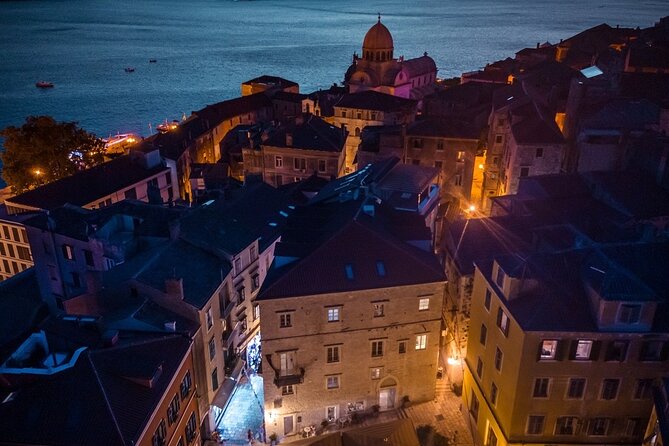
An evening outing changes the mood. Narrow lanes, church facades, stone steps, and underground spaces can feel more atmospheric after dark. One especially strong account praised the evening route for making the town and the mindset of people 500 years ago feel immediate.
The route is about 90 minutes, which is long enough for real context but short enough to combine with your own wandering. The pace includes several stairways and old passages, so comfortable shoes and a willingness to move carefully are sensible. The walk begins and ends at the same meeting point.
The tour is offered in English. Confirmation arrives when you book, and service animals are allowed. Most people can participate, though the stone steps and narrow passages are worth considering if walking is difficult.
What the $29.79 Price Gets You
At $29.79 per person, this is not the cheapest way to spend an hour and a half in Šibenik, but the value depends on how much context you want. The route covers a UNESCO cathedral, five additional church or religious sites, a medieval cistern, old city defenses, trading measures, and a story about early electric lighting.
You are paying mainly for interpretation, not entrance tickets. Admission is listed as free at the main stops, so the guide’s explanations are the central product. That makes the tour a good buy if you want to understand what you are seeing rather than simply collect exterior photographs.
The small-group limit helps justify the price. With no more than 10 people, Dario can point out details in tight spaces and respond to questions. The strongest praise centers on his enthusiasm, patience, and ability to explain both the town and cathedral in detail.
The balance is less ideal if your interest is strictly secular medieval history. Much of the route concerns churches, Christian symbols, religious brotherhoods, and the role of faith in city life. You should book with that in mind.
Who Should Book This Walk?
I would recommend it to you if you enjoy architecture, old stone cities, religious art, and the practical mechanics of medieval life. It is also a smart first activity in Šibenik because it gives you a map of the old center and points out places worth revisiting on your own.
History-minded visitors should get the most from Dario’s explanations of Juraj Dalmatinac, construction methods, medieval measurements, water storage, and civic customs. The tour also suits anyone who likes small clues: a signature hidden in stone, a one-handed clock, iron hoops, a dog bowl, or a relief honoring a doctor.
You may want another kind of tour if you are looking mainly for food, nightlife, coastal scenery, or military fortresses. This experience stays within the historic center and gives church architecture a large share of the time.
The rating is 4.7 from six ratings, and the praise is consistent about Dario’s preparation, enthusiasm, and storytelling. One lower score focused not on poor guiding, but on wanting more secular medieval history. That is a useful distinction.
Final Verdict: A Strong Introduction to Medieval Šibenik
Book this tour if you want Šibenik explained through its buildings, symbols, water supply, trade, and religious life. The cathedral alone is worth careful attention, but the Four Wells cistern and the small details around St. John, Medulić Square, and the Franciscan complex give the walk its real character.
Choose the evening option for atmosphere, or the daytime walk for easier viewing of stone carvings and windows. At $29.79, it offers good value for a compact, small-group introduction, provided you are comfortable with a church-heavy route and old stone steps.
Free cancellation is available if you cancel at least 24 hours before the start time. Changes or cancellations within 24 hours are not accepted for a refund.
FAQ
How long does the Medieval Šibenik walking tour last?
The tour lasts approximately 1 hour and 30 minutes.
Where does the tour begin?
The meeting point is Ul. Biskupa Fosca 9, 22000, Šibenik, Croatia.
Where does the tour end?
The activity ends back at the meeting point.
Is the tour offered in English?
Yes. English is the available tour language.
Can I take the tour during the day or at night?
Yes. The experience is offered as either a daytime or nighttime walking tour.
How many people can join the tour?
The group has a maximum of 10 participants.
What major landmark is included?
The route includes the Cathedral of St. James in Šibenik, a UNESCO World Heritage Site.
Are admission tickets included at the stops?
The listed stops have free admission tickets.
What is the cancellation policy?
You can cancel at least 24 hours before the start time for a full refund. Cancellations or changes made less than 24 hours before the start time are not accepted for a refund.
More Evening Experiences in Sibenik
- Sunset Sea Private Kayaking in Vodice
★ 5.0 · 11 reviews - Kayaking Sunset Tour
★ 5.0 · 4 reviews - Split: Illuminated Evening Guided Kayaking Tour
★ 4.8 · 1,622 reviews - Split: Stand Up Paddleboard Night Glow Tour
★ 4.9 · 916 reviews
Just added around Sibenik
- Kayaking & Zipline Šibenik – Čikola Canyon★ 5.0 · 3 reviews
- Krka National Park & Zipline Šibenik – Čikola Canyon★ 5.0 · 3 reviews
- Zipline Šibenik★ 5.0 · 3 reviews
- Panorama Tour – Eco City Tour Šibenik★ 4.5 · 4 reviews
- Panorama & Wine tour – Eco City Tour Šibenik★ 5.0 · 4 reviews
- Kayaking Sunset Tour★ 5.0 · 4 reviews
- Private tour Sibenik full day★ 5.0 · 5 reviews
- From Sibenik: Private Skradinski buk waterfall in Krka NP★ 5.0 · 5 reviews
Old Town & History Tours, compared.


Walking Tour of Split with a ‘Magister’ of History
Read our review →

Diocletian Palace & Old Town Guided Walking Tour
Read our review →

Diocletian’s Palace and Old Town SMALL GROUP Walking Tour
Read our review →

Split History and Gastro Small-Group Tour with Food and Drinks
Read our review →Browse the lists this tour appears in