
Reviewed · OLD TOWN & HISTORY TOURS
Private History Split Walking Tour in English
Split’s Old Town is not just a collection of pretty stone lanes. It is a living Roman palace, with cafés in ancient rooms and daily life threaded through imperial walls. This private tour gives you a clear route through that unusual setting, from the Peristyle to the Riva waterfront, while an English-speaking guide explains how Emperor Diocletian shaped the city.
I like the private format, since you can ask questions and keep the pace suited to your group. I also like the mix of major sights and smaller stops, especially the 16th-century synagogue and Fruit’s Square, which add layers beyond the Roman story. The main drawback is the short 90-minute length: you get a useful orientation, but not a slow, detailed visit to every site.
In This Review
- Key points at a glance
- Why Split’s palace makes this walk different
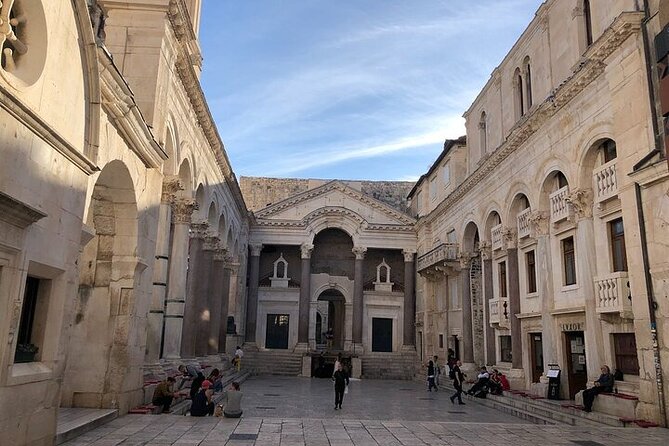
- Starting at the Peristyle of Diocletian’s Palace
- The Vestibule and the sound of Dalmatia
- What the palace substructures reveal
- The Golden Gate and Gregory of Nin
- Riva Harbor and Split’s waterfront life
- Fruit’s Square and Marko Marulić
- Passing Split’s historic synagogue
- How the 90-minute pace works
- Guide style and the private advantage
- Is $66.54 per person good value?
- Practical details before you reserve
- Who should book this Split walk?
- Should you book the Private History Split Walking Tour?
- FAQ
- How long is the Private History Split Walking Tour?
- What language is the tour offered in?
- Is this a private tour?
- Where does the tour start and finish?
- Is admission to the substructures museum included?
- Does the tour visit the Split Synagogue?
- Is the tour suitable for people with mobility concerns?
Key points at a glance
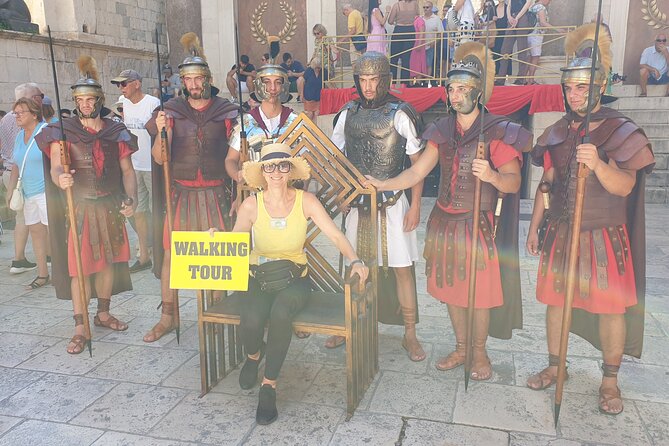
- Roman palace as a living neighborhood: Walk through the Peristyle, Vestibule, Golden Gate, and substructures while people carry on ordinary city life around you.
- Private English-speaking guide: Your group receives a more personal tour than a large shared walk, with room for questions and tailored explanations.
- Seven focused stops: The route adds Riva, Fruit’s Square, and Split’s synagogue to the main Diocletian sights.
- Substructures museum not included: You pass through the palace foundations, but the museum section requires a separate ticket and can be visited afterward.
- Strong focus on explanation: The tour covers architecture, Emperor Diocletian, Croatian language, Venetian rule, and Split’s Jewish community.
- Good first-day activity: At about 90 minutes, it helps you understand the Old Town before exploring on your own.
Why Split’s palace makes this walk different
Many European old towns preserve a Roman monument behind a fence. Split took a different path. Diocletian’s Palace became the core of the modern city, so you walk through ancient gates and courtyards while shops, homes, cafés, and streets continue around you.
That makes a guided walk especially useful. Without context, the palace can look like a maze of pale stone, narrow passages, and later buildings. A good guide shows you the Roman plan beneath the medieval and Venetian changes. You begin to see why the Peristyle mattered, how the palace was entered, and why the underground rooms survived.
This is not a museum-heavy tour. It is a brisk outdoor introduction with several short stops. You spend about 15 minutes at the Peristyle, then move through the Vestibule, substructures, Golden Gate, Riva, Fruit’s Square, and the synagogue area. The route covers a lot, so expect explanation and orientation rather than long periods for photographs or independent inspection.
The private setup changes the feel. Your group is the only group on the activity, and the guide can respond to your interests. If you care about Roman engineering, Croatian literature, architecture, or local religious history, you can ask for more detail in that direction.
More old town history walks in Split:
- Split: Old Town and Diocletian Palace Walking Tour
★ 4.9 · 4,727 reviews - Walking Tour of Split with a ‘Magister’ of History
★ 5.0 · 1,122 reviews - Split Walking Tour with Professor of History
★ 5.0 · 926 reviews
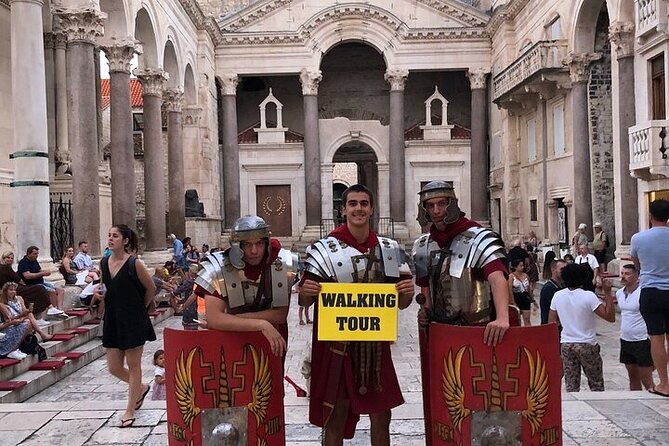
Starting at the Peristyle of Diocletian’s Palace
The meeting point is on Peristil ulica, at the Peristyle, the central square of Diocletian’s Palace. This is an efficient place to begin because many palace routes branch out from here.
Allow yourself time to find the meeting point. The address is in the old center, not at a separate modern visitor building. Once you meet the guide, the opening explanation should help you understand the palace layout and the role of the square before the walk moves on.
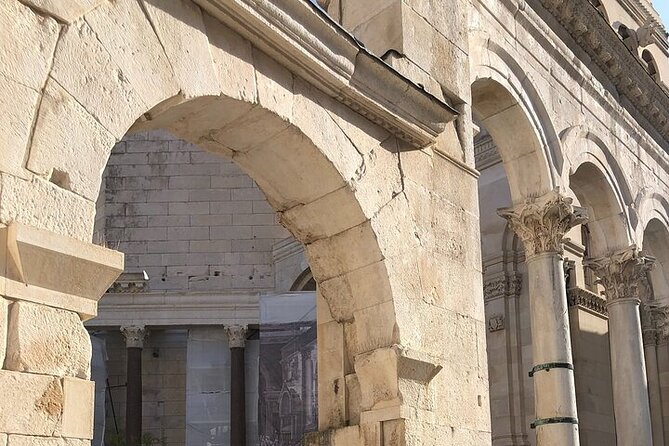
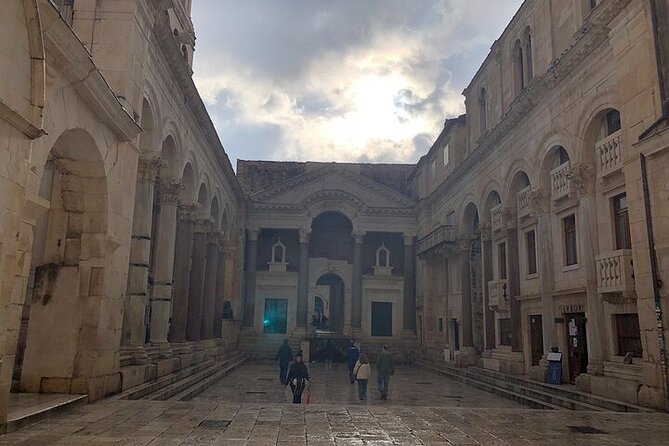
The Peristyle is the tour’s key Roman setting. It gives you a sense of scale and purpose, and it provides a visual anchor for the rest of the route. From here, you can understand how the palace connected its ceremonial, religious, residential, and service areas.
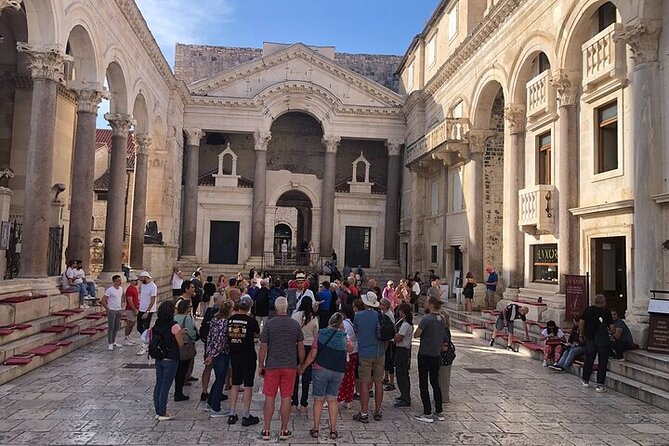
I would pay close attention to the guide’s explanation here rather than rushing to take pictures. The square is easy to admire on your own, but the value of this stop comes from learning how it fits into the palace plan and why it remains the central point of Split’s Old Town.
The Vestibule and the sound of Dalmatia
The next stop is the Vestibule, the former entrance area connected with Emperor Diocletian. The visit is brief, about five minutes, but it adds an important interior detail to the Roman story.
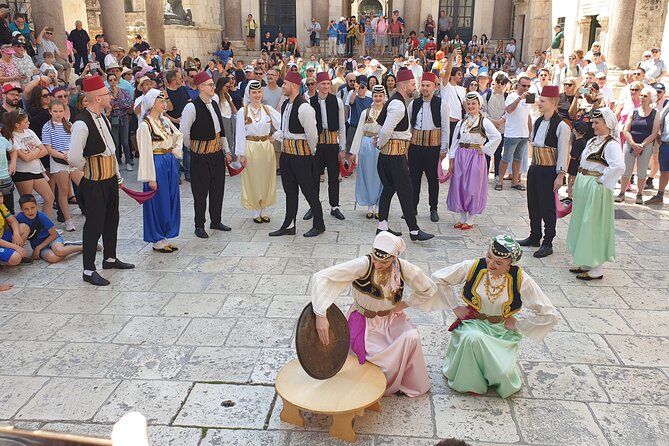
This is also the point where you might hear traditional Dalmatian singing. The information provided for the tour says this may happen, so treat it as a possible local touch rather than a guaranteed performance. If it does occur, it gives the stone architecture a human and regional connection.
The short timing means you should not expect a long musical program or an extended architectural study. Instead, the guide uses the Vestibule to explain its original purpose and place within the imperial complex.
What the palace substructures reveal
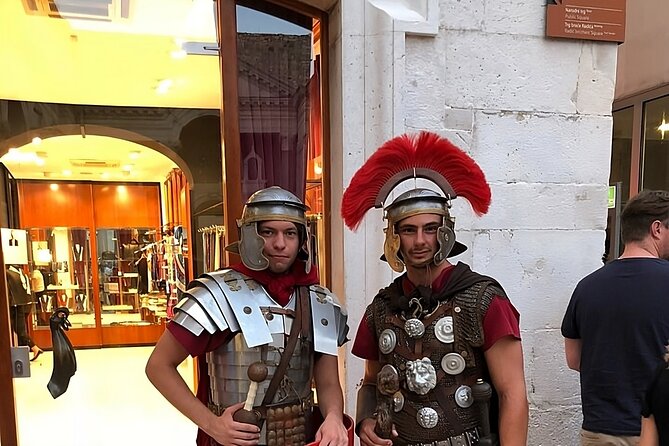
The substructures are one of the most useful parts of the walk because they show how the upper palace was supported and arranged. You pass through these lower rooms while learning about their construction and how their function changed over time.
The tour does not include the museum section of the substructures. That distinction matters. You can see and discuss the passage area during the walk, but a separate admission is needed if you want to visit the museum afterward.
I like this arrangement for a short orientation tour because it gives you the basic idea without turning the entire activity into an indoor museum visit. If Roman building methods interest you, plan extra time after the walk for the museum. If you mainly want to understand Split’s street plan and major landmarks, the included passage may be enough.
The substructures also help explain why the modern city feels so unusual. The palace is not a single untouched monument. Its lower rooms, upper walls, later buildings, and active streets form one layered place. The guide’s job here is to help you separate those layers.
More walking tours in Split:
- Walking Tour of Split and Diocletian’s Palace
★ 5.0 · 2,588 reviews - Krka Waterfalls tour with Trogir Walking tour and Krka panoramic boat cruise
★ 5.0 · 1,659 reviews - Split & Diocletian’s Palace Walking Tour
★ 5.0 · 1,125 reviews - Split: Diocletian Palace & Old Town Guided Walking Tour
★ 4.7 · 882 reviews
The Golden Gate and Gregory of Nin
The Golden Gate was the main entrance to Diocletian’s Palace, and it is one of the most recognizable points on the route. Here, the guide explains the gate and introduces the statue of Gregory of Nin.
Gregory of Nin is important to Croatian history and language, so this stop moves beyond imperial Rome. The guide connects the statue with the country’s cultural story, giving you another way to understand how Split presents its past.
This is a good example of why a private walk can be more useful than a simple landmark checklist. You are not only stopping at a gate to take a photograph. You are also hearing why the figure beside it matters and how the site connects with Croatian identity.
The visit lasts about 10 minutes. That is enough for an explanation and a look around, but you may want to return later if you want unhurried photographs or a closer look at the surrounding details.
Riva Harbor and Split’s waterfront life
The route then leaves the palace core for Riva Harbor, Split’s well-known promenade. Here, you see a bronze model of Diocletian’s Palace and learn about the waterfront’s development and role in the city.
This stop provides a welcome change of view after the enclosed lanes and stone courtyards. The model can help you picture the full palace complex, especially if the narrow streets made its size hard to grasp.
The Riva is also a useful orientation point for the rest of your stay. From here, you can better understand the relationship between the Old Town, the palace, and the harbor. The tour does not present Split as a frozen Roman site. It shows a city shaped by the palace, the sea, Venetian influence, and modern public life.
At around 15 minutes, this is one of the longer stops. You get enough time to hear the explanation and take in the setting, though the tour is still moving at a steady pace. If you want a relaxed waterfront stroll, save that for later.
Fruit’s Square and Marko Marulić
Fruit’s Square, or Trg Brace Radic, adds a Venetian chapter to the walk. The guide points out a 15th-century Venetian citadel and explains the importance of Marko Marulić, often described as the father of Croatian literature.
This is a valuable change of subject. The tour begins with an emperor and Roman architecture, then moves into language, literature, and later political influence. You get a better sense of Split as a city shaped by many periods rather than one grand ancient monument.
The stop lasts about 10 minutes. It is long enough for a focused explanation, but the name Fruit’s Square can invite extra questions. Ask if you want help understanding how the square’s present name relates to its earlier role. The private format makes that sort of question easy.
I especially like this stop for people who have already seen the palace’s main Roman features elsewhere. It offers something less obvious and gives you a reason to look at the city’s public spaces with more attention.
Passing Split’s historic synagogue
The final listed stop is the Split Synagogue, where you pass by the 16th-century building and learn about the history of the Jewish community in the city.
The tour does not promise an interior visit. Admission is not included, and the route description presents this as a pass-by stop. Keep your expectations clear: this is an introduction to the site and its place in Split’s story, not a full synagogue tour.
That limitation is still worthwhile. Religious history is often left out of a quick walk through an old city, yet it can tell you a great deal about trade, settlement, tolerance, and change. Here, the guide adds a smaller but important part of Split’s past to the better-known Roman and Venetian material.
Because this is the last stop, it also gives the tour a broader finish. You have moved from the palace center through the waterfront and later urban quarters, ending with a reminder that Split’s identity includes many communities and periods.
How the 90-minute pace works
Ninety minutes is enough to get your bearings, but you should not expect a full day of sightseeing. The listed stop times add up to roughly 75 minutes, leaving the rest for walking between locations, questions, and transitions.
That pace suits a first visit. You can learn the basic structure of the Old Town, note places you want to revisit, and then explore independently. It also works well if your schedule is tight or you are combining the walk with another Split activity.
The tradeoff is depth. The guide covers seven locations, so each subject receives a focused explanation rather than a long lesson. The tour can tell you why the substructures matter, but it does not include the full museum. It can introduce the synagogue, but it does not provide an indoor visit.
I would book this early in your stay, especially since the activity is often reserved about nine days ahead. That timing suggests you should not wait until the last minute if you want a particular date, though availability is not guaranteed.
Guide style and the private advantage
The tour is led by an educated guide with strong knowledge of the palace and surrounding sites. The supplied comments repeatedly praise clear explanations, historical detail, pleasant delivery, and useful recommendations for other things to see and do.
One named guide is Antonella, who is described as bringing the palace to life through an easy understanding of Split’s past. The experience may be led by another guide, so do not assume Antonella will conduct every departure. Still, the feedback points to the kind of guiding you should expect: detailed, friendly, and easy to follow.
A private tour is most valuable when you use it actively. Ask about the palace’s construction, the function of the lower rooms, Gregory of Nin, Croatian literature, or the Jewish community. The guide can spend more time on what interests you instead of following the needs of a large mixed group.
The private format also works well for families, couples, and small groups with different energy levels. Group discounts may be available, so check the total cost for your party rather than judging the price only per person.
Is $66.54 per person good value?
At $66.54 per person, this is not the cheapest way to see Split. You are paying for a private English-language guide and a focused route, not for admission to every attraction.
The value improves if you are sharing the activity with several people. Since only your group participates, a larger party can make the per-person price easier to justify, especially if you prefer direct questions and a set appointment.
The price is also easier to defend if you treat the tour as an orientation. A guide can help you understand where you are, explain the palace’s layers, and point out sites you might otherwise pass without noticing. That can save time during the rest of your stay.
You should budget separately for the substructures museum if you want to visit it. The tour also lists admission as not included for the synagogue stop, although the route describes passing by it rather than promising an interior entry. The main route itself includes several free outdoor stops.
With a five-star rating from 159 ratings and 99 percent of customers recommending it, the experience has a strong record. Those figures do not remove the need to match the tour with your interests, but they support choosing it for guide quality and historical explanation rather than for included admissions.
Practical details before you reserve
The tour starts and ends at the Peristyle on Peristil ulica in Split. It is near public transportation, and a mobile ticket is accepted, which keeps the arrival process simple.
Most people can take part, but the route is not recommended if you have trouble with high steps. A palace walk uses uneven historic surfaces and stairways, so wear comfortable shoes and consider your mobility before booking.
Service animals are allowed. Confirmation is provided at booking, and free cancellation is available if you cancel at least 24 hours before the local start time. Changes or cancellations inside that 24-hour window are not accepted for a refund.
The activity requires a minimum number of participants. If that minimum is not met and the company cancels, you will be offered another date or experience, or receive a full refund.
Who should book this Split walk?
I would choose this tour if you want a strong introduction to Split without committing half a day. It suits first-time visitors, couples, families, and small groups who prefer a private guide to a large shared walk.
It is also a good match if you care about more than Roman ruins. The route includes Croatian language and literature, Venetian architecture, the Riva, and Jewish history. That range gives you a more rounded picture of the city.
You may want something else if your main goal is a long museum visit, a slow photography walk, or a detailed archaeological study. The substructures museum is not included, the synagogue is presented as a pass-by stop, and the 90-minute schedule leaves little room for lingering.
Should you book the Private History Split Walking Tour?
Book it if you want a clear, personal introduction to Split and value an English-speaking guide who can explain what you are seeing. The Peristyle, Vestibule, substructures, Golden Gate, Riva, Fruit’s Square, and synagogue create a sensible route through the city’s Roman, Venetian, literary, and religious past.
The best plan is to take the walk near the beginning of your stay, then return to the substructures museum or any other site that catches your interest. At $66.54 per person, it makes the most sense for a private group that will ask questions and use the tour as a foundation for exploring Split on its own.
FAQ
How long is the Private History Split Walking Tour?
The tour lasts approximately 1 hour and 30 minutes.
What language is the tour offered in?
The tour is offered in English.
Is this a private tour?
Yes. Only your group participates in the activity.
Where does the tour start and finish?
It starts at Peristil ulica, Peristil, 21000 Split, Croatia, and ends back at the meeting point.
Is admission to the substructures museum included?
No. The tour passes through the substructures, but the museum section is not included. You can visit it separately after the tour.
Does the tour visit the Split Synagogue?
The route passes by the 16th-century synagogue and explains its history. Admission is not included, and an interior visit is not specified.
Is the tour suitable for people with mobility concerns?
Most people can participate, but the activity is not recommended for anyone who has difficulty with high steps.
Just added around Split
- Kayaking & Zipline Šibenik – Čikola Canyon★ 5.0 · 3 reviews
- Krka National Park & Zipline Šibenik – Čikola Canyon★ 5.0 · 3 reviews
- From Split: Krka National Park & Waterfalls Private Day Trip★ 5.0 · 3 reviews
- Split: Small-Group Half Day Sailing Trip★ 5.0 · 3 reviews
- Rafting River Cetina from Makarska Riviera including transfer★ 5.0 · 3 reviews
- Split and Salona Cultural Heritage Day Tour from Trogir★ 4.0 · 3 reviews
- Split Bike and Wine Experience★ 5.0 · 3 reviews
- Private transfer from Split to Dubrovnik with 2h sightseeing stop in Ston★ 5.0 · 3 reviews
Old Town & History Tours, compared.


Walking Tour of Split with a ‘Magister’ of History
Read our review →

Diocletian Palace & Old Town Guided Walking Tour
Read our review →

Diocletian’s Palace and Old Town SMALL GROUP Walking Tour
Read our review →

Split History and Gastro Small-Group Tour with Food and Drinks
Read our review →Browse the lists this tour appears in