
Reviewed · DIOCLETIAN PALACE TOURS
History & Cultural Walking Tour of Split and Diocletian’s Palace
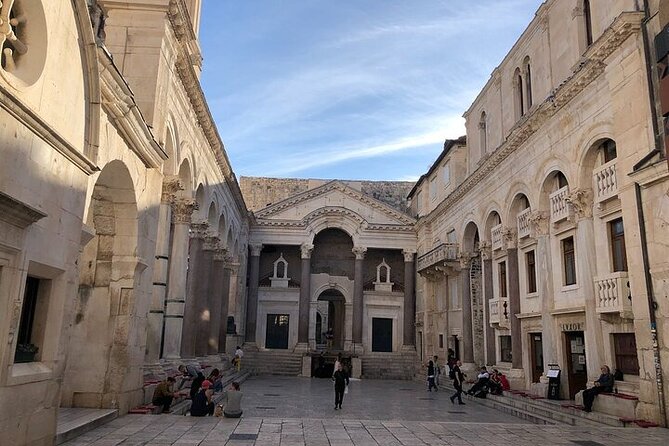
Diocletian’s Palace is not a single ruin sitting apart from modern life. It is Split’s old town, where Roman walls frame cafés, homes, shops, and narrow lanes. This 90-minute walking tour helps you read that jumble, from the emperor’s Peristyle to the Golden Gate and the lively Riva promenade.
I like the small maximum of 15 people, which gives you a better chance to hear the guide and ask questions. I also like the cultural touches, especially the possible klapa singing in the Vestibule and the stories about Gregory of Nin, Marko Marulić, and Split’s Jewish community. The main caution is the walking surface and high steps, which may trouble anyone with mobility issues. The tour also moves quickly, so the separate museum section of the Palace substructures is left for you to visit later.
In This Review
- Key points to know before you book
- Why this first walk helps you understand Split
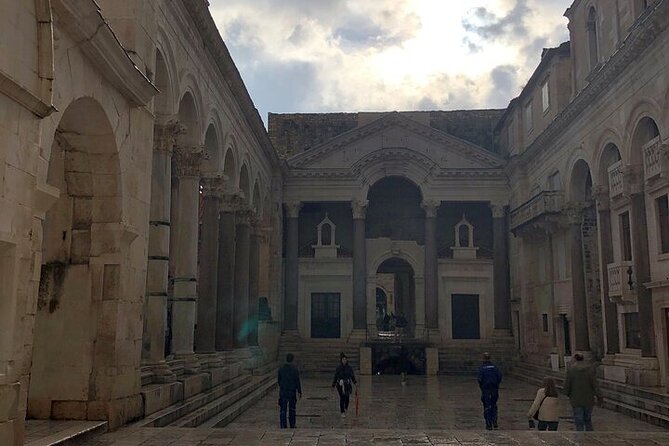
- The Peristyle: your Roman starting point
- The Vestibule and the sound of Dalmatia
- The Palace substructures, and what you will not see
- The Golden Gate and Gregory of Nin
- Riva Harbor: Split’s grand public promenade
- Fruit’s Square and Split’s Venetian chapter
- Passing the old Split synagogue
- The guides make the difference
- Small group size and timing
- Price, value, and practical limits
- Who should book this Split walking tour?
- Should you book it?
- FAQ
- Where does the tour begin?
- Where does the tour end?
- How long does the walking tour last?
- What language is the tour offered in?
- How many people can join the group?
- Is admission to the listed stops included?
- Is the tour suitable for people with mobility issues?
- Are service animals allowed?
- What is the cancellation policy?
- What happens if the tour does not meet its minimum number of participants?
Key points to know before you book
- Roman life remains part of modern Split: Diocletian’s Palace is the setting for homes, shops, squares, and daily city life.
- A small group keeps the tour personal: The activity accepts no more than 15 people, and some departures have been much smaller.
- The Peristyle anchors the route: This central square makes it easier to understand how the Palace was arranged.
- Klapa singing may add a local touch: The Vestibule can offer a chance to hear traditional Dalmatian vocal music.
- The route covers more than Roman ruins: You also visit Riva Harbor, Fruit’s Square, a Venetian citadel, and the old synagogue.
- Budget travelers get solid value: At $22.98 per person, you receive a guided orientation to Split’s core sights without separate admission costs at the listed stops.
Why this first walk helps you understand Split
I recommend taking this tour near the start of your stay. Split can feel confusing at first because the ancient Palace is woven into the present-day city rather than arranged as a tidy archaeological park. A guide gives you the basic map and explains why a Roman basement, a medieval lane, a Venetian square, and a modern café can all occupy the same few blocks.
The tour begins at Peristil ulica, at the Peristyle of Diocletian’s Palace. This is a practical meeting point because the Peristyle is the Palace’s central square and connects to many of its other sections. You finish back at the same meeting point, so you are not left trying to find your way across town.
The pace is fairly brisk. The advertised duration is about one hour and 30 minutes, with seven stops along the way. That makes it useful for a first orientation, but it does not leave time for every room, museum display, or side street. One reported morning outing lasted close to three hours, so a guide may sometimes offer extra explanation, but you should plan around the stated duration rather than count on a longer visit.
More ways into Diocletian’s Palace:
- Split: Old Town and Diocletian Palace Walking Tour
★ 4.9 · 4,727 reviews - Walking Tour of Split and Diocletian’s Palace
★ 5.0 · 2,588 reviews - Split & Diocletian’s Palace Walking Tour
★ 5.0 · 1,125 reviews
The Peristyle: your Roman starting point
The Peristyle is the right place to begin because it shows how the Palace worked as a whole. From this square, you can reach much of the former imperial complex, and the guide can explain how the central space related to Diocletian’s residence and ceremonial life.
You get about 15 minutes here. That is enough for a clear introduction and time to look around, though you may want to return later for a slower look. The square is one of the parts of Split where the age of the site is easiest to feel, but it is also an active public space. Expect the old and the everyday to share the same view.
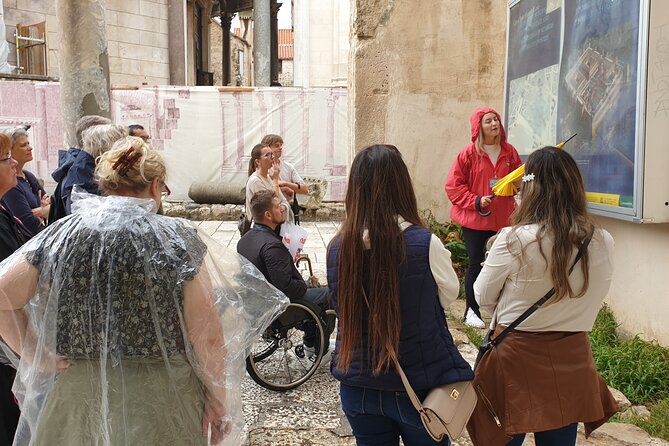
The guide’s role matters here. A bare stone wall tells you very little. A good explanation helps you understand why the Palace became the core of Split instead of fading into an isolated ruin. Guides such as Darko, Ante, and Ivana have been praised for clear storytelling, humor, questions, and useful suggestions for exploring on your own.
The Vestibule and the sound of Dalmatia
The Vestibule is a short stop, about five minutes, but it can be one of the most memorable. This was part of the emperor’s entrance area, and the guide explains its place in the Palace and its changing role over time.
You may also hear traditional Dalmatian klapa singing here. This is not presented as a guaranteed performance, so keep your expectations flexible. If singers are present, the setting gives the music a strong sense of place. The plain stone space carries the voices in a way that connects the architecture with living local culture.
That small cultural detail helps keep the tour from becoming only a lesson in dates and emperors. You are not just hearing about Split’s past. You may also encounter a tradition still associated with the region.
The Palace substructures, and what you will not see
The substructures explain how the Palace was built and how these lower areas were used through different periods. You spend about 10 minutes here, enough to understand their function and their link to the rooms above.
This portion is especially useful if you want to picture the original plan. The lower level acts like a guide to the upper Palace, showing how carefully the complex was organized. It also helps explain why modern Split can sit on top of ancient foundations without the old structure disappearing completely.
There is one important limit. The tour does not include the museum portion of the substructures. You can visit that section after the walk, but any admission would be separate. If underground chambers and archaeological displays are your main reason for coming, leave extra time and budget for that follow-up visit.
More old town history walks in Split:
- Walking Tour of Split with a ‘Magister’ of History
★ 5.0 · 1,122 reviews - Split Walking Tour with Professor of History
★ 5.0 · 926 reviews - Split: Diocletian Palace & Old Town Guided Walking Tour
★ 4.7 · 882 reviews - Split: History and Heritage Walking Tour
★ 4.9 · 650 reviews
The Golden Gate and Gregory of Nin
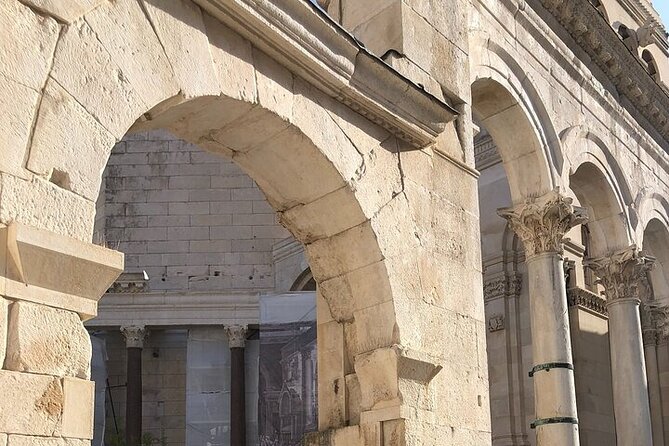
The Golden Gate was the Palace’s main entrance, and the 10-minute stop gives you a chance to understand its importance. The guide also introduces the statue of Gregory of Nin, a major figure in Croatian history and language.
This is where the tour broadens beyond Roman architecture. You learn how national identity, language, and public memory are represented in Split. The statue is more than a landmark for a quick photograph, and the guide’s explanation gives you a reason to notice it.
The Golden Gate also helps you picture the Palace as a fortified complex with controlled entrances. After hearing about the Peristyle and the lower structures, you can begin to connect the ceremonial center with the outer walls and gates.
Riva Harbor: Split’s grand public promenade
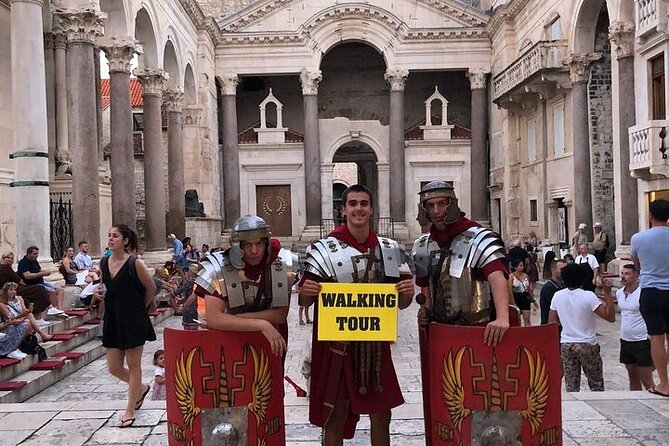
The walk then reaches Riva Harbor, where you see a bronze model of Diocletian’s Palace and learn about the history of the waterfront promenade. Allow about 15 minutes here.
Riva gives you a useful change of scale. Inside the Palace, the streets can feel compressed and maze-like. Along the harbor, you can step back and consider how the old complex relates to the wider city and the sea.
The bronze model is practical, not just decorative. It can help you see the Palace’s overall shape after you have walked through its central parts. I would pay close attention here if you are still getting your bearings, then use the promenade as a starting point for your own later walk.
The harbor stop also gives the tour a welcome visual break. You are still learning about Split, but you are no longer looking only at stone walls and narrow passages.
Fruit’s Square and Split’s Venetian chapter
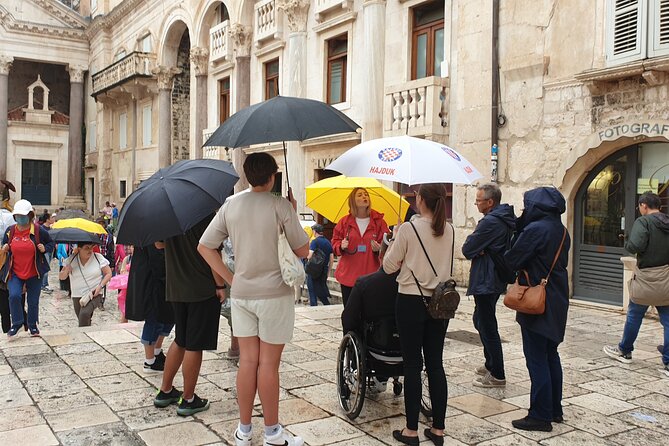
Fruit’s Square, or Trg Braće Radić, is a 10-minute stop with a different historical focus. Here you learn about a 15th-century Venetian citadel and Marko Marulić, often called the father of Croatian literature.
This stop shows why a tour limited to Diocletian alone would give you only part of Split’s story. Roman rule is the main frame, but the city also developed through later medieval and Venetian periods. The square helps you see those layers without leaving the compact old center.
Marko Marulić adds a cultural and literary angle. If you are interested in Croatia beyond its beaches and Roman monuments, this is one of the more useful stops. The guide connects a public square with language and national literature, giving you another way to understand local identity.
Passing the old Split synagogue
The final listed stop is the 16th-century Split Synagogue. You pass by rather than enter, spending about 10 minutes learning about the city’s Jewish community and its place in Split’s past.
This is a brief but worthwhile addition. Many short city walks focus only on rulers, churches, and military buildings. Including the synagogue gives you a broader view of the people who shaped the city and the communities that lived within its walls.
Admission is not included, and the tour description presents this as a pass-by stop rather than an interior visit. If the synagogue is a major interest for you, ask the guide about what can be seen independently after the tour. The supplied information confirms the historical stop, but not opening hours or an included entrance.
The guides make the difference
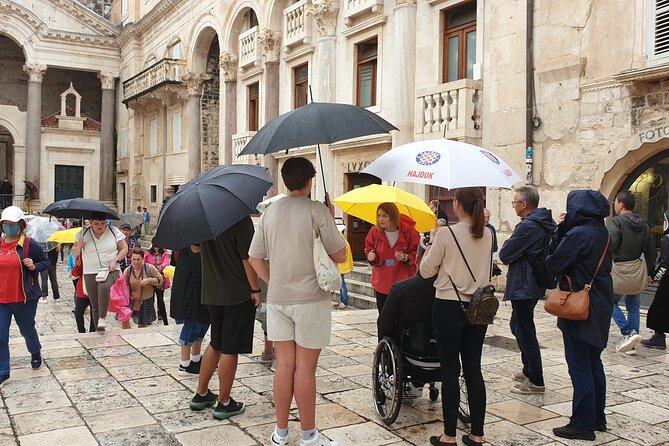
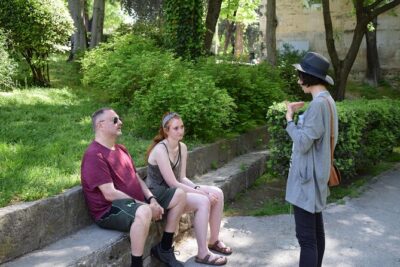
The strongest part of this experience is the guide-led storytelling. The tour is conducted in English, and the guide is described as educated and well informed about the Palace and the surrounding sites.
Several guide names have been associated with especially strong departures. Darko has been praised for his interest in Split and his ability to make the history lively. Ante, who introduces himself as Anthony in American, has been noted for going beyond the most obvious sights and making the group feel welcome. Ivana has been effective at bringing history into focus through clear stories and questions.
These details matter because a 90-minute history walk can easily become a list of dates. The best guides adjust their explanation to the group, add humor, invite questions, and point out places you might miss alone. One person with an advanced history background found the material suitably detailed, while others valued the simple orientation and easy-to-follow presentation.
You should still allow for differences between guides. The company is Ancient Tours, but the exact guide depends on the departure. The experience promises a strong guide rather than a guaranteed individual.
Small group size and timing
The maximum group size is 15 people. That is small enough for a more personal walk, especially in narrow Palace lanes where a large crowd can block doorways and make it hard to hear.
Some morning departures have been particularly intimate, with only three people on one outing and four on another. An early start can also help you see the center before the busiest part of the day. The activity information does not promise a specific crowd level, so treat that as a possible benefit, not a guarantee.
A small group is especially useful if you want to ask about restaurants, other sights, or places to explore after the tour. Ivana has offered suggestions for further visits, and that kind of local guidance can make a short orientation more useful than its clock time suggests.
Price, value, and practical limits
At $22.98 per person, this is a reasonable price for a guided introduction to Split’s historic center. The listed stops do not require an admission ticket as part of the walk, and the main value comes from interpretation, route planning, and context rather than included attractions.
The price works best for you if this is your first time in Split or if you have only a day or two. You can see the central sights, learn the basic story, and then return to the Palace sections that deserve more time. It is less suitable if you want a long archaeological visit with museum entry included.
The tour is mobile-ticket friendly and is near public transportation. Confirmation arrives at booking, and free cancellation is available until 24 hours before the start time. Changes or cancellations inside that window are not refunded, and the activity requires a minimum number of participants. These are simple conditions, but check the local start time before making changes.
Wear shoes suited to uneven streets and steps. The tour is not recommended for people who have trouble with high steps, and most people can take part. Service animals are allowed.
Who should book this Split walking tour?
I would choose this tour for a first morning or first evening in Split, particularly if you want history explained in plain English rather than simply photographed. It suits couples, families with older children, solo visitors, and small groups who want a focused introduction without committing to a full-day program.
It is also a good match for history fans. The route covers Roman planning, imperial architecture, Venetian influence, Croatian literature, language, music, and Jewish heritage in one compact walk. You get more than a checklist of famous stones.
I would look elsewhere if you need step-free access, guaranteed singing, or admission to the Palace substructures museum. You may also prefer a longer private tour if you want to stop often for photographs or ask detailed questions at every site.
Should you book it?
Book this tour if you want a well-paced introduction to Split’s old center, a small group, and a guide who can connect Roman, Venetian, literary, musical, and local stories. The $22.98 price is fair for the orientation, and the route covers the essential landmarks without demanding half a day.
Skip it only if you already know Diocletian’s Palace well or need a fully accessible route. For most first-time visitors, the best plan is to take the walk early, note the places you want to revisit, and return later to explore the Palace substructures museum and other details at your own speed.
FAQ
Where does the tour begin?
The tour begins at Peristil ulica, Peristil ul., 21000 Split, Croatia, at the Peristyle of Diocletian’s Palace.
Where does the tour end?
The activity ends back at the meeting point.
How long does the walking tour last?
The scheduled duration is approximately one hour and 30 minutes.
What language is the tour offered in?
The tour is offered in English.
How many people can join the group?
The maximum group size is 15 people.
Is admission to the listed stops included?
The listed stops are shown with no admission ticket required. The museum part of the Palace substructures is not visited during the tour and can be visited separately afterward.
Is the tour suitable for people with mobility issues?
Most people can participate, but the tour is not recommended for people who have problems with high steps.
Are service animals allowed?
Yes, service animals are allowed.
What is the cancellation policy?
You can cancel at least 24 hours before the experience start time for a full refund. Cancellations or changes made less than 24 hours before the start time are not accepted for a refund.
What happens if the tour does not meet its minimum number of participants?
If Ancient Tours cancels the activity because the minimum number is not met, you will be offered another date or experience, or you will receive a full refund.
More Walking Tours in Split
- Krka Waterfalls tour with Trogir Walking tour and Krka panoramic boat cruise
★ 5.0 · 1,659 reviews - From Split: Krka Waterfalls Cruise & Trogir Walking Tour
★ 4.7 · 681 reviews - Diocletian’s Palace and Old Town SMALL GROUP Walking Tour
★ 5.0 · 502 reviews - SPLIT-PRIVATE Walking Tour of Diocletian’s Palace & Old Town
★ 5.0 · 467 reviews
Just added around Split
- Kayaking & Zipline Šibenik – Čikola Canyon★ 5.0 · 3 reviews
- Krka National Park & Zipline Šibenik – Čikola Canyon★ 5.0 · 3 reviews
- From Split: Krka National Park & Waterfalls Private Day Trip★ 5.0 · 3 reviews
- Split: Small-Group Half Day Sailing Trip★ 5.0 · 3 reviews
- Rafting River Cetina from Makarska Riviera including transfer★ 5.0 · 3 reviews
- Split Bike and Wine Experience★ 5.0 · 3 reviews
- Split and Salona Cultural Heritage Day Tour from Trogir★ 4.0 · 3 reviews
- Private transfer from Split to Dubrovnik with 2h sightseeing stop in Ston★ 5.0 · 3 reviews
Diocletian Palace Tours, compared.


Walking Tour of Split and Diocletian’s Palace
Read our review →

Diocletian Palace & Old Town Guided Walking Tour
Read our review →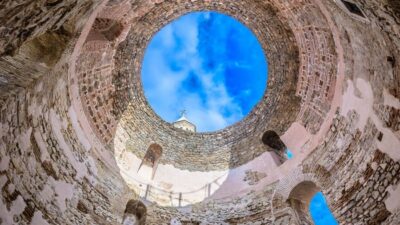
Game of Thrones Tour with Diocletian’s Palace Cellar
Read our review →
Diocletian’s Palace and Old Town SMALL GROUP Walking Tour
Read our review →
Browse the lists this tour appears in