
Reviewed · DIOCLETIAN PALACE TOURS
Grand Split Walking Tour with Diocletian’s Palace
Diocletian’s Palace is not a fenced-off ruin. It is the heart of modern Split, with homes, shops, cafés, churches, and narrow stone lanes built into a 1,700-year-old Roman complex. This walking tour gives you a useful first look at that unusual mix, with a local guide explaining what you are seeing instead of leaving you to guess.
I like the short, well-planned route, which covers major sights without taking half a day. I also like the local touch: guides such as Mia, Ivan, Tino, Slavko, Jakob, and Antonia have explained the city’s past and offered practical food and sightseeing tips. The main caution is group size. It is promoted as a small-group tour of 15 or fewer, but the booking information allows as many as 49 people, and one outing required a large crowd to split into two groups.
In This Review
- Key points to know before booking
- Why Diocletian’s Palace works best with a guide
- Starting at the Golden Gate and Gregory of Nin
- Diocletian’s Palace: a Roman complex inside a living city
- The City Clock and Pjaca square
- Riva Harbor and Split’s everyday side
- Architecture, art, and the Game of Thrones connection
- Timing, heat, rain, and the walk itself
- Group size and the value of $21.78
- Who should take this Split walking tour?
- Should you book the Grand Split Walking Tour?
- FAQ
- Where does the Grand Split Walking Tour begin?
- Where does the tour finish?
- How long does the walking tour last?
- What language is the tour conducted in?
- What sights are included?
- Are food and drinks included?
- Are church and museum entrance tickets included?
- What group size should I expect?
- What happens if the weather is poor?
Key points to know before booking
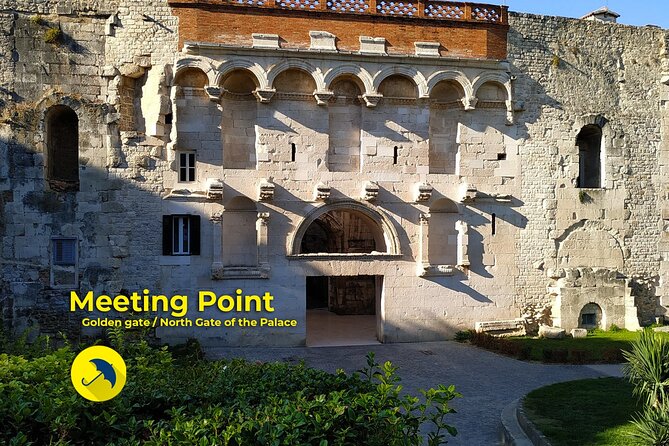
- You begin at the Golden Gate, beside the Statue of Gregory of Nin, a simple meeting place at the north entrance to the old city.
- The route combines Roman, medieval, and modern Split, including Peristil, St. Duje Cathedral, Vestibul, Riva, Pjaca, and the City Clock.
- The tour is conducted in English and lasts about 1 hour 30 minutes, though the description also refers to a longer walk of about two hours.
- The guide makes the difference, with praised guides including Tino, Ivan, Mia, Slavko, Jakob, Antonia, Nina, Karla, Maria, and Ante.
- Entry tickets are not included, so this is an outdoor orientation walk rather than a ticketed visit inside every church or museum.
- At $21.78 per person, it is a sensible way to get your bearings before exploring Split on your own.
Why Diocletian’s Palace works best with a guide
The palace is easy to enter but not always easy to understand. The modern city has grown through the Roman structure, so you may pass from a busy street into an ancient courtyard, then turn into a lane where people still live. Without context, the stones can blur together.
A good guide points out the original Roman plan, explains how the palace changed over time, and shows how Split became a living city rather than a preserved archaeological site. You will hear about Emperor Diocletian, the palace’s role in local history, and the succession of rulers who shaped the city.
The strongest guide reports describe a clear, lively style. Tino kept explanations to roughly five or ten minutes at each stop, answered questions, and used short stories to keep the walk moving. Another guide, Ante, connected Split’s past to the wider story of Croatia. That local perspective matters because the palace is not just an ancient monument. It remains the city’s main public stage.
The quality may vary with the individual guide. Ivan has been praised for humor and warmth, while Mia has been noted for clear explanations and useful restaurant suggestions. Slavko and Jakob are described as especially enthusiastic about their home city. One less successful experience was described as dry and overly factual, so you should expect the subject matter to be strong, but the presentation to depend on who leads your departure.
More ways into Diocletian’s Palace:
- Split: Old Town and Diocletian Palace Walking Tour
★ 4.9 · 4,727 reviews - Walking Tour of Split and Diocletian’s Palace
★ 5.0 · 2,588 reviews - Split & Diocletian’s Palace Walking Tour
★ 5.0 · 1,125 reviews
Starting at the Golden Gate and Gregory of Nin
The meeting point is the Golden Gate on Dioklecijanova 7, near the large Statue of Gregory of Nin. This is one of Split’s clearest landmarks, and the statue provides an easy visual reference if several groups are gathering nearby.
The Golden Gate was one of the main entrances to Diocletian’s Palace. Beginning here gives the tour a logical shape: you start at the edge of the old complex, then move inward through the Roman street plan.
The Statue of Gregory of Nin adds a later layer of Croatian culture. Your guide may explain why this medieval bishop is important and why visitors commonly rub the statue’s toe. The tour’s stated focus is sightseeing and history, so do not expect a long standalone stop at the statue, but it helps set the scene.
Arrive ready to walk on uneven stone streets. The route is in the old town, near public transportation, and most people can take part, but comfortable shoes will make the experience easier. Children must be accompanied by an adult.
Diocletian’s Palace: a Roman complex inside a living city
The central portion of the walk takes you through Diocletian’s Palace itself. The palace is about 1,700 years old, but it does not feel like a single empty building. It is a network of courtyards, passageways, public spaces, and later construction folded into the Roman remains.
You will likely hear how Diocletian’s residence and military complex were arranged, then see how later generations adapted the site. This is where a guide earns the modest tour price. A pointed explanation can turn an ordinary-looking wall into part of a Roman palace, or show why a lane follows the old structure.
Peristil is one of the key stops. This grand central square gives you a sense of the palace’s scale and ceremonial purpose. It is also one of Split’s most memorable spaces, with stone architecture rising around an open court.
St. Duje Cathedral occupies part of the old palace area and shows how Split reused Roman buildings for Christian worship. The cathedral is an important visual stop on the route, but the tour does not include entry into churches or museums. You will hear about the site from outside unless you later return with a separate ticket or visit arrangement.
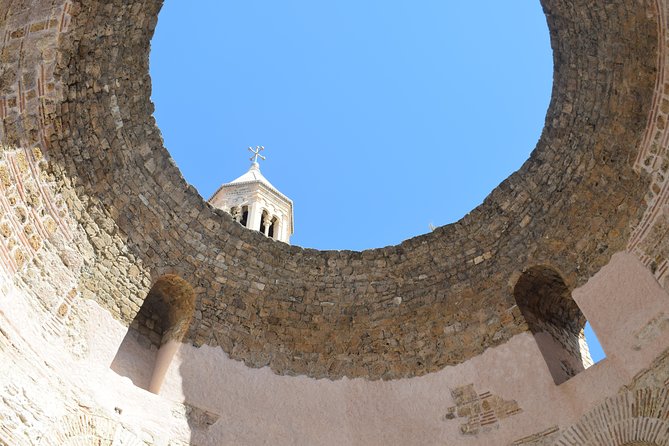
Vestibul offers another change of mood. This circular entrance space once led toward the imperial apartments and remains one of the palace’s most distinctive architectural features. One particularly memorable outing included a traditional Croatian harmony quartet singing in the rotunda. That performance is not stated as a guaranteed part of every departure, but it shows the kind of local detail you might encounter in this setting.
Expect other people around Peristil and the main palace lanes, especially in summer. A good guide needs to keep the group together and find places where everyone can hear. Karla was praised for seeking shade during a very hot August walk, while another guide managed the group well in crowded conditions. Those small choices can make a big difference.
The City Clock and Pjaca square
The City Clock is a brief stop of about 10 minutes. You will see the famous 24-hour sun clock at the City Square and learn why it catches attention. It is not a long museum-style visit, but it adds a detail you could easily miss while walking through the old town.
Narodni Trg, commonly called Pjaca, gives you a different view of Split. This square has long held an important place in city life, and the guide explains its former role and changing surroundings. The stop helps connect the palace to the wider medieval and civic city.
These short stops are useful because they prevent the tour from becoming a single extended lecture about Roman architecture. You keep moving, see several public spaces, and build a mental map of central Split.
The tradeoff is time. Ten minutes is enough for an explanation and photographs, but not for a slow look at every façade or a sit-down pause. If you prefer to linger, write down the places that interest you and return after the tour.
More walking tours in Split:
- Krka Waterfalls tour with Trogir Walking tour and Krka panoramic boat cruise
★ 5.0 · 1,659 reviews - Walking Tour of Split with a ‘Magister’ of History
★ 5.0 · 1,122 reviews - Split Walking Tour with Professor of History
★ 5.0 · 926 reviews - Split: Diocletian Palace & Old Town Guided Walking Tour
★ 4.7 · 882 reviews
Riva Harbor and Split’s everyday side
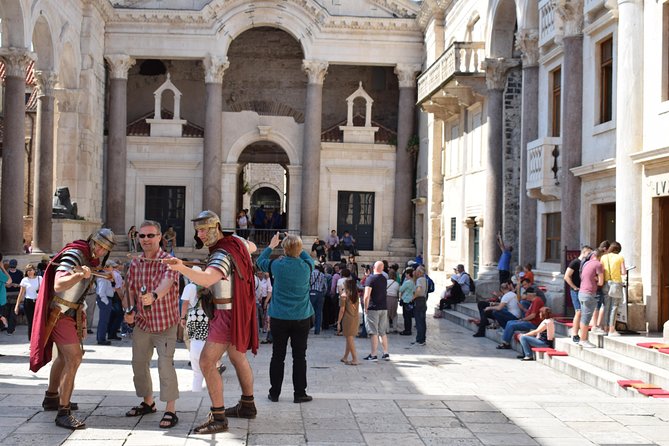
Riva is the famous waterfront promenade and one of the busiest streets in Split. The stop lasts about 10 minutes, giving you time to see the harborfront and take photographs before returning toward the old city.
Riva matters because it shows modern Split beyond the palace walls. You will see the city’s social side, with people using the promenade as part of daily life. The contrast between the Roman core and the open harborfront helps explain why Split feels like a real working city rather than a single historical attraction.
This is also where guide recommendations can become practical. Several guides have offered suggestions for restaurants and other things to do after the walk. That advice is most useful when you take the tour early in your stay, since you can use the rest of your time in Split with a clearer plan.
Do not expect a harbor cruise, meal, or extended free time on Riva. Food and drinks are not included, and the stop is designed for orientation rather than a full waterfront experience.
Architecture, art, and the Game of Thrones connection
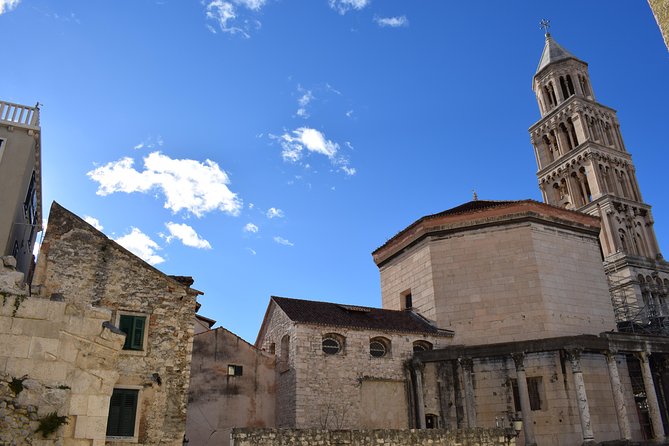
The walk covers architecture and art as part of the city story. You will see Roman forms, later religious buildings, public squares, and everyday alterations that show how the old center developed.
Some guides also add popular culture, including Game of Thrones references. That can be a pleasant extra if you enjoy the show, but the tour’s main value is the city itself. The palace is interesting even if you have never watched the series.
The best approach is to listen for connections. A column, arch, square, or passageway may tell you something about Roman power, Christian worship, medieval commerce, or modern Croatian identity. Guides have been praised for giving cultural context rather than listing dates alone.
You should not expect a specialist art tour or a detailed archaeological seminar. This is a broad introduction with several stops. That makes it a good choice for a first visit, while those with advanced Roman history interests may want a longer or more focused tour afterward.
Timing, heat, rain, and the walk itself
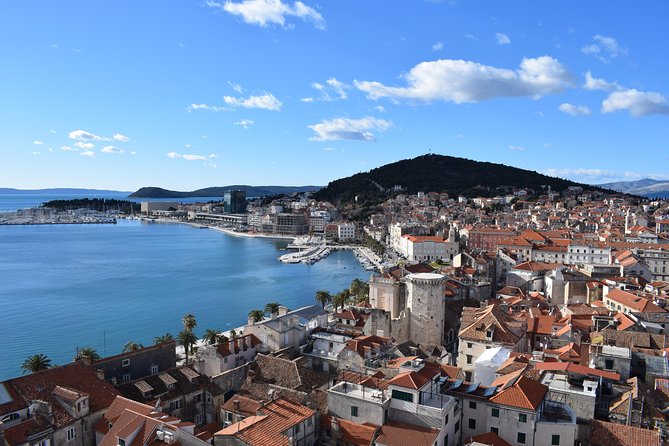
The advertised duration is about 1 hour 30 minutes. The description also refers to spending the next two hours on foot, so allow some flexibility rather than planning a tight connection immediately afterward.
Departure times vary, which is helpful if you arrive by ferry, have a cruise schedule, or prefer an evening walk. One group took a 6 p.m. departure and found it a good-value way to see the palace. A bank holiday once caused a time change from 1 p.m. to 11:30 a.m., with advance notice sent to participants. Check your confirmed time before setting out.
Split can be very hot, and much of the old town is paved in stone. Wear suitable clothing, carry water, and choose comfortable shoes. Shade stops can help, but you should not count on cool conditions.
The tour operates in all weather conditions, and the instructions ask you to dress appropriately. At the same time, the experience requires good weather and may be canceled if conditions are poor. In that case, you are offered another date or a full refund.
Rain does not necessarily ruin the walk. One outing continued in persistent rain and still worked well because the guide kept the route moving. Still, an umbrella or rain jacket is sensible when the forecast looks uncertain.
Group size and the value of $21.78
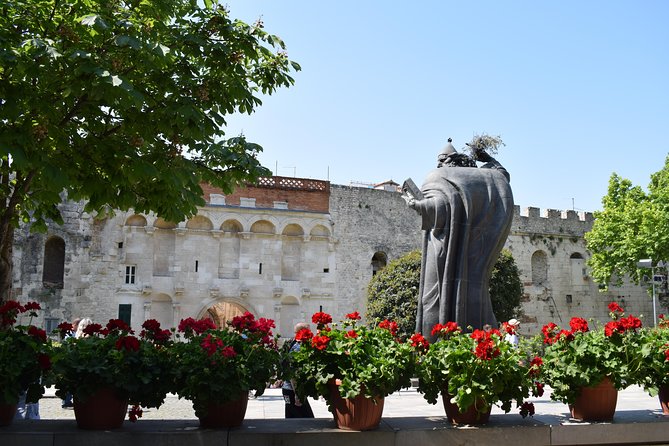
At $21.78 per person, this tour is priced well for a guided introduction to Split’s central sights. You are paying for a local English-speaking guide, the walk, and the historical explanation. There are no extra entrance fees included because the route is primarily an outdoor sightseeing experience.
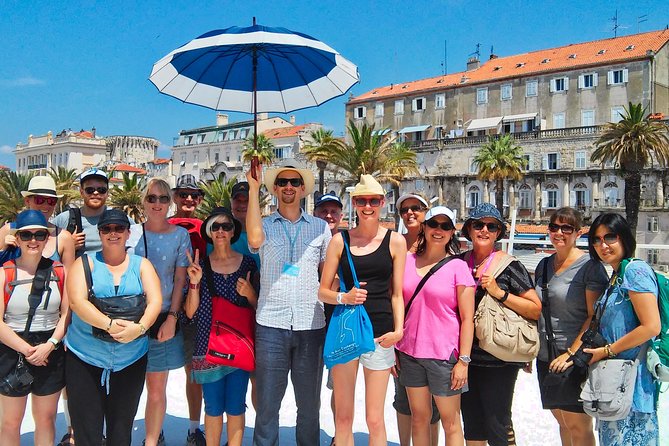
The small-group promise is an important part of the value. A group of 15 or fewer makes it easier to hear the guide, ask questions, move through narrow lanes, and stay together at Peristil. Several outings benefited from that quicker, more personal format.
However, the additional information permits up to 49 participants, and one group was large enough to split into two still-large groups. This appears to be an operational possibility rather than the normal experience, but it is worth considering if you strongly prefer a quiet, intimate walk.
The tour is especially good value if you take it near the start of your stay. You get the broad layout of the palace, identify places worth revisiting, and receive suggestions for food and other activities. If you already know Split well, the route may feel basic.
Who should take this Split walking tour?
I would recommend it for first-time visitors who want a clear introduction without committing to a long day. It also suits couples, families with older children, and anyone interested in Roman architecture but not keen on a formal lecture.
Children aged 10 and 13 have enjoyed the walk when the guide kept the pace lively and interactive. That said, children must remain with an adult, and the stone streets may be tiring in hot weather.
The tour also works well for cruise passengers and people with limited time, provided the departure fits your schedule. You will see several major sights in one compact outing, but you will need to return later if you want to enter St. Duje Cathedral or visit museums.
I would be more cautious if you dislike group walks, need guaranteed individual attention, or want detailed access to interiors. The experience is conducted in English only, and the guide’s energy can shape the day.
Should you book the Grand Split Walking Tour?
Book it if you want an affordable, practical first look at Split’s Roman core and modern center. The route covers the Golden Gate, Diocletian’s Palace, Peristil, Vestibul, St. Duje Cathedral, the City Clock, Pjaca, and Riva, while local guides add stories and useful advice.
The strongest reason to choose it is the combination of short duration and local explanation. The main reason to hesitate is the possible group size, along with the fact that interior admission is not included.
Choose an early departure if you want to use the guide’s restaurant and sightseeing suggestions during the rest of your visit. If you book, confirm the meeting time, arrive at the Golden Gate, dress for the weather, and leave room in your schedule in case the walk runs closer to two hours.
FAQ
Where does the Grand Split Walking Tour begin?
The tour begins at the Golden Gate, at Dioklecijanova 7 in Split, near the Statue of Gregory of Nin.
Where does the tour finish?
The activity ends back at the original meeting point by the Golden Gate.
How long does the walking tour last?
The stated duration is approximately 1 hour 30 minutes. The description also refers to a walk of about two hours, so allow some extra time.
What language is the tour conducted in?
The tour operates in English.
What sights are included?
The route includes Diocletian’s Palace, the Golden Gate area, the Statue of Gregory of Nin, Peristil, St. Duje Cathedral, Vestibul, the City Clock, Riva Harbor, and Narodni Trg, also known as Pjaca.
Are food and drinks included?
No. Food and drinks are not included in the tour price.
Are church and museum entrance tickets included?
No. The walking tour does not include admission to churches or museums.
What group size should I expect?
The experience is promoted as a small-group tour limited to 15 people or fewer, but the additional booking information allows a maximum of 49 participants. Group size may therefore vary.
What happens if the weather is poor?
If the experience is canceled because of poor weather, you will be offered a different date or a full refund. You can also cancel at least 24 hours before the start time for a full refund.
Just added around Split
- Krka National Park & Zipline Šibenik – Čikola Canyon★ 5.0 · 3 reviews
- Kayaking & Zipline Šibenik – Čikola Canyon★ 5.0 · 3 reviews
- Rafting River Cetina from Makarska Riviera including transfer★ 5.0 · 3 reviews
- From Split: Krka National Park & Waterfalls Private Day Trip★ 5.0 · 3 reviews
- Split: Small-Group Half Day Sailing Trip★ 5.0 · 3 reviews
- Split and Salona Cultural Heritage Day Tour from Trogir★ 4.0 · 3 reviews
- Split Bike and Wine Experience★ 5.0 · 3 reviews
- Split: Jewish Heritage & Diocletian’s Palace Walking Tour★ 5.0 · 3 reviews
Diocletian Palace Tours, compared.


Walking Tour of Split and Diocletian’s Palace
Read our review →

Diocletian Palace & Old Town Guided Walking Tour
Read our review →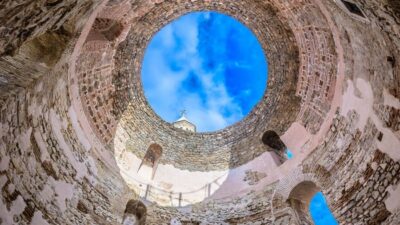
Game of Thrones Tour with Diocletian’s Palace Cellar
Read our review →
Diocletian’s Palace and Old Town SMALL GROUP Walking Tour
Read our review →

Browse the lists this tour appears in