
Reviewed · OLD TOWN & HISTORY TOURS
Experience Split History Walking Tour With Local Historian
Split’s old town is not a museum behind glass. People live, work, worship, shop, and eat inside the walls of Diocletian’s Palace. This two-hour walk, led by local historian Boris, helps you read that tangled mix of Roman ruins, medieval streets, and modern Split.
I like the small maximum of 12 people, which leaves room for questions, and I like the use of 3D reconstruction images to show how the palace may have looked in Roman times. The main drawback is the pace: two hours covers a lot, so this is an orientation tour rather than a full archaeological visit. Uneven stone streets and stairs also make it unsuitable for wheelchair users and people with mobility impairments.
In This Review
- Key points at a glance
- Why Split makes sense with a historian
- Meeting Gregory of Nin at the Golden Gate
- Inside Diocletian’s Palace and the imperial center
- Peristil, Jupiter’s Temple, and the old Roman stage
- The cathedral, mausoleum, and vestibule
- The cellars and the palace beneath your feet
- Riva and the change from Rome to medieval Split
- Fruit Square and People’s Square
- The small details that make the walk worthwhile
- What $37 buys you
- Timing, shoes, and group comfort
- Who should book this Split walk
- Should you book the Experience Split History Walking Tour?
- FAQ
- How long is the Experience Split History Walking Tour?
- How much does the tour cost?
- Where does the tour start?
- Where does the tour finish?
- What sights are included?
- Who leads the tour?
- What languages are available?
- Is the tour suitable for wheelchair users?
- Are food, drinks, and hotel transfers included?
- Can I cancel the booking?
Key points at a glance
- Enter through the Golden Gate: Begin at Split’s grand northern entrance, beside the eight-meter statue of Gregory of Nin.
- Read the palace as a living town: Roman walls now frame homes, shops, cafés, churches, and everyday city life.
- See Peristil and the imperial core: Learn how the main square, mausoleum, temple, vestibule, and cellars fitted together.
- Connect Roman, medieval, and modern Split: The walk continues along Riva and into Fruit Square and People’s Square.
- Look for lesser-known details: The route includes a narrow church, a narrow street, a lost sphinx head, and a secret garden.
- Get practical local advice: Boris also points out places worth returning to, including food and ice cream stops.
Why Split makes sense with a historian
Diocletian’s Palace can be confusing at first. It is large, irregular in places, and woven into the present-day center of Split. A Roman gate may open onto a busy street. A medieval house may lean against an imperial wall. A café table may sit where Roman officials once moved through the palace.
That is why I find a guided first walk useful here. You are not only looking at old stones. You are learning how the palace changed purpose over centuries, and why Split still feels like a town built inside an ancient shell.
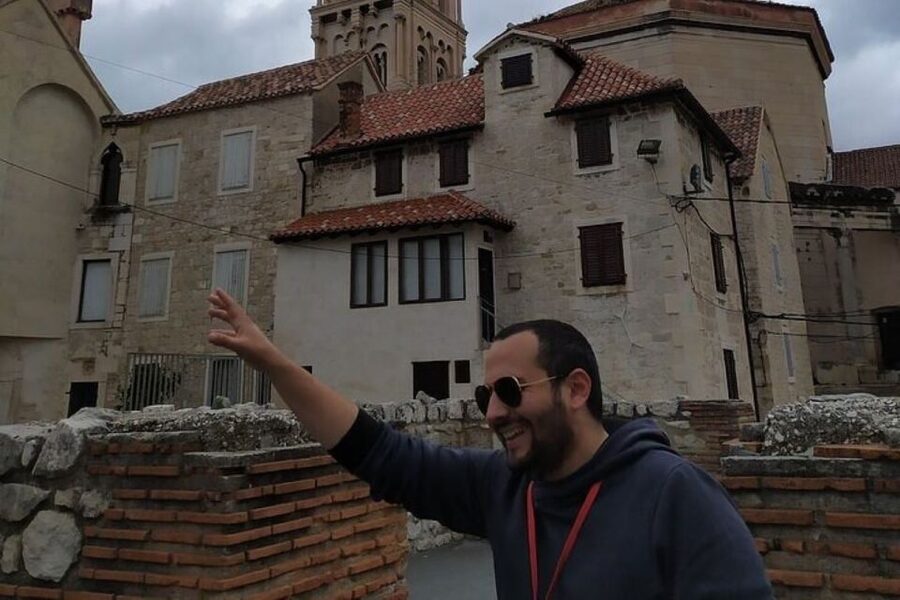
The guide’s history training matters most when the route moves quickly between periods. Boris explains Emperor Diocletian’s life, the purpose of the palace, the arrival of medieval life, and the way local people adapted the Roman structure. The tour also brings in Croatian culture, religion, community, and everyday customs, so you get more than a list of dates.
The advertised approach is See, Hear, and Feel. That means you look at the remains, listen to stories and legends, and get a sense of pomalo, the relaxed local way of taking life. I would not expect a formal lecture. The experience is designed as a conversation through the city, with time for questions.
More old town history walks in Split:
- Split: Old Town and Diocletian Palace Walking Tour
★ 4.9 · 4,727 reviews - Walking Tour of Split with a ‘Magister’ of History
★ 5.0 · 1,122 reviews - Split Walking Tour with Professor of History
★ 5.0 · 926 reviews
Meeting Gregory of Nin at the Golden Gate
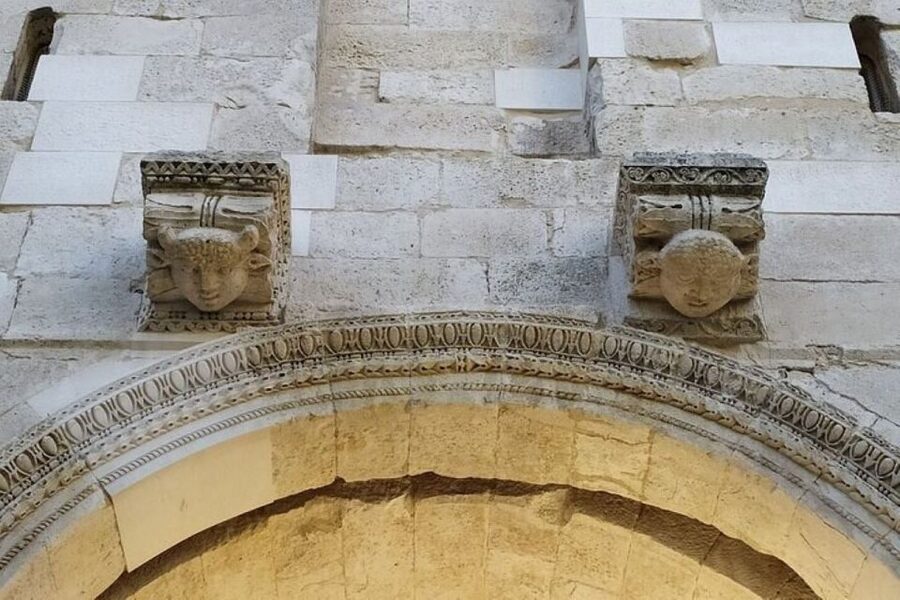
The meeting point is the Golden Gate, Split’s northern entrance and one of the clearest places to begin understanding the palace. The gate once controlled access from the north, and its size gives you an immediate sense of the imperial project.
Before entering, you receive an introduction to Split, Croatia, and the area around the palace. You also learn why the gate was built, what purpose it served, and how Roman emperors and empresses would have approached the palace.
Just opposite is the towering statue of Gregory of Nin. The figure is one of Split’s best-known landmarks, and the guide explains who Gregory was and why the statue matters. You enter the palace through the Golden Gate much as the imperial household once did, at least in broad ceremonial terms.
This opening takes about 15 minutes, followed by roughly eight minutes focused on Gregory of Nin. That may sound like a long introduction for a two-hour tour, but it gives you useful bearings before the streets grow tighter and the Roman plan becomes harder to see.
Inside Diocletian’s Palace and the imperial center

The palace visit begins with about 10 minutes of guided orientation before the tour reaches the main sites. Diocletian built the complex as both a residence and a fortified retreat, and the route helps you understand that dual purpose.
The palace is best understood as a connected system rather than a single building. The tour points out the main square, religious buildings, ceremonial spaces, underground areas, and routes linking the sea-facing side with the northern entrance.
A short secret stop adds one of the tour’s lesser-known details. The supplied information does not name this stop, so you should expect a brief discovery rather than a major monument. That is part of the appeal of a walk led by someone who pays attention to small features that are easy to pass without context.
Peristil, Jupiter’s Temple, and the old Roman stage
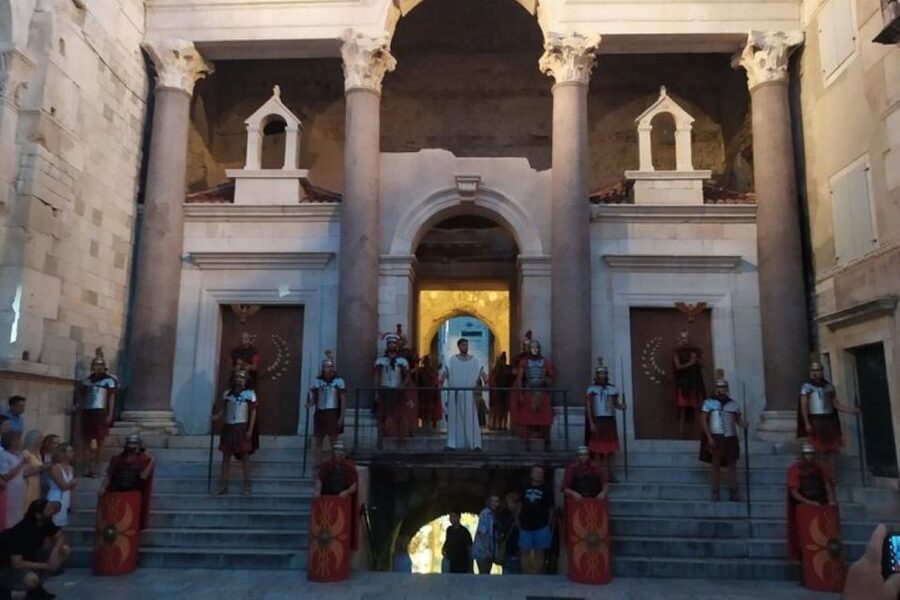
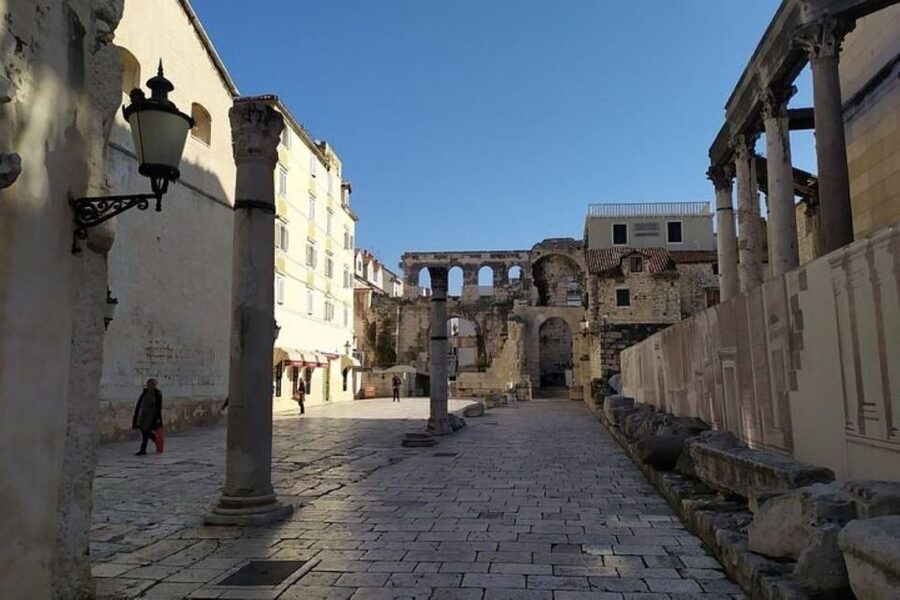
Peristil is the heart of the Roman palace and receives about 15 minutes. This is the place where the scale of the complex becomes easiest to grasp. Tall columns and monumental stonework frame a square that once had a ceremonial role, while modern Split continues to use it as an open public space.
I like this stop because it shows the central problem and pleasure of Split: ancient architecture is still part of daily movement. You may be standing in a space built for imperial ceremony while people pass through on ordinary errands.
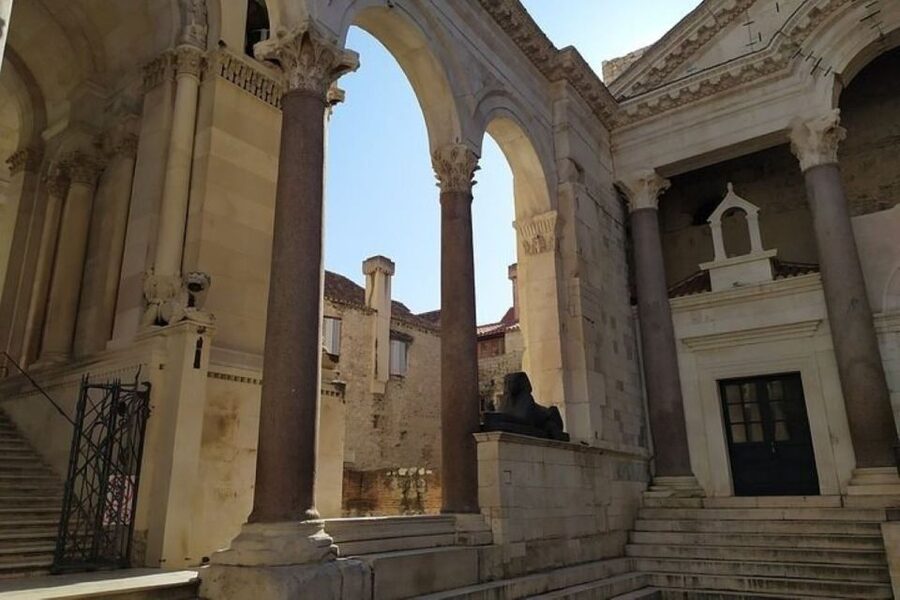
The tour then spends about 10 minutes at Jupiter’s Temple. The guide explains the building and its religious role, along with the stories and legends attached to it. This stop helps place Diocletian’s rule within the Roman religious world, rather than treating the palace as a collection of attractive ruins.
A two-minute stop at another lesser-known feature follows. It is brief, but it breaks up the major monuments and keeps you looking closely. I would treat these short stops as prompts for later exploration, not as full visits.
More walking tours in Split:
- Walking Tour of Split and Diocletian’s Palace
★ 5.0 · 2,588 reviews - Krka Waterfalls tour with Trogir Walking tour and Krka panoramic boat cruise
★ 5.0 · 1,659 reviews - Split & Diocletian’s Palace Walking Tour
★ 5.0 · 1,125 reviews - Split: Diocletian Palace & Old Town Guided Walking Tour
★ 4.7 · 882 reviews
The cathedral, mausoleum, and vestibule
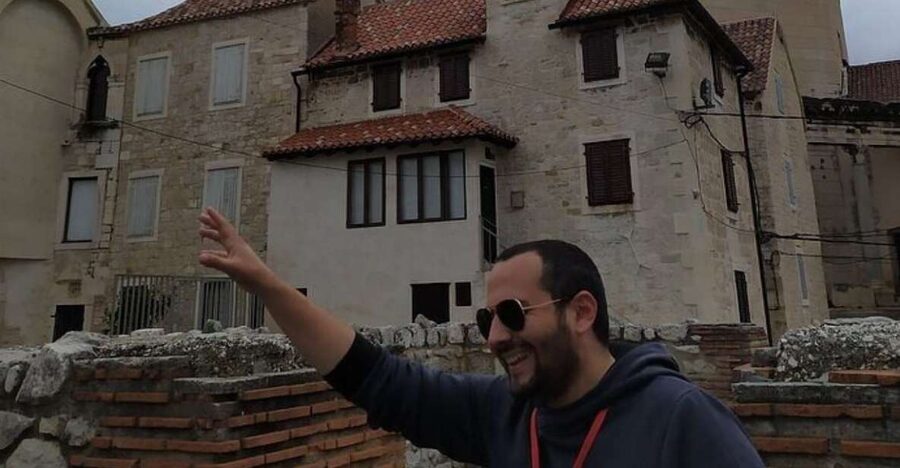
The Cathedral of Saint Domnius receives about 10 minutes of explanation. The building began as Diocletian’s mausoleum, which gives Split one of its most striking examples of changing use. A structure connected to a Roman emperor later became a Christian cathedral.
That change is central to understanding the city. Split did not simply preserve the palace as an ancient relic. Later residents reused its spaces, altered them, and fitted new beliefs and needs into the old plan.
You then reach the Vestibule for around 10 minutes. This circular entrance space once led toward the emperor’s residential rooms. Its shape and position reveal how carefully the palace separated public ceremony from private life.
The tour points out the Triclinium and other palace spaces as well. The Triclinium was connected with dining, and the guide uses such places to make Roman life easier to picture. The 3D reconstruction images and pictures are particularly useful here. When only walls and fragments remain, a visual reconstruction can help you imagine scale, rooflines, and the relationship between rooms.
The cellars and the palace beneath your feet
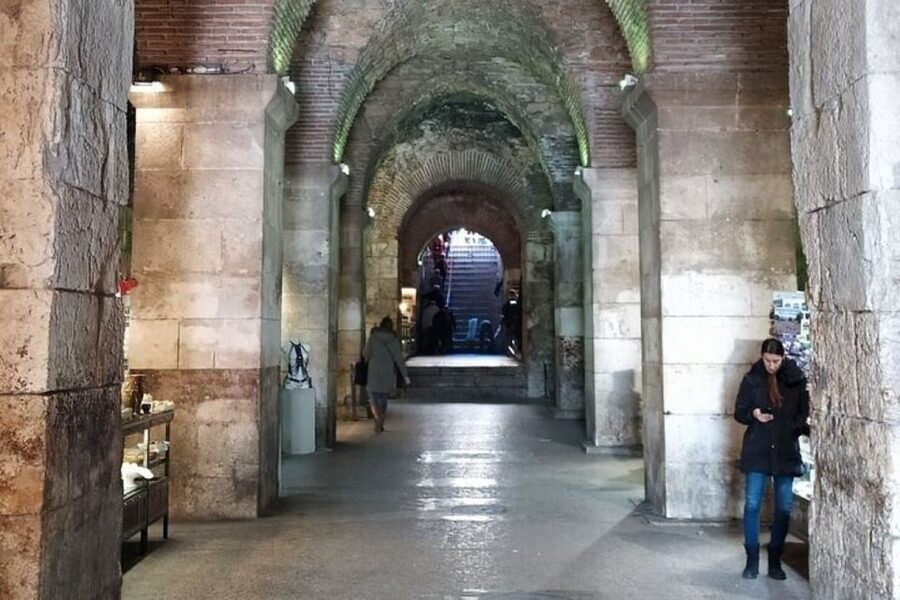
Diocletian’s Cellars, also called the central substructures, are included for about 10 minutes. These underground rooms are among the most useful places for understanding the original palace plan because their layout preserved the shape of structures above.
You get a sense of how the Roman builders organized the complex and supported the imperial residence. The cellars also show how practical the palace was. This was not only a place for ceremonies and luxury. It needed storage, service areas, circulation routes, and solid foundations.
The brief visit is an advantage if you want a clear introduction, but it may leave you wanting more. If underground architecture interests you, plan to return for a longer look after the tour. One of the useful features of this walk is that it points out where extra time will pay off.
Riva and the change from Rome to medieval Split
After the palace sites, the route moves to Riva, the waterfront promenade, for about five minutes. This is a short stop, but it gives you a valuable change of view. From here, the guide explains the connection between Roman and medieval Split and introduces the local pomalo way of life.
Riva is not presented as a separate attraction detached from the palace. Instead, it helps you see how the city grew outward from the Roman core. You move from imperial architecture to the public space where modern Split meets, strolls, and spends time.
The short timing means you will not get a long waterfront break. That is sensible on a two-hour history walk, but you should return later if you want a slower look at the promenade.
Fruit Square and People’s Square
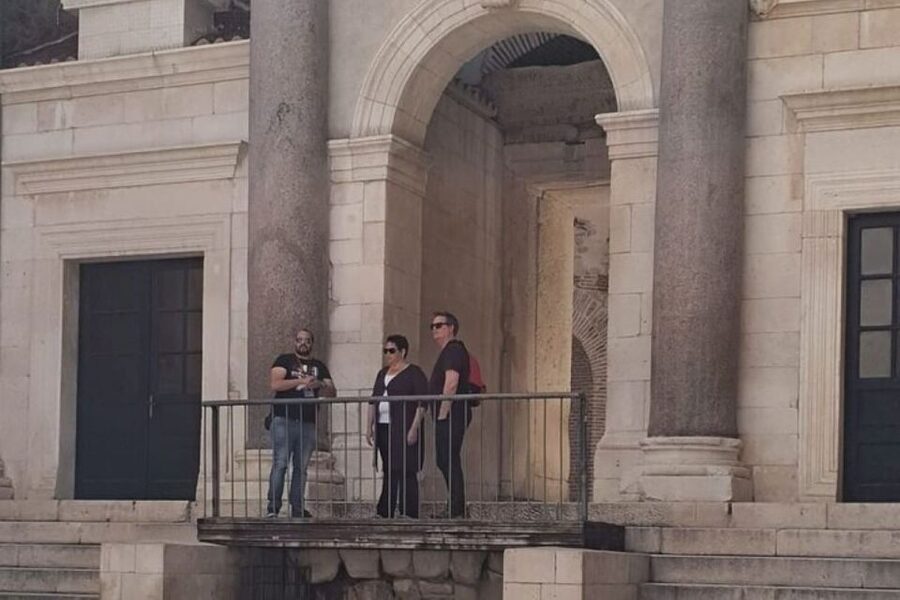
Fruit Square is the first of two medieval squares covered near the end of the route, with about 10 minutes of guided sightseeing. Its architecture and changing uses help show how Split developed after the Roman period.
People’s Square follows, with another 10 minutes. Together, these two squares broaden the tour beyond Diocletian’s Palace. You learn how streets, buildings, and public spaces carried the city into the medieval and modern periods.
I like this part because it prevents the experience from becoming Roman-only. Split’s identity was shaped by many centuries of reuse. The squares show that history in a more human scale, through façades, narrow passages, local movement, and the way public life gathers around open spaces.
The tour ends at Narodni trg, also known as People’s Square. That is a practical finish because you are already in the center, near places you may want to explore on your own. The end point also gives you a natural choice: continue sightseeing, stop for food, or retrace one of the palace lanes with a better sense of what you are seeing.
The small details that make the walk worthwhile
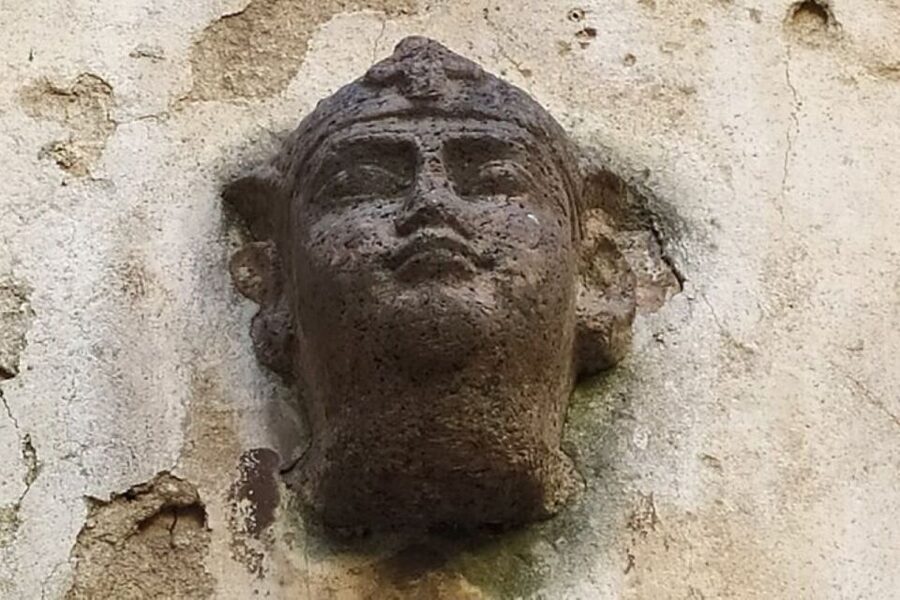
The route reserves some of its most intriguing material for lesser-known features. You hear about the narrowest church, the narrowest street, a lost sphinx head, and a secret garden.
These are not replacements for major monuments. They are the details that make a guided walk feel personal. On your own, you might photograph Peristil and the cathedral but miss a strange architectural corner or a remnant tied to an older story.
The guide also uses stories, legends, and intriguing details to keep the walk moving. I would listen for the difference between established history and local tale. Legends are enjoyable, but the best guides make clear when they are telling a story rather than stating a proven fact.
The practical advice adds real value. Boris has pointed out places for further exploration and offered food recommendations, including an ice cream stop that proved especially useful. I would keep your phone ready to mark suggestions, since you may want to return after the tour.
What $37 buys you
At $37 per person, this is not the cheapest way to wander around Split, but the price is reasonable if you want a structured introduction with an expert guide and a small group. You are paying for two hours, a maximum of 12 participants, a local licensed guide with a master’s degree in history, and the visual aid of 3D reconstructions and historical pictures.
The group limit matters. Split’s old streets can be tight, and a group of 12 is easier to hear and manage than a large crowd. It also gives you a better chance to ask about Roman architecture, Croatian culture, local customs, or places to eat.
The value is strongest on a first visit. If you already know the palace well and plan to spend several hours reading detailed archaeological information, you may prefer to explore independently. If you want to understand the city before returning to specific sites, the tour gives you a useful framework.
Food, drinks, and hotel pickup are not included. The walk begins and ends in central Split, so you need to reach the Golden Gate yourself and arrange your own way onward.
Timing, shoes, and group comfort
The tour lasts two hours, with starting times available according to the day’s schedule. Free cancellation is available up to 24 hours before the start, and you can reserve now and pay later, which helps if your Split plans are still shifting.
Wear comfortable shoes. Stone streets, tight passages, and historic surfaces are part of the setting, but they are not ideal for flimsy footwear. Bring water, and use a hat or cap on sunny days.
The route is not suitable for wheelchair users or people with mobility impairments. The information provided does not specify the exact number of stairs or the condition of every surface, so you should ask before booking if you have any concern about walking comfort.
English and Croatian are available. The tour is most useful for people who enjoy asking questions and making connections between buildings, stories, and present-day life.
Who should book this Split walk
I would choose this tour if you are visiting Split for the first time, have about two hours, and want more than a quick photo stop at the palace. It suits history fans, curious independent sightseers, and anyone who likes to understand a city before exploring it alone.
Families with older children may also find the legends, hidden details, and pictures easier to follow than a standard sequence of dates. The small group and question-friendly format help keep the experience personal.
I would be less likely to book it if you need a fully accessible route, want a long cathedral or cellar visit, or prefer to move at your own pace. The tour covers many places in a short time, so you will gain context rather than exhaustive entry time at every monument.
Should you book the Experience Split History Walking Tour?
Book it if you want a strong first look at Split, especially if Boris is leading your departure. The combination of imperial spaces, medieval squares, local customs, visual reconstructions, and practical food tips gives you a useful picture of how the city works.
The best reason to go is not simply to see Diocletian’s Palace. It is to understand why the palace still feels like part of Split’s bloodstream. At $37, the tour offers good value for that orientation, provided you are comfortable walking on historic streets and accept that two hours cannot cover every room in detail.
FAQ
How long is the Experience Split History Walking Tour?
The tour lasts two hours.
How much does the tour cost?
The price is $37 per person.
Where does the tour start?
The meeting point is at the Golden Gate, the northern gate of Diocletian’s Palace, opposite the eight-meter statue of Gregory of Nin.
Where does the tour finish?
The walk finishes at Narodni trg, also known as People’s Square.
What sights are included?
The route includes the Golden Gate, Gregory of Nin, Diocletian’s Palace, Peristil, Jupiter’s Temple, the Cathedral of Saint Domnius, the Vestibule, Diocletian’s Cellars, Riva, Fruit Square, and People’s Square. It also includes several lesser-known stops.
Who leads the tour?
A local licensed guide and professional historian leads the walk. Boris is named as the guide for this experience. The included guide has a master’s degree in history.
What languages are available?
The tour is available in English and Croatian.
Is the tour suitable for wheelchair users?
No. The experience is not suitable for wheelchair users or people with mobility impairments. Comfortable shoes, water, and a hat or cap on sunny days are recommended.
Are food, drinks, and hotel transfers included?
No. Food, drinks, hotel pickup, and hotel drop-off are not included.
Can I cancel the booking?
You can cancel up to 24 hours in advance for a full refund. Reserve now and pay later is also available.
Just added around Split
- Kayaking & Zipline Šibenik – Čikola Canyon★ 5.0 · 3 reviews
- Krka National Park & Zipline Šibenik – Čikola Canyon★ 5.0 · 3 reviews
- Split: Small-Group Half Day Sailing Trip★ 5.0 · 3 reviews
- Rafting River Cetina from Makarska Riviera including transfer★ 5.0 · 3 reviews
- From Split: Krka National Park & Waterfalls Private Day Trip★ 5.0 · 3 reviews
- Split and Salona Cultural Heritage Day Tour from Trogir★ 4.0 · 3 reviews
- Split Bike and Wine Experience★ 5.0 · 3 reviews
- Krka Waterfalls, Lake Cruise & Skradin★ 5.0 · 3 reviews
Old Town & History Tours, compared.


Walking Tour of Split with a ‘Magister’ of History
Read our review →

Diocletian Palace & Old Town Guided Walking Tour
Read our review →

Diocletian’s Palace and Old Town SMALL GROUP Walking Tour
Read our review →

Split History and Gastro Small-Group Tour with Food and Drinks
Read our review →Browse the lists this tour appears in