
Reviewed · OLD TOWN & HISTORY TOURS
Discover Split’s Hidden History – Guided Walking Tour
Split’s most surprising sight is not a ruin outside town. It is a Roman palace that became the center of a living city. On this 90-minute walking tour, you move through Diocletian’s Palace, the Peristyle, Saint Domnius Cathedral, and Jupiter’s Temple while the guide explains how ancient stonework became modern Split.
I like the small maximum group of 15, which makes it easier to hear and ask questions. I also like the early 9:00 am start, especially if you want your bearings before spending the rest of the day in the Old Town. The main drawback is the short running time: this is a sharp introduction, not a slow, room-by-room visit.
In This Review
- Key points to know
- Why Split’s Roman Palace Makes Such a Good Walking Tour
- The Peristyle: Begin at Split’s Roman Center
- Saint Domnius Cathedral: A Roman Mausoleum Turned Christian Landmark
- Jupiter’s Temple: A Compact Roman Finish
- What the Guides Add to the Experience
- The 9:00 am Start and 90-Minute Length
- Is $41.70 a Fair Price?
- Who Will Get the Most From This Split Walk
- Booking, Weather, and Cancellation Details
- Should You Book This Split History Walk?
- FAQ
- Where does the tour start?
- What time does the tour begin?
- Where does the tour end?
- How long does the walking tour last?
- What language is the tour offered in?
- What sights are included?
- How many people can join the tour?
- Can I cancel for a refund?
Key points to know
- The Peristyle is the tour’s central stage: You see the formal courtyard at the heart of Diocletian’s Palace and learn why it remains Split’s main gathering place.
- Three major sights fit into 90 minutes: The route covers the Peristyle, Saint Domnius Cathedral, and Jupiter’s Temple without adding transport time.
- Nicole and Nikol are named guides associated with the experience: Both are praised for clear explanations, friendly conversation, and strong command of Split’s past.
- The group is capped at 15 people: That is a useful middle ground between a private walk and a large crowd.
- Some stairs are involved: The amount is described as limited, but this is still a walking tour through an old stone center.
- Cancellation is flexible up to 24 hours ahead: Poor weather or an unmet minimum group size can also lead to a new date or a full refund.
Why Split’s Roman Palace Makes Such a Good Walking Tour
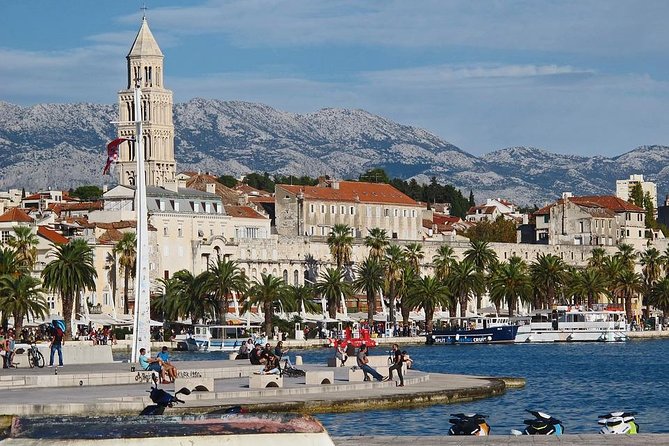
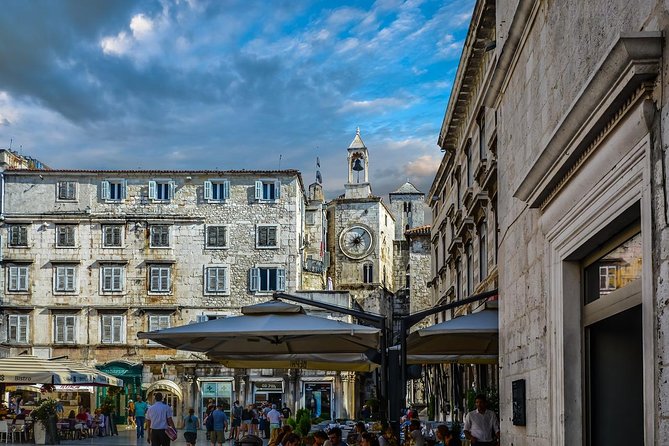
Diocletian’s Palace is not a fenced-off archaeological park. It is woven into Split’s Old Town, with streets, squares, shops, and daily life occupying the old imperial structure. That makes a guided walk especially useful. Without context, you may see handsome columns and worn stone. With a guide, you can begin to read the palace as a planned Roman complex that later became a city.
The Peristyle gives you the clearest first look. This was the palace’s formal courtyard, built for one of Rome’s last emperors. It was part of a fortified residence, but it also had a ceremonial role, linking the emperor’s quarters with the sacred and public areas of the complex.
I like that the tour does not try to cover all of Split. It focuses on three places that explain the city’s basic story: imperial power at the Peristyle, Christianity and later use at the cathedral, and Roman religion at the Temple of Jupiter.
That focus matters. You are not spending precious time being led from one minor plaque to another. Instead, the guide has room to explain how a Roman palace changed over time and why the old center still feels like a real neighborhood rather than a museum set.
More old town history walks in Split:
- Split: Old Town and Diocletian Palace Walking Tour
★ 4.9 · 4,727 reviews - Walking Tour of Split with a ‘Magister’ of History
★ 5.0 · 1,122 reviews - Split Walking Tour with Professor of History
★ 5.0 · 926 reviews
The Peristyle: Begin at Split’s Roman Center
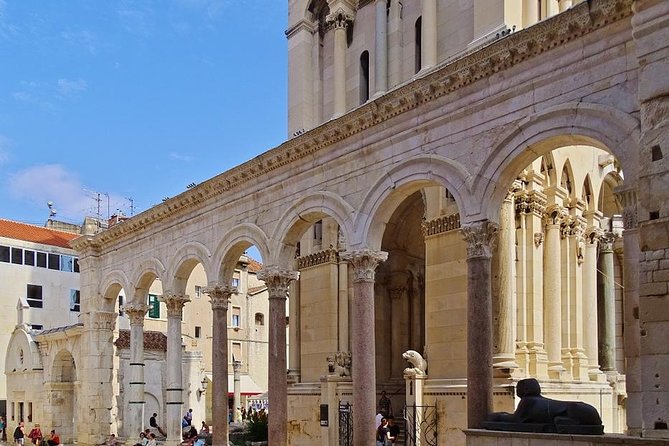
The first stop lasts about 30 minutes, making the Peristyle the main opening chapter. You can expect the guide to use the courtyard to explain Diocletian’s Palace and the emperor who ordered it built.
The Peristyle was created as part of a fortified palace by Diocletian, one of the last famous persecutors of Christians. That fact gives the square a useful tension. The same imperial world that once controlled religious life later became the setting for Christian worship.
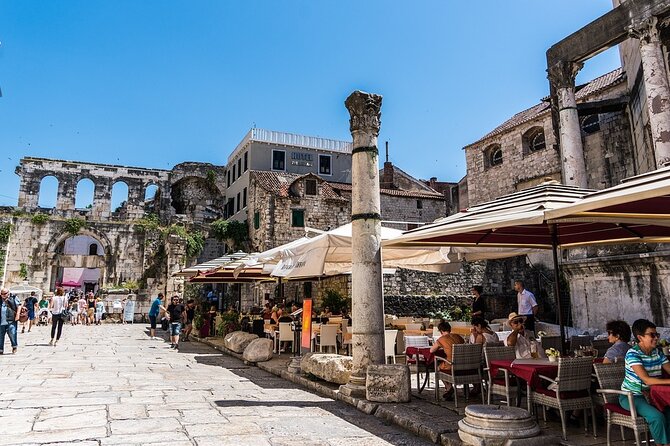
The physical setting is what makes this stop memorable. A formal Roman courtyard now sits at the heart of Split’s Old Town. Ancient architecture is not merely preserved around the modern city. It helps form the city’s public spaces and routes.
Your guide’s role here is important. A short explanation can point out the difference between a ceremonial imperial space and the later life that grew around it. You will get more from the columns, paving, and surrounding buildings if you understand what the courtyard was meant to do.
The 30-minute timing is sensible. It gives you enough room for a proper introduction without making the opening lecture too long. If you want detailed architectural measurements, a full Roman archaeology course, or quiet time for extended photography, you may find the pace brisk.
Still, this is the right place to begin. Once you understand the Peristyle, the cathedral and Temple of Jupiter make more sense as parts of one large complex rather than separate attractions.
Saint Domnius Cathedral: A Roman Mausoleum Turned Christian Landmark
The second stop lasts another 30 minutes and brings you to Split’s most widely recognized attraction, the Cathedral of Saint Domnius. The building began as Diocletian’s mausoleum, so its original purpose was not Christian worship.
That origin is central to the cathedral’s character. Diocletian was a powerful Roman emperor and a well-known persecutor of Christians. Later, the building was adapted for Christian use, creating one of the clearest examples in Split of old imperial architecture receiving a new religious life.
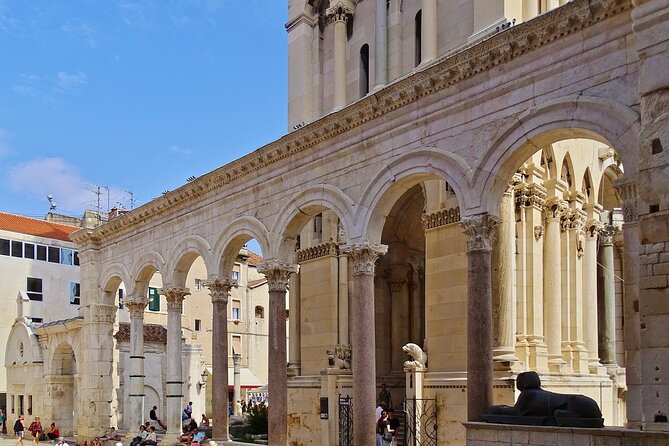
The exterior still has an original colonnade of 24 columns. Your guide can help you notice how unusual it is to encounter a cathedral whose beginnings are so closely tied to a Roman emperor’s burial building.
The bell tower has become an emblem of Split. It is the part most likely to shape your first impression of the Old Town, even if you have only seen photographs before arriving. On this tour, you learn how the tower relates to the older structure around it instead of treating it as an isolated landmark.
The cathedral complex also includes a treasury with reliquaries, icons, church robes, illuminated manuscripts, and documents written in Glagolitic script. These objects show how the site continued to matter long after the Roman period.
There is an important practical point here. The tour information includes admission for the listed stops, but it also says optional entrance fees are not included. That wording can leave room for confusion, especially if certain interior areas or added visits require payment. I would confirm exactly what your booking covers before you arrive if seeing the treasury is a priority.
The half-hour allocation keeps the visit moving. You should gain a strong sense of the cathedral’s unusual layers, but you may not have time to examine every object in the treasury. If you prefer a long church visit with plenty of quiet time, plan to return on your own, subject to local opening arrangements.
Jupiter’s Temple: A Compact Roman Finish
The final stop is the Temple of Jupiter, with about 15 minutes set aside. The temple was built in the third century as part of Diocletian’s Palace and dedicated to Jupiter, the Roman king of the gods.
The temple adds an important religious piece to the tour. At the Peristyle, you see imperial ceremony. At the cathedral, you see Christian worship occupying a former imperial mausoleum. Here, you return to the Roman gods and to Diocletian’s belief that he was the reincarnation of Jupiter.
That connection helps explain why the temple was included in the palace plan. Diocletian was not simply building a private retirement home. He was shaping a residence that expressed his authority, his place in the Roman world, and his link to the divine.
The Temple of Jupiter is considered one of the best-preserved Roman temples in the world. The 15-minute stop is short, but that may suit the site. It works well as a concise final piece after the longer discussions at the Peristyle and cathedral.
Do not expect an extended archaeological session here. The guide will help you understand the temple’s purpose and place in the palace, then bring the walk to a close. For a first visit to Split, that economy is useful. You leave with a clear framework instead of a head full of disconnected dates.
More walking tours in Split:
- Walking Tour of Split and Diocletian’s Palace
★ 5.0 · 2,588 reviews - Krka Waterfalls tour with Trogir Walking tour and Krka panoramic boat cruise
★ 5.0 · 1,659 reviews - Split & Diocletian’s Palace Walking Tour
★ 5.0 · 1,125 reviews - Split: Diocletian Palace & Old Town Guided Walking Tour
★ 4.7 · 882 reviews
What the Guides Add to the Experience
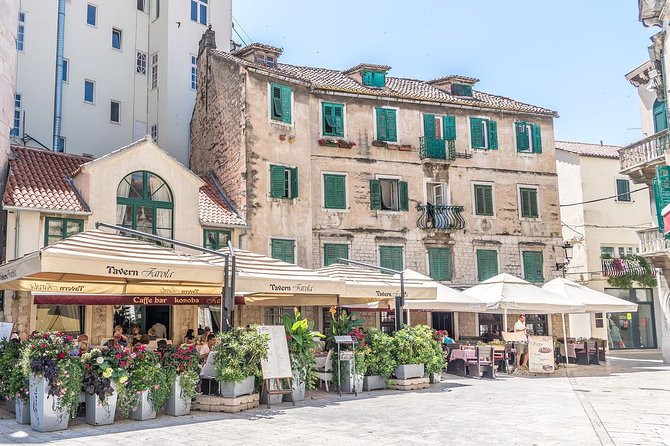
The quality of a short history walk depends heavily on the person leading it. There is not enough time for a weak guide to hide behind a long route. The listed guides Nicole and Nikol receive particularly warm praise for their explanations, friendliness, and ability to answer questions.
That is useful information when you are choosing a compact tour. You want someone who can explain the difficult parts plainly, especially the shift from Roman imperial palace to Christian cathedral and living Old Town.
Nicole is described as answering questions carefully and making the group feel comfortable. Nikol is also praised for making the history personal and clear. The most useful quality here is not simply the number of facts. It is the ability to connect those facts to what you are looking at.
Your guide is also likely to shape the pace. The experience is designed for questions, but it is not a private appointment. With up to 15 people, you should have a better chance of hearing the explanation than you would in a large group, though the exact feel depends on the final number attending.
There is one naming detail to keep in mind. The information associates the experience with both Nicole and Nikol, so a particular guide may not be guaranteed. If you are hoping specifically for one of them, ask before booking rather than assuming.
The 9:00 am Start and 90-Minute Length
The tour begins at Obala Lazareta 3 and ends at the same meeting point. Starting at 9:00 am gives you a useful first look at the Old Town before your own wandering, lunch plans, or other sightseeing.
I like the fixed loop. You do not need to arrange a pickup or figure out how to return from a distant site. The walk begins and ends in the same general area, which is practical if you are visiting Split for a short stay.
Ninety minutes is long enough to establish the essentials but short enough to fit into a busy day. You can take this before exploring the Old Town independently, before another scheduled activity, or as a quick orientation after arriving.
The tradeoff is depth. The tour visits three important places, but it does not promise an exhaustive examination of every corner of Diocletian’s Palace. You will likely leave with a better understanding of the layout and major historical changes, then need to explore on your own if you want more.
Wear comfortable shoes. The route passes through an old stone center and includes some stairs, though the amount has been described as limited. Most people can participate, but anyone concerned about walking or steps should ask the provider for current route details.
Is $41.70 a Fair Price?
At $41.70 per person, this is not the cheapest way to stroll through Split. The value rests in the guide, the small group limit, and the time saved by having the main Roman and Christian sights explained in one focused walk.
You are paying for a certified English-speaking local guide and a planned route through the Old Town. That can be worthwhile if you are visiting for only a day or two, since a good introduction helps you decide where to spend your own time afterward.
The price is easier to justify if you enjoy asking questions or find ancient sites hard to interpret without context. It is less appealing if you prefer to wander alone, read at your own pace, or limit paid sightseeing to major museums and towers.
Check the final cost details before booking. Coffee and tea are not included, and the information says all fees and taxes are not included. It also lists optional entrance fees as excluded, even though admission is shown for the three stops. Ask what is covered so the price does not surprise you at the meeting point.
Who Will Get the Most From This Split Walk
I would recommend this experience to a first-time visitor who wants a clear introduction without giving up an entire morning. It also suits anyone who likes history in manageable portions, especially when the story involves several periods in the same building.
It is a good choice if you want:
- A short orientation to Split’s Old Town
- Roman architecture explained in place
- A local English-speaking guide
- A group smaller than a typical mass tour
- A route focused on the city’s main historical center
Families and older visitors may appreciate the limited length, though the stone streets and stairs still require ordinary walking ability. Most people can participate, but the experience is not presented as fully step-free.
I would be more cautious if your main goal is an extended cathedral visit, a detailed look at every treasury object, or a private archaeological discussion. The format is brisk and introductory by design.
Booking, Weather, and Cancellation Details
You receive confirmation when you book, and the activity is offered in English with a mobile ticket. The maximum group size is 15 people.
Free cancellation is available if you cancel at least 24 hours before the 9:00 am start time. Changes or cancellations inside that 24-hour window are not accepted for a refund.
The walk requires good weather. If poor weather causes cancellation, you can choose another date or receive a full refund. The same basic choice applies if the minimum number of participants is not reached.
Should You Book This Split History Walk?
Book it if you want the story behind Split’s Old Town explained by a local guide in a compact format. The best reasons are the smart three-stop route, the manageable group size, and the strong guide feedback connected with Nicole and Nikol.
I would skip it only if you already know the palace well or want to explore every interior space independently. For most first visits, $41.70 is a reasonable price for a focused introduction, provided you confirm which entrance fees are covered.
Start at 9:00 am, listen closely at the Peristyle, and use the rest of the day to return to the places that catch your eye. That is where this tour works best: it gives you the historical map, then leaves Split for you to discover at street level.
FAQ
Where does the tour start?
The tour starts at Obala Lazareta 3, 21000 Split, Croatia.
What time does the tour begin?
The start time is 9:00 am.
Where does the tour end?
The activity ends back at the meeting point.
How long does the walking tour last?
The tour lasts approximately 1 hour and 30 minutes.
What language is the tour offered in?
The tour is offered in English and includes a certified English-speaking local guide.
What sights are included?
The route includes the Peristyle of Diocletian’s Palace, the Cathedral of Saint Domnius, and the Temple of Jupiter.
How many people can join the tour?
The activity has a maximum of 15 participants.
Can I cancel for a refund?
Yes. You can cancel at least 24 hours before the start time for a full refund. Cancellations or changes made less than 24 hours before the start time are not refunded.
Just added around Split
- Kayaking & Zipline Šibenik – Čikola Canyon★ 5.0 · 3 reviews
- Krka National Park & Zipline Šibenik – Čikola Canyon★ 5.0 · 3 reviews
- Split: Small-Group Half Day Sailing Trip★ 5.0 · 3 reviews
- Rafting River Cetina from Makarska Riviera including transfer★ 5.0 · 3 reviews
- From Split: Krka National Park & Waterfalls Private Day Trip★ 5.0 · 3 reviews
- Split Bike and Wine Experience★ 5.0 · 3 reviews
- Split and Salona Cultural Heritage Day Tour from Trogir★ 4.0 · 3 reviews
- Krka Waterfalls, Lake Cruise & Skradin★ 5.0 · 3 reviews
Old Town & History Tours, compared.


Walking Tour of Split with a ‘Magister’ of History
Read our review →

Diocletian Palace & Old Town Guided Walking Tour
Read our review →

Diocletian’s Palace and Old Town SMALL GROUP Walking Tour
Read our review →

Split History and Gastro Small-Group Tour with Food and Drinks
Read our review →Browse the lists this tour appears in