
Reviewed · WALKING TOURS
Split: Trogir Open Top Bus Trip + Free Split Walking Tour
Trogir is the star here: a small island town where Romanesque, Gothic, and Venetian buildings crowd into a compact maze of stone lanes. At $13, this trip gives you a simple way to reach it from Split, then adds a guided walk through Diocletian’s Palace at no extra charge.
I like the scenic 45-minute ride along the coast and the useful free time in Trogir. I also like the chance to pair a smaller medieval town with Split’s Roman center, especially if this is your first morning in Dalmatia. The main caution is that the quality of the guiding may vary, and the walking portions are in English only.
In This Review
- Key points to know before booking
- Why Trogir makes a good morning trip from Split
- The 45-minute ride from Split to Trogir
- Walking Trogir’s ancient lanes
- Cathedral of St. Lawrence and the Radovan Portal
- Kamerlengo Fortress and the view over the marina
- Free time for coffee, pastries, shops, and the waterfront
- The included Split walk and Diocletian’s Palace
- What the $13 price really buys you
- Who should book this Trogir trip?
- Practical details that can shape your morning
- Should you book it?
- FAQ
- How long does the Trogir and Split experience last?
- What is included in the $13 price?
- Is the walking tour available in languages other than English?
- Is the activity wheelchair accessible?
- What should I bring?
- Where do I meet the group?
Key points to know before booking
- Trogir fits neatly into a morning: The trip returns to Split around midday, leaving your afternoon open.
- The Cathedral of St. Lawrence is the architectural highlight: Its Radovan Portal mixes biblical scenes with details from daily medieval life.
- Kamerlengo Fortress adds wide coastal views: You can look over the marina, town, and Adriatic from its walls.
- The $13 price covers two sightseeing pieces: You get transport and a Trogir walk, plus a guided walk of Diocletian’s Palace in Split.
- Guide quality matters: Duje received especially warm praise for clear, amusing commentary, while other reports describe short or underdeveloped guided portions.
- This is not a wheelchair-accessible outing: Expect stone streets, walking, and an active visit through historic quarters.
Why Trogir makes a good morning trip from Split
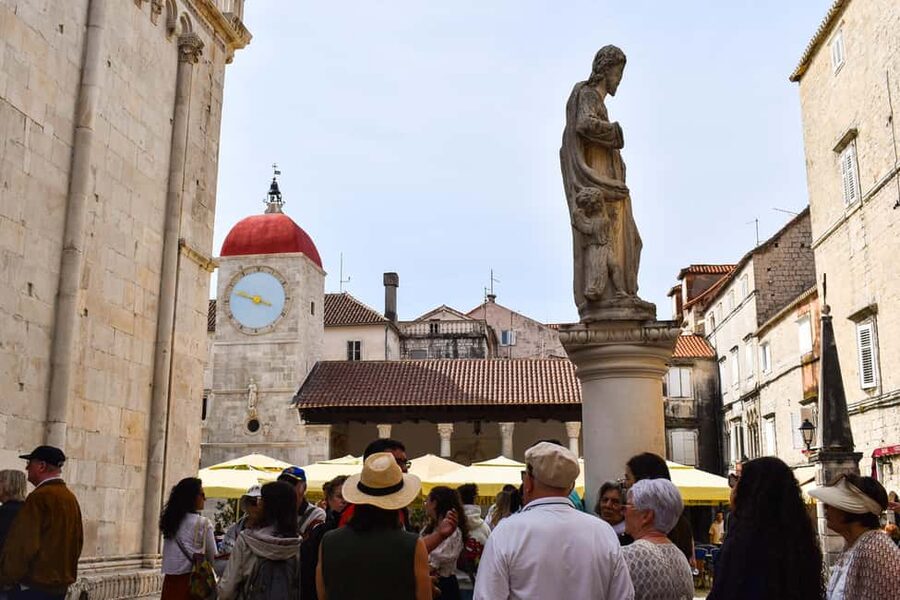
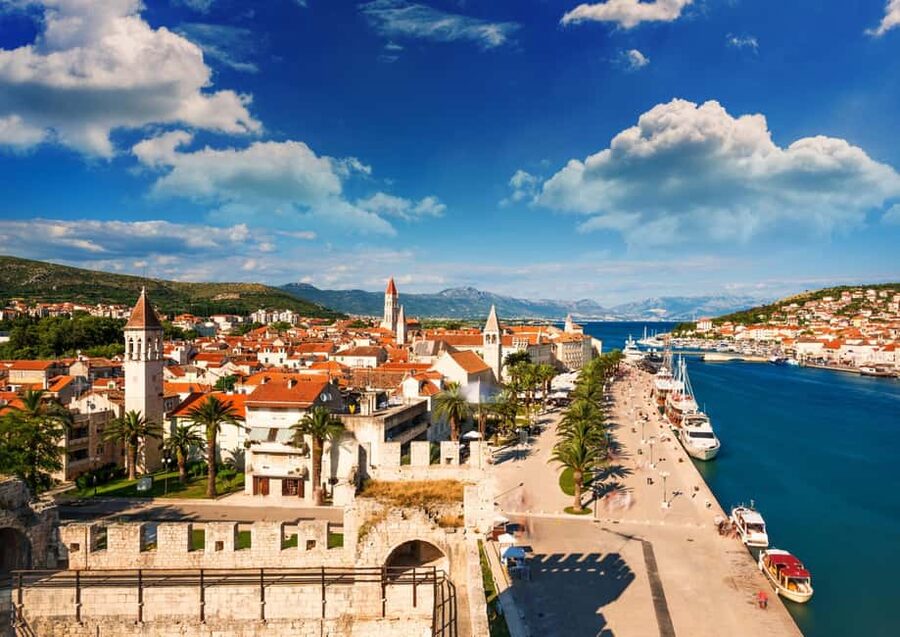
Trogir lies on a small island linked to the mainland and nearby island areas by bridges. Its center is compact, so you can cover many of the main sights without spending the whole day on foot.
The town began with ancient Greek foundations and later became a medieval port shaped by Romanesque, Gothic, and Venetian building styles. That layered past is what makes Trogir worth the short ride from Split. You are not simply visiting another pretty Croatian waterfront. You are walking through a town whose streets, courtyards, churches, and defensive walls still form a remarkably intact old center.
I especially like the contrast with Split. Split is built around the remains of Diocletian’s Palace, with modern life woven into the Roman structure. Trogir feels smaller and more enclosed. The two places work well together, but they offer different moods.
The trip lasts about three hours, including the drive. That makes it a good fit if you want a taste of Trogir without giving up an entire day. It also works well for a first morning in Split, since you return around midday and can still have lunch, visit a museum, or spend the afternoon along the waterfront.
The tradeoff is time. A short morning cannot provide a slow, detailed visit to every church, museum, and lane. You will see the key sights and get time to wander, but anyone wanting a relaxed Trogir day should consider staying longer independently.
More walking tours in Split:
- Split: Old Town and Diocletian Palace Walking Tour
★ 4.9 · 4,727 reviews - Walking Tour of Split and Diocletian’s Palace
★ 5.0 · 2,588 reviews - Krka Waterfalls tour with Trogir Walking tour and Krka panoramic boat cruise
★ 5.0 · 1,659 reviews
The 45-minute ride from Split to Trogir
The journey takes roughly 45 minutes and follows the Adriatic coast. The ride is part of the appeal, since you get a quick look at the coastal setting before reaching the old town.
Meeting the bus is meant to be straightforward. Look for an open-top red bus and staff in red or white shirts. The open-top branding can be slightly confusing because the actual vehicle may be a larger coach rather than a classic hop-on, hop-off bus. One account describes a comfortable bus, while another notes a large coach with only six people aboard. The exact vehicle and group feel may therefore vary.
The guide may provide commentary during the drive. Duje was specifically praised for combining useful information with humor, which can turn a basic transfer into a helpful introduction to the area. Still, you should not assume that every departure will have the same level of narration. Some accounts describe waiting during the bus portion, so build in a little patience.
If you are prone to motion sickness, sit where you feel most comfortable and bring water. The tour requires comfortable shoes and clothing suited to the weather. You will be walking on old stone surfaces once you arrive.
Walking Trogir’s ancient lanes
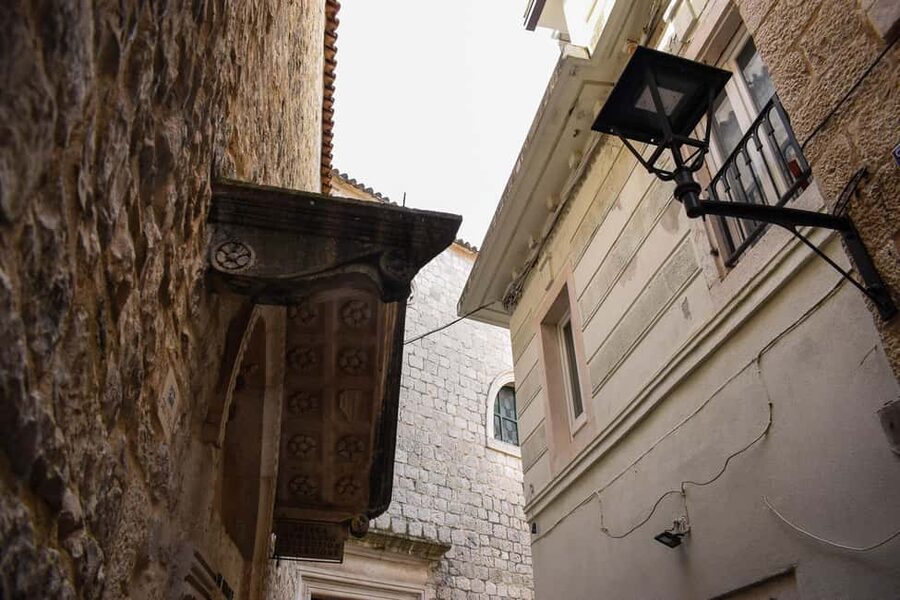
The guided portion begins in Trogir’s Old Town. Expect narrow stone streets, old houses, inner courtyards, and traces of the town’s development from Greek settlement to medieval port.
This is where a guide adds real value. Without context, Trogir can look like a charming collection of old buildings. With a good explanation, you start to see how the town grew, why the lanes are so tight, and how different periods left their mark.
The old center is small enough that the tour can show you the main structure of the town without exhausting your morning. You will not need a long transfer between sights. That is useful for a short trip, though it also means the official guided section may feel brisk.
This is the part where expectations matter most. The advertised experience includes a guided walking tour, but the amount of commentary can differ. One poor account describes a guided section lasting about 15 minutes, while stronger experiences describe a proper walk through the main sights with clear explanations. The guide you receive will affect how much history you take away.
The free period after the walk helps make up for the short schedule. You can return to a lane you liked, browse artisan shops, stop for a coffee and local pastries, or stroll by the waterfront. I would use this time to wander without a map for a while. Trogir is compact, and its small details are often more rewarding than rushing from one listed sight to the next.
Cathedral of St. Lawrence and the Radovan Portal
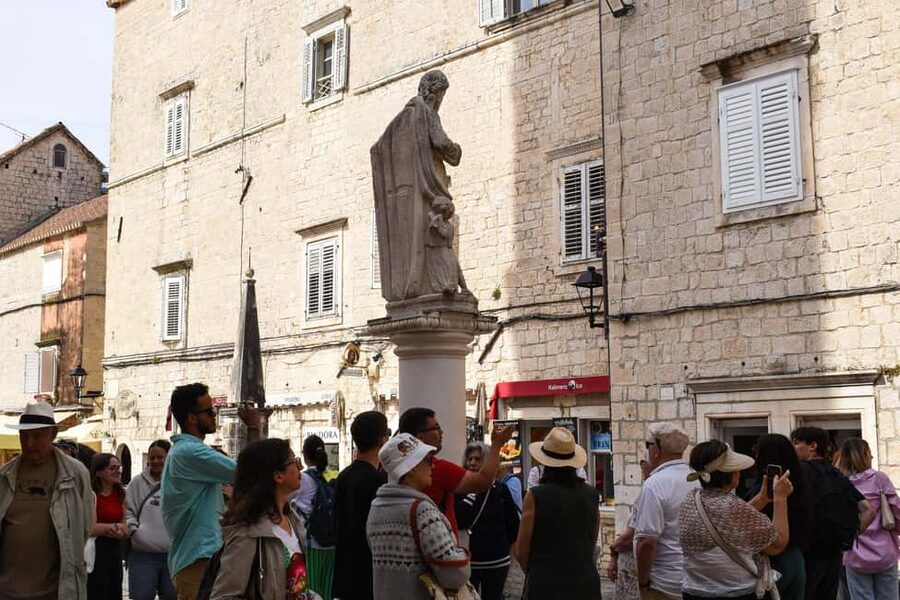
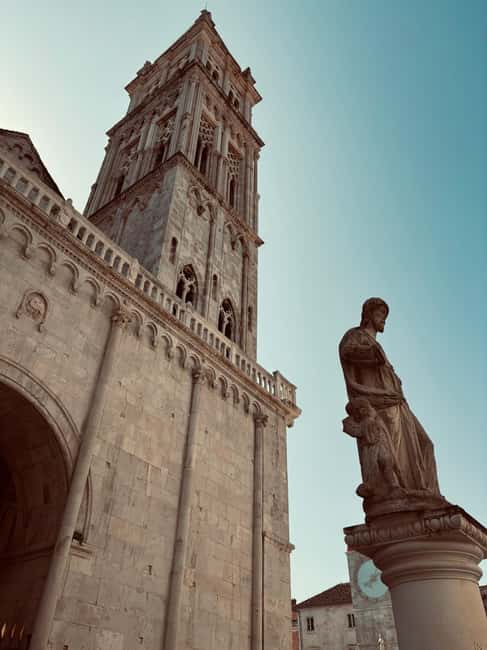
The Cathedral of St. Lawrence is the most important single stop on the walking route. Its design combines Romanesque and Gothic elements, reflecting the long period over which it was built and altered.
The 13th-century Radovan Portal is the detail to watch for. Its stone decoration includes biblical scenes, but it also shows ordinary human activity. That mix gives the entrance more life than a purely formal religious carving. Look closely at the figures and small details rather than simply taking a quick photograph and moving on.
A guide can explain why the cathedral matters within Dalmatia, how its art reflects medieval culture, and what makes the portal such an important monument. This is one of the places where an English-language walk is useful, since the meaning is not always obvious from the stonework alone.
The visit is not designed as a long cathedral study. If you have a special interest in medieval architecture, you may want to return during your free time if opening conditions allow. The tour provides the introduction, while independent time lets you look more carefully.
A few more Split half-days to weigh up
- Split: Krka Waterfalls Trip with Boat Cruise and Swimming
★ 4.8 · 10,519 reviews - From Split: Krka Waterfalls, Food & Wine Tasting Tour
★ 5.0 · 9,326 reviews - Blue cave, Mamma Mia and Hvar, 5 islands speedboat tour
★ 5.0 · 7,150 reviews - From Split: Krka Waterfalls, Food & Wine Tasting Tour
★ 4.9 · 6,598 reviews
Kamerlengo Fortress and the view over the marina
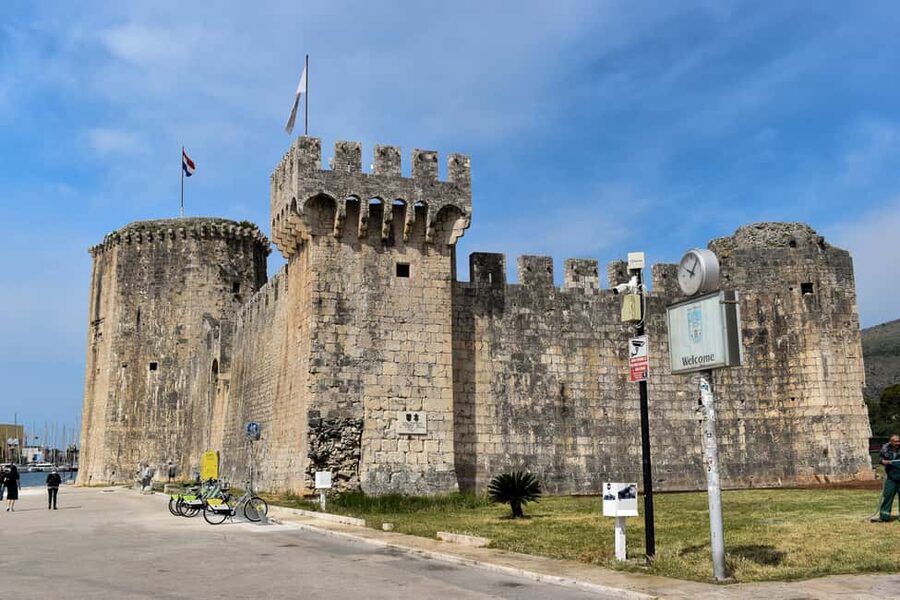
Kamerlengo Fortress was built by the Venetians in the 15th century. Its purpose was practical: it helped protect Trogir and its harbor. Today, its most immediate reward is the view.
From the walls, you can look across Trogir, the marina, and the Adriatic coast. It is a useful stop because it shifts your view from street level to the town’s wider setting. After walking through tight lanes and enclosed courtyards, the open outlook helps you understand the island town’s position and defensive value.
The fortress also gives the tour a change of pace. You move from carved stone and church architecture to thick defensive walls and open coastal scenery. If the weather is clear, this may be one of the most memorable moments of the morning.
You should still keep the short schedule in mind. The tour is not a full fortress visit with unlimited time. If you want to linger over the views, the free period is important. Ask your guide how much time you have before wandering too far from the meeting point.
Free time for coffee, pastries, shops, and the waterfront
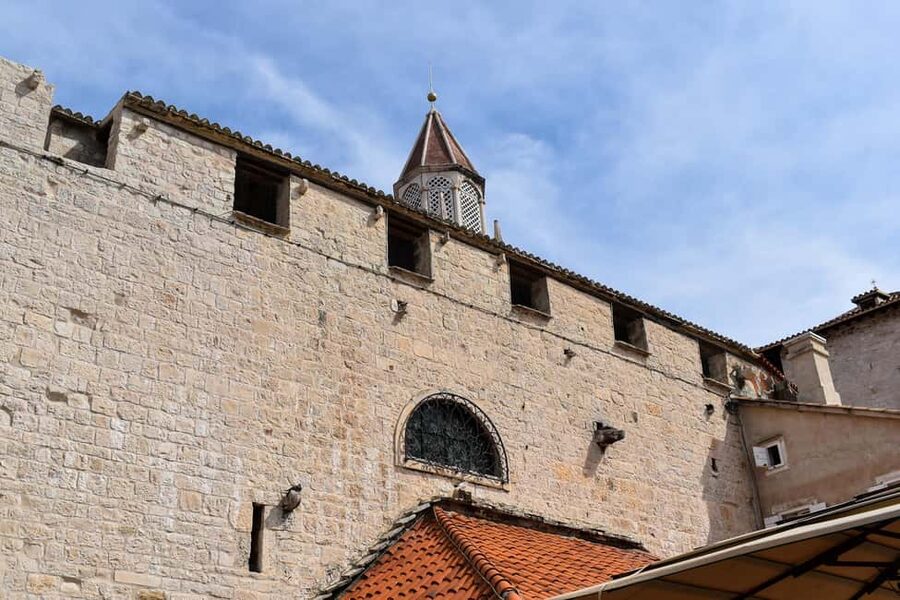
After the guided walk, you get time to explore on your own. This is a valuable part of the outing because Trogir is best appreciated at a slower pace than a strict checklist allows.
A coffee and local pastries make an easy use of the break. You might also look through artisan shops or walk along the waterfront promenade. The supplied experience does not include personal expenses, so food, drinks, and shopping are extra.
I would avoid treating this period as spare time to kill. Use it to revisit the parts of the Old Town that caught your eye. The guide has already given you the basic map of the center, so you can now choose between architecture, shops, food, or the harbor.
The main risk is simply losing track of time. The bus returns to Split around midday, and the schedule is not built for a long independent stay. One departure reportedly ran from 8:30 a.m. to noon rather than ending at 11:30 a.m., so the actual finish may shift slightly. Keep your plans after the tour flexible.
The included Split walk and Diocletian’s Palace
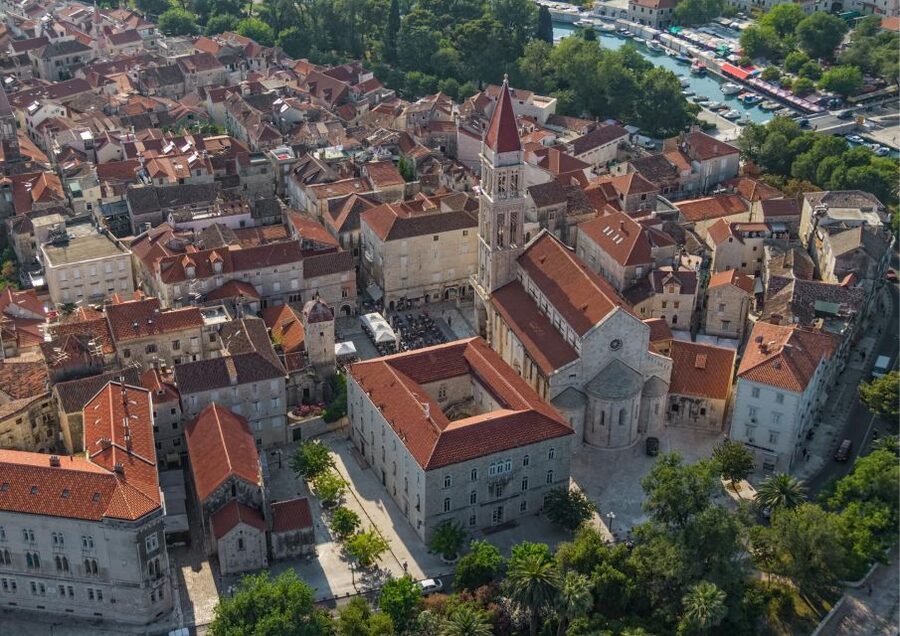
The ticket also includes a guided English walking tour of Diocletian’s Palace in Split. This is a strong value point, since you are combining two important historic centers for $13.
The Split walk focuses on the UNESCO-listed Old Town and the Roman origins of the city. Diocletian’s Palace is not an isolated ruin. Modern streets, shops, homes, and cafés occupy and surround the ancient structure, so a guide helps you identify what belongs to the Roman complex and how the city developed around it.
The Split walk may be scheduled separately from the Trogir outing. That means you can return to Split, find lunch, and join the palace walk according to the arrangements given by the provider. The information supplied does not establish one exact timing for this second tour, so check the day’s instructions carefully.
Guide Ina was singled out for her work as an archaeologist and for her passion when explaining Split’s Roman past. That kind of specialist background can make the palace far easier to understand. It also shows why the combination is more than a bus transfer to Trogir. You receive a useful introduction to both the medieval coastal town and the Roman core of Split.
One important point: the walking tours of Trogir and Split are in English only. An audio guide is listed in English, Italian, Spanish, French, Croatian, Portuguese, Russian, German, Dutch, and Swedish, but the live walking commentary is not offered in all those languages. If you book expecting Spanish or French live guiding, you may be disappointed.
What the $13 price really buys you
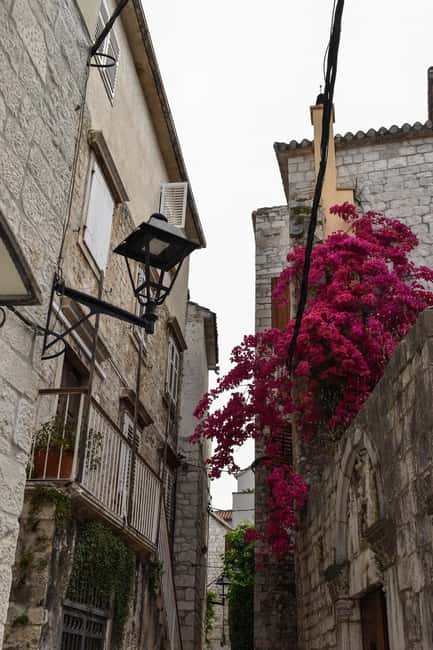
At $13 per person, the price is unusually low for round-trip transport, a guided Trogir walk, free time, and a second guided walk in Split. You are paying less for a polished, private excursion and more for an efficient shared outing.
The value is strongest if you want orientation. A guide points out the main Trogir sights, explains the cathedral and fortress, and gets you back to Split without the work of arranging transport. The added palace walk gives the fare even more weight.
The price is less compelling if you prefer complete control. You may face waiting during transport, a coach-style vehicle, and a quick guided route. You also cannot count on a long, detailed lecture at every stop. Independent visitors who are happy to arrange their own transport and spend several hours in Trogir may prefer to stay longer.
The overall rating is 4.1 from 17 ratings, which suggests a generally positive but uneven experience. Strong outings feature guides such as Duje and Ina, while weaker ones involve unclear communication, broken audio, waiting, or a very short walking explanation. That range is worth considering before you book.
Free cancellation up to 24 hours ahead and reserve-now, pay-later terms reduce the financial risk. They do not solve the question of guide quality, but they make the tour easier to fit into a changing Split itinerary.
Who should book this Trogir trip?
I would recommend it to you if:
- You have only a morning available.
- You want transport handled for you.
- You enjoy guided introductions but also want free time.
- You are visiting both Split and Trogir for the first time.
- You want a low-cost way to connect Roman and medieval Dalmatian history.
- You can manage several hours of walking on uneven old-town surfaces.
It is less suitable if you use a wheelchair, since the tour is not wheelchair accessible. It is also a poor match if you need a live guide in French, Spanish, or another language besides English.
Families and casual sightseers may like the short format, especially if a full-day excursion feels too long. History lovers should enjoy the cathedral, Radovan Portal, fortress, and palace, but may want extra independent time in Trogir.
Practical details that can shape your morning
Wear comfortable walking shoes. The historic centers use stone streets, and the tour is built around walking rather than sitting on the bus.
Bring weather-appropriate clothing. The fortress and waterfront are exposed, while the Old Town can feel enclosed and shaded. You should also carry water and leave room in your schedule for a possible late return.
The meeting point is identified by the open-top red bus and staff wearing red or white shirts. Look for the team beside the bus rather than relying only on a street address.
Alcohol and drugs are not allowed. Personal expenses, including food, drinks, and shopping, are not included.
The tour includes an express security check, described as skip-the-line access through express security. The experience is still not a private tour, and the exact pace can depend on transport and the guide assigned that day.
Should you book it?
Book this trip if you want a cheap, convenient introduction to Trogir and Split in one package. The best reasons are the short coastal ride, Trogir’s concentrated historic center, the views from Kamerlengo Fortress, and the added Diocletian’s Palace walk. At $13, the combination offers excellent potential value.
Book with realistic expectations. This is a short shared excursion, not a slow cultural day. Guide quality and timing may vary, and the live commentary is English only. If you want hours in Trogir, a guaranteed specialist guide, or full control over the schedule, arrange the town independently.
For most first-time visitors with a free morning, I would choose it as a practical introduction. Wear good shoes, keep your afternoon flexible, and treat the free time in Trogir as part of the experience rather than an afterthought.
FAQ
How long does the Trogir and Split experience last?
The full activity lasts about three hours, including travel time. Return to Split is scheduled around midday, though the exact finish may vary slightly.
What is included in the $13 price?
The price includes round-trip transportation from Split, a guided walking tour of Trogir Old Town, an English-speaking licensed guide, free time in Trogir, and a guided English walking tour of Diocletian’s Palace in Split.
Is the walking tour available in languages other than English?
The live walking tours of Trogir and Split are in English only. An audio guide is listed in English, Italian, Spanish, French, Croatian, Portuguese, Russian, German, Dutch, and Swedish.
Is the activity wheelchair accessible?
No. The tour is not suitable for wheelchair users.
What should I bring?
Bring comfortable walking shoes and clothing suited to the weather. You should also plan for personal spending if you want food, drinks, or purchases in Trogir.
Where do I meet the group?
Look for an open-top red bus and the tour team beside it. Staff members wear red or white shirts.
Just added around Split
- Kayaking & Zipline Šibenik – Čikola Canyon★ 5.0 · 3 reviews
- Krka National Park & Zipline Šibenik – Čikola Canyon★ 5.0 · 3 reviews
- Rafting River Cetina from Makarska Riviera including transfer★ 5.0 · 3 reviews
- From Split: Krka National Park & Waterfalls Private Day Trip★ 5.0 · 3 reviews
- Split: Small-Group Half Day Sailing Trip★ 5.0 · 3 reviews
- Split and Salona Cultural Heritage Day Tour from Trogir★ 4.0 · 3 reviews
- Split Bike and Wine Experience★ 5.0 · 3 reviews
- Split: Jewish Heritage & Diocletian’s Palace Walking Tour★ 5.0 · 3 reviews
Walking Tours, compared.


Walking Tour of Split and Diocletian’s Palace
Read our review →
Krka Waterfalls tour with Trogir Walking tour and Krka panoramic boat cruise
Read our review →

Walking Tour of Split with a ‘Magister’ of History
Read our review →

Diocletian Palace & Old Town Guided Walking Tour
Read our review →
Browse the lists this tour appears in