
Reviewed · OLD TOWN & HISTORY TOURS
Split: Private Roman History & Market Tour
Diocletian’s Palace is not a museum sealed behind ropes. It is the center of modern Split, where laundry hangs above Roman stone and daily life carries on inside a 1,700-year-old imperial home. This private tour connects those layers with a Green Market tasting and stories about customs that reach back to Illyrian times.
I like the personal scale and the food stop. A private guide can adjust the pace, while seasonal fruit, cheese, olive oil, dry figs, and rakija give you a quick taste of how locals shop and eat. The main drawback is the price: at $280 per person for two hours, it offers better value for a small private group than for one or two people.
In This Review
- Key points at a glance
- Starting beside the Riva promenade
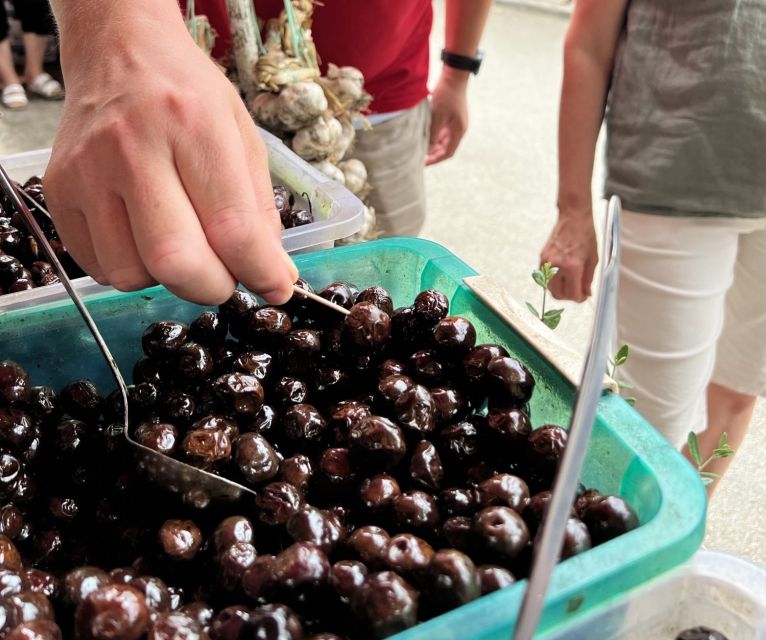
- The Green Market puts food first
- Gregory of Nin and the golden toe
- Hajduk Split and the city’s strong identity
- Entering Diocletian’s Palace
- Peristil reveals the palace’s grand side
- The Vestibule and Golden Gate
- Local rituals and palace stories
- Finishing on the Riva
- What the guides add
- Is $280 per person a fair price?
- Who should book this Split tour?
- Practical details before you go
- FAQ
- Where does the tour meet?
- How long does the tour last?
- Is the tour private?
- What language is the tour offered in?
- What food tastings are included?
- Which parts of Diocletian’s Palace are included?
- Are the cathedral, Bell Tower, museums, and palace underground included?
- Are young children allowed to join?
- Should you book it?
Key points at a glance
- Green Market tasting: Sample seasonal produce, cheese, olive oil, dry figs, and possibly rakija while learning how Split residents shop.
- Roman palace as a living neighborhood: Walk through Peristil, the Vestibule, Golden Gate, and a private section of Diocletian’s Palace.
- Local guides from Split: Guides such as Ted and Ivan bring personal knowledge of the city, while the tour may also be led by a local woman guide.
- Stories beyond Roman dates: Hear about Dalmatian food customs, Illyrian-era rituals, Hajduk Split, Gregory of Nin, and palace legends.
- Private two-hour format: The short visit works well for a first look at Split, though it leaves little time for included attractions such as the cathedral or palace basements.
- Carbon-neutral operation: The experience is run by a B Corp certified company that uses travel as a force for good.
Starting beside the Riva promenade
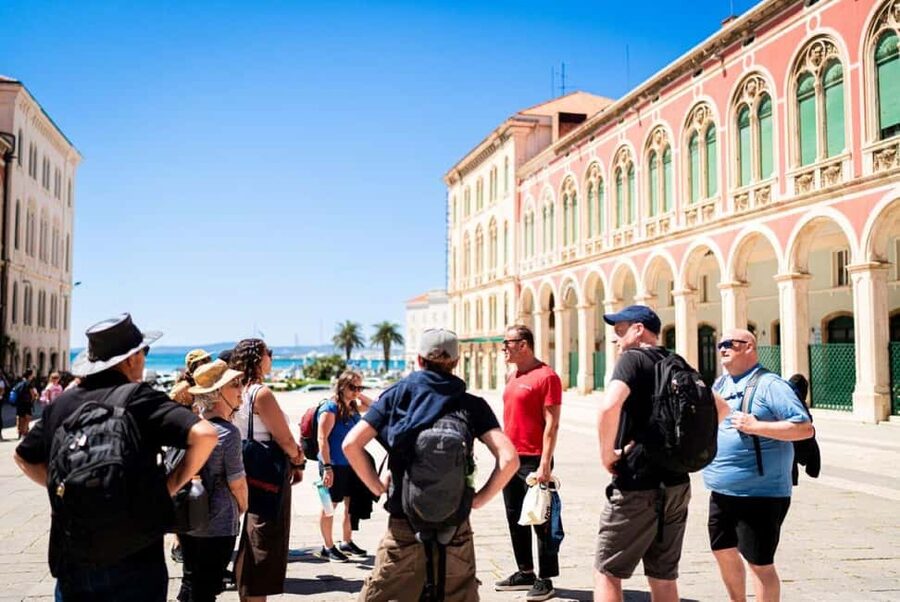
You meet near the beginning of Split’s Riva promenade, beside the iron map and mock-up model of the city. This is a useful starting point because the Riva is easy to find and sits right beside the old town.
Your guide speaks English and leads a private group. That matters here. Split’s historic center can feel confusing at first, with narrow passages, Roman columns, medieval houses, modern cafés, and apartment entrances sharing the same few blocks. A local guide helps you read the city instead of simply walking past its most famous stones.
The tour is aimed at introducing you to Splićani, the people of Split. Local pride is part of the experience. Residents are famously attached to their city, and the tour takes that affection seriously. You will hear why Split is treated by locals as one of the finest places on Earth, along with the kind of practical advice that helps you behave respectfully in a residential old town.
More old town history walks in Split:
- Split: Old Town and Diocletian Palace Walking Tour
★ 4.9 · 4,727 reviews - Walking Tour of Split with a ‘Magister’ of History
★ 5.0 · 1,122 reviews - Split Walking Tour with Professor of History
★ 5.0 · 926 reviews
The Green Market puts food first
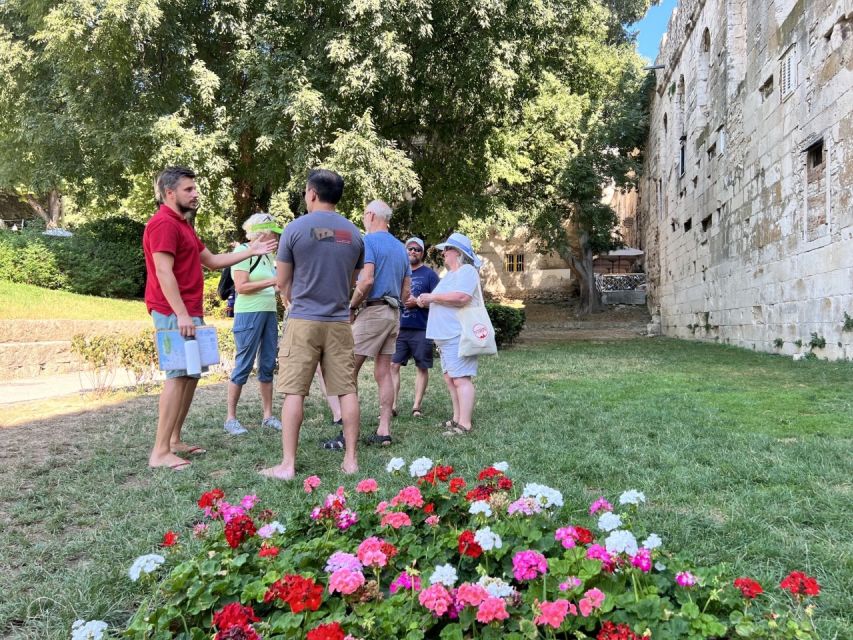
The first major stop is Split’s Green Market. This is a smart choice because food gives you an immediate connection to local life, and it keeps the tour from becoming a string of Roman facts.
The exact samples depend on the season and the vendors available. You may taste fruit, vegetables, olive oil, cheese, dry figs, or rakija. The point is not to fill you up. It is to show you what Dalmatian food looks like at the place where people buy it.
Your guide explains how locals use the market, how they choose produce, and which foods belong on a Dalmatian table. You may also hear the stories behind traditional ingredients and the customs tied to them. The food stop gives context to the old saying that the way to a Dalmatian’s heart is through the stomach.
Keep your expectations clear: this is a tasting stop, not a full meal. One past guest described the food as very good and referred to lunch, but the stated plan includes market tastings rather than a restaurant lunch. If you want a substantial meal, plan one separately after the tour.
The market can also be one of the more useful parts of the visit for later in your trip. You will receive suggestions for local delicacies and places to eat in the evening. The guide may point you toward favorite coffee shops and spots for Dalmatian food and entertainment, giving you options beyond the most obvious restaurant streets.
Gregory of Nin and the golden toe
From the market, the route brings you to Gregory of Nin, or Grgur Ninski. His large statue is one of Split’s best-known public landmarks, and the polished golden toe is impossible to miss.
You can make a wish while touching the toe, a small ritual that adds humor to the walk. The stop is brief, but it shows how Split mixes history, belief, and everyday habit. You are not only looking at a statue. You are taking part in a local custom that many people know as they pass through the old town.
This is also where a private guide can add value. If you are alone with the guide or traveling with your own small party, you can ask why this figure matters and how the statue fits into Split’s public life. The pace is less fixed than on a large group tour, so you have room for questions.
Hajduk Split and the city’s strong identity
Another local thread is Hajduk Split, the football club whose name appears across the city, from outer neighborhoods to the old town. Even if you do not follow football, this subject helps explain the emotional side of Split.
The tour presents Hajduk as part of local identity rather than as a sports lecture. You will learn why the club matters so much and why its name turns up in everyday city life. It is a useful reminder that Split is not only an archaeological site. It is a city with strong loyalties, proud traditions, and modern passions.
This kind of detail is one reason the tour works better than a basic monument walk. Roman emperors matter, but so do football, food, coffee, and neighborhood customs. The experience tries to place you among all of those parts of Split at once.
A few more Split half-days to weigh up
- Split: Krka Waterfalls Trip with Boat Cruise and Swimming
★ 4.8 · 10,519 reviews - From Split: Krka Waterfalls, Food & Wine Tasting Tour
★ 5.0 · 9,326 reviews - Blue cave, Mamma Mia and Hvar, 5 islands speedboat tour
★ 5.0 · 7,150 reviews - From Split: Krka Waterfalls, Food & Wine Tasting Tour
★ 4.9 · 6,598 reviews
Entering Diocletian’s Palace
The central section takes place inside Diocletian’s Palace, built for the Roman emperor Diocletian. The palace is a UNESCO World Heritage monument, but it is also home to many residents and a regular meeting place for people who live in Split.
You will walk through the main square inside the palace walls, the Vestibule, and the Golden Gate. The route also includes a private section of the palace. These places help you see the scale and purpose of the imperial complex, from formal public spaces to areas connected with the emperor’s private life.
The palace is often called one of the best-preserved Roman palaces in the world. What makes it unusual is not simply the survival of the stone. The structure has been absorbed into the city. Medieval buildings rise against Roman walls, homes occupy ancient spaces, and cafés fill areas that once served an emperor.
That mixture can be confusing if you expect a tidy archaeological park. It is also the palace’s greatest strength. You are walking through a place where antique, medieval, and modern life occupy the same ground.
Peristil reveals the palace’s grand side
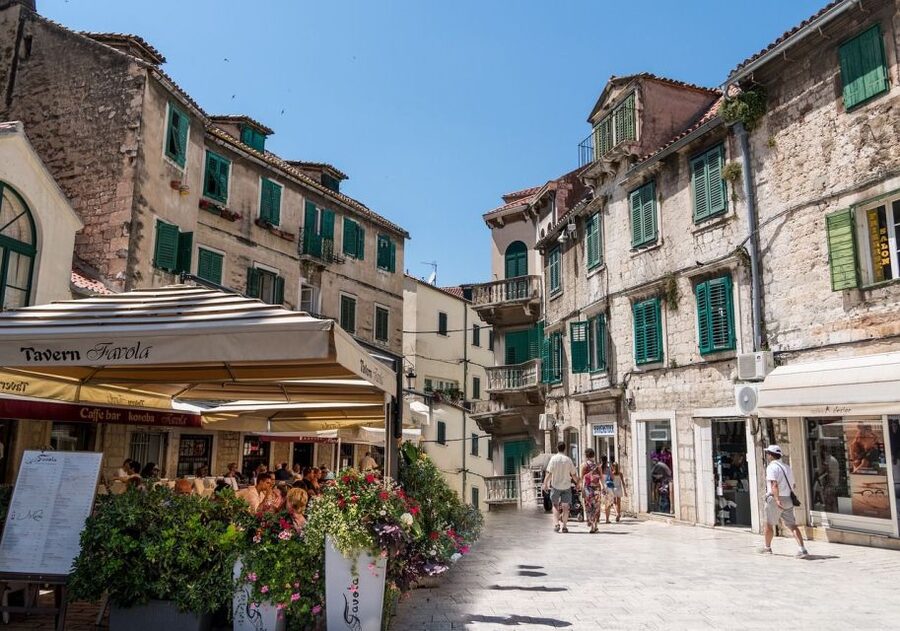
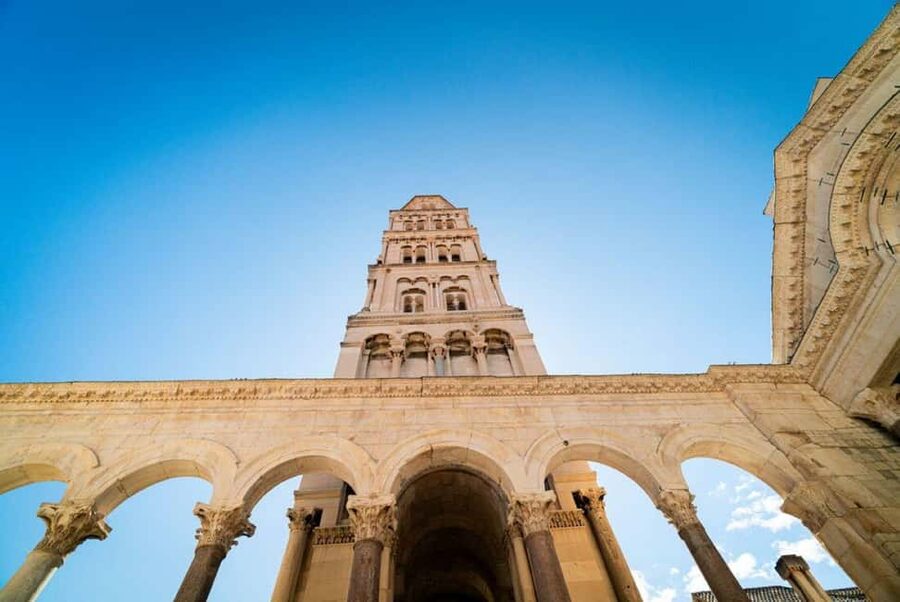
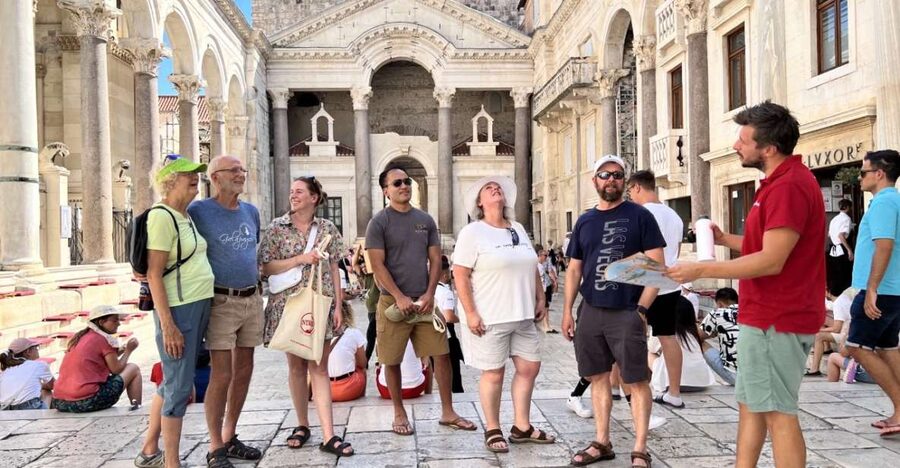
Peristil, the palace’s main ceremonial square, is one of the tour’s key stops. Here, your guide explains the public face of Diocletian’s residence and points out details in the surrounding stonework.
The square helps you understand how power was displayed in the Roman world. Diocletian did not build a modest retirement cottage. He created a huge complex that expressed his status, and the route lets you follow part of the same path he once used.
The guide also shares stories about Diocletian’s private preferences and the unusual details hidden in the palace walls. You may hear why he loved salad and learn about the mythical White Stone, said to bring happiness. These stories are not the same as a formal lecture on Roman architecture. They make the palace easier to remember.
Because the tour lasts only two hours, you should not expect every corner of the complex. The value comes from seeing the major spaces with an interpreter who links them to local customs and modern Split.
The Vestibule and Golden Gate
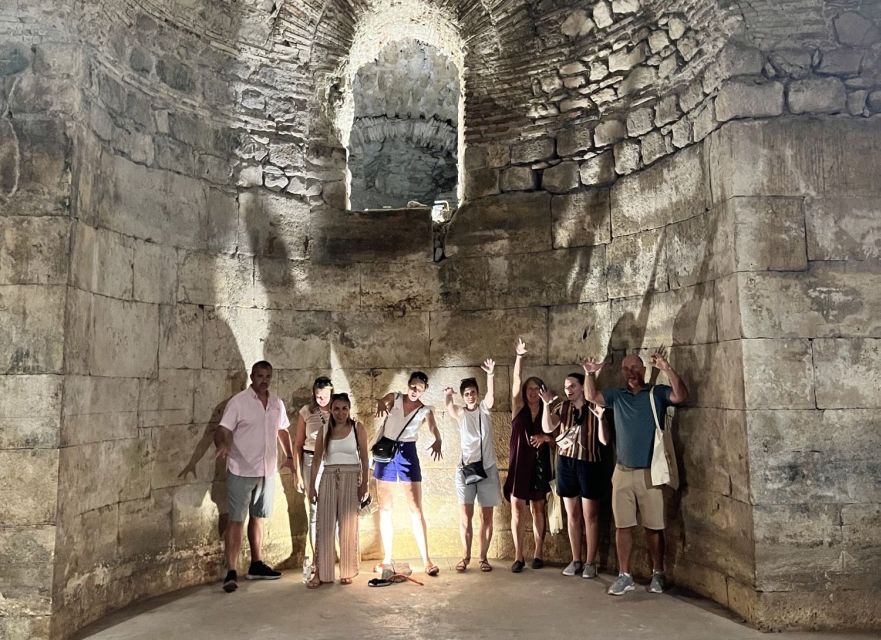
The Vestibule shows another side of the palace. Its form and position help explain how visitors once moved toward the emperor’s private quarters. Your guide gives the space a human scale by describing how it related to imperial life rather than leaving you with only dates and building terms.
The Golden Gate is another important stop. It was one of the palace entrances and remains among the most recognizable places in the old town. The gate helps you see how the original Roman plan shaped later streets and city movement.
These stops are especially helpful early in your time in Split. Once you understand the palace entrances and central routes, you can explore on your own without feeling as if every narrow lane is a dead end.
The route does not include entrance fees for the cathedral, the former imperial mausoleum, the palace underground, the Bell Tower, museums, or the Temple of Jupiter. That keeps the two-hour route focused, but it also means you will pay extra if you want to visit those sites afterward.
Local rituals and palace stories
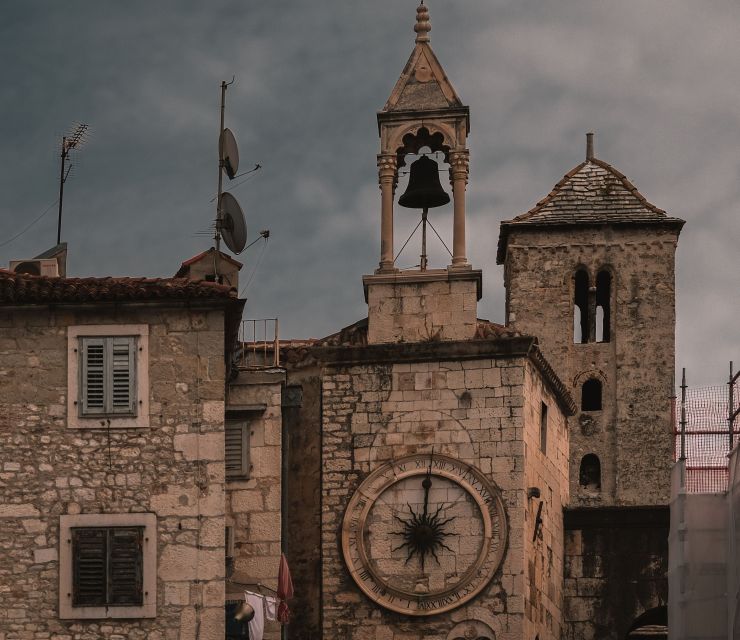
The tour includes stories about rituals that Dalmatian people still respect from Illyrian times. The information provided does not list every ritual, so you should treat this as a guide-led storytelling section rather than a fixed collection of named stops.
That flexibility can be useful. A local guide can explain customs in relation to the streets you are standing in, the foods you have sampled, and the people who still live inside the palace. You get a sense of continuity without being asked to pretend that modern Split is frozen in the ancient past.
The guide also points out how the old town has been used in popular culture, including appearances connected with Game of Thrones. That will appeal to fans, but it is not the main reason to book the experience. The stronger feature is the chance to see filming locations as part of a real neighborhood rather than as a separate theme park.
Finishing on the Riva
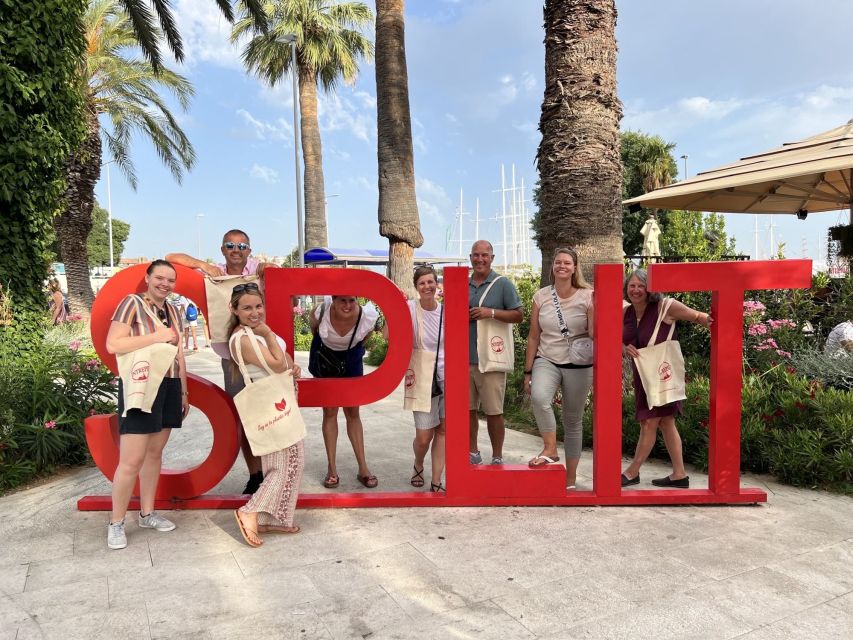
The tour ends on the Riva promenade, returning you to one of Split’s most useful public spaces. The waterfront is a natural place to continue your day with coffee, food, or an evening walk.
Before you go, your guide points out favorite cafés and places for Dalmatian delicacies and entertainment. This final advice can be worth a lot in a short tour, particularly if Split is your first stop in Dalmatia and you have not yet learned which streets suit your tastes.
The ending also gives the route a practical shape. You begin near the Riva, move through the market and palace, then return to the waterfront with a better sense of direction. You are not dropped at an isolated attraction with no idea what to do next.
What the guides add
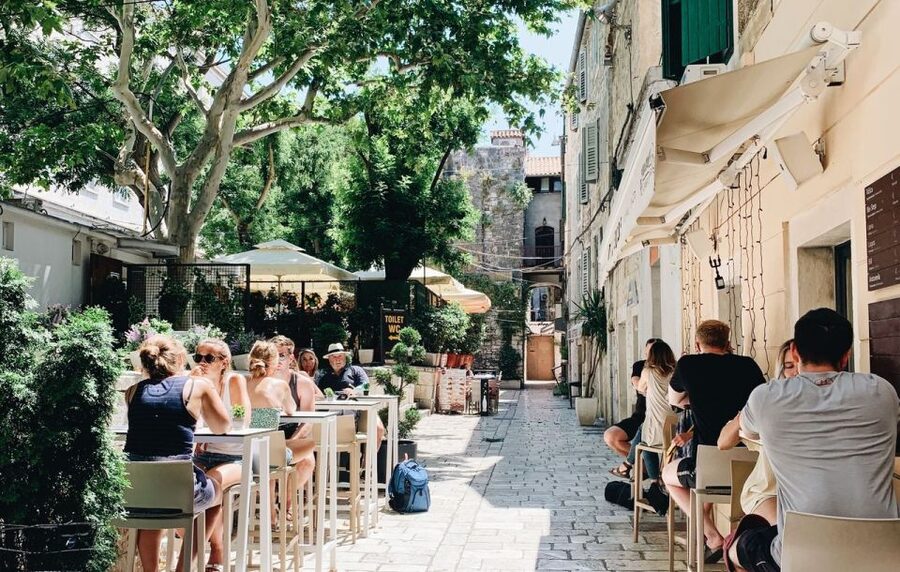
The experience is led by local English-speaking guides born and raised in Split. Specific guides named in the available feedback include Ted and Ivan. Ted was praised for a well-paced and educational tour, while Ivan was singled out for his strong command of the city and its past.
Another confirmed experience was led by a woman guide who spoke very good English, showed beautiful corners of the city, and added many anecdotes. The exact guide depends on the date, so you should not book expecting a particular person unless the operator confirms it.
The common thread is local perspective. The guide is not there only to recite Roman facts. You will hear about food, football, coffee, wishes, seasonal buying habits, and city pride. That broader view is the main reason to choose this tour over a purely archaeological walk.
Is $280 per person a fair price?
At $280 per person, this is a costly two-hour experience. The price is easier to justify if you are traveling with a private group, want an English-speaking local guide focused only on your party, and value the food tasting and personal recommendations.
For one or two people, the cost is harder to defend unless privacy is important to you. A standard group walking tour will usually offer more time per dollar, though it may not provide the same control over pace or questions. The private format is most useful for families, couples marking a special occasion, or people who want a focused introduction before exploring alone.
The tour includes the guide, the market tastings, and the listed palace areas. You will pay extra for the cathedral, Bell Tower, museums, Temple of Jupiter, and the palace underground. Additional food and drinks are also not included.
It is a short experience, so think of it as an orientation with flavor rather than a complete Split sightseeing day. If you want a first look at the city followed by independent exploration, the price may feel reasonable. If you want extensive monument access, a full meal, or several hours of history, you should look elsewhere or plan extra visits.
Who should book this Split tour?
I would choose this experience if you want your first hours in Split to include both Roman landmarks and everyday local life. It suits you best if food, personal stories, and practical recommendations matter as much as formal history.
Families can also consider it because children under six join free, provided you tell the operator in advance. The food samples and wish-making stop may give younger children something to enjoy, while older children can connect the palace with Roman life and Game of Thrones locations.
The tour also suits visitors who care about lower-impact travel. It is carbon neutral and operated by a B Corp certified company. That does not change the route itself, but it gives you a clear sustainability detail when comparing similar walking tours.
You may want to skip it if you dislike food tastings, need a full meal included, or want to spend most of your time inside paid monuments. You should also think twice if $280 per person feels high for a two-hour walk. The strength here is the local guide and private attention, not the number of attractions checked off.
Practical details before you go
The tour is offered in English and lasts two hours. Starting times vary, so check availability when booking.
You can cancel up to 24 hours before the start for a full refund, and you can reserve now and pay later. The tour is child-friendly, with children under six admitted free when the operator is informed beforehand.
Wear comfortable shoes. The route moves through old streets and palace passages, and the best experience comes when you can look up at the stonework rather than worry about every step. Since the tour ends on the Riva, you can easily continue with coffee or dinner afterward.
FAQ
Where does the tour meet?
Meet at the beginning of the Riva promenade near the mock-up model of Split and the iron map of the city.
How long does the tour last?
The tour lasts two hours.
Is the tour private?
Yes. It is organized for a private group.
What language is the tour offered in?
The tour is offered in English with a live English-speaking guide.
What food tastings are included?
The Green Market stop may include fruits, vegetables, olive oil, rakija, cheese, or dry figs. The exact seasonal foods can vary.
Which parts of Diocletian’s Palace are included?
The tour includes the main square within the palace walls, a private section of the palace, the Vestibule, and the Golden Gates.
Are the cathedral, Bell Tower, museums, and palace underground included?
No. Entrance fees to the cathedral of the former emperor’s mausoleum, palace underground, Bell Tower, museums, and Temple of Jupiter are not included.
Are young children allowed to join?
Yes. Children under six may join free of charge, but you need to inform the operator if you are bringing one.
Should you book it?
Book this tour if you want Split explained through food, local customs, and Roman architecture in one compact visit. The market tasting, personal guide, and living palace setting give you more than a standard list of dates and monuments.
The main decision is value. At $280 per person, this makes the most sense for a private group that wants a flexible introduction and useful local advice. For a solo visitor or couple on a tight budget, a less expensive group walk may be the wiser choice. For families and small groups who want to understand Split before exploring its streets on their own, this private Roman and market tour is a strong opening act.
Just added around Split
- Kayaking & Zipline Šibenik – Čikola Canyon★ 5.0 · 3 reviews
- Krka National Park & Zipline Šibenik – Čikola Canyon★ 5.0 · 3 reviews
- From Split: Krka National Park & Waterfalls Private Day Trip★ 5.0 · 3 reviews
- Split: Small-Group Half Day Sailing Trip★ 5.0 · 3 reviews
- Rafting River Cetina from Makarska Riviera including transfer★ 5.0 · 3 reviews
- Split Bike and Wine Experience★ 5.0 · 3 reviews
- Split and Salona Cultural Heritage Day Tour from Trogir★ 4.0 · 3 reviews
- Private transfer from Split to Dubrovnik with 2h sightseeing stop in Ston★ 5.0 · 3 reviews
Old Town & History Tours, compared.


Walking Tour of Split with a ‘Magister’ of History
Read our review →

Diocletian Palace & Old Town Guided Walking Tour
Read our review →

Diocletian’s Palace and Old Town SMALL GROUP Walking Tour
Read our review →

Split History and Gastro Small-Group Tour with Food and Drinks
Read our review →Browse the lists this tour appears in