
Reviewed · DIOCLETIAN PALACE TOURS
Split: Diocletian’s Palace Private walking tour
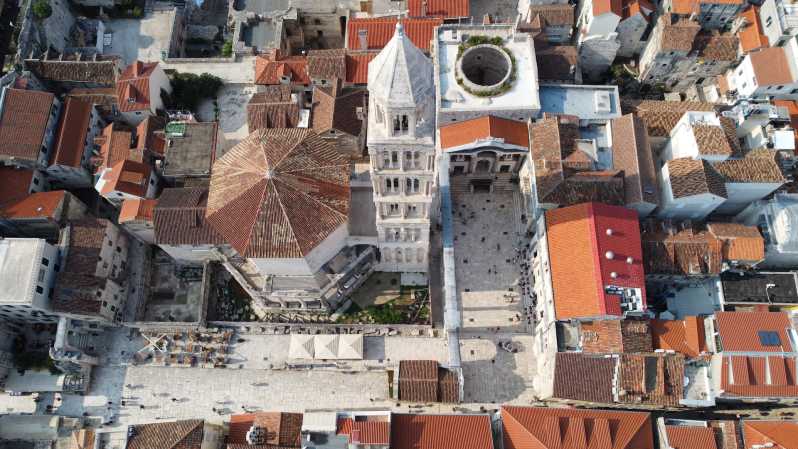
Diocletian’s Palace is not a silent ruin behind museum glass. It is a 1700-year-old Roman palace where Split’s residents still live, work, worship, and pass through ancient streets. This private walking tour uses that unusual setting to explain the Peristyle, the former imperial quarters, the cathedral, and the city gates.
I like the small-group format, which keeps the walk personal and allows some adjustment to your interests. I also like the way the tour connects Roman power with modern Split, especially at the former mausoleum and the North Gate.
The main consideration is that some sights may close for church services or special events. The palace is also only partly wheelchair accessible, though the route can be adjusted if you explain your needs ahead of time.
In This Review
- Key points to know before you book
- Why Diocletian’s Palace feels different from a normal museum
- The Peristyle, where an emperor played a god
- Split Cathedral, a mausoleum turned Christian church
- The Vestibule and the route to private imperial rooms
- The Golden Gate and the little Church of St. Martin
- What the private format adds for your money
- Who will enjoy this palace walk most
- Tips for getting more from the experience
- My verdict: a strong introduction at a premium price
- FAQ
- Where does the Diocletian’s Palace tour begin?
- Where does the tour finish?
- How many people can join the tour?
- Is the tour private?
- What languages are available?
- Which main sights are included?
- Is the route wheelchair accessible?
- Can the program change during the visit?
Key points to know before you book
- You walk through a living Roman palace: Ancient walls form part of everyday Split, not just a preserved attraction.
- The Peristyle tells the story of imperial power: This was where Diocletian presented himself as the son of Jupiter.
- The cathedral began as a mausoleum: Split Cathedral occupies the former tomb of Emperor Diocletian.
- The Vestibule led to the emperor’s private world: This grand entrance once received dignitaries.
- The Golden Gate includes a tiny church: The former guard corridor at the North Gate contains the Church of St. Martin.
- The group size is limited to 10: The route is individually customizable and available in English, German, or French.
Why Diocletian’s Palace feels different from a normal museum
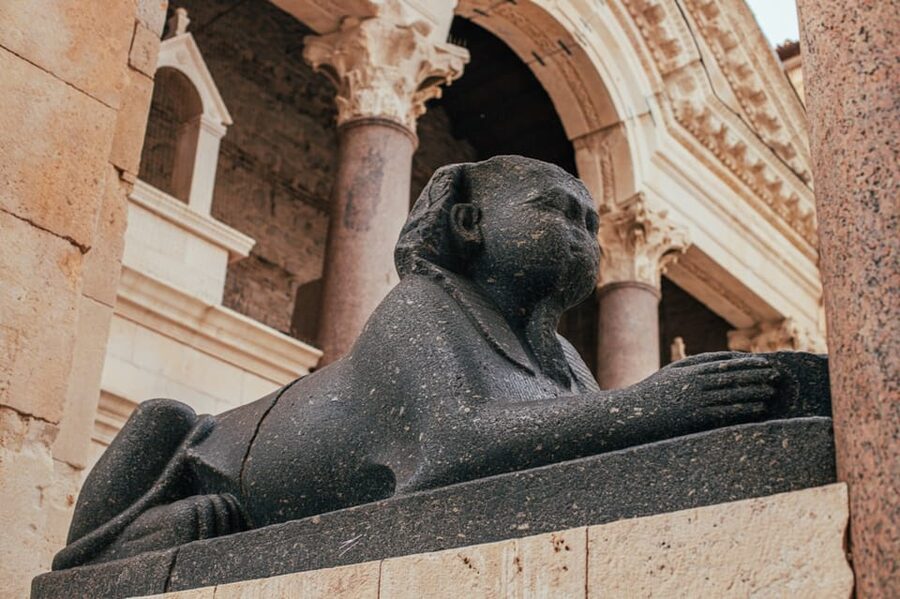
The first thing to understand about this tour is the setting. Diocletian’s Palace is not one isolated building with a neat entrance, exit, and row of display cases. It is a large historic quarter woven into the center of Split.
You walk through spaces first built for a Roman emperor, then turn a corner and find the ordinary life of a Croatian city. People live inside the palace area. Streets remain active. Ancient stone is part of the setting rather than a separate backdrop.
That makes a guide especially useful. Without help, you can admire the columns and walls but miss how the palace worked. A private walking tour gives you a clear route and explains how the public, religious, military, and private parts fitted together.
The group limit of 10 matters here. Narrow passages and busy central spaces are easier to handle with a small party than with a large crowd. You should also have a better chance to ask questions or request extra attention at a particular stop.
The tour begins at the bronze model of Split at the eastern end of the Riva promenade. That is a sensible meeting point because it gives you a clear reference before you enter the old center. The walk ends back at the same place, which makes the route easy to fit into a day of sightseeing.
More ways into Diocletian’s Palace:
- Split: Old Town and Diocletian Palace Walking Tour
★ 4.9 · 4,727 reviews - Walking Tour of Split and Diocletian’s Palace
★ 5.0 · 2,588 reviews - Split & Diocletian’s Palace Walking Tour
★ 5.0 · 1,125 reviews
The Peristyle, where an emperor played a god
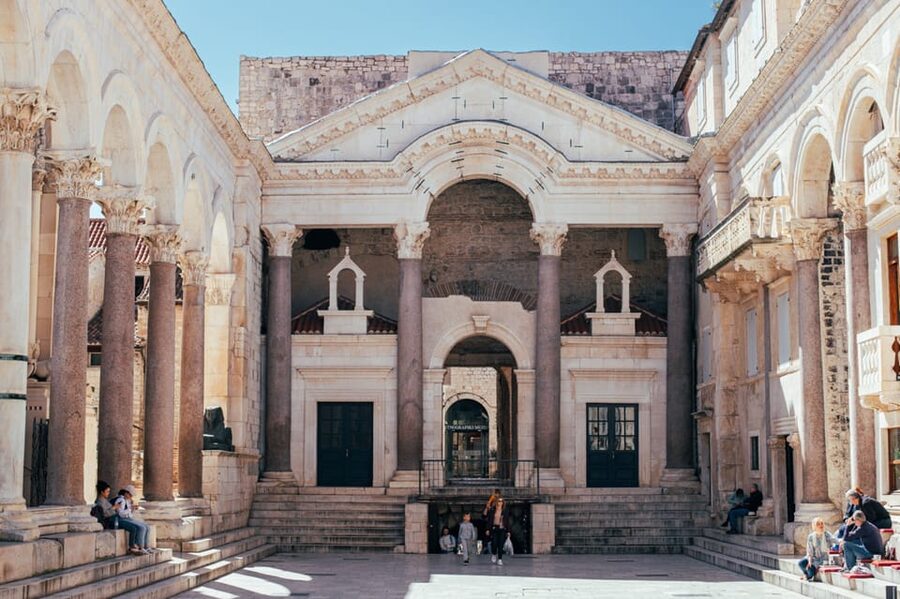
The Peristyle is one of the tour’s most important stops. This grand central court was a meeting place in Diocletian’s time, but it was not simply a square for people to cross.
Here, Diocletian was worshipped as the son of Jupiter. That detail changes how you read the space. The columns and open court were part of a carefully planned display of authority, designed to place the emperor close to the divine world in the eyes of his subjects.
I find this kind of explanation more useful than a list of dates. You begin to see the palace as a working political stage. The architecture was meant to shape how people approached the emperor and understood his power.
Today, the Peristyle is also one of the places where the old palace and present-day Split meet most clearly. You can look at the Roman stone while daily life carries on around you. Your guide can help separate what belongs to Diocletian’s era from the later changes that turned the palace into the heart of a living city.
Expect the central areas to feel active, not hushed. That is part of the appeal, though it also means you may occasionally need to pause, listen carefully, and stay close to the group.
Split Cathedral, a mausoleum turned Christian church
Split Cathedral offers the tour’s clearest example of changing beliefs and changing buildings. The structure began as a mausoleum for Diocletian, the emperor who built and inhabited the palace.
With the spread of Christianity, the emperor’s remains disappeared and the building became a cathedral. You are therefore looking at a place with two very different roles: first, a monument to a Roman ruler, and later, a Christian church.
That change gives the building unusual weight. It is not simply an old cathedral placed near Roman remains. The cathedral occupies a structure connected directly to the emperor’s private world and burial plans.
The tour highlights the cathedral’s exterior, while access can depend on what is happening inside. Church services or special events may prevent a visit to some areas, and the guide may need to adjust the program. This is worth knowing before you arrive, especially if seeing the interior is your main reason for booking.
Even with a changed route, the building’s story remains a strong part of the walk. You can appreciate how later generations reused the palace instead of leaving it as a frozen Roman monument.
The Vestibule and the route to private imperial rooms
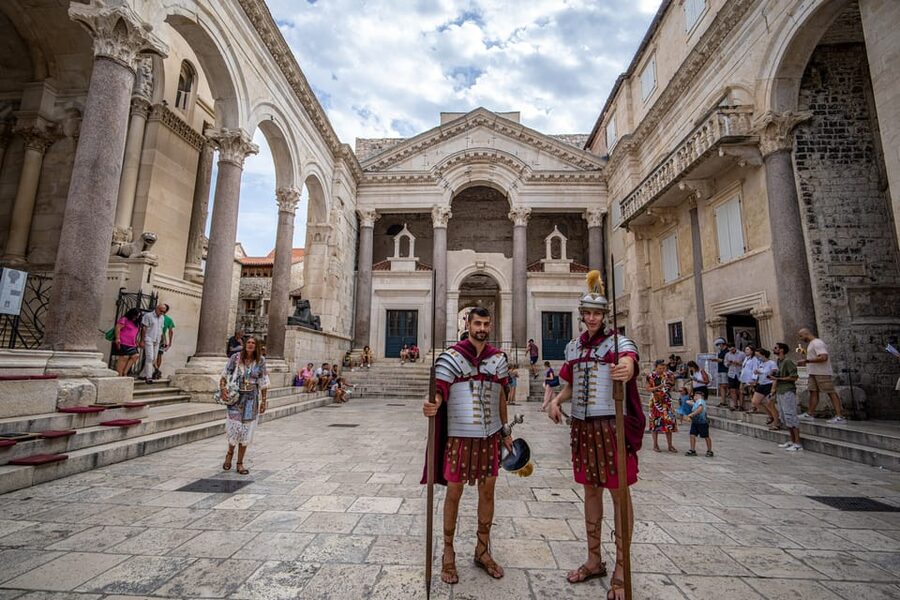
The Vestibule was the grand entrance to Diocletian’s private chambers. This was not an ordinary doorway. It formed a formal transition between the palace’s public areas and the emperor’s personal quarters.
Dignitaries arriving from across the Roman world would have passed through this space. The scale and design helped make a point before anyone reached the emperor himself: access to Diocletian was controlled, ceremonial, and important.
I like this stop because it gives the palace a human sequence. You are not only seeing a large stone structure. You are following the path that visitors took as they moved toward the emperor.
The Vestibule also helps explain the palace’s layout. Public authority, religious symbolism, private life, and security were all placed close together, but not without boundaries. Your guide can connect this entrance with the other parts of the route so the palace feels like a planned residence rather than a collection of unrelated ruins.
Because the tour is individually customizable, you can ask for more explanation about the palace’s design or focus on the details that interest you most. The information provided does not specify a fixed length or a rigid timetable, so you should confirm any time concerns when booking.
More walking tours in Split:
- Krka Waterfalls tour with Trogir Walking tour and Krka panoramic boat cruise
★ 5.0 · 1,659 reviews - Walking Tour of Split with a ‘Magister’ of History
★ 5.0 · 1,122 reviews - Split Walking Tour with Professor of History
★ 5.0 · 926 reviews - Split: Diocletian Palace & Old Town Guided Walking Tour
★ 4.7 · 882 reviews
The Golden Gate and the little Church of St. Martin
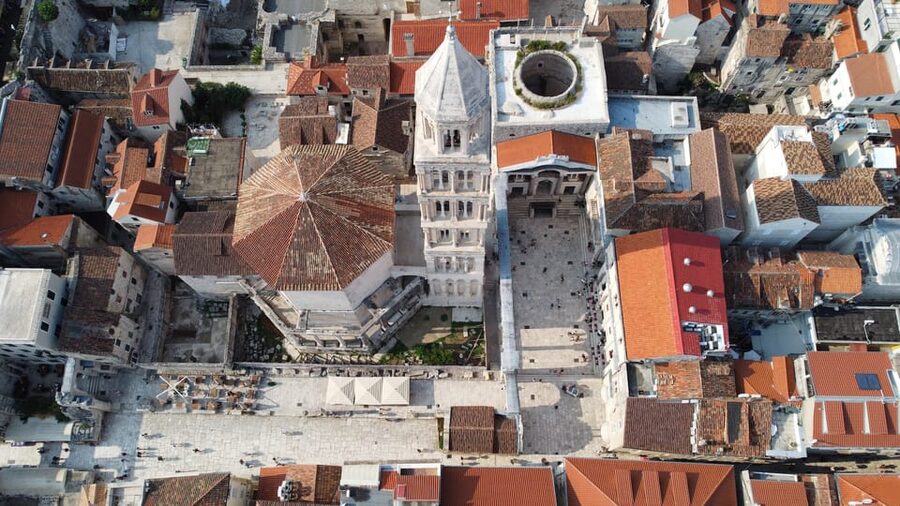
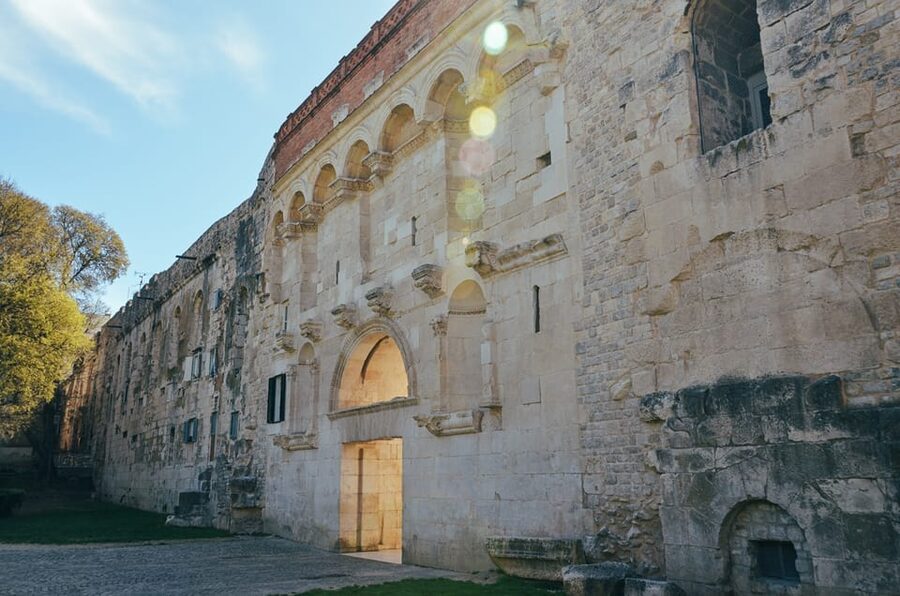
The North Gate was the most important city gate during the Roman era. It is also known as the Golden Gate, or Porta Aurea, and it gives the tour a useful look at how people entered and moved through the palace.
Gates are easy to overlook when grand courtyards and religious buildings receive most of the attention. Here, the guide explains why this entrance mattered and how its architecture reflected the city’s defensive and ceremonial needs.
Inside the former guard corridor is the Church of St. Martin, described as the smallest church in the city. That is the kind of detail that makes a walking tour worthwhile. A narrow former military space has taken on a new religious role, adding another layer to the palace’s long use.
Access to churches can be affected by services, so do not treat every interior visit as guaranteed. If the church is unavailable, the guide may need to change the order or slightly revise the program.
The Golden Gate is also a good reminder that Diocletian’s Palace was more than a residence. It was a fortified complex with controlled points of entry. The North Gate helps you picture the palace as a place of authority and protection, not merely an elegant retreat.
What the private format adds for your money
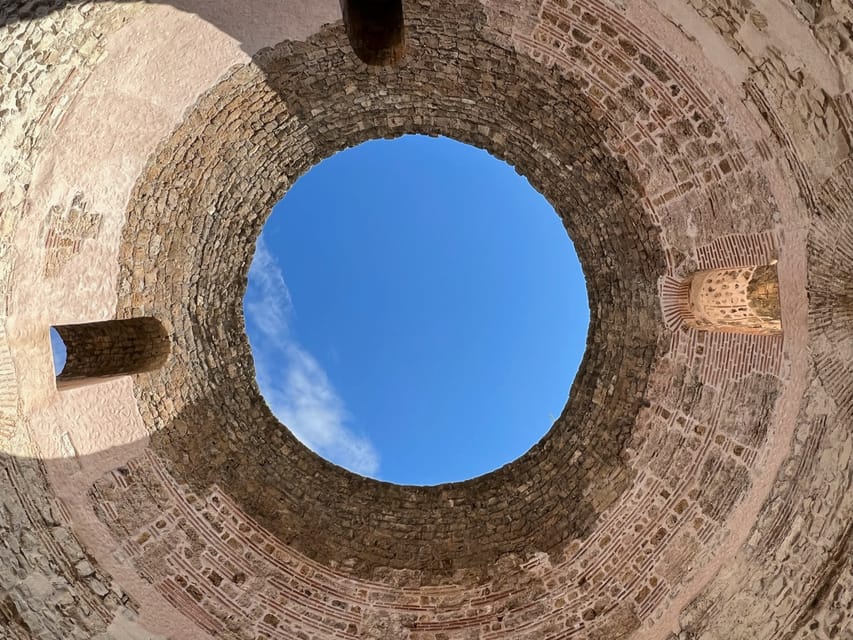
The listed price is $135 per person. That is a substantial cost compared with walking around Split independently, where you can see many exterior sights without paying for a guide.
The value depends on what you want from the visit. If your goal is a quick look at old stone and a few photographs, the price may feel high. If you want the palace explained in a connected way, with a route adapted to your group, the cost makes more sense.
You are paying for a private guided experience rather than a general group walk. The group can include up to 10 participants, so the per-person price may be easier to justify for a family or small party that wants its own guide.
The tour also helps you get oriented quickly. One useful benefit is practical: you see the principal sights and learn how the old center fits together early in your stay. That can make later independent exploring less confusing.
A five-star rating is recorded from three published assessments, including especially warm praise for a guide named Dana. One note describes the experience as a fast way to see the main sights, learn a lot, and understand the city center. That is a fair way to think about the tour’s value: it is an efficient introduction, not a full archaeological study.
The supplier is Split Guide. Tours are offered in English, German, and French. You can reserve now and pay later, and cancellation is allowed up to 24 hours before the start for a full refund.
Who will enjoy this palace walk most

This tour suits you if you are visiting Split for the first time and want the old center explained before exploring on your own. It is also a good fit if you enjoy history but prefer stories tied to actual streets, courtyards, gates, and buildings.
Families and small groups may appreciate the ability to customize the route. A private guide can adjust the emphasis, within the available program, instead of forcing everyone through a standard presentation.
It is also useful for visitors with limited time. One direct route covers the Peristyle, cathedral, Vestibule, Golden Gate, and Church of St. Martin. The exact duration is not provided, so ask before booking if you need to fit the walk between other plans.
You should think carefully if mobility is a serious concern. The palace is only partly wheelchair accessible. The route can be adapted to special needs, but you must tell the provider in advance. Ancient streets and historic buildings rarely offer the same easy access as a modern attraction.
You should also be comfortable with some uncertainty around interior access. Church services and events may mean that certain sights cannot be entered. A good guide can adjust the program, but no walking tour can guarantee access during religious ceremonies.
Tips for getting more from the experience
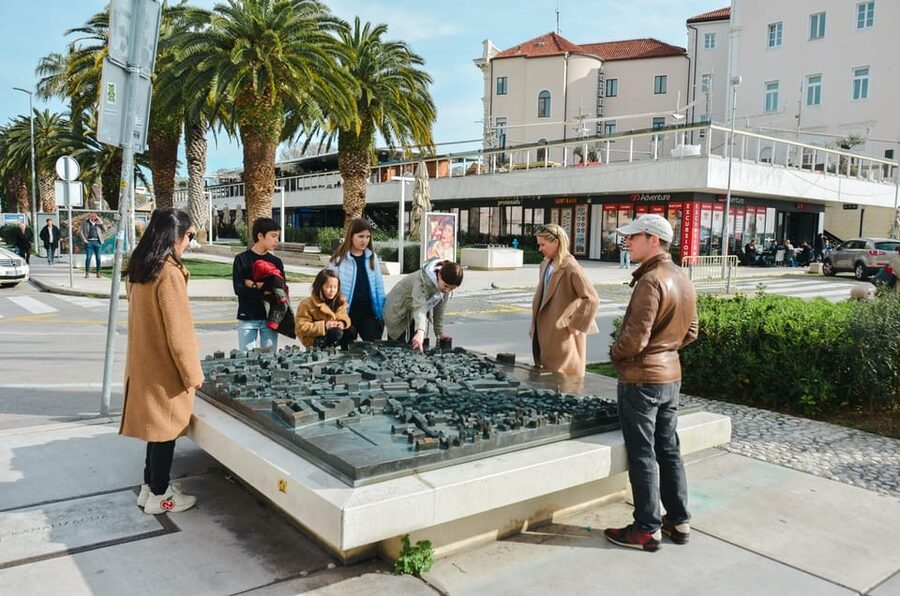
Meet at the bronze city model on the eastern end of the Riva promenade, not at a random point inside the palace. The tour returns to this meeting point, so note it as a useful orientation marker.
Wear shoes suitable for a historic walking route. The available information does not describe the surface in detail, but the palace includes old passages, courtyards, and narrow corridors, and comfort will help you pay attention to the guide.
Keep your schedule slightly open around the tour. Since events and church services can change which spaces are available, flexibility allows the guide to reorder the route without turning the experience into a race.
If you have a particular interest, tell the provider when you reserve. The tour is individually customizable, so you may be able to shape the emphasis around Roman imperial life, religious change, architecture, or the palace as a living part of Split.
Dana is one named guide associated with the experience and received especially strong praise for an enthusiastic, personal approach. Guide assignments can vary, so do not assume Dana will lead every departure, but you can ask when booking if that matters to you.
My verdict: a strong introduction at a premium price

I would recommend this tour to a first-time visitor who wants a clear introduction to Split’s old center and values personal guiding over the lowest price.
The best parts are the setting and the connections between stops. The Peristyle explains imperial ceremony. The cathedral shows how a mausoleum changed function. The Vestibule reveals the line between public and private palace life. The Golden Gate and St. Martin’s Church show how military and religious uses continued inside the old walls.
At $135 per person, it is not the budget choice. You are paying for a private, customizable route and a small group of no more than 10, not just entry to a monument. If you are happy to read signs and explore independently, save the money. If you want to understand what you are seeing and get your bearings quickly, the price can be worthwhile.
Book it if you want history explained in place, a flexible small-group walk, and a close look at the palace’s major landmarks. Skip it if you need guaranteed access to every interior or if a self-guided stroll is enough for you.
FAQ
Where does the Diocletian’s Palace tour begin?
It begins at the bronze model of the city of Split at the eastern end of the Riva promenade.
Where does the tour finish?
The activity ends back at the original meeting point.
How many people can join the tour?
The tour is designed for a maximum of 10 participants.
Is the tour private?
Yes. It is described as a private guided walking tour, with an individually customizable program.
What languages are available?
The tour is available in English, German, and French.
Which main sights are included?
The route includes the Peristyle, Split Cathedral, the Vestibule, the North Gate also called the Golden Gate or Porta Aurea, and the Church of St. Martin.
Is the route wheelchair accessible?
The site is partly wheelchair accessible. The tour can be adapted to special needs if you inform the provider in advance.
Can the program change during the visit?
Yes. Some sights may not be available because of events or church services, in which case the program may be adjusted slightly.
Just added around Split
- Kayaking & Zipline Šibenik – Čikola Canyon★ 5.0 · 3 reviews
- Krka National Park & Zipline Šibenik – Čikola Canyon★ 5.0 · 3 reviews
- From Split: Krka National Park & Waterfalls Private Day Trip★ 5.0 · 3 reviews
- Split: Small-Group Half Day Sailing Trip★ 5.0 · 3 reviews
- Rafting River Cetina from Makarska Riviera including transfer★ 5.0 · 3 reviews
- Split Bike and Wine Experience★ 5.0 · 3 reviews
- Split and Salona Cultural Heritage Day Tour from Trogir★ 4.0 · 3 reviews
- Private transfer from Split to Dubrovnik with 2h sightseeing stop in Ston★ 5.0 · 3 reviews
Diocletian Palace Tours, compared.


Walking Tour of Split and Diocletian’s Palace
Read our review →

Diocletian Palace & Old Town Guided Walking Tour
Read our review →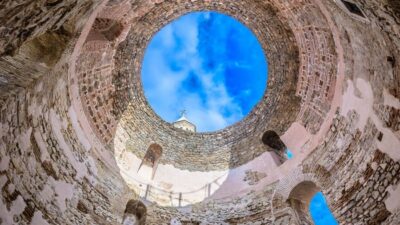
Game of Thrones Tour with Diocletian’s Palace Cellar
Read our review →
Diocletian’s Palace and Old Town SMALL GROUP Walking Tour
Read our review →
Browse the lists this tour appears in