
Reviewed · WALKING TOURS
Split: city center private walking tour 2 h
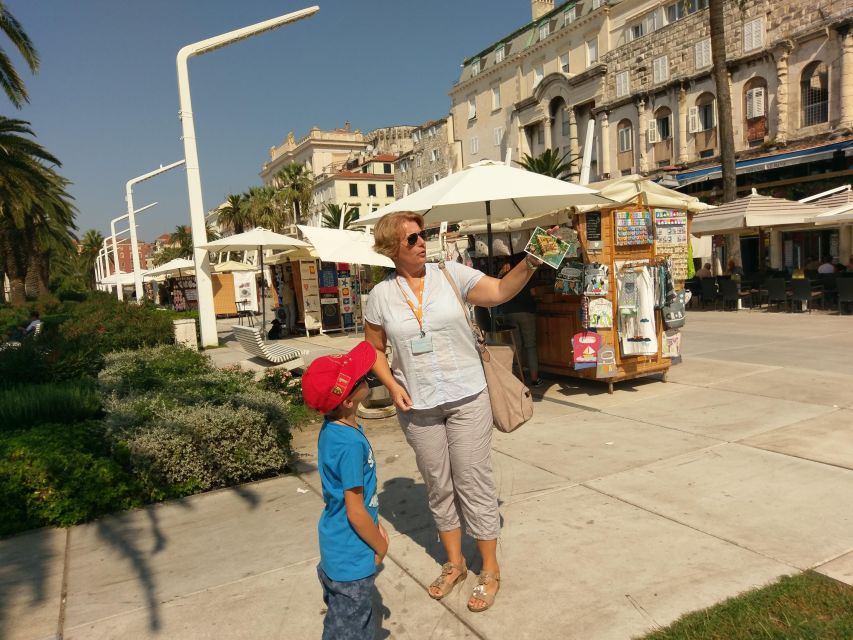
Split’s old center is not a museum set apart from modern life. It is a living city built inside and around a 1,700-year-old Roman palace. This private walk takes you from the Riva into Diocletian’s cellars, across Peristil, past the cathedral and palace gates, and through the medieval streets that grew up around the emperor’s home.
I like the private format, especially if you want to set the pace or ask plenty of questions. I also like the route’s variety: Roman stonework, a medieval town hall, food markets, busy squares, and the waterfront all fit into one compact outing. The main drawback is time. Two hours is enough for an excellent introduction, but not for a slow, detailed look at every corner or a long visit inside each paid sight.
In This Review
- Key points at a glance
- Why Diocletian’s Palace is the right place to begin
- The cellars: the palace below the palace
- Peristil and the emperor’s ceremonial heart
- The Golden Gate and Gregory of Nin
- People’s Square and Split’s Venetian layer
- Fruit Square, markets, and everyday Split
- Finishing on the Riva
- What the private format is worth at $141
- Guides, languages, and the feel of the walk
- Who should book this Split walk?
- Should you book it?
- FAQ
- Where does the tour meet?
- How long does the private walking tour last?
- What languages are available?
- Are entrance tickets included?
- Is the tour wheelchair accessible?
- What should I wear?
Key points at a glance
- Roman palace turned city center: Diocletian’s Palace is not just an archaeological site. Shops, homes, cafes, and lanes occupy the old imperial complex.
- Private group of up to 20: You can request a pace and focus that suit your group, though a party of 20 will feel less intimate than a small family group.
- Cellars and Game of Thrones location: The palace cellars reveal how the upper residential level was supported, and they were also used as a filming location.
- A strong mix of landmarks: The route includes Peristil, the Golden Gate, the Gregory of Nin statue, People’s Square, Fruit Square, and Split’s markets.
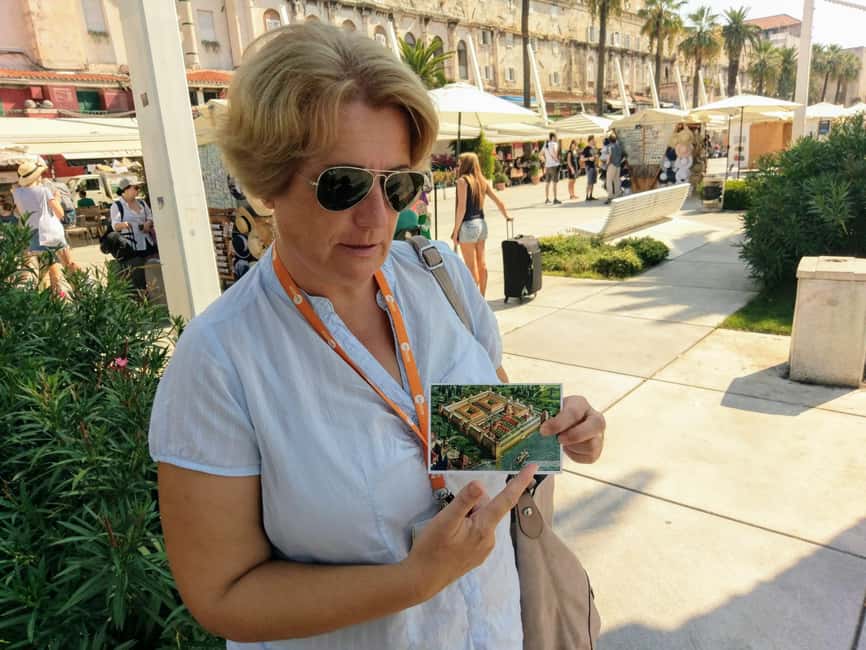
- French, English, and Croatian guides: Guides including Zrinka, Zinka, and Yvonna have been singled out for clear explanations, humor, and useful advice for the rest of a Split stay.
- Plan for uneven ground: Comfortable shoes matter, and you need covered shoulders and knees to enter the cathedral.
Why Diocletian’s Palace is the right place to begin
I would start a first visit to Split here. The palace gives you the key to the city: Roman imperial power, medieval rebuilding, Venetian influence, and present-day Dalmatian life all meet within a few minutes of one another.
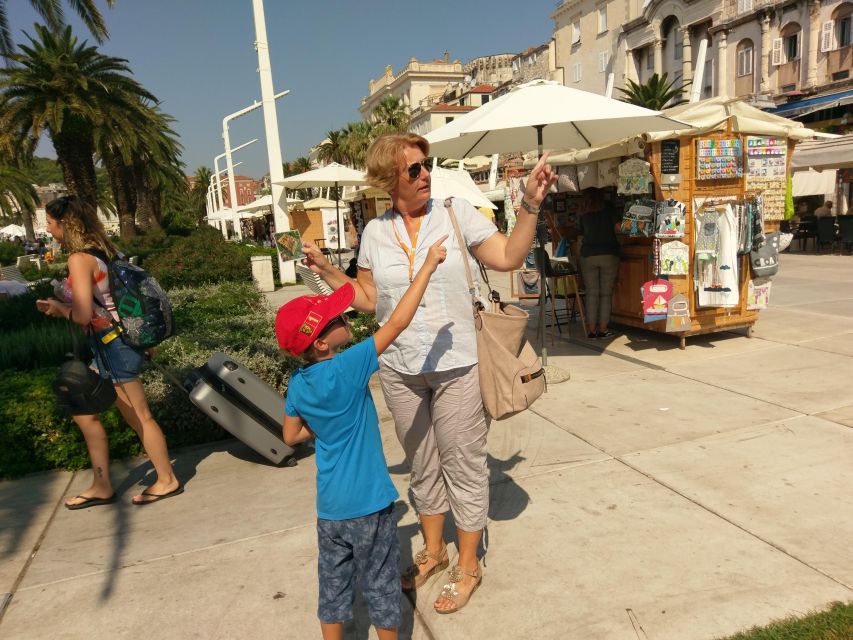
The meeting point is on the Riva, in front of the entrance to the palace cellars at Obala Hrvatskog narodnog preporoda 15b. You begin near a model of Split’s historic core, which helps you understand the compact shape of the old city before walking into it.
The palace was built for Emperor Diocletian, who retired to the area around Split. Today, the old imperial residence is the heart of the city rather than a fenced-off ruin. That makes the walk especially useful for first-time visitors. A guide can point out where the ancient structure ends, where later buildings begin, and why a narrow lane may follow an old Roman wall.
The tour is designed as a tailor-made private walk. That does not mean every stop can receive unlimited time, but it does give your guide room to respond to your interests. If you care about architecture, Roman history, local food, filming locations, or practical advice for the rest of your trip, say so at the start.
More City Tours in Split
- Split: City Highlights Electric Tuk-Tuk Tour
★ 4.9 · 1,317 reviews - Split Game of Thrones Tour: City of Dragons
★ 4.7 · 556 reviews - Eco City Tour Split
★ 5.0 · 538 reviews
The cellars: the palace below the palace
The cellars are one of the most worthwhile parts of the route. Their architectural job was practical: they supported and raised the imperial residential rooms above. The lower level therefore preserves the basic footprint of Diocletian’s palace and helps you picture how the upper floors were arranged.
You will also see why the cellars appeal to film fans. They were used as a Game of Thrones filming location. That is a fun extra, but the space does not need a television connection to be interesting. Stone walls, passageways, and the sense of a huge structure below the modern city make this one of Split’s most atmospheric stops.
Entrance to the cellars is not included, so budget for a separate ticket. The same applies to the cathedral. Since the tour lasts two hours, ask your guide how much time is sensible for the paid areas if you want to keep the rest of the route intact.
The cellars can also be a useful stop in hot weather, since much of the experience is below street level. You still need good shoes. The walk crosses old and uneven surfaces, and this is not a polished shopping-mall route.
Peristil and the emperor’s ceremonial heart
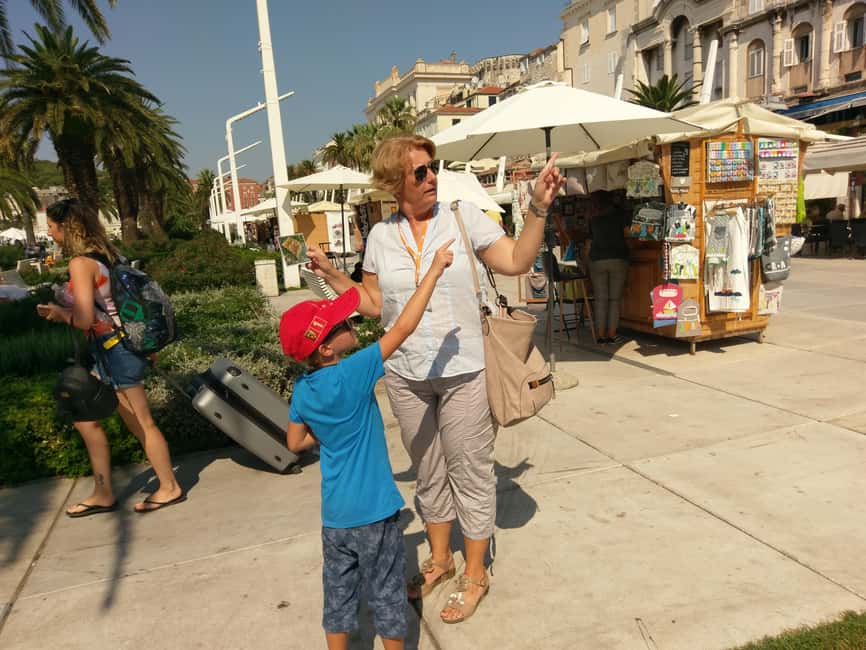
From the cellars, you walk up the stairs to Peristil. This is the palace’s grand central court, and it is where the scale of the imperial project becomes easiest to read.
Peristil was designed for Diocletian and for ceremonies connected with Jupiter, the Roman god associated with the living son of Jupiter in the palace’s imperial symbolism. The nearby temple, now connected with Split’s later religious story, gives the square extra weight.
This is a good place to pause and look up. The surrounding stone, columns, and later buildings show how Split kept adapting the Roman core instead of abandoning it. A guide adds value here because the square can look like a pretty photo stop unless someone explains its ceremonial role.
The cathedral of Saint Domnius, or Saint Duje, is next to Peristil. It began as Diocletian’s mausoleum and was later converted into a Christian cathedral. Saint Duje is Split’s patron saint. The building’s unusual history is one reason the cathedral is often described as the oldest cathedral in the world, though that claim depends on how one defines a cathedral and continuous use.
The cathedral requires an entrance fee and proper clothing. Your shoulders and knees must be covered, so carry a light cover-up if your summer clothing is short or sleeveless.
The Golden Gate and Gregory of Nin
The Golden Gate is one of the palace’s major entrances and makes a strong photo stop. It gives you a sense of how the palace was connected to the outside world and how its defensive and ceremonial design worked.
From here, the route includes the statue of Gregory of Nin. This large figure is a familiar Split landmark and another natural pause for photographs. The stop is brief, but it breaks up the Roman architecture with a reminder of Croatia’s later religious and cultural story.
The walk does not treat every location as a long formal visit. Several stops are listed at around 5 to 15 minutes, which means your guide will explain the place, point out what matters, and keep the route moving. That is useful if you want orientation before exploring alone, but it may feel quick if you prefer to sit in each square and study the details.
One practical note: one past booking described the experience as less walk-heavy than expected, with a wish for more streets and alleyways. That is worth considering. The route covers many sights, but it is structured around concentrated stops in and around the palace rather than a long wandering walk through every lane of the old center.
More walking tours in Split:
- Split: Old Town and Diocletian Palace Walking Tour
★ 4.9 · 4,727 reviews - Walking Tour of Split and Diocletian’s Palace
★ 5.0 · 2,588 reviews - Krka Waterfalls tour with Trogir Walking tour and Krka panoramic boat cruise
★ 5.0 · 1,659 reviews - Split & Diocletian’s Palace Walking Tour
★ 5.0 · 1,125 reviews
People’s Square and Split’s Venetian layer
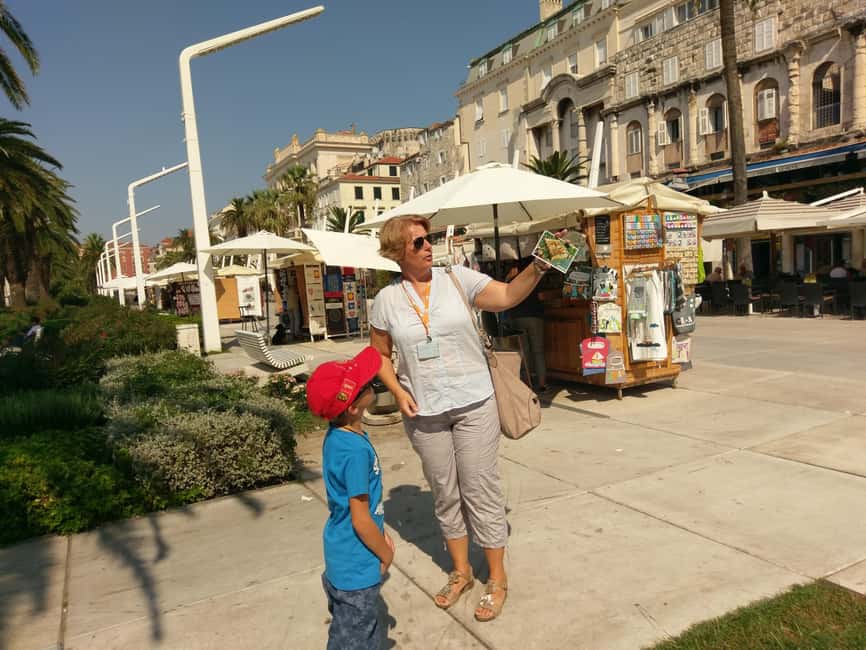
The palace is only part of Split’s story. The route continues to People’s Square, known locally as Pjaca, a medieval space shaped during Venetian rule.
This is where you see the city grow beyond the Roman walls. The square, old buildings, shops, and cafes show how Split’s center developed into a working town. The Old Town Hall is included as a short photo stop, adding another layer to the city’s civic history.
I like this portion because it keeps the tour from becoming a single-theme Roman lesson. You get a clearer picture of Split as a place that changed hands, changed purpose, and kept using its old center.
The private setup helps here. You can ask your guide to explain the difference between the Roman palace, the medieval quarters, and Venetian-era public spaces without feeling that you are holding up a large group. Guides who enjoy local context can also help you decide which areas deserve a return visit later in the day.
Fruit Square, markets, and everyday Split
Fruit Square is another compact but appealing stop. Its name points to the market activity that once took place there, and it is a good example of how Split’s public spaces often combine architecture, commerce, and daily life.
The Green Market gives the tour a more local, practical flavor. You have around 10 minutes there, with time to look around and shop. Since the stop is short, think of it as an introduction rather than a full market visit. If you want to buy produce or browse at leisure, return later.
The fish market is also included. Together, the two markets help show the city beyond its monuments. Split is not only a Roman palace and a waterfront lined with cafes. It is also a place where people shop for food and move through the center as part of ordinary life.
The route ends back near the starting point after including the fish market. The precise order may vary with the guide and timing, but the overall pattern is clear: waterfront, market, palace, old squares, and market streets in a compact circuit.
Finishing on the Riva
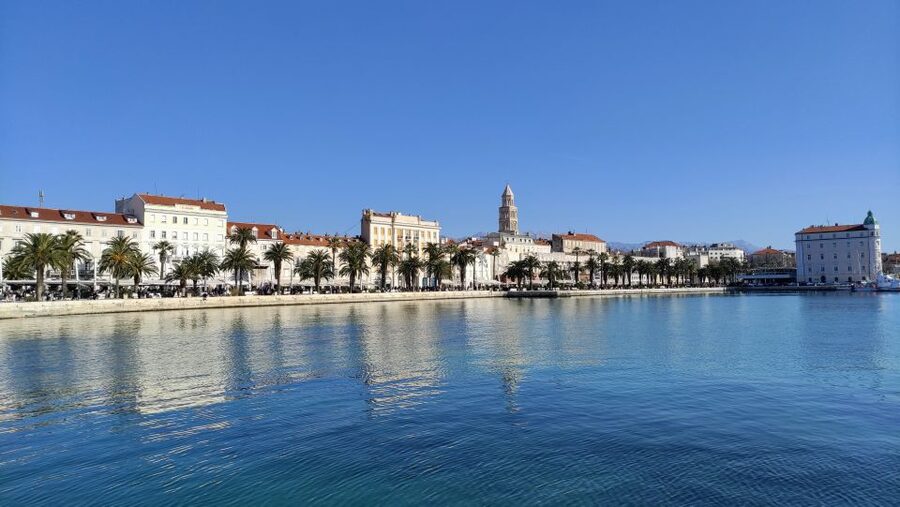
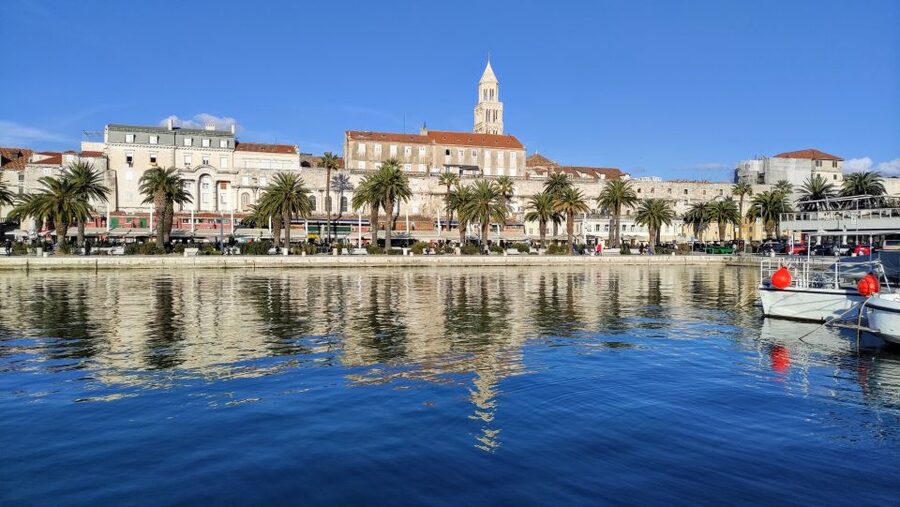
The Riva is Split’s waterfront promenade and the natural place to end a first orientation walk. Restaurants and cafes line the promenade, making it easy to continue with lunch, coffee, or a second look at the harbor.
Ending here is practical. You are close to the palace, close to places to eat, and well placed to continue exploring on your own. Ask your guide for suggestions while you still have the chance. Several guides have been praised for offering useful advice for the rest of a visit, not just explaining the monuments directly in front of you.
The Riva is also a good spot to decide what you want to revisit. You might return to the cellars, spend more time around Peristil, browse the market, or simply wander the small streets without a schedule.
What the private format is worth at $141
The price is $141 per group of up to 20 people. For a couple or a small family, that is more expensive than joining a standard group walk. The value comes from having one guide focused on your party and from being able to adjust the pace and subject matter.
For a full group of 20, the price works out to less than $8 per person, before any entrance fees. That is strong value if everyone in the group wants the same introduction to Split. For two people, the cost is harder to justify unless you place a high value on privacy, language choice, or a custom route.
Keep in mind that cathedral and cellar tickets are extra, and there are no transfers. You make your own way to the Riva meeting point. Since the historic center is the focus, the lack of transportation is not a serious problem for anyone already staying in or near central Split.
The two-hour length is both a strength and a limit. It fits neatly into a morning, an afternoon before dinner, or a cruise stop. You get a useful framework without giving up half a day. But if you want lengthy interior visits, detailed photography time, or extensive alleyway wandering, you will need to continue exploring after the guide leaves.
Guides, languages, and the feel of the walk
Tours are available in English, French, and Croatian. The guide names connected with especially strong feedback include Zrinka, also written as Zinka in some comments, and Yvonna. French-speaking customers have found the explanations clear and the guides warm, engaging, and helpful with local advice.
The most consistent strength is the human side of the experience. The guides are described as pleasant, good-humored, and able to explain the monuments in a way that makes the city easier to understand. That matters in Split, where a Roman column, a medieval wall, and a modern cafe may sit within the same view.
Still, your expectations should match the format. This is a guided introduction, not a full archaeological seminar. The route moves through many landmarks, and the private format gives you flexibility, but the two-hour clock keeps the experience brisk.
The tour is wheelchair accessible, though the old center includes uneven surfaces and stairs, particularly around the palace and its cellars. If mobility is a concern, contact the provider before booking to discuss the exact route and which interiors you want to enter.
Who should book this Split walk?
I would recommend it most strongly to first-time visitors who want the old center to make sense quickly. It also suits families, couples, and private groups with different interests, since you can ask for a pace and emphasis that fit your party.
It is a good choice before independent sightseeing. After two hours, you will know where the main palace entrances, squares, markets, cathedral, and waterfront are located. You can then return to the places that caught your attention.
French-speaking visitors have a particularly good reason to consider it, given the strong French-language feedback and the availability of French guides. English and Croatian speakers have the same language options, but guide availability may vary by start time.
I would be less likely to choose it if your main goal is a long, unhurried walk through side streets and alleyways. One past booking specifically wanted more walking, and the route’s many short stops confirm that this is a landmark-focused orientation rather than a free-form stroll.
Booking terms also deserve a quick check. The information provided gives both free cancellation up to 24 hours before the tour and a separate note saying cancellation is free up to 14 days before the tour. Because those terms conflict, confirm the exact policy shown for your chosen booking before paying.
Should you book it?
Book this tour if you want a private, well-organized introduction to Split’s Roman and medieval core, especially if you value a guide who can answer questions in English, French, or Croatian. The mix of palace interiors, squares, markets, and the Riva gives you more than a single monument visit.
Skip it if you want a long exploratory walk or prefer to spend most of your time inside the cathedral and cellars. In that case, a shorter orientation followed by your own slower visit may suit you better.
For most first visits, the strongest plan is to take the walk early in your stay, pay for the cellar or cathedral entrance if they interest you, then use the rest of the day to revisit your favorite corners at your own speed.
FAQ
Where does the tour meet?
The meeting point is on Split’s Riva promenade, in front of the entrance to the cellars of Diocletian’s Palace at Obala Hrvatskog narodnog preporoda 15b, 21000 Split, Croatia.
How long does the private walking tour last?
The tour lasts two hours. Starting times depend on availability.
What languages are available?
The live guide is available in English, French, and Croatian.
Are entrance tickets included?
No. Entrance fees to the cathedral and the cellars of Diocletian’s Palace are not included in the price.
Is the tour wheelchair accessible?
Yes, the activity is listed as wheelchair accessible. You should still consider the uneven surfaces and stairs in the historic center and palace area.
What should I wear?
Wear comfortable shoes because the route includes a lot of walking on uneven surfaces. To enter the cathedral, your shoulders and knees must be covered.
Just added around Split
- Kayaking & Zipline Šibenik – Čikola Canyon★ 5.0 · 3 reviews
- Krka National Park & Zipline Šibenik – Čikola Canyon★ 5.0 · 3 reviews
- Rafting River Cetina from Makarska Riviera including transfer★ 5.0 · 3 reviews
- From Split: Krka National Park & Waterfalls Private Day Trip★ 5.0 · 3 reviews
- Split: Small-Group Half Day Sailing Trip★ 5.0 · 3 reviews
- Split and Salona Cultural Heritage Day Tour from Trogir★ 4.0 · 3 reviews
- Split Bike and Wine Experience★ 5.0 · 3 reviews
- Split: Jewish Heritage & Diocletian’s Palace Walking Tour★ 5.0 · 3 reviews
Walking Tours, compared.


Walking Tour of Split and Diocletian’s Palace
Read our review →
Krka Waterfalls tour with Trogir Walking tour and Krka panoramic boat cruise
Read our review →

Walking Tour of Split with a ‘Magister’ of History
Read our review →

Diocletian Palace & Old Town Guided Walking Tour
Read our review →
Browse the lists this tour appears in