
Reviewed · WALKING TOURS
Walking Tour Split
Split is easiest to understand on foot, and this 1.5-hour walking tour takes you straight into the ancient palace that still forms the city center. You’ll move from Roman ruins to medieval squares and modern streets while a local guide explains how old and contemporary Split fit together.
I like the focused route and the chance to ask your guide what else to do after the tour. I also like the small personal touch shown by guides such as Anna and Victoria G, who bring local pride and clear storytelling to the walk. The main drawback is that entrance tickets are not included, so you’ll see several important sights from the outside unless you pay separately.
In This Review
- Key points to know
- Starting at the National Theatre in Split
- Walking through Diocletian’s Palace
- Peristyle, the palace’s grand central space
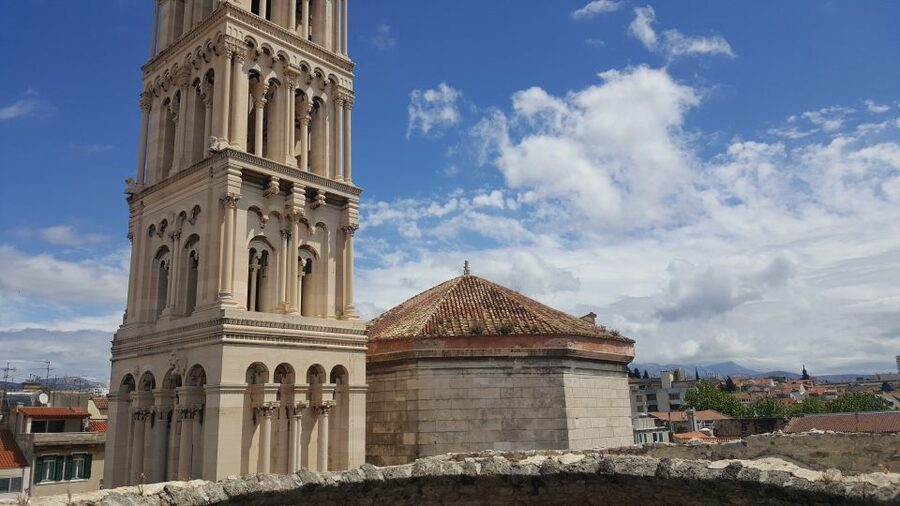
- Cathedral of St. Duje and Jupiter’s Temple
- Vestibul and the Golden Gate
- Pjaca and Fruit Square
- Guides Anna and Victoria G
- What $28 buys you in Split
- Timing, pace, and practical planning
- Who will get the most from this walk
- Should you book Walking Tour Split?
- FAQ
- Where does the Walking Tour Split begin?
- Where does the walking tour end?
- How long does the tour last?
- What languages are available?
- Is the tour led by a licensed guide?
- What sights are included on the route?
- Are entrance tickets included?
- What is included in the $28 price?
- Can I cancel the booking?
- Can I reserve the tour and pay later?
Key points to know
- Diocletian’s Palace forms the heart of the route, with the Peristyle, Vestibul, Jupiter’s Temple, and Golden Gate included.
- The tour begins at Split’s National Theatre and returns to the same meeting point.
- English and Spanish tours are available, led by a licensed guide.
- The route mixes Roman, religious, medieval, and modern Split, rather than focusing on one period alone.
- At $28 per person, the tour offers a practical introduction before you decide which sights deserve an entrance fee.
- Flexible booking helps, with free cancellation up to 24 hours ahead and a reserve-now, pay-later option.
Starting at the National Theatre in Split
You meet in front of the National Theatre at Trg Gaje Bulata 1. This gives the tour a clear city-center starting point, but you should allow a little time to find the exact spot before the start time. The activity ends back at the same meeting point, which makes it easy to continue exploring on your own.
The opening location also puts you in the right frame of mind. You are not being collected for a bus ride or carried between distant sights. You begin in the center of Split and stay there, using your own feet to connect the city’s main pieces.
That matters in Split. The Old Town is not just a preserved quarter set apart from daily life. It is a working part of the city, and the tour is designed to show you how the ancient palace became the foundation for a living town.
More walking tours in Split:
- Split: Old Town and Diocletian Palace Walking Tour
★ 4.9 · 4,727 reviews - Walking Tour of Split and Diocletian’s Palace
★ 5.0 · 2,588 reviews - Krka Waterfalls tour with Trogir Walking tour and Krka panoramic boat cruise
★ 5.0 · 1,659 reviews
Walking through Diocletian’s Palace
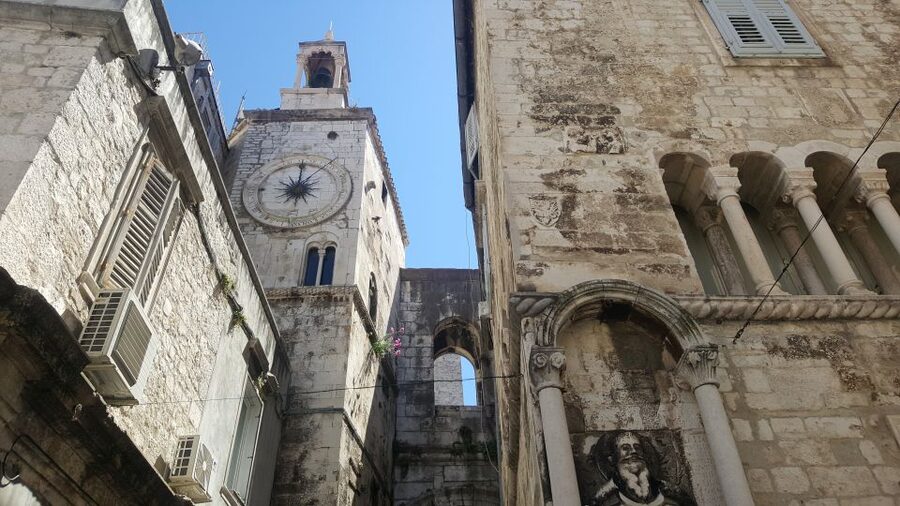
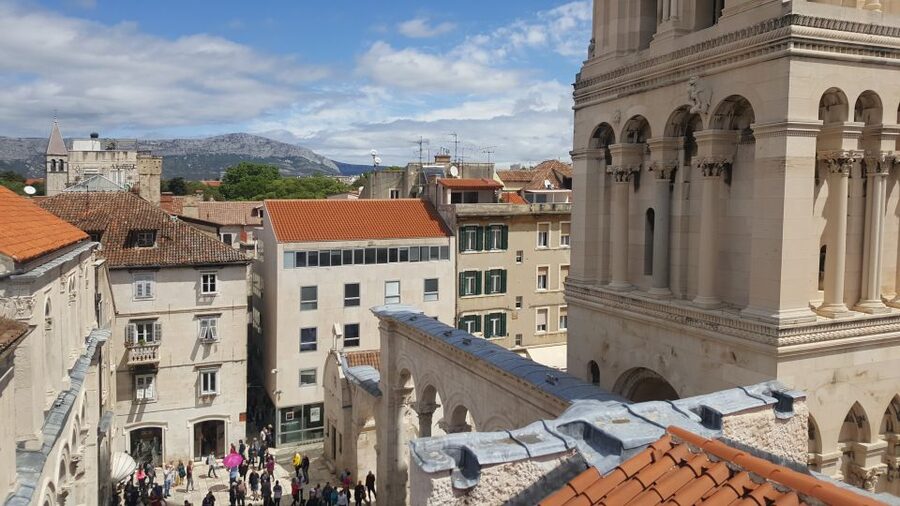
The main attraction is the UNESCO-protected Diocletian’s Palace. The name can be slightly misleading because you do not encounter one tidy palace building. Instead, the old Roman complex has become streets, courtyards, walls, shops, public spaces, and homes.
A guide helps you read those layers. Without explanation, you might see a column, an arch, or a stone wall and move on. With context, you can begin to understand how the palace shaped Split and why so much of the present-day city center sits inside or around its ancient structure.
The walk is especially useful early in your stay. I would choose it near the beginning of a Split visit because it can give you a basic map of the Old Town and point you toward places you may want to revisit later. The guide can also suggest additional activities around the city center after the tour.
Because the walk lasts only 90 minutes, expect an introduction rather than an exhaustive study. You will get the main story and the key sights, but you will not have time for long stops at every monument.
Peristyle, the palace’s grand central space
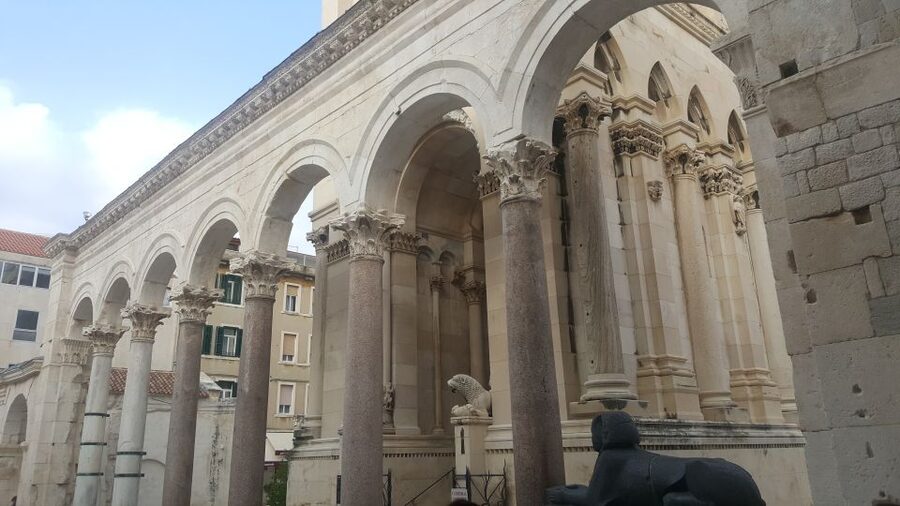
The Peristyle is one of the route’s essential stops. This open space gives you a strong sense of the palace’s original scale and importance. It is also the sort of place where a guide’s explanation changes what you see.
Look around before the guide begins speaking. Notice how the surrounding stone, columns, and buildings make the area feel enclosed, yet still open to the sky. Then listen for the connection between the Roman imperial past and the later uses of the space.
The Peristyle is likely to be one of the busiest points on the walk, depending on the time of day. That is not a reason to skip it, but it does mean you should stay close to your guide and pay attention to the meeting instructions. A 90-minute tour moves quickly, and delays at one stop can reduce time at another.
Cathedral of St. Duje and Jupiter’s Temple
The Cathedral of St. Duje introduces the religious side of Split’s story. The tour includes the cathedral among the city’s most important sights, giving you the chance to see how a Roman imperial setting was adapted for Christian worship.
Jupiter’s Temple adds another useful contrast. Its name brings you back to the Roman world, while the cathedral shows how the same central area gained new meaning over time. Seeing both on one route helps you understand that Split is not a city with one historical chapter. Its identity has been reshaped across centuries.
Tickets and entrance fees are not included. This is important if you want to go inside the cathedral or any other paid sight. The tour price covers the licensed guide, the walking route, and insurance, not admission.
That arrangement can be good value if you prefer to choose your own interiors. You can first see the main sights, hear the explanation, and then decide where an entrance fee is worth paying. If your goal is to enter every major monument, plan for extra costs.
A few more Split half-days to weigh up
- Split: Krka Waterfalls Trip with Boat Cruise and Swimming
★ 4.8 · 10,519 reviews - From Split: Krka Waterfalls, Food & Wine Tasting Tour
★ 5.0 · 9,326 reviews - Blue cave, Mamma Mia and Hvar, 5 islands speedboat tour
★ 5.0 · 7,150 reviews - From Split: Krka Waterfalls, Food & Wine Tasting Tour
★ 4.9 · 6,598 reviews
Vestibul and the Golden Gate
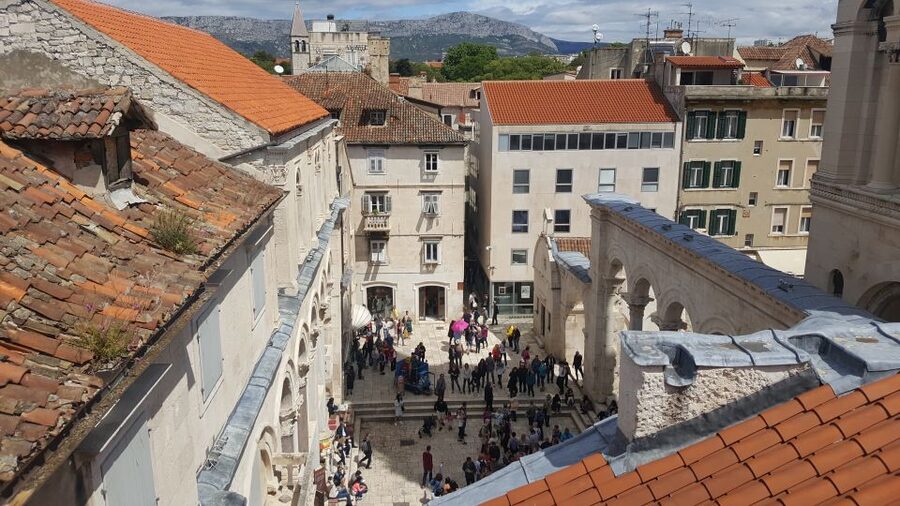
The Vestibul is another memorable palace feature on the route. Its position within the old complex helps connect the open Peristyle with the palace’s more enclosed passages. The guide can explain how these spaces worked together, rather than treating each ruin as an isolated object.
The Golden Gate gives you a different view of the palace’s defensive and ceremonial side. It is one of Split’s best-known landmarks and a useful place to picture how people once entered the complex.
You will also see the Grgur Ninski statue. This stop brings the tour out of the Roman period and into the public spaces of modern Split. It is a good reminder that the Old Town is not simply a museum. People pass through it, meet friends, run errands, and use its streets as part of ordinary city life.
The route may feel compact on a map, but the details come at a steady pace. Wear comfortable shoes and expect to spend the full 90 minutes walking and standing. No transport is involved, and no part of the experience is designed as a seated sightseeing tour.
Pjaca and Fruit Square
Pjaca and Fruit Square show you another side of the center. These squares help you see how Split’s historic core works as a public town, not just as a set of archaeological sites.
Pjaca offers a change from the palace’s Roman remains and narrow internal passages. Fruit Square adds another recognizable Old Town setting. The value of including both is that you get a broader picture of Split’s urban character, with public gathering spaces alongside ancient stonework.
This is where a local guide can be especially useful. A guide who lives close to the city’s daily life can point out how the center is used now, not only what happened there long ago. The tour description promises facts about both old and contemporary Split, so you should expect the walk to connect history with present-day culture.
Still, keep your expectations sensible. The tour is not advertised as a food walk, shopping tour, or nightlife tour. Pjaca and Fruit Square are included as historic and civic sights, not as stops for tastings or extended free time.
Guides Anna and Victoria G
The personal quality of the guide is one of the strongest reasons to book this walk. Anna is described as engaging and willing to run a small off-season tour even when only two people had booked. That suggests a good fit for visitors who prefer a more attentive experience in quieter months.
Victoria G is also singled out for her enthusiasm and clear connection to Split. Her approach covers the Roman period but also reaches beyond it, helping you see the city as more than an ancient monument.
You should not assume that every departure will be led by Anna or Victoria G. The available guide depends on the schedule, but both names give you a useful sense of the style to expect: local, personal, and focused on explaining the city rather than rushing through a checklist.
The guide speaks English or Spanish. Choose the language that lets you ask questions easily. Since the route is short, being comfortable with the language matters. You will get more from the tour if you can follow explanations while walking and stop to ask about places that catch your attention.
What $28 buys you in Split
At $28 per person, this sits in the affordable range for a guided introduction to a major historic center. You are paying for a licensed tour guide, a 90-minute walk around central Split, and insurance.
The real value depends on how you use the time. If you arrive without a plan, the tour can prevent you from wandering past important places without understanding them. It also gives you a basic structure for the rest of your day. You can return to a favorite square, investigate a sight that was closed, or ask the guide for ideas about further activities.
The price is less compelling if you only want photographs of the landmarks and already know the history. You could walk around the Old Town independently, but you would lose the organized explanation and the chance to ask a local guide direct questions.
The missing entrance fees are both a limitation and a useful form of flexibility. You are not paying for admission to attractions you may not wish to enter. On the other hand, you should budget separately if interior visits are part of your plan.
Timing, pace, and practical planning
The listed duration is 1.5 hours, with starting times shown when you check availability. Since schedules can vary, choose a departure that fits your arrival plans and leaves room for finding the National Theatre meeting point.
A morning walk can help you get oriented before spending the rest of the day in the Old Town. A later departure may suit you if you want to explore independently first. The tour ends where it begins, so you do not need to arrange transport back from a distant neighborhood.
The route is compact but includes continuous walking. Comfortable footwear is the sensible choice, especially if you plan to continue exploring after the tour. You should also keep your schedule flexible enough to listen at the stops instead of treating the activity as a race between landmarks.
Free cancellation is available up to 24 hours in advance for a full refund. You can also reserve now and pay later, which is handy when your Croatian itinerary is still shifting. These policies do not change the route, but they lower the risk of booking a short city tour before your plans are fixed.
Who will get the most from this walk
I would recommend this tour to first-time visitors who want a clear introduction to Split without spending half a day indoors. It suits couples, families with older children, and independent visitors who like to explore on their own after receiving some local direction.
It is also a good choice for a short stay. If you have only one day in Split, the route covers many of the city center’s key sights in a manageable block of time. The guide’s suggestions afterward may help you use the remaining hours well.
History fans should appreciate the sequence from Roman palace spaces to Christian buildings and later public squares. The tour is also useful for anyone who wants more than a list of dates, since the guide explains both heritage and contemporary life.
I would be more cautious if you need step-free access, a very slow pace, or long interior visits. The supplied details do not describe accessibility arrangements, walking conditions, or group size for each departure, so ask the provider before booking if those points matter to you.
Should you book Walking Tour Split?
Book it if you want an affordable, guided first look at Split’s Old Town and Diocletian’s Palace. The route covers the right landmarks, the guide speaks English or Spanish, and the 90-minute length leaves plenty of time for your own plans.
The best reason to choose it is the guide-led explanation. Anna and Victoria G bring a personal connection to the city, and the tour gives you a chance to ask what else to see. Just remember that admission tickets cost extra and that this is a brisk overview, not a full-day archaeological visit.
FAQ
Where does the Walking Tour Split begin?
The tour begins in front of the National Theatre in Split at Trg Gaje Bulata 1, 21000 Split, Croatia.
Where does the walking tour end?
The activity ends back at the meeting point in front of the National Theatre.
How long does the tour last?
The walking tour lasts 1.5 hours.
What languages are available?
The live guide can conduct the tour in English or Spanish.
Is the tour led by a licensed guide?
Yes. A licensed tour guide is included.
What sights are included on the route?
The route includes Split city center, Diocletian’s Palace, the Cathedral of St. Duje, Peristyle, Jupiter’s Temple, Vestibul, the Golden Gates, the Grgur Ninski statue, Pjaca, and Fruit Square.
Are entrance tickets included?
No. Tickets and entrance fees for sights are not included in the tour price.
What is included in the $28 price?
The price includes the licensed guide, the walking tour around Split city center, and insurance.
Can I cancel the booking?
Yes. You can cancel up to 24 hours in advance for a full refund.
Can I reserve the tour and pay later?
Yes. The reserve-now, pay-later option lets you book your place without paying immediately.
Just added around Split
- Kayaking & Zipline Šibenik – Čikola Canyon★ 5.0 · 3 reviews
- Krka National Park & Zipline Šibenik – Čikola Canyon★ 5.0 · 3 reviews
- Split: Small-Group Half Day Sailing Trip★ 5.0 · 3 reviews
- Rafting River Cetina from Makarska Riviera including transfer★ 5.0 · 3 reviews
- From Split: Krka National Park & Waterfalls Private Day Trip★ 5.0 · 3 reviews
- Split Bike and Wine Experience★ 5.0 · 3 reviews
- Split and Salona Cultural Heritage Day Tour from Trogir★ 4.0 · 3 reviews
- Krka Waterfalls, Lake Cruise & Skradin★ 5.0 · 3 reviews
Walking Tours, compared.


Walking Tour of Split and Diocletian’s Palace
Read our review →
Krka Waterfalls tour with Trogir Walking tour and Krka panoramic boat cruise
Read our review →

Walking Tour of Split with a ‘Magister’ of History
Read our review →

Diocletian Palace & Old Town Guided Walking Tour
Read our review →
Browse the lists this tour appears in