
Reviewed · WALKING TOURS
Trogir; Private walking tour of higlights of Trogir
Trogir packs more than 3,600 years of history into a small island town. This private walk takes you from the north gate through medieval lanes, noble palaces, a remarkable cathedral portal, and the waterfront, finishing at Kamerlengo Fortress. I like the focus on Trogir itself, rather than treating it as a quick photo stop from Split.
I also like the private format for up to eight people. At $129 per group, the cost works out to about $16 per person if you fill the group, and you get a guide’s attention instead of following a large crowd. The main consideration is that the price does not include entrance fees or personal spending, and no tour duration is provided, so you should confirm the expected length before booking.
A practical strength is the guide’s flexibility. During a severe storm, the guide moved one booking by three hours without trouble, which matters in Dalmatia, where summer weather can change quickly. You can also finish at the meeting point or another suitable spot, if arranged with the guide.
In This Review
- Key points about this Trogir walking tour
- Entering Trogir through the north city gate
- Cipiko Palaces and Trogir’s noble families
- Saint Lawrence Cathedral and its carved portal
- City Loggia, City Hall, and the civic heart
- The story of Kairos, the fortunate moment
- A Mediterranean pause along the Riva
- Finishing at Kamerlengo Fortress
- What the private format means for your day
- Who will get the most from this walk
- Should you book the Trogir private walking tour?
- FAQ
- Where does the Trogir walking tour begin?
- Where does the tour end?
- How much does the private tour cost?
- What is included in the price?
- Are personal expenses included?
- Which languages are available?
- Can I reserve now and pay later?
- What is the cancellation policy?
- How long does the walking tour last?
Key points about this Trogir walking tour
- Trogir’s north gate begins the story: Start at the historic main entrance and enter the old town on foot.
- Cipiko Palaces reveal noble life: See the former homes of powerful Trogir families and the stone fragments collected to honor earlier civilizations.
- Saint Lawrence Cathedral holds the artistic centerpiece: The cathedral’s carved portal is the tour’s major architectural highlight.
- Kairos adds a small Greek-era mystery: Learn about Kairos, the Greek god linked with the fortunate moment.
- Riva offers the best change of pace: Walk beside the sea, palms, and anchored boats after the tighter medieval streets.
- Kamerlengo Fortress provides a strong finish: End beside one of Trogir’s most imposing defensive buildings.
Entering Trogir through the north city gate
Your walk begins in front of Trogir’s north city gate, the main entrance into the historic center. This is a sensible meeting point because it gives you a clear transition from modern Dalmatia into the old town’s close-packed streets.
I like starting here instead of meeting somewhere vague along the waterfront. You can identify the city gate easily, and the guide can set the scene before the buildings begin competing for your attention. Trogir has been inhabited for more than 3,600 years, and the opening explanation connects the present-day town with its Greek origins and later periods of artistic and political importance.
The first few minutes are also useful for orientation. Trogir’s old town is compact, but its lanes can feel confusing if you are trying to navigate while looking up at carved stonework. With a guide beside you, you can pay attention to the details instead of constantly checking a map.
More Walking Tours in Trogir
- Trogir: City Highlights Guided Walking Tour
★ 4.9 · 199 reviews - Trogir walking tour with a local guide
★ 5.0 · 129 reviews - Trogir: Old Town Guided Walking Tour
★ 4.6 · 76 reviews
Cipiko Palaces and Trogir’s noble families
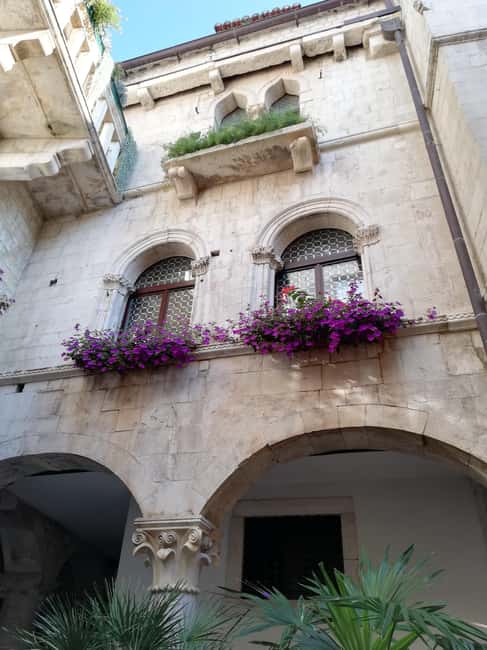
The Cipiko Palaces introduce the town’s political and social past. These buildings belonged to one of Trogir’s prominent noble families, and they help explain how power was displayed in stone.
Do not expect a palace visit in the grand, room-after-room sense. The appeal here is the exterior architecture and the story attached to it. Your guide points out the palaces and explains the families connected with them, along with the old fragments that were gathered and displayed as a mark of respect for earlier cultures.
That detail gives the stop more depth than a simple list of dates. Trogir’s residents were not only building for their own time. They were also placing themselves within a much older Mediterranean story. I find that useful context, especially if you are visiting several Dalmatian towns and want to understand why Roman, Greek, medieval, and later influences appear so close together.
The drawback is that the experience depends heavily on the guide’s explanation. The palaces are important, but without context you may simply see handsome stone buildings on a narrow street. That is one reason a private tour can be worthwhile here.
Saint Lawrence Cathedral and its carved portal
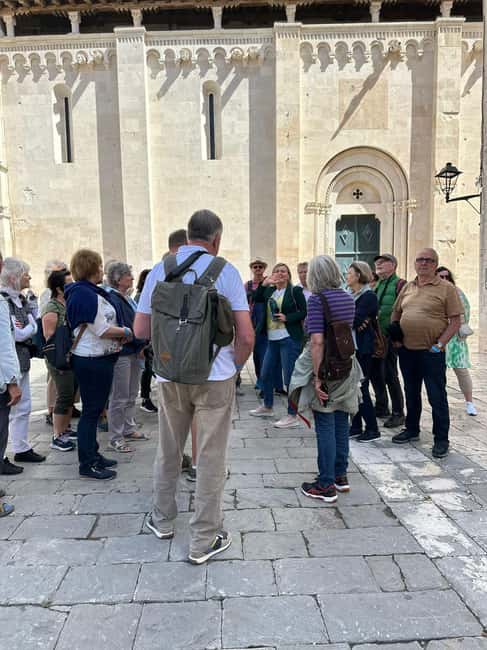
The Cathedral of Saint Lawrence is the architectural centerpiece of the route. The building is known for its impressive portal, a detailed work of sculpture that rewards a slow look.
Your guide will explain the artistic and historical importance of the cathedral, then direct your attention to the portal’s carved figures and decoration. You should allow yourself time here. It is easy to glance at a doorway, take a picture, and move on, but the craftsmanship is the reason this stop matters.
The cathedral also shows how Trogir attracted skilled artists over many centuries. The town drew major masters from the era of the ancient Greeks onward, and some created important works here. The tour connects those artists with the setting around you, making the old town feel less like a collection of pretty streets and more like a working center of art and building.
The supplied information does not specify whether cathedral admission is included, so treat interior access as something to confirm before you go. The tour includes a licensed guide, but personal expenses are not included. If seeing the inside is essential to you, ask about any entrance cost and the exact visit plan.
City Loggia, City Hall, and the civic heart
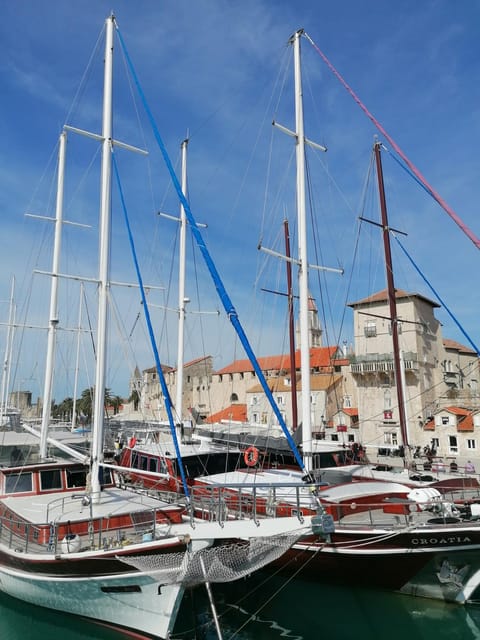
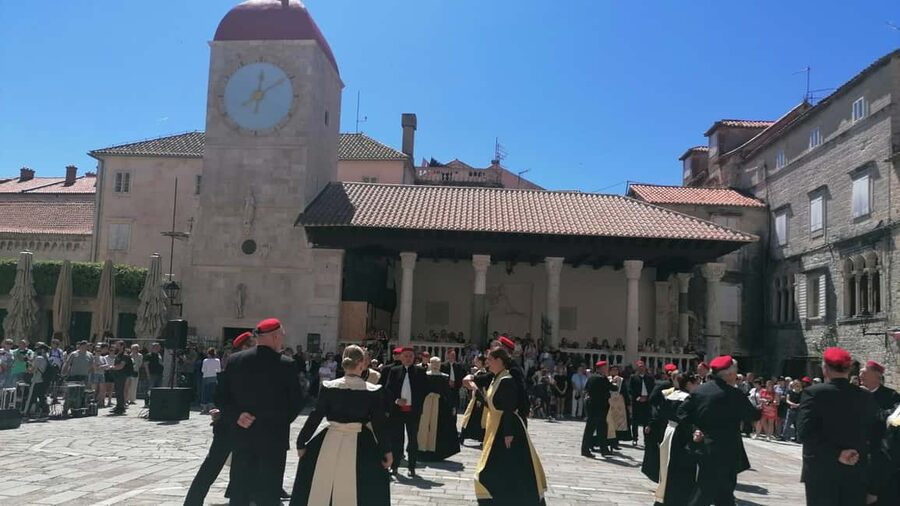
The walk continues to the City Loggia and City Hall. These stops shift the focus from private noble residences to public life.
A loggia was a place where civic business, legal matters, and public gatherings could take place. City Hall, meanwhile, represents the town’s governing side. You will hear the stories behind both buildings and learn how Trogir’s public spaces fit into its long civic tradition.
This part of the walk is particularly good for putting the grander sights into context. The cathedral shows religious and artistic authority. The Cipiko Palaces show family power. The loggia and City Hall show the machinery of town life. Taken together, the stops create a clearer picture of how a small fortified Mediterranean community worked.
Because the tour is private, you can ask the guide to slow down when a civic detail interests you. You can also keep moving if you have already had your fill of architectural history. That freedom is harder to manage in a fixed group.
Same coast, a completely different day out:
- Blue cave, Mama Mia and Hvar, 5 island speedboat tour from Trogir
★ 5.0 · 2,861 reviews - From Trogir: Three Islands Half-Day Speedboat Tour
★ 4.8 · 804 reviews - From Trogir or Split: Full-Day Blue Cave & Hvar Island Tour
★ 4.7 · 413 reviews - Half Day Speedboat Tour to Three Islands from Trogir
★ 5.0 · 401 reviews
The story of Kairos, the fortunate moment
One of the more unusual details on the route is the story of Kairos, the Greek god associated with a happy or fortunate moment. This gives the tour a touch of mythology and helps link Trogir’s present streets with its ancient Greek foundations.
Kairos is the sort of detail you might miss on a self-guided walk. It is not one of the huge buildings that dominates the skyline, so you need someone to point out its importance and explain the idea behind it.
I like this stop because it breaks up the sequence of palaces, churches, and government buildings. It also gives you a memorable story to carry away from the tour. Trogir is not only about walls and dates. Small symbols and old beliefs are part of the town’s character too.
A Mediterranean pause along the Riva
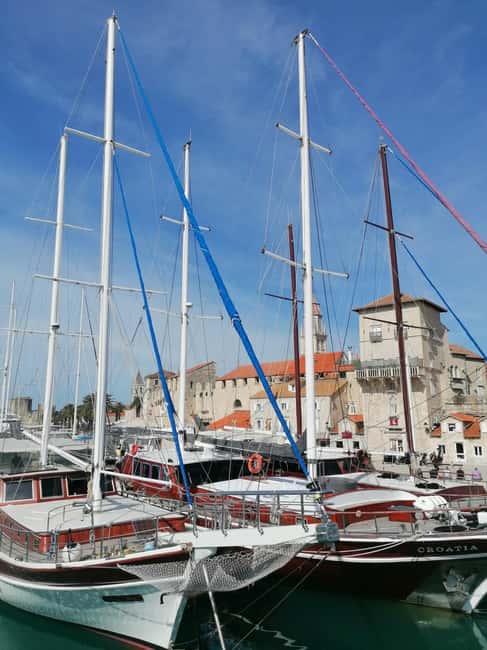
After the tighter streets of the old town, the route reaches the Riva promenade. Here you get the classic Mediterranean view: sea, palm trees, and anchored boats.
This is a good change of pace. The historic center asks you to look closely at stone carvings and building fronts. The Riva lets you step back and see Trogir as a coastal town. The water and boats explain why this place has drawn people for so long.
The promenade is also a practical place to ask for local advice. The guide offers recommendations for the rest of your stay in Trogir and Dalmatia, so bring specific questions about what you want from the area. Keep in mind that the information provided does not list restaurant bookings, transport, or additional activities. You are receiving recommendations, not a full vacation-planning service.
If you prefer ruins and interiors to open waterfront views, this section may feel less substantial than the cathedral or palaces. I still consider it important because it gives the tour visual variety and a better sense of Trogir’s setting.
Finishing at Kamerlengo Fortress
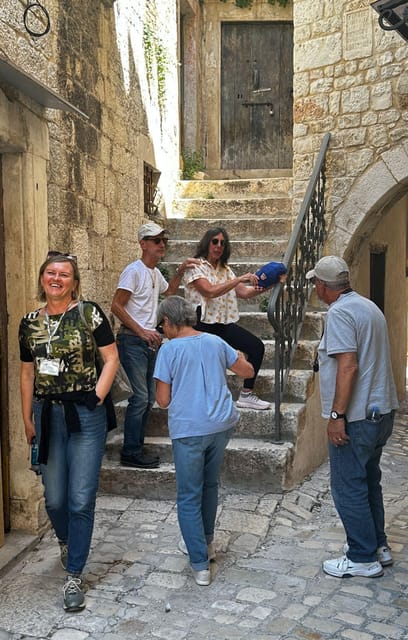
The tour concludes at Fortress Kamerlengo, an imposing defensive structure at the edge of the old town. It is a fitting final stop after the civic buildings, palace façades, cathedral, and waterfront.
The fortress brings the town’s defensive role into view. Trogir was not only a place of worship, trade, art, and noble life. It also needed strong walls and military protection. Ending here gives the route a clear sense of movement, from the north gate through the town’s institutions and out toward its defenses.
You should not assume that a fortress admission is included. The listed inclusion is a licensed tour guide, while personal expenses are excluded. Ask whether the guide plans to enter the fortress or discuss it from outside, and whether any entrance fee applies.
The activity is scheduled to end back at the meeting point, but the tour can also finish at another point that suits you. This is useful if you want to continue along the waterfront, return to accommodation, or meet the rest of your party elsewhere. Confirm the plan with the guide at the start.
What the private format means for your day
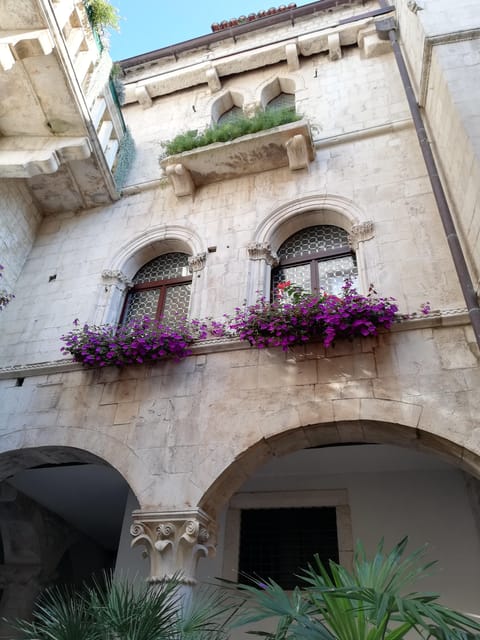
The tour costs $129 per group of up to eight people. For a full group, that is about $16.13 each. For two people, the same tour works out to $64.50 per person, so the value improves sharply as your group gets larger.
That price makes the most sense for families, couples traveling with friends, or a small group that wants a private explanation of Trogir’s main sights. If you are alone and comfortable reading signs or using a guidebook, the cost may be harder to justify. If you want to ask questions, adjust the pace, and get local suggestions, the private setup has a clearer benefit.
The tour includes a licensed guide, with English and German available. It does not include personal expenses. Since no duration is stated, I would ask how long the walk normally lasts, whether the cathedral or fortress interior is part of the plan, and if entrance fees are separate.
One useful sign of the guide’s practical approach is the handling of bad weather. A German-speaking participant had a tour shifted by three hours during a storm, and the guide fitted the rescheduled visit in without difficulty. That does not guarantee every weather change will be handled the same way, but it suggests you should contact the provider quickly if conditions disrupt your plans.
You can reserve now and pay later, which helps if your Dalmatian itinerary is still changing. Cancellation is free up to 24 hours before the activity for a full refund. Those terms are especially useful if you are coordinating a day trip, ferry connection, or weather-sensitive plan.
Who will get the most from this walk
I would choose this tour if you want Trogir’s main sights explained in a logical order rather than simply photographed. It suits first-time visitors who want an introduction to the town’s architecture, noble families, ancient connections, and waterfront setting.
It also works well for people who enjoy details but do not want a long museum-style lecture. The route mixes major buildings with smaller stories, including Kairos, and the guide can respond to your questions as you go.
Families may appreciate the private format because you can pause or move on without worrying about a large group. Couples and small friend groups get better value when they divide the $129 cost among several people.
I would be more cautious if you need a fully specified schedule. The exact duration is not given, and the information does not confirm interior admission at Saint Lawrence Cathedral or Kamerlengo Fortress. You should clarify both points before booking if they matter to you.
This is also not a transport excursion. You meet at the north city gate and explore on foot. If you have mobility concerns, ask the provider about the route before paying, since no accessibility details are supplied.
Should you book the Trogir private walking tour?
Book it if you want a focused introduction to Trogir with a licensed English- or German-speaking guide, especially if you are sharing the $129 cost with a group. The route covers the town’s most important sights without wasting time on transport, and the private format lets you ask questions and adjust the ending point.
I especially like the combination of the cathedral portal, Cipiko Palaces, Kairos, and the Riva. Those stops give you art, family power, ancient ideas, public life, and the sea in one compact walk.
Before booking, confirm the tour length and any entry fees. If those details suit your plans, this is a sensible way to get your bearings and understand why Trogir deserves more than a quick stop between larger Dalmatian destinations.
FAQ
Where does the Trogir walking tour begin?
It begins in front of the north city gate, which is the main northern entrance to Trogir’s historic center.
Where does the tour end?
The activity ends back at the meeting point. It can also finish at another point that suits you, if arranged with the guide.
How much does the private tour cost?
The price is $129 per group of up to eight people.
What is included in the price?
A licensed tour guide is included.
Are personal expenses included?
No. Personal expenses are not included in the tour price.
Which languages are available?
The tour is available in English and German.
Can I reserve now and pay later?
Yes. You can reserve your place and pay nothing at the time of booking.
What is the cancellation policy?
You can cancel up to 24 hours in advance for a full refund.
How long does the walking tour last?
The supplied tour information does not state a duration. Ask the provider to confirm the expected length before booking.
Just added around Trogir
- Split and Salona Cultural Heritage Day Tour from Trogir★ 4.0 · 3 reviews
- Split and Trogir private tour *ideal for cruise ship guests*★ 5.0 · 3 reviews
- Trogir to Krka Waterfalls – Full Day Private Tour Including Free Detour★ 5.0 · 3 reviews
- From Trogir Day sailing (private tour)★ 5.0 · 4 reviews
- Private Transfer from Split Croatia Airport to Hotel★ 5.0 · 4 reviews
- Split (airport) – Hvar (town) sea transfer★ 5.0 · 4 reviews
- Private speedboat tour to Blue Cave and visit Island Hvar★ 4.0 · 4 reviews
- Kastela: Wine & Olive Tasting Tour w/Delicacies & Live Music★ 5.0 · 5 reviews
Walking Tours, compared.


Walking Tour of Split and Diocletian’s Palace
Read our review →
Krka Waterfalls tour with Trogir Walking tour and Krka panoramic boat cruise
Read our review →

Walking Tour of Split with a ‘Magister’ of History
Read our review →

Diocletian Palace & Old Town Guided Walking Tour
Read our review →
Browse the lists this tour appears in