

Reviewed · WALKING TOURS
Split; Private Morning Walking Tour in Split
Split’s old town is not a museum sealed behind glass. It is a living city built into the bones of Diocletian’s Palace, where laundry hangs above Roman walls and daily life carries on around ancient columns. This private morning walk takes you through the palace, its cellars, the Cathedral of Saint Domnius, several squares, and the waterfront Riva before the day gets crowded. I like the early timing and the local stop at Pazar market, where Split residents shop for produce from Dalmatia. I also like that the private format lets your group ask questions about both the past and present city.
The main consideration is pace. Two hours covers many stops, so you will get a strong introduction rather than a slow, detailed visit to every site. The tour price is $129 per group of up to 10, which can be good value for a family or small group, but less attractive for one or two people than a shared walk.
In This Review
- Key points at a glance
- Starting with Split’s historic-core model
- Walking through a 1,700-year-old palace
- Seeing the Diocletian’s Cellars
- Meeting Saint Domnius at the former mausoleum
- Peristil, where the palace opens up
- The Golden Gate and the city’s old entrances
- The secret stop and the people’s squares
- Pazar market, where Split buys its food
- Walking along the Riva
- Finishing with a break and local advice
- Is $129 good value for a private group?
- Who should book this morning walk?
- Should you book it?
- FAQ
- Where does the tour start?
- How long does the walking tour last?
- Is this a private tour?
- What languages are available?
- What landmarks are included?
- Is a licensed guide included?
- Is food or shopping included in the price?
- What should I bring?
- Can I cancel the booking?
Key points at a glance
- Morning timing: Begin early to enjoy Split’s old town with less crowd pressure and less heat.
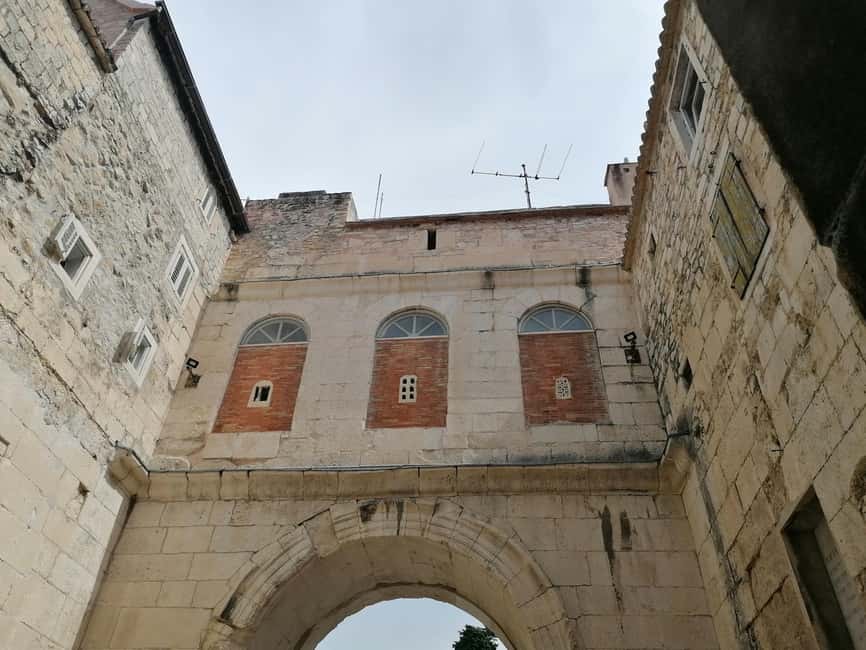
- Roman palace, modern city: Walk through Diocletian’s Palace, where ancient structures remain part of everyday life.
- Pazar market stop: See where locals buy products grown on Dalmatian soil.
- Private group format: One price covers up to 10 people, with more room for personal questions.
- English or German guide: Live guiding is available in both languages, with Kristina and Christina named in the supplied guide information.
- A useful first look at Split: The tour includes landmarks, dining tips, nightlife pointers, and ideas for further activities.
Starting with Split’s historic-core model
Your meeting point is the model of Split’s historical core. That is a practical place to begin because the old town can feel confusing at first. Streets twist through the former palace, and important buildings do not always look separate from ordinary shops, cafés, and homes.
I like starting with a model before walking into the real thing. It gives you a basic map of the palace and helps you understand how the Roman structure relates to the later medieval and modern city. The tour also touches on the past and present, so you are not limited to dates and emperors. You can ask about daily life, local customs, dining, nightlife, and other things to do in Split and the wider area.
The meeting point is listed as the model itself, not a hotel pickup. Plan to arrive ready to walk, with water in hand. No transport is included or needed during the tour.
More walking tours in Split:
- Split: Old Town and Diocletian Palace Walking Tour
★ 4.9 · 4,727 reviews - Walking Tour of Split and Diocletian’s Palace
★ 5.0 · 2,588 reviews - Krka Waterfalls tour with Trogir Walking tour and Krka panoramic boat cruise
★ 5.0 · 1,659 reviews
Walking through a 1,700-year-old palace
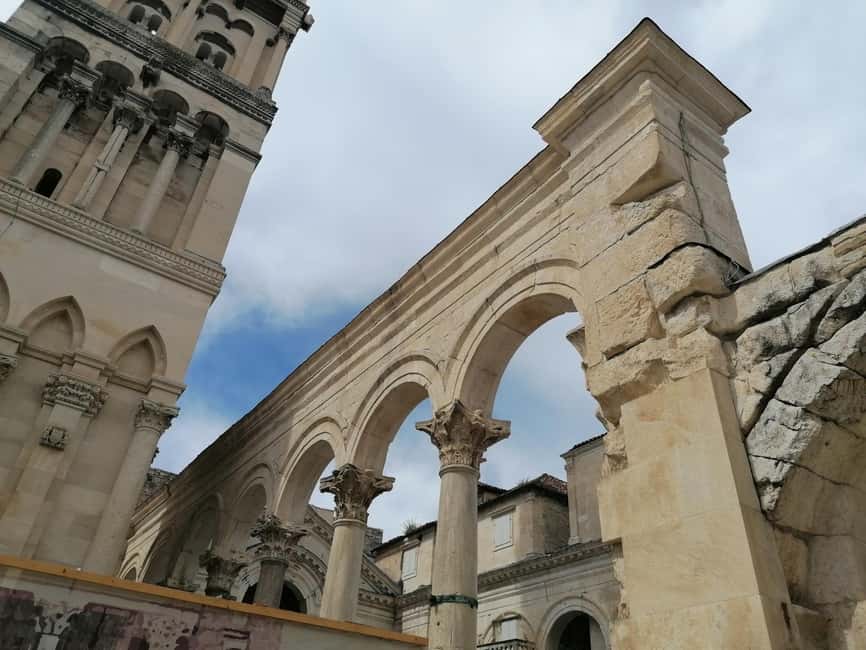
The main attraction is Diocletian’s Palace, built for Emperor Diocletian around the turn of the fourth century. It is tempting to picture a quiet archaeological site, but Split’s palace is more interesting because it became the framework for a working town.
You will explore streets, buildings, and squares that carry different layers of the city’s past. A licensed guide can help connect those layers. The walk is not only about Roman construction. It also covers culture and the way the old center functions today.
The scheduled palace visit includes a photo stop, sightseeing, and time to take in the setting. Since the tour is private, your group can use questions to shape the conversation. If one person in your party is fascinated by Roman architecture while another wants practical advice on food or nightlife, this format should work better than a fixed large-group walk.
Keep your expectations sensible. A 10-minute palace segment cannot explain every corner of the complex. It works best as an orientation, giving you enough context to explore more on your own later.
Seeing the Diocletian’s Cellars
The palace cellars are one of the clearest places to understand the scale and structure of Diocletian’s project. The tour allows about 10 minutes for a guided visit, enough to see the preserved underground spaces and learn why they matter.
These rooms are valuable because they show how the palace was built and organized. They also help you read the upper level more clearly. After seeing the cellars, columns, walls, and passageways above are easier to place in context.
The short time here is both useful and limiting. You will get an introduction, not a long archaeological lecture. If underground spaces are your main reason for booking, ask the guide how much time can be devoted to them when you meet.
Personal expenses are not included, so treat any admission, shopping, or other spending as separate from the tour price. The supplied details identify the guide as included but do not list separate entrance tickets.
Meeting Saint Domnius at the former mausoleum
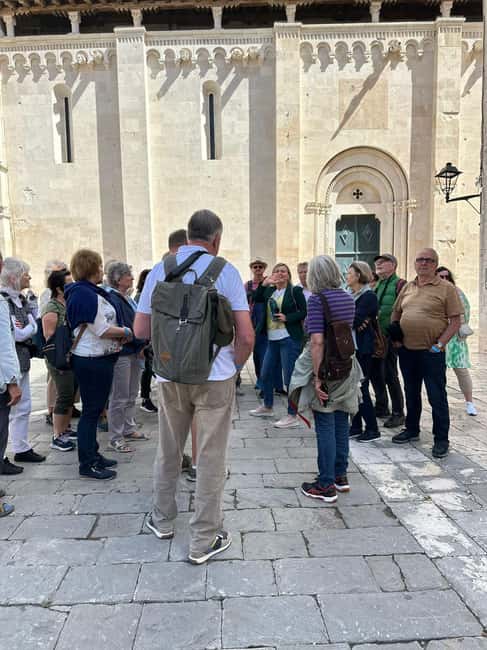
The Cathedral of Saint Domnius, known locally as Sveti Duje, is another key stop. The building began as Diocletian’s mausoleum, which gives the visit an unusual historical twist. A space made for the emperor later became part of Split’s Christian cathedral complex.
The schedule allows around 10 minutes for guided sightseeing. That is enough to understand the building’s central role and its connection to Diocletian. I appreciate this stop because it shows how the city changed without erasing every earlier layer.
The cathedral is not treated as an isolated monument. It fits into the larger story of the palace and Split’s changing religious and civic life. You will want to listen for those connections rather than simply taking a photograph and moving on.
Again, the format is brisk. If you want an extended interior visit or more time for detailed architectural study, this tour may feel too short. Its purpose is to place Saint Domnius within the old town route.
A few more Split half-days to weigh up
- Private Sibenik Walking Historical Morning or Evening Tour
★ 5.0 · 93 reviews - Morning Split Sea Kayaking Tour
★ 5.0 · 11 reviews - Morning Stand Up Paddle Tour in Split
★ 5.0 · 10 reviews - Morning Stand Up Paddle Tour in Split
★ 4.9 · 6 reviews
Peristil, where the palace opens up
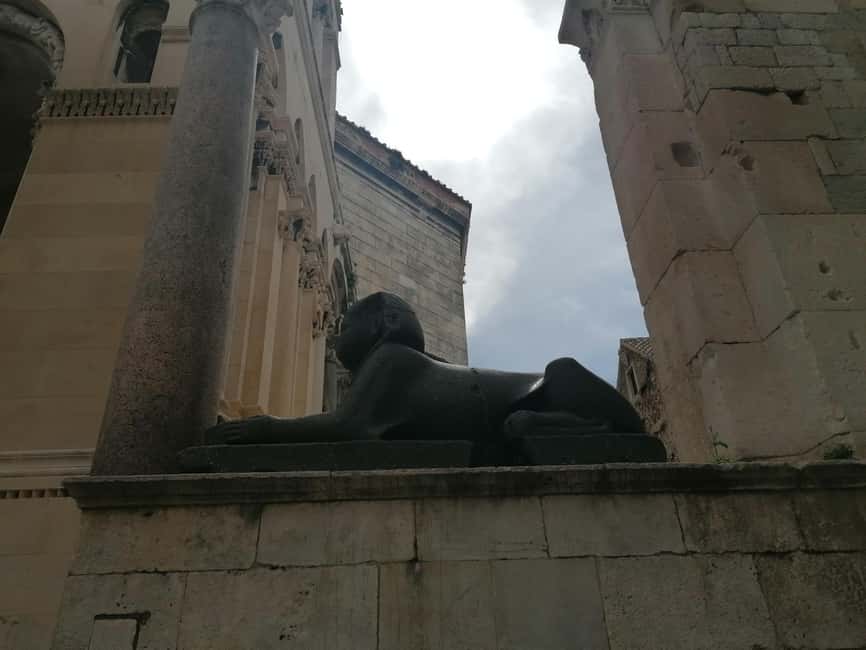
Peristil is scheduled for a 15-minute visit. This is one of the tour’s most important pauses because it gives you an open view inside the palace complex after the tighter streets and cellar spaces.
Here, the guide can tie together the palace’s public areas, imperial purpose, and later use. The square also helps you see how Split’s old center is arranged. Rather than rushing past it as a passageway, you have time to stop, look around, and ask questions.
I would pay attention to the contrast between formal Roman planning and the practical life of the present-day city. That contrast is one of the pleasures of walking Split. Ancient stone is not just a backdrop. It forms the setting for ordinary movement through the old town.
The Golden Gate and the city’s old entrances
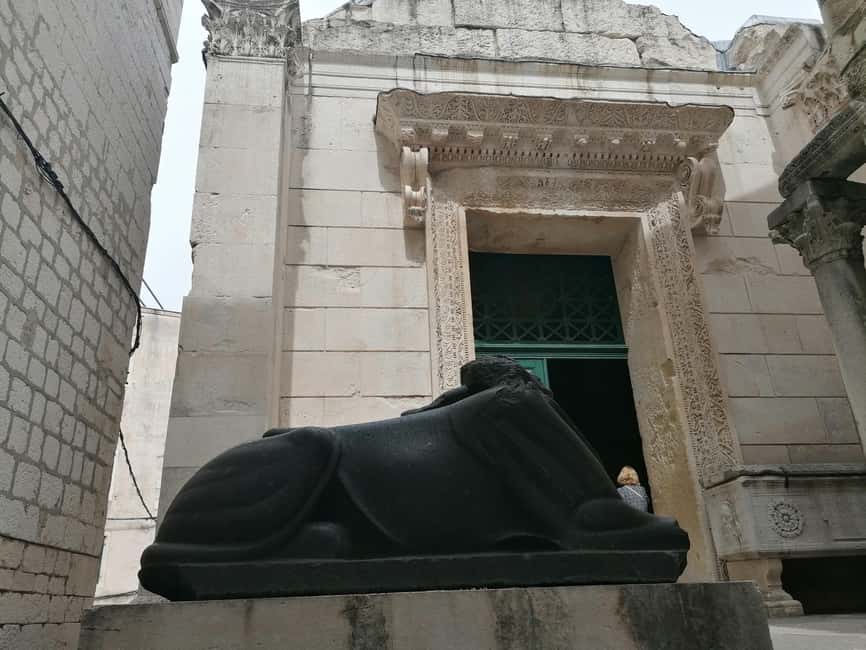
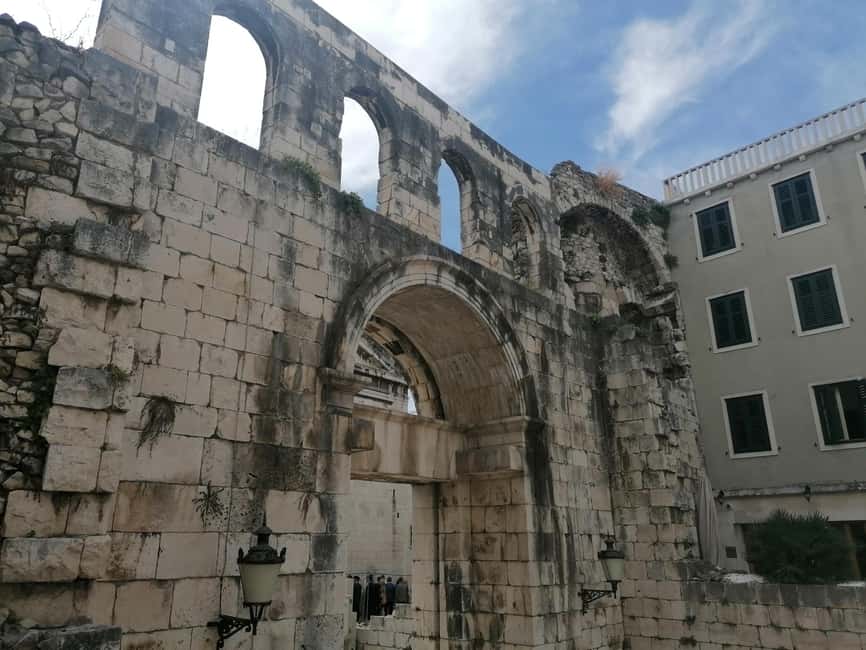
The Golden Gate receives about 15 minutes for a photo stop and sightseeing. This is a good place to consider how people entered the palace and how the old center connected with the area beyond its walls.
The stop is especially useful if you are trying to orient yourself. The guide can explain the gate’s place in the palace plan while also pointing out how the surrounding streets connect with the rest of Split.
Because it is a photo stop, do not expect a long interior visit or a separate museum program here. The value comes from seeing the gate in relation to the palace, not from spending the entire morning at one monument.
The secret stop and the people’s squares

The itinerary includes a 20-minute secret stop. Since its exact location is not disclosed in advance, you should think of it as a flexible surprise within the walk rather than a guaranteed named monument.
That uncertainty can be part of the fun, but it also makes comparison harder. If you need to know every stop before booking, ask the provider for more detail. The supplied information only identifies it as a visit lasting about 20 minutes.
The route then continues to People’s Square for roughly 15 minutes of sightseeing and shopping. This is a chance to see a different side of Split’s center, away from the most obvious palace landmarks. Streets and squares in the old town each have their own story, and this stop broadens the tour beyond Roman remains.
The shopping element does not mean shopping is compulsory. You can use the time to look around, listen to the guide, or ask for suggestions about local food and other parts of the city.
Pazar market, where Split buys its food
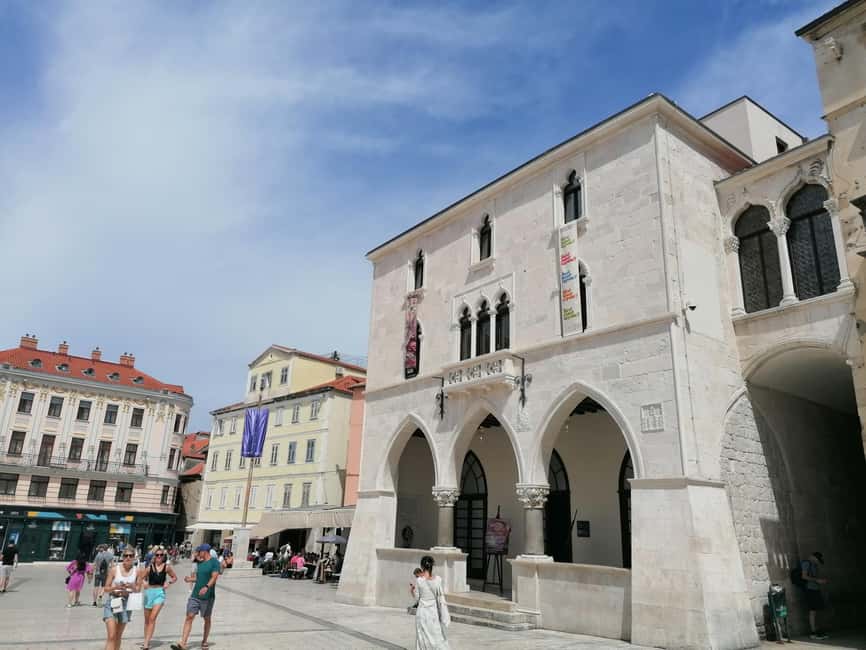
The Green Market, called Pazar, is one of the most useful stops for understanding everyday Split. This is where locals buy and sell products connected with Dalmatian soil.
I like that the route includes a market rather than limiting itself to grand monuments. A market gives you a more grounded view of the city. You can see what people buy, learn which local products to look for, and ask the guide how the market fits into daily life.
The information supplied does not promise tastings or food purchases as part of the tour, so bring money only if you want to shop. Personal expenses are excluded. The main value here is the setting and the explanation, not a built-in meal.
Walking along the Riva
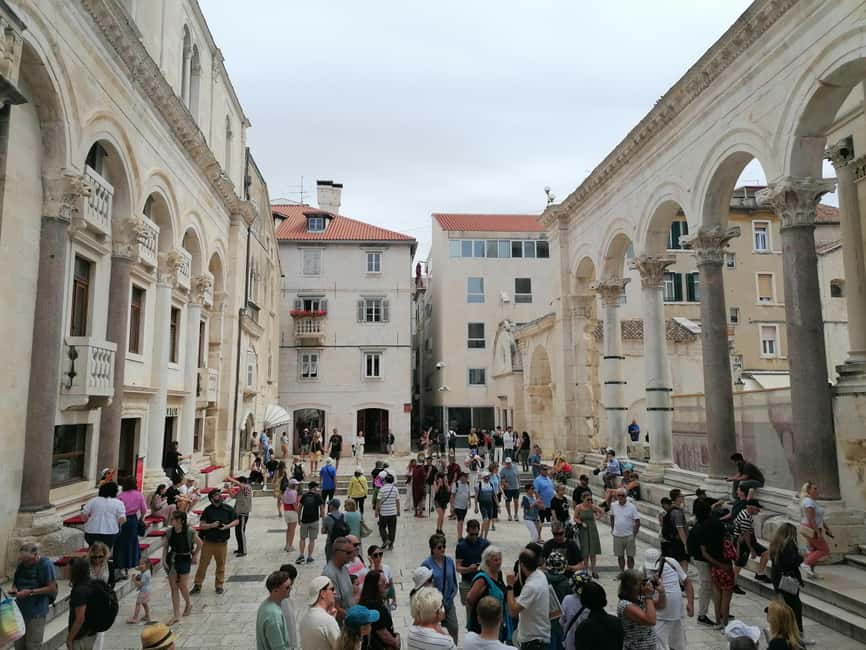
The tour reaches the Riva for a 10-minute photo stop. Split’s waterfront promenade is a natural place to pause after the enclosed lanes of the palace.
This section gives you a change of scale. The palace route is defined by stone walls, narrow streets, and interior squares. The Riva opens the view and lets you experience Split’s public waterfront. It is also a useful point for asking about restaurants, nightlife, and further activities.
Ten minutes is enough for photographs and a short explanation, but not for lingering over coffee. If you want a slow waterfront morning, plan to return after the tour. The guide’s tips can help you decide where to spend that extra time.
Finishing with a break and local advice
The final listed stop is another model of Split, with about 10 minutes for a break. This gives the route a practical ending. You can review what you have seen, ask follow-up questions, and get suggestions for the rest of your stay.
The tour covers historical landmarks and cultural heritage, but it also includes advice on dining, nightlife, and activities in Split and the surrounding area. That makes it more useful as a first-day orientation than as a single isolated history lesson.
The two-hour length is a strength for many schedules. You can fit it before lunch, a beach outing, a museum visit, or an afternoon excursion. It is also short enough for people who prefer not to spend half a day on foot.
Is $129 good value for a private group?
The price is $129 for a private group of up to 10 people. For a full group, that works out to about $13 per person, which is a solid price for a licensed guide and a focused introduction to Split. For two people, the per-person cost is much higher, so the value depends on how much you want privacy and personal attention.
The private format matters most when your group has different interests or needs a flexible conversation. You can ask about the palace, local culture, restaurants, nightlife, and future plans without waiting for a large group to move on.
The tour includes a licensed guide, but personal expenses are not included. Water is specifically recommended, and comfortable walking shoes make sense for old-town streets. English and German are available.
Two verified ratings supplied for this experience praise the guide’s information and personal approach. One identifies Kristina, while another spells the guide’s name Christina. The safest practical point is that the named guides are praised for explaining Split and its history clearly, and the activity offers live guiding in English or German.
Cancellation is free up to 24 hours before the start for a full refund. You can also reserve now and pay later, which helps if your Split schedule is still changing.
Who should book this morning walk?
I would recommend it to first-time visitors who want a clear introduction before exploring on their own. It also suits families, couples, and small groups who prefer a private guide to a crowded shared tour.
The morning start is a real advantage if you want a calmer walk. It also gives you the rest of the day for your own plans. People interested in markets, local life, and practical city advice will get more from this route than someone focused only on Roman ruins.
You may want a different experience if you prefer a long specialist tour devoted to archaeology, architecture, or cathedral interiors. The route covers many places in two hours, so each stop receives a short, purposeful explanation rather than a lengthy study.
Should you book it?
Book this tour if you want a private morning orientation to Split, especially if your group includes up to 10 people and you value questions, local advice, and a less stressful start. The combination of palace ruins, Saint Domnius, Peristil, the Golden Gate, Pazar, People’s Square, and the Riva gives you a useful picture of both old and present-day Split.
Skip it if you want an unhurried half-day visit to one monument or if you are traveling alone and do not value private guiding enough to justify the price. For most small groups, though, $129 buys a well-shaped introduction and leaves you better prepared to enjoy the city afterward.
FAQ
Where does the tour start?
The meeting point is the model of the historical core of the city of Split.
How long does the walking tour last?
The tour lasts two hours.
Is this a private tour?
Yes. It is offered for a private group of up to 10 people.
What languages are available?
Live guiding is available in English and German.
What landmarks are included?
The route includes Diocletian’s Palace, the Diocletian’s Cellars, the Cathedral of Saint Domnius, Peristil, the Golden Gate, People’s Square, the Riva, Pazar market, and two models of Split’s historic core.
Is a licensed guide included?
Yes. A licensed tour guide is included.
Is food or shopping included in the price?
No. Personal expenses are not included. You may choose to spend money at the market or elsewhere, but purchases are separate.
What should I bring?
Bring water. The activity is a walking tour through Split’s old town.
Can I cancel the booking?
Yes. You can cancel up to 24 hours in advance for a full refund. Reserve now and pay later is also available.
Just added around Split
- Kayaking & Zipline Šibenik – Čikola Canyon★ 5.0 · 3 reviews
- Krka National Park & Zipline Šibenik – Čikola Canyon★ 5.0 · 3 reviews
- Split: Small-Group Half Day Sailing Trip★ 5.0 · 3 reviews
- Rafting River Cetina from Makarska Riviera including transfer★ 5.0 · 3 reviews
- From Split: Krka National Park & Waterfalls Private Day Trip★ 5.0 · 3 reviews
- Split Bike and Wine Experience★ 5.0 · 3 reviews
- Split and Salona Cultural Heritage Day Tour from Trogir★ 4.0 · 3 reviews
- Krka Waterfalls, Lake Cruise & Skradin★ 5.0 · 3 reviews
Walking Tours, compared.


Walking Tour of Split and Diocletian’s Palace
Read our review →
Krka Waterfalls tour with Trogir Walking tour and Krka panoramic boat cruise
Read our review →

Walking Tour of Split with a ‘Magister’ of History
Read our review →

Diocletian Palace & Old Town Guided Walking Tour
Read our review →
Browse the lists this tour appears in