
Reviewed · WALKING TOURS
Split: Group or Private Walking Tour with Art Historian
Split’s best stories are not all inside a museum. They are built into doorways, squeezed between Roman stones, and still used as part of daily life. On this two-hour walk, art historian Josipa leads you through Diocletian’s Palace and the Old Town, showing how 17 centuries of Roman, medieval, and modern life share the same streets.
I like the tour’s scholarly but personal approach, and I like that it ends in Varoš, an old neighborhood rather than simply stopping at the palace’s biggest photo spot. You also get a small group or private format, which leaves room for questions and a route shaped around your interests.
The main drawback is practical: you do not enter paid sights, including the cathedral, Temple of Jupiter, or palace substructures. The route also includes several steps and is not suitable for wheelchair users, people with mobility impairments, or people with hearing impairments.
In This Review
- Key points before you book
- Why this walk gives you a better start in Split
- Starting beside Strossmayer Park
- Gregory of Nin and the Golden Gate
- St. Martin, the Silver Gate, and Roman street lines
- The Peristyle and Jupiter’s Temple
- Vestibul, Triklinij, and the palace substructures
- Down to the Riva waterfront
- Fruit Square, People’s Square, and the fish market
- Republic Square and the route toward Varoš
- Private tour or small group?
- What Josipa adds to the experience
- Timing, comfort, and what to bring
- Who should book this Split walk?
- Should you book it?
- FAQ
- How long is the Split walking tour?
- What language is the tour conducted in?
- Who leads the tour?
- Where does the tour start?
- How will I recognize the guide?
- Does the tour include entrance tickets?
- Is the tour private or shared?
- Is the route suitable for wheelchair users?
- Can I cancel for a refund?
Key points before you book
- Art historian guide: Josipa, owner of Aspalathos Guided Tours, leads the walk in English.
- Roman Split in everyday use: See original streets, palace gates, ancient walls, and buildings still woven into city life.
- Private or small group choice: The format allows more conversation and some flexibility in the route.
- Unusual details: Josipa connects what you see with archaeological fieldwork and stories often missed in standard guidebooks.
- Paid sites are viewed from outside: You receive background and advice for visiting them later on your own.
- A useful orientation walk: The route covers the palace, Riva, market areas, main squares, and Varoš in two hours.
Why this walk gives you a better start in Split

Diocletian’s Palace is not a fenced-off monument sitting apart from the city. It is the center of Split. People live, work, eat, shop, and walk through spaces that began as a Roman imperial complex. That can be confusing at first, especially when a medieval house seems to grow out of an ancient wall.
Josipa’s role is to help you read the city. Instead of only pointing out famous buildings, she explains how to notice reused stone, changing street plans, layers of architecture, and the way old spaces have been adapted. That makes the rest of your time in Split more rewarding because you begin spotting clues on your own.
The pace should suit most visitors who want a strong introduction without giving up half a day. The route includes many stops, but most are brief. You get a broad view of Split rather than a long interior visit at one monument.
The $32 price is fair for a two-hour guided walk, particularly if you choose a private tour or value a guide who can answer detailed questions. It is less of a bargain if your only goal is to enter the palace cellars or cathedral, since admission is not included and those sites remain for a separate visit.
More walking tours in Split:
- Split: Old Town and Diocletian Palace Walking Tour
★ 4.9 · 4,727 reviews - Walking Tour of Split and Diocletian’s Palace
★ 5.0 · 2,588 reviews - Krka Waterfalls tour with Trogir Walking tour and Krka panoramic boat cruise
★ 5.0 · 1,659 reviews
Starting beside Strossmayer Park
Meet around the fountain in Strossmayer Park, also called Djardin. The park is just above the Golden Gate and near the statue of Gregory of Nin, so it gives you a useful starting point outside the palace walls.
Look for Josipa holding the yellow and blue Aspalathos Guided Tours sign. Search your map for Strossmayer Park or Strossmayerova Fountain rather than relying on a vague palace address.
This starting point is helpful because you begin with a little breathing room before entering the tight lanes of the Old Town. Arrive on time, especially during summer. Traffic can be heavy, and the group waits a maximum of 10 minutes before leaving.
Gregory of Nin and the Golden Gate
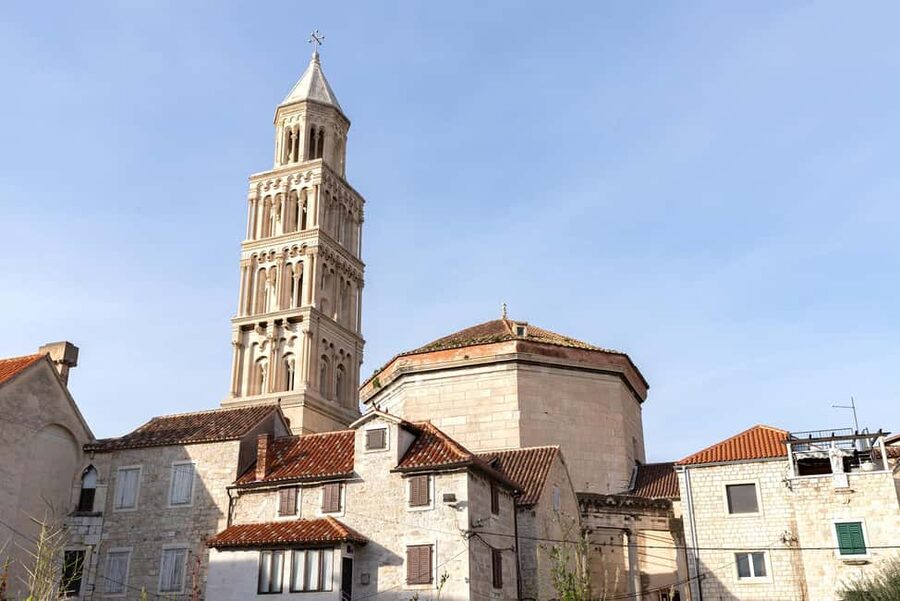
The first short stop is the statue of Gregory of Nin. Josipa uses this area to set up Split’s wider story before leading you through the Golden Gate, the grand northern entrance to Diocletian’s Palace.
The Golden Gate is one of the clearest places to understand the palace as a fortified Roman complex. You will hear about the gate and its role in the original plan, then move into streets that have been used for centuries after the Roman period ended.
This part of the route is more about orientation than extended sightseeing. If you want a long photo session at the statue or gate, you may need to take extra pictures later.
St. Martin, the Silver Gate, and Roman street lines
The walk continues to St. Martin, then to the Silver Gate. These smaller stops help show that Split is not only about the Peristyle. The palace had several entrances and a carefully planned network of streets, and Josipa points out how those routes still shape movement through the center.
I especially like this kind of stop because it makes the large monuments easier to understand. You are not simply collecting names. You are seeing how gates, walls, and streets fit together.
The tour includes original Roman streets and sections of city walls. Expect uneven paving and steps. Comfortable shoes matter here, and anyone who finds stairs difficult should think carefully before booking.
A few more Split half-days to weigh up
- Split: Krka Waterfalls Trip with Boat Cruise and Swimming
★ 4.8 · 10,519 reviews - From Split: Krka Waterfalls, Food & Wine Tasting Tour
★ 5.0 · 9,326 reviews - Blue cave, Mamma Mia and Hvar, 5 islands speedboat tour
★ 5.0 · 7,150 reviews - From Split: Krka Waterfalls, Food & Wine Tasting Tour
★ 4.9 · 6,598 reviews
The Peristyle and Jupiter’s Temple

The Peristyle is the visual centerpiece of the palace. It is the open ceremonial court where the scale and formality of Diocletian’s complex become easiest to grasp. Josipa gives you time to look, but the visit is still part of a moving walking route, not a long sit-down lecture.
From there, you visit Jupiter’s Temple. The tour does not enter the temple as a paid site, but Josipa explains its importance and gives you suggestions for seeing it independently. This arrangement keeps the tour price down, but you should allow extra time and budget if interiors are important to you.
The short stop at Let Me Pass adds a more intimate view of the Old Town. A narrow lane with that name captures the practical side of Split’s old center. The route is full of small details like this, where the city’s past is encountered in ordinary passageways rather than grand halls.
Vestibul, Triklinij, and the palace substructures
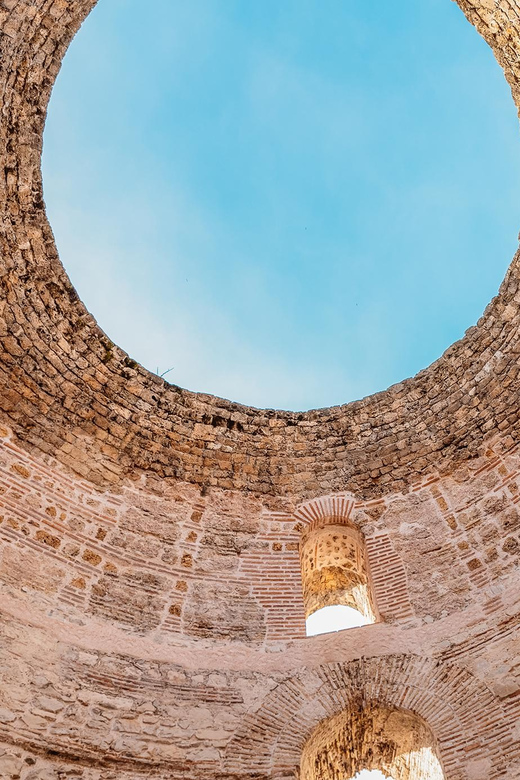
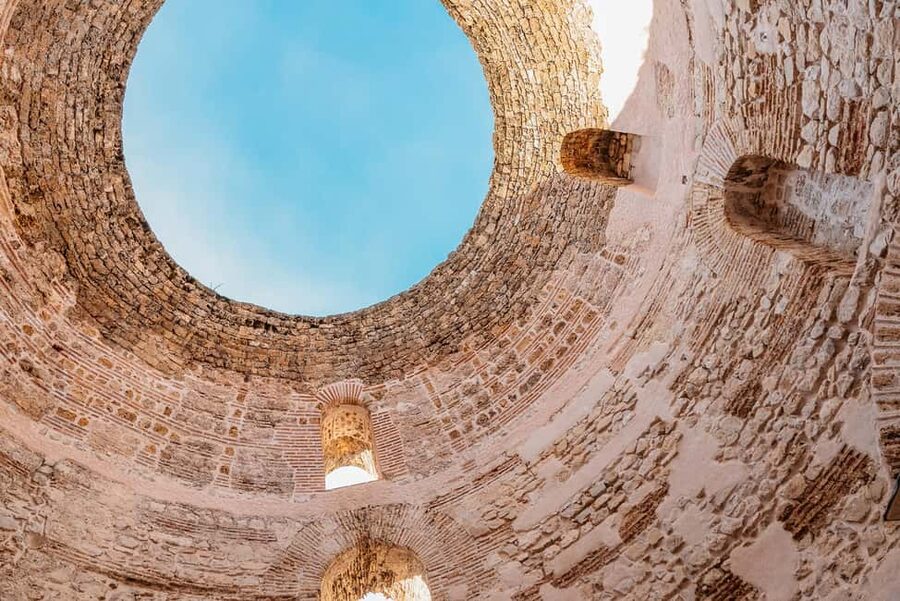
At the Vestibul, the tour pauses for photos and a guided explanation. This rounded entrance space is one of the palace’s memorable architectural features, and it gives you another chance to see how Roman design survives within a living city.
The next stop is Triklinij. Josipa discusses the site as part of the palace complex and helps place it within the larger plan. Because the route moves quickly, you will get context and interpretation rather than a lengthy architectural study.
The palace substructures are another major stop. These underground spaces are important for understanding the palace’s original layout and later use, but admission is not included. You pass the site and hear the story, then receive instructions for visiting it later by yourself.
That is an important distinction when comparing tours. If you want the substructures included, you will need a separate ticket and more time. If you mainly want to understand what you are seeing before exploring independently, this tour gives you a useful foundation.
Down to the Riva waterfront
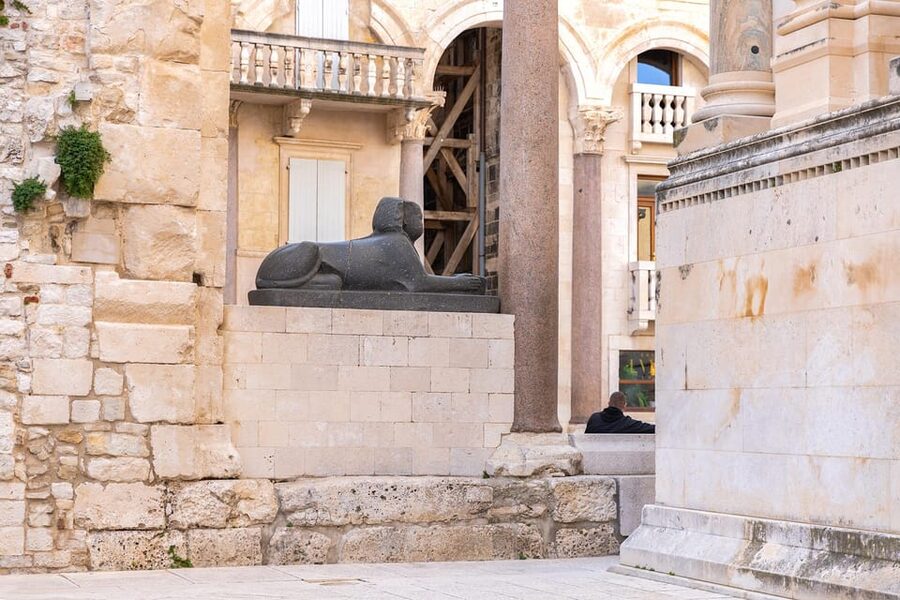
After the palace, the route reaches the Riva, Split’s waterfront promenade. This change of setting helps connect the old center with the city’s public life beyond the Roman walls.
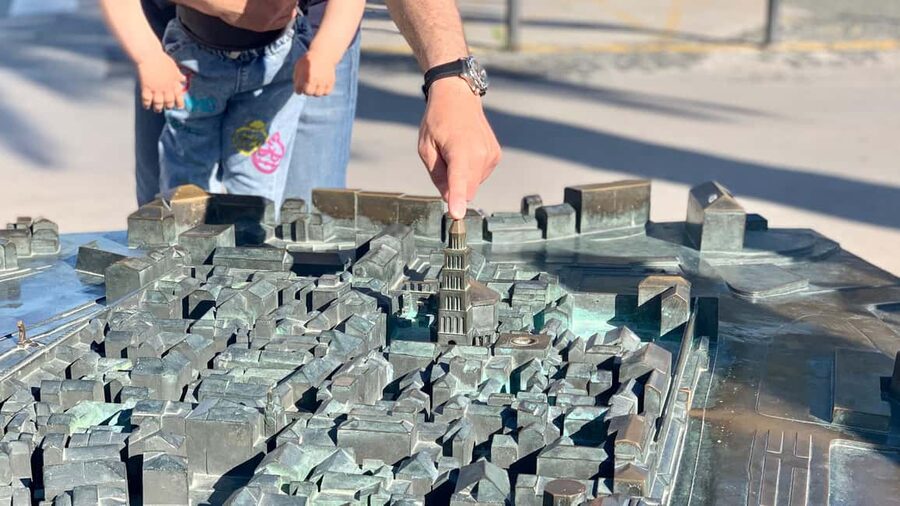
Josipa also points out a model of Split. A scale model can be especially useful after walking through narrow lanes because it lets you see the city’s arrangement from above. You can connect the palace, waterfront, gates, and older neighborhoods in a single view.
The Riva stop is not just a scenic finish. It helps explain why Split developed as a city shaped by both its fortified core and its waterfront. You also get a good place to pause mentally before the route continues through the squares and market areas.
Fruit Square, People’s Square, and the fish market
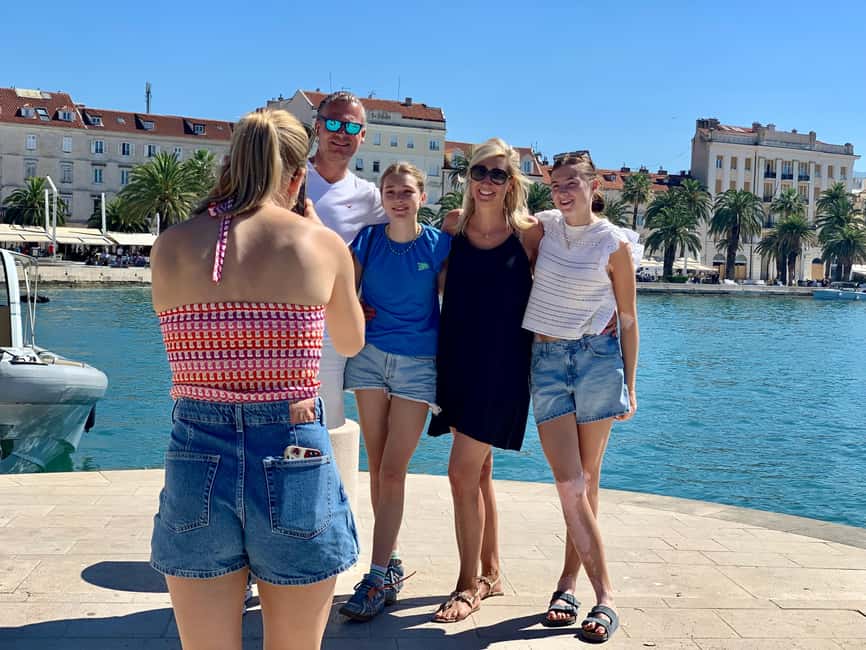
Fruit Square, or Voćni trg, brings you into one of the city’s familiar public spaces. The short guided stop gives Josipa room to explain how Split’s civic areas changed over time.
People’s Square offers another view of the city outside the palace’s Roman frame. By this stage, you have seen ancient gates, imperial spaces, medieval lanes, waterfront life, and later urban areas. The value is in the contrast.
The walk then passes the Split Fishmarket. This is a practical, local part of the city rather than a formal monument. I like its inclusion because it keeps the experience connected to daily Split, not just polished historic sights.
You should not expect a market tasting or a special food activity. The fishmarket is part of the city walk, with Josipa explaining its place in local life.
Republic Square and the route toward Varoš
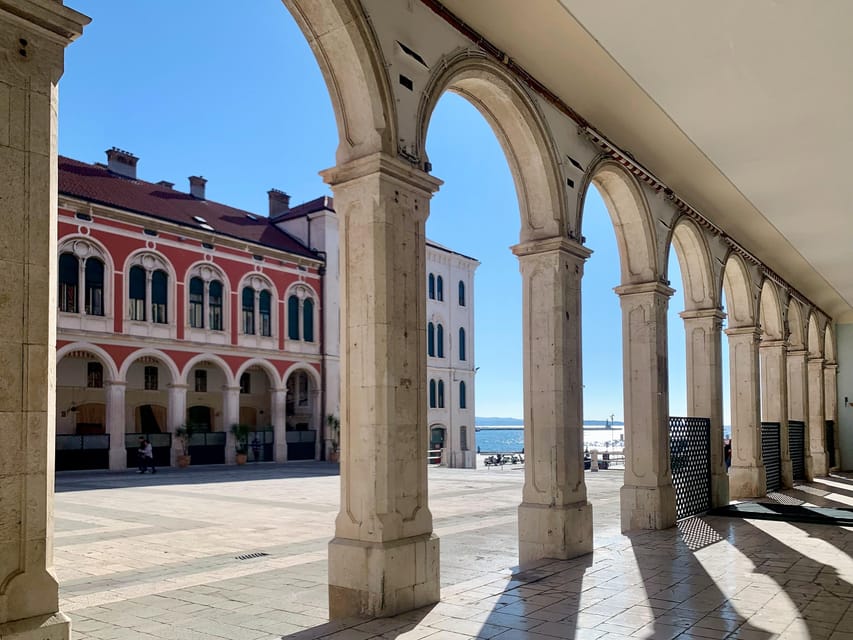
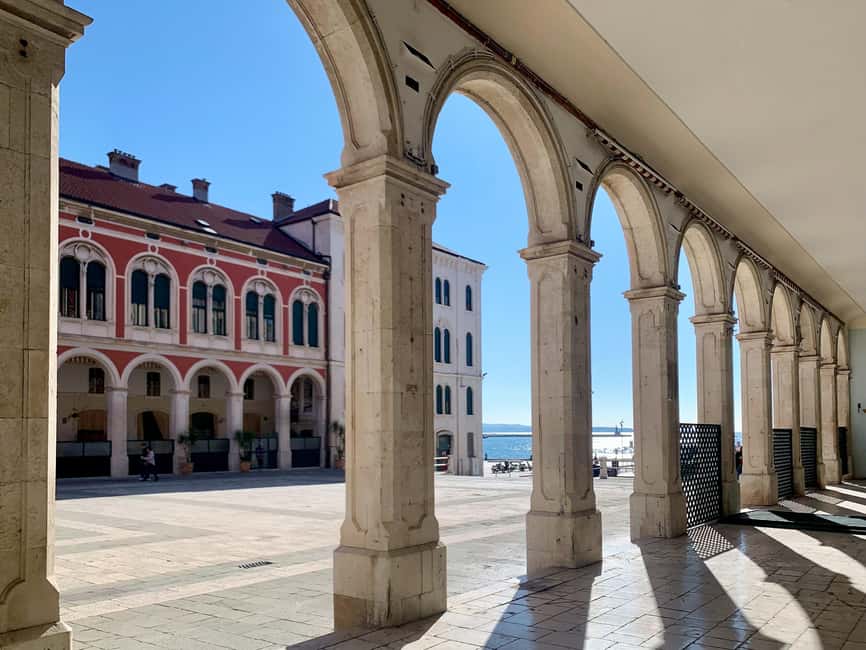
The final major stop is Republic Square, followed by the route toward the old neighborhood of Varoš. The square gives you one more large urban space after the enclosed lanes of the palace.
Varoš is one of the tour’s more useful choices. It is described as one of Split’s oldest and most authentic neighborhoods, with preserved 4th-century Roman architecture that has been reused over the centuries. That reuse is central to understanding Split. Ancient buildings here are not simply frozen in time. They have been altered, occupied, and given new purposes.
Ending in this part of town also takes you away from the most predictable palace circuit. You see a neighborhood with a different feel and learn why Split is considered a unique UNESCO site.
The activity information says the tour ends back at the meeting point, while the route details list Trg Šperun and Republic Square as possible final locations. Confirm the exact end point when you book, particularly if you have a timed reservation or transport connection afterward.
Private tour or small group?
A private tour is the better choice if your group has a specific interest in Roman architecture, archaeology, art, or local history. Josipa can shape the discussion around your background and questions, and the private format should make it easier to stop when something catches your eye.
The small group option suits you if you want a lower price while keeping the walk conversational. The tour is designed to allow questions, and the guide’s route can be adjusted in real time around the group’s interests.
The available information does not give a maximum group size, so do not assume a particular number. If group size matters to you, ask before booking.
What Josipa adds to the experience
Josipa is a licensed local guide and the owner of Aspalathos Guided Tours. She is also an art historian with links to ongoing archaeological fieldwork, which gives the tour a stronger academic base than a simple list of dates and monuments.
Her strength is explaining how to observe. That can mean noticing a Roman trace in a later building, understanding why a street bends the way it does, or seeing how the old palace became part of a modern city.
The experience is conducted in English. A previous French-language comment indicates that at least one guest enjoyed the visit with Josipa, but the tour information lists English as the available language. If you need another language, ask before reserving.
Timing, comfort, and what to bring
Two hours is enough for a first look at Split, but it is not enough for every interior or a slow study of each stop. Plan this as an orientation walk, then return on your own to the paid sites that interest you most.
Wear shoes suited to uneven streets and steps. The tour runs rain or shine, so check the forecast and carry suitable protection. There is no indication that transportation is used, so expect to walk throughout.
The tour is not suitable for wheelchair users, people with mobility impairments, or people with hearing impairments. Several unavoidable steps are part of the route. If you are unsure about your ability to manage them, contact the provider before booking.
Free cancellation is available up to 24 hours before the tour for a full refund. You can also reserve now and pay later, which helps if you are still arranging your Split schedule.
Who should book this Split walk?
I would choose this tour if you want the city explained rather than simply photographed. It is a good fit for first-time visitors, history fans, architecture students, and anyone who likes asking questions as they walk.
It is also useful early in your stay. Josipa can offer local advice about the best time to visit Split and Croatia, as well as suggestions for seeing paid sites after the tour.
I would look elsewhere if you want a museum-style tour with entry fees included, a completely step-free route, or a long visit inside one monument. This walk covers a lot of ground and relies on the guide’s explanations from public areas.
Should you book it?
Book it if you want a two-hour introduction that connects Diocletian’s Palace to the living city around it. The strongest reasons are Josipa’s art-history background, the chance to explore less obvious streets, and the finish in Varoš rather than a standard palace-only circuit.
At $32 per person, it offers solid value for a private or small group experience, provided you understand that admissions are separate. For the best result, schedule it near the start of your stay, arrive at Strossmayer Fountain early, wear good shoes, and save time afterward for the cathedral, Temple of Jupiter, or substructures you want to enter.
FAQ
How long is the Split walking tour?
The tour lasts two hours.
What language is the tour conducted in?
The live tour guide speaks English.
Who leads the tour?
Josipa leads the tour. She is a licensed local guide, an art historian, and the owner of Aspalathos Guided Tours.
Where does the tour start?
It starts around the fountain in Strossmayer Park, also called Djardin. Search for Strossmayer Park or Strossmayerova Fountain on your map.
How will I recognize the guide?
Josipa will hold a yellow and blue sign marked Aspalathos Guided Tours.
Does the tour include entrance tickets?
No. The tour does not enter paid sites such as the palace substructures, the cathedral, or Jupiter’s Temple. Josipa passes these places, explains them, and offers advice for visiting later.
Is the tour private or shared?
You can choose a private tour or a small group option.
Is the route suitable for wheelchair users?
No. The tour includes unavoidable steps and is not suitable for wheelchair users or people with mobility impairments.
Can I cancel for a refund?
Yes. You can cancel up to 24 hours in advance for a full refund. You can also reserve now and pay later.
Just added around Split
- Kayaking & Zipline Šibenik – Čikola Canyon★ 5.0 · 3 reviews
- Krka National Park & Zipline Šibenik – Čikola Canyon★ 5.0 · 3 reviews
- From Split: Krka National Park & Waterfalls Private Day Trip★ 5.0 · 3 reviews
- Split: Small-Group Half Day Sailing Trip★ 5.0 · 3 reviews
- Rafting River Cetina from Makarska Riviera including transfer★ 5.0 · 3 reviews
- Split Bike and Wine Experience★ 5.0 · 3 reviews
- Split and Salona Cultural Heritage Day Tour from Trogir★ 4.0 · 3 reviews
- Private transfer from Split to Dubrovnik with 2h sightseeing stop in Ston★ 5.0 · 3 reviews
Walking Tours, compared.


Walking Tour of Split and Diocletian’s Palace
Read our review →
Krka Waterfalls tour with Trogir Walking tour and Krka panoramic boat cruise
Read our review →

Walking Tour of Split with a ‘Magister’ of History
Read our review →

Diocletian Palace & Old Town Guided Walking Tour
Read our review →
Browse the lists this tour appears in