
Reviewed · WALKING TOURS
Split City Walking Tour
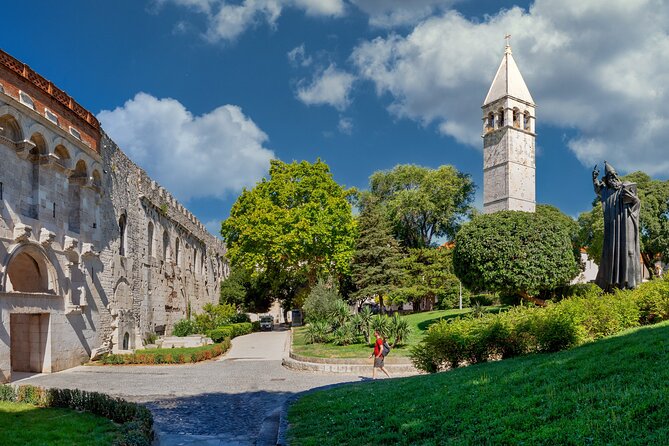
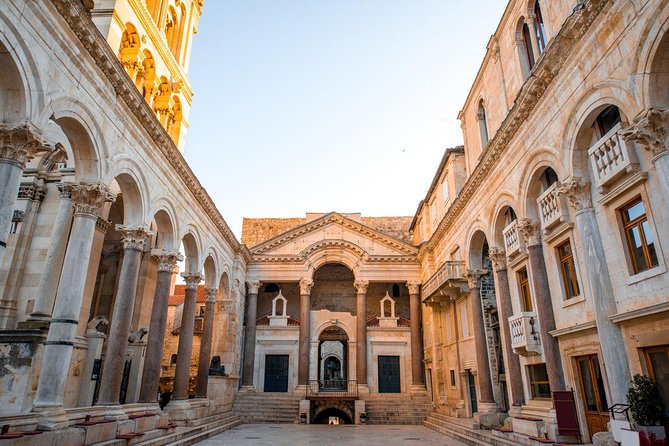
Split’s old center is not a museum behind glass. It is a living Roman palace, with homes, shops, cafés, churches, and daily life built into the ancient stone. This two-hour walking tour takes you through that remarkable mix, focusing on Saint Domnius Cathedral, Jupiter’s Temple, and the Peristyle of Diocletian’s Palace.
I like the choice of morning or evening departures, and I like the small maximum of 15 people. Guides such as Ana bring clear explanations, good energy, and a strong feel for the city. The main consideration is price: at $94.12 per person, this is not a bargain-priced orientation walk, especially since entry tickets are not included, although the listed stops have free admission.
In This Review
- Key points at a glance
- Why Split’s Roman palace makes such a good walking tour
- Starting on Ul. kralja Tomislava
- Saint Domnius Cathedral, a mausoleum with a second life
- Jupiter’s Temple and the surviving Roman mood
- The Peristyle, the palace’s great central stage
- Trg Braće Radić and the city beyond the palace
- What the guides add to the experience
- Morning or evening: choosing the better departure
- Is $94.12 a fair price?
- Practical details before you book
- Who should book the Split City Walking Tour?
- FAQ
- Where does the Split City Walking Tour start?
- Where does the tour end?
- How long does the walking tour last?
- Is the tour offered in English?
- What sights are visited?
- Are admission tickets included?
- How many people can join the tour?
- Is hotel pickup provided?
- What should I wear?
Key points at a glance
- Roman palace turned living city: Walk through the heart of Diocletian’s Palace rather than viewing its ruins from outside.
- Three important central stops: See Saint Domnius Cathedral, Jupiter’s Temple, and the Peristyle.
- Morning or evening timing: Choose the departure that fits your arrival, sightseeing, or dinner plans.
- Small-group setting: The tour accepts no more than 15 people, allowing more room for questions and personal attention.
- Strong guide presence: Ana is praised for her clear knowledge, upbeat style, and obvious passion for Split.
- Easy walking format: The tour begins on Ul. kralja Tomislava and ends at Diocletian’s Palace, with no hotel transfer included.
Why Split’s Roman palace makes such a good walking tour
Diocletian’s Palace is the reason a guided walk works so well in Split. You are not simply walking toward a single monument. The palace forms much of the old city, so its walls and rooms appear alongside ordinary streets, business entrances, and café tables.
That setting can be confusing at first. You may walk through a narrow passage and suddenly find yourself in a Roman courtyard. A local guide helps you understand how the separate pieces fit together, and why a former imperial residence still functions as part of the city.
The experience is offered in English and lasts about two hours. That is long enough to give you a useful first look without taking over your day. I would consider it a good first activity in Split, since you can use the guide’s explanations to make sense of the old center when you return on your own.
The group limit of 15 matters here. The palace contains tight lanes and compact spaces, so a very large group could make the walk awkward. A smaller group also gives you a better chance to hear the guide and ask about details that catch your eye.
The tour is still a short introduction, not a full archaeological study. You will need to accept a fairly brisk pace, and the advertised stop times add up to about 40 minutes, with the rest of the two-hour period used for walking and explanation. That is a sensible format for a city orientation, but less suitable if you want long, quiet time at each monument.
More City Tours in Split
- Split: City Highlights Electric Tuk-Tuk Tour
★ 4.9 · 1,317 reviews - Split Game of Thrones Tour: City of Dragons
★ 4.7 · 556 reviews - Eco City Tour Split
★ 5.0 · 538 reviews
Starting on Ul. kralja Tomislava
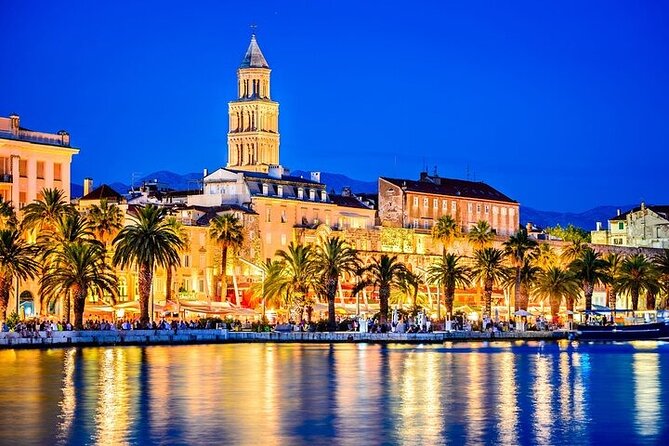
The meeting point is Ul. kralja Tomislava 15, 21000 Split. You arrange your own way there because hotel pickup and drop-off are not included.
The tour ends at Diocletian’s Palace in the Grad area of Split. This finish is useful because it leaves you in the middle of the old center, close to more streets and sights to explore on foot. The end point is not a return transfer, so plan your next move before the walk begins.
Because this is a walking activity, comfortable shoes are the practical choice. The supplied details do not promise a flat or easy route, so anyone who dislikes standing or walking for two hours should take that into account. Most people can participate, and service animals are allowed.
The tour is offered as a mobile-ticket experience. Confirmation arrives at booking, which makes it easy to keep the details on your phone. Still, I would check the meeting address and local time before setting out, particularly if you are fitting the tour between transport connections.
Saint Domnius Cathedral, a mausoleum with a second life
The first listed stop is the Cathedral of Saint Domnius, with about 10 minutes set aside. Its most striking feature is its unusual beginning: the building was first created as the mausoleum of Roman Emperor Diocletian and later became a Christian church.
That change gives the cathedral more than one story. You are looking at a place shaped by imperial Rome and then adapted for Christian worship. A guide can make that transformation easier to grasp than a quick photograph or a paragraph in a guidebook.
The short stop suggests that the tour will focus on the cathedral’s place within the palace rather than offer a long interior visit. Admission is listed as free for this stop, but you should still dress properly if you hope to enter places of worship. Shorts and sleeveless tops are not allowed, and both men and women must cover their knees and shoulders.
This dress rule is not a minor suggestion. You may be refused entry if you arrive dressed against the requirements. Smart casual clothing is requested, so pack or wear something that works for religious sites as well as the rest of your day in Split.
Jupiter’s Temple and the surviving Roman mood
The next stop is Jupiter’s Temple, with about 15 minutes devoted to it. The temple is a compact reminder that Diocletian’s palace was not only a home but also a carefully planned imperial complex with religious spaces.
This part of the tour should appeal to anyone who enjoys seeing how Roman ideas survive inside a later city. The temple’s importance is not only its stonework. It helps explain the beliefs and public image connected with the emperor who built the palace.
The supplied details list admission as free. Even so, access rules can apply to select museums and worship spaces, so the same modest dress is the safest choice throughout the tour. You will not need to budget a separate admission fee for the listed stops, which softens the cost somewhat.
Fifteen minutes is enough for a clear explanation and a look at the main details, but it is not a long visit. If you enjoy lingering over carvings or taking many photographs, you may wish to return later at your own pace. The guide’s role here is to provide context and keep the overall walk moving.
More walking tours in Split:
- Split: Old Town and Diocletian Palace Walking Tour
★ 4.9 · 4,727 reviews - Walking Tour of Split and Diocletian’s Palace
★ 5.0 · 2,588 reviews - Krka Waterfalls tour with Trogir Walking tour and Krka panoramic boat cruise
★ 5.0 · 1,659 reviews - Split & Diocletian’s Palace Walking Tour
★ 5.0 · 1,125 reviews
The Peristyle, the palace’s great central stage
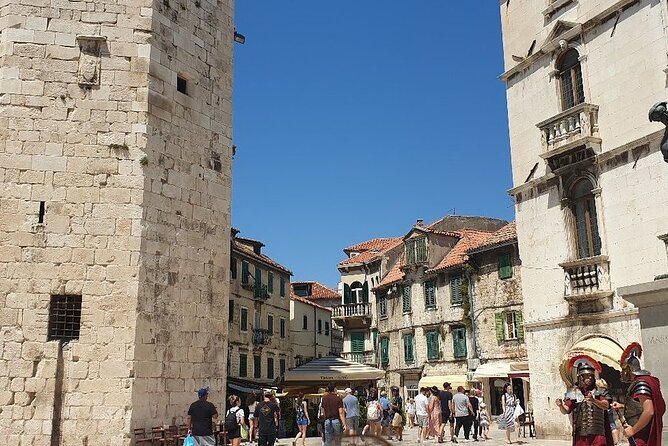
The Peristyle of Diocletian’s Palace is the central stop and receives about 15 minutes. This is the heart of the old palace, a space where the scale and purpose of the complex become easiest to understand.
The Peristyle is also where the tour’s different threads come together. Saint Domnius Cathedral shows how Roman architecture was reused for Christian worship. Jupiter’s Temple points to the palace’s religious purpose. The Peristyle helps you see the larger imperial setting that held them all.
I especially like having this courtyard included in a short first visit because it gives you a clear reference point for later exploring. Once you know where the palace’s central spaces are, the surrounding lanes feel less like a maze. You can better appreciate that the old center is not a scattered group of ruins but a connected place.
The stop is brief, so expect explanation rather than a leisurely architectural survey. A guide’s timing matters in a space like this. One guide is praised for not lingering too long in any one area, a useful quality when you want a steady introduction instead of one prolonged lecture.
Trg Braće Radić and the city beyond the palace
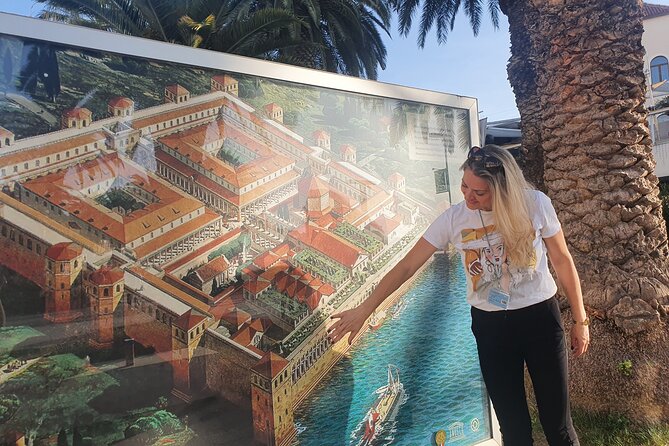
The tour highlights Trg Braće Radić, a square that helps connect the palace area with Split’s wider public life. Including a square outside the best-known palace rooms gives the walk a more useful sense of the city as a whole.
You are not only ticking off Roman monuments. You are walking through Split’s active center, where old stone and present-day life sit side by side. The tour description also points to remains of a Benedictine monastery, adding another layer to the city’s religious and architectural story.
The exact timing for these sights is not listed separately, so I would treat them as part of the route and guide commentary rather than guaranteed long stops. That is one reason the experience works best as an orientation. It introduces several important places, then leaves you free to return to the ones you want to study in greater detail.
The walk’s lively atmosphere is part of the appeal, but it can also mean distractions. You may hear street activity around the guide or need to pause as people move through the old center. A small group helps, though it cannot make a working city feel like a private archaeological site.
What the guides add to the experience
The strongest feature here is the guide’s role. The experience depends less on special equipment or included admissions and more on how well the local guide explains the palace and keeps the route moving.
Ana receives especially warm praise for being well-informed, pleasant, upbeat, and passionate about Split. Her energy is described as contagious, and her explanations of Diocletian’s Palace reportedly bring plenty of surprising details. Another guide is praised for giving useful palace history without lingering too long at one point.
That combination is exactly what I want from a short city walk. You need enough detail to understand what you are seeing, but not so much that the entire two hours becomes a classroom session. The guide should help you notice the structure, explain the changes over time, and leave you with a few memorable facts.
One recorded experience became a private tour for a couple because only two people attended. You should not assume that will happen on your date, but it shows how the small-group format can sometimes become even more personal. The stated maximum is 15 people, not a guaranteed group size.
There are five ratings in the supplied record, with an overall score of 4.8 out of 5. That is a small sample, so I would read it as encouraging evidence about the guides rather than a guarantee that every departure will feel identical.
Morning or evening: choosing the better departure
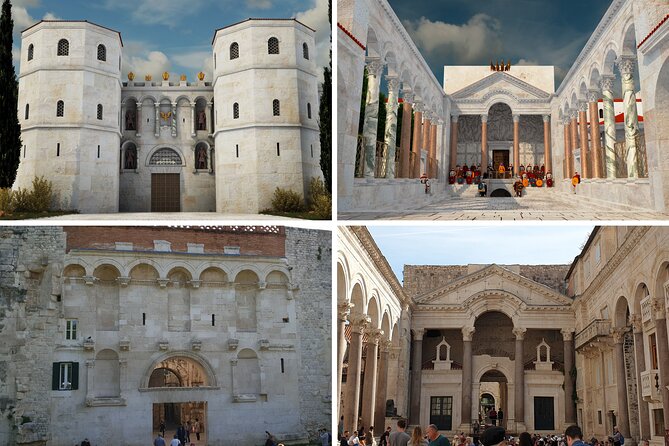
A morning walk is useful if you want to get your bearings early. After the tour, you can revisit the Peristyle, spend more time around the cathedral, or continue exploring the old center with a basic understanding of what you are seeing.
An evening departure suits a different kind of day. It lets you use the cooler part of the day for sightseeing, then walk through the palace as Split’s social life becomes more noticeable. The tour is still focused on landmarks, but the setting can feel more atmospheric later in the day.
The best choice depends on how you plan to use the rest of your time. Choose morning if this is your first activity and you want practical orientation. Choose evening if you prefer a later walk or have limited daytime availability.
No departure time is specified in the supplied details, so check the available options when booking. The experience requires a minimum number of people to operate. If that minimum is not reached, the tour may be canceled and you will be offered another date or experience, or receive a full refund.
Is $94.12 a fair price?
At $94.12 per person, the tour sits in the premium range for a two-hour city walk. The price includes a local guide, but not hotel transfers or separate admission costs.
The value comes from focus and interpretation. You are paying for a local person to connect the cathedral, temple, Peristyle, Trg Braće Radić, and monastery remains into one understandable walk. If you have only a short time in Split, that structure can save you from wandering past important details without knowing their significance.
The price is harder to justify if you are happy to explore independently and read about the palace as you go. The main sites are in the old center, the listed admissions are free, and the route ends at Diocletian’s Palace rather than including transport back to your hotel.
I would see it as better value for a first-time visitor who wants a clear introduction, a couple who values personal guide attention, or anyone with limited time. It is less compelling for a repeat visitor who already knows the palace or for a budget-focused solo explorer.
Practical details before you book
Wear smart casual clothes that cover your knees and shoulders. This applies to both men and women, and it matters for the cathedral and other religious places.
The tour is in English, uses a mobile ticket, and has a maximum of 15 people. It runs for approximately two hours and is conducted on foot. Public transportation is nearby, but no hotel pickup or drop-off is provided.
Free cancellation is available if you cancel at least 24 hours before the local start time. Cancellations or changes made inside that 24-hour window are not refunded or accepted. Keep the local cut-off time in mind if you are booking around a flight, ferry, or cruise schedule.
Who should book the Split City Walking Tour?
I would book this if you want a guided introduction to Split’s Roman center and prefer a small group to a large city walk. It is especially useful on a first visit, at the start of a short stay, or when you want a guide to explain why a church, temple, and palace courtyard belong to the same story.
I would skip it if you mainly want extended time inside each monument, need hotel transport, or feel the $94.12 cost is too high for a two-hour walk with no included admissions. In that case, you can still use the meeting and end locations as a starting point for exploring the center yourself.
For most first-time visitors who value clear local explanation, the tour earns its place in a Split itinerary. The best reason to choose it is not the number of stops. It is the chance to understand the palace as a living part of the city, guided by someone such as Ana who can make its unusual layers easy to follow.
FAQ
Where does the Split City Walking Tour start?
It starts at Ul. kralja Tomislava 15, 21000, Split, Croatia.
Where does the tour end?
The tour ends at Diocletian’s Palace in the Grad area of Split.
How long does the walking tour last?
The experience lasts approximately two hours.
Is the tour offered in English?
Yes. The tour is offered in English.
What sights are visited?
The listed stops are the Cathedral of Saint Domnius, Jupiter’s Temple, and the Peristyle of Diocletian’s Palace. The experience also highlights Trg Braće Radić and remains of a Benedictine monastery.
Are admission tickets included?
The tour includes a local guide. Admission tickets are not separately included, although the listed stops show free admission.
How many people can join the tour?
The tour has a maximum of 15 travelers.
Is hotel pickup provided?
No. Hotel pickup and drop-off are not included.
What should I wear?
Smart casual clothing is required. For places of worship and select museums, your knees and shoulders must be covered. Shorts and sleeveless tops are not allowed, and entry may be refused if you do not follow the dress code.
Just added around Split
- Kayaking & Zipline Šibenik – Čikola Canyon★ 5.0 · 3 reviews
- Krka National Park & Zipline Šibenik – Čikola Canyon★ 5.0 · 3 reviews
- From Split: Krka National Park & Waterfalls Private Day Trip★ 5.0 · 3 reviews
- Split: Small-Group Half Day Sailing Trip★ 5.0 · 3 reviews
- Rafting River Cetina from Makarska Riviera including transfer★ 5.0 · 3 reviews
- Split Bike and Wine Experience★ 5.0 · 3 reviews
- Split and Salona Cultural Heritage Day Tour from Trogir★ 4.0 · 3 reviews
- Private transfer from Split to Dubrovnik with 2h sightseeing stop in Ston★ 5.0 · 3 reviews
Walking Tours, compared.


Walking Tour of Split and Diocletian’s Palace
Read our review →
Krka Waterfalls tour with Trogir Walking tour and Krka panoramic boat cruise
Read our review →

Walking Tour of Split with a ‘Magister’ of History
Read our review →

Diocletian Palace & Old Town Guided Walking Tour
Read our review →
Browse the lists this tour appears in