
Reviewed · WALKING TOURS
Private walking tour of Sibenik
Šibenik’s best moments are tucked into its stone lanes, where a short walk can take you from an Adriatic waterfront to a medieval church, a theater with an early electric lighting system, and the remarkable St. James Cathedral, a UNESCO World Heritage Site. This private tour gives you a local guide to explain the details you would likely pass without context.
I like the small private format, which lets your group set a comfortable pace, and I like the way the route mixes major sights with less obvious churches and public squares. The main consideration is time: at 90 minutes to two hours, a slow-moving group may not reach every planned stop, and cathedral admission costs extra.
In This Review
- Key points at a glance
- Why Šibenik rewards a guided walk
- From Obala hrvatske mornarice into the old town
- King Petar Krešimir IV and Šibenik’s civic identity
- The Croatian National Theater’s early electric lights
- Three churches, three different stories
- Four Wells and the practical side of medieval life
- St. James Cathedral, the tour’s essential stop
- Republic Square and the medieval commune
- Saint Barbara’s bells and the final streets
- What the private price means for your group
- The pace, comfort, and fit
- Booking, cancellation, and practical details
- Should you book this Šibenik walking tour?
- FAQ
- How long does the private walking tour last?
- How many people can join the private tour?
- Is admission to St. James Cathedral included?
- Is the tour offered in English?
- Where does the tour begin and end?
- Is pickup available?
- Can I cancel for a full refund?
Key points at a glance
- A private tour for up to 10 people: You get one guide for your own group rather than joining a large crowd.
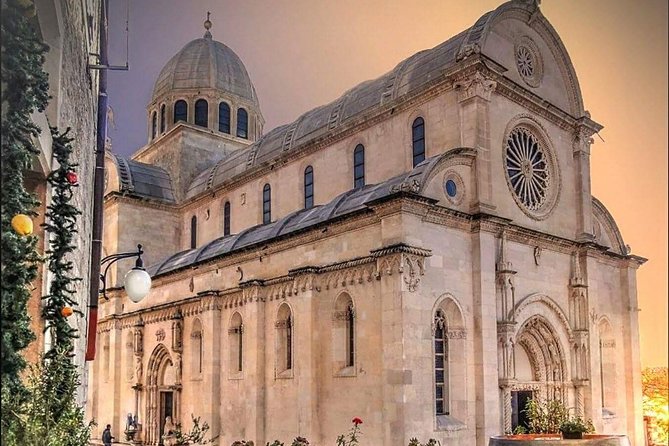
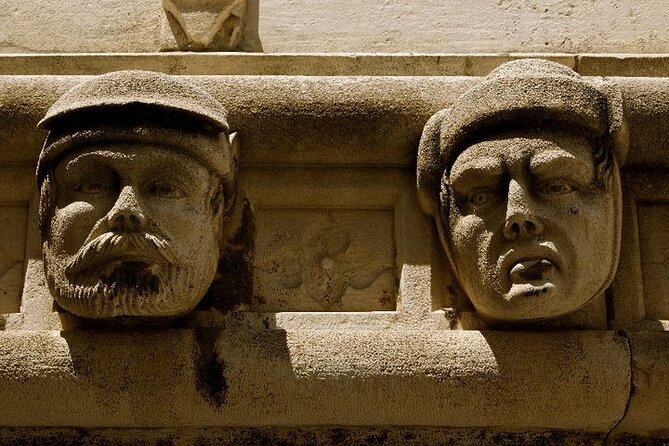
- St. James Cathedral is the centerpiece: See its stone construction, trefoil facade, and 71 sculpted heads around the apses.
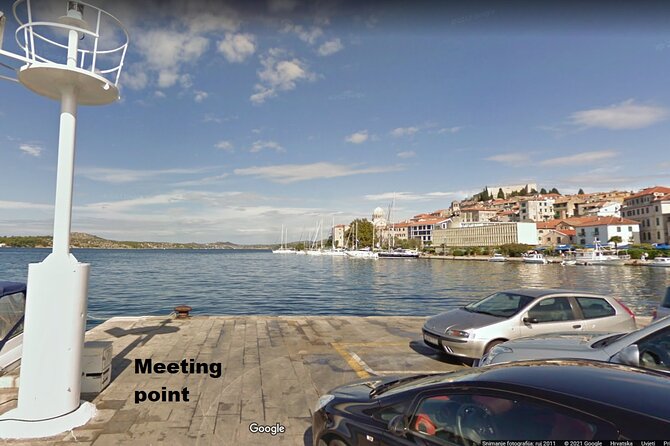
- The route begins by the Adriatic: Meet at Parking Mulo Krke on Obala hrvatske mornarice.
- Guides add local character: Irena and Sandra are praised for their warmth, city knowledge, and attention to comfort.
- Expect a history-led walk: Churches, royal monuments, theaters, wells, squares, and old civic buildings all have a story.
- Budget for cathedral entry: The guide is included, but admission to the cathedral is not.
Why Šibenik rewards a guided walk
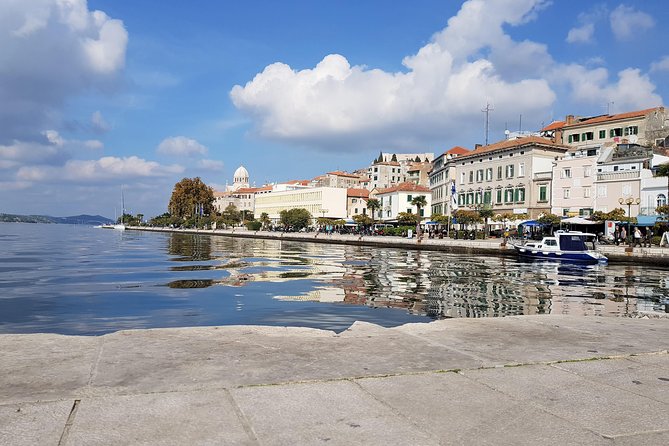
Šibenik is not a city you understand from a quick look at its waterfront. Its old center rises behind the harbor in a web of narrow stone streets, stairways, and small squares. The setting feels distinctly Adriatic, but the details point to centuries of church life, medieval civic government, royal connections, and Renaissance ambition.
I like this tour because it gives those details a clear order. You begin near the sea, move through the old town, and gradually reach the main square and cathedral. That progression helps you see Šibenik as a living city rather than a string of unrelated photo stops.
The tour is offered in English and lasts about an hour and a half to two hours. Since the activity is private, your guide can spend more time on the parts that interest you, though the short duration means you should think of it as an orientation walk, not a full-day study of the city.
More Walking Tours in Sibenik
- Sibenik: Guided Evening Walking Tour
★ 4.9 · 62 reviews - Šibenik: Medieval Night Walking Tour
★ 5.0 · 19 reviews - The Best of Sibenik Private Walking Tour
★ 5.0 · 13 reviews
From Obala hrvatske mornarice into the old town
The starting point is Parking Mulo Krke at Obala hrvatske mornarice 1. This is a useful place to begin because you are close to the water and can get your bearings before entering the older streets.
The opening walk introduces Šibenik as a Gothic-Renaissance town shaped by the Mediterranean. Your guide points out the narrow lanes and attractive squares, explaining how the buildings around you reflect different periods of the city’s past.
This is where a private guide can make a real difference. Instead of simply hearing dates, you can ask why a lane is arranged as it is, how a square was used, or which details are easy to miss. Guides Irena and Sandra are especially associated with an enthusiastic, personal way of bringing the city to life.
The walk is not designed as a fitness challenge, but it does involve old-town streets and some uneven or inclined sections. The activity asks for a moderate level of physical fitness, so sensible shoes are a good idea.
King Petar Krešimir IV and Šibenik’s civic identity
The monument to Croatian King Petar Krešimir IV provides an early chance to connect Šibenik with Croatia’s royal past. Your guide explains who the king was and why his name matters to the city and its people.
This stop is brief, listed at about five minutes, but it sets up an important theme: Šibenik is not only a pretty coastal town. Its identity is tied to Croatian history, local pride, and the long effort to shape a secure, self-governing community on the Adriatic.
The route also includes the Church of St. Francis. Here you learn what makes it different from the city’s other churches. The specific details are part of the guide’s storytelling, so this is one of the stops where asking questions can make the difference between a quick glance and a lasting memory.
Another stop raises an amusing civic puzzle: why is the main city square not actually in the city? That sort of local question gives the walk a lighter touch. It also helps you notice how old urban boundaries and modern city names do not always match neatly.
The Croatian National Theater’s early electric lights
The Croatian National Theater is a compact but memorable stop. When it was built, it was considered the largest and most beautiful theater in southern Europe. In 1896, it received electric lighting, placing it among the early theaters in the world to use that technology.
You will spend about five minutes here, enough to understand the building’s importance without turning the tour into an architectural lecture. I appreciate this change of pace. After several medieval churches, the theater shows Šibenik looking forward as well as back.
This stop also broadens your sense of the city’s cultural life. The old center was not only a place of worship and administration. It also had public entertainment, technical ambition, and a desire to present itself as an important European town.
Same coast, a completely different day out:
- From Split: Krka National Park Tour
★ 4.7 · 2,359 reviews - Vodice: Krka Waterfalls National Park Boat Tour
★ 4.6 · 250 reviews - Split: Krka Waterfalls Guided Day Trip with Swim & Boat Tour
★ 4.5 · 170 reviews - Split: Krka National Park Full-Day Tour with Wine Tasting
★ 4.9 · 142 reviews
Three churches, three different stories
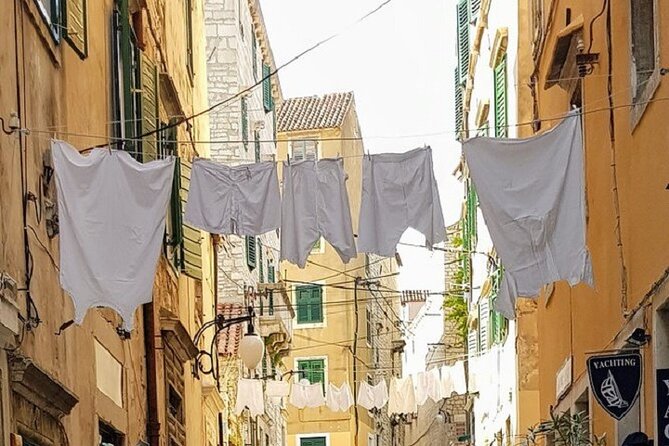
The Church of the Uspenie Mother of God, also called Crkva Uspenie Bogomatere, offers another short but distinctive stop. Your guide explains who uses the church, who built its unusual bell tower, and how to remember the artist’s name.
That last detail suggests the tour’s general style. Rather than giving you a list of names to forget by lunchtime, the guide uses small memory aids and stories. This makes the information easier to carry with you as you continue exploring Šibenik on your own.
At the Church of St. John the Baptist, the focus shifts to the Middle Ages. You learn why this church held special importance during that period and why it later changed its patron saint. The stop lasts about 10 minutes, giving your guide room to explain the change and add related facts.
The Church of St. Krsevan is a shorter visit, but it has a clear claim to attention: it is described as the oldest church still in the town today. You do not need a long stop to understand why that matters. In a city filled with centuries-old buildings, being the oldest surviving church is a useful piece of local context.
Together, these churches show why a guide helps in Šibenik. From the outside, several stone churches can look similar. Their changing patrons, users, builders, and roles reveal a much more varied story.
Four Wells and the practical side of medieval life
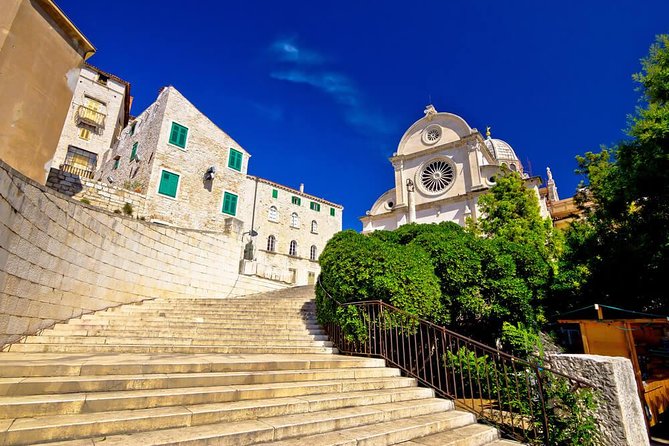
Near Pelegrini, the tour explains why the public cistern called Four Wells was built during the Middle Ages. This is one of the most useful stops for understanding daily life.
Churches and grand civic buildings attract attention, but water shaped the survival of every old town. A public cistern points to the practical problems that medieval Šibenik had to solve, especially in a dense settlement where reliable water was essential.
I like that this stop sits among more famous sights. It reminds you to look down and around, not only straight at the grandest facade. The explanation also gives the route a welcome everyday dimension.
St. James Cathedral, the tour’s essential stop
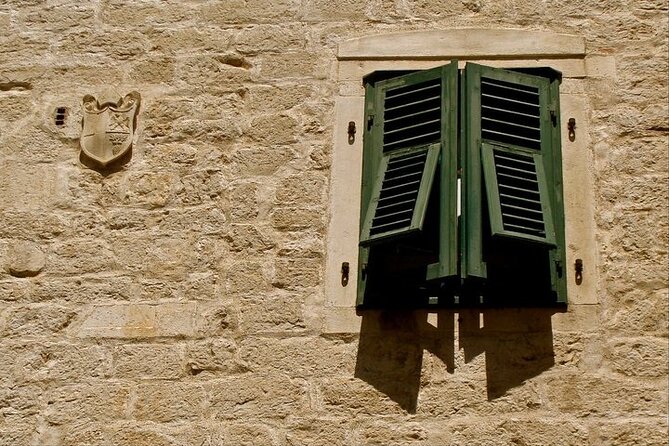
The cathedral is the main reason to book this walk. St. James Cathedral is a UNESCO World Heritage Site and one of Šibenik’s most striking buildings.
It is built entirely of stone, using stone slabs and ribs without binding material. That construction method is unusual enough on its own, but the cathedral’s design adds more surprises: a trefoil front facade, uncommon among Renaissance churches, and a row of 71 realistic sculpted portraits around the apses.
The guide allows about 20 minutes here, the longest single stop on the route. That is the right amount of time for an introduction, though you should not expect to examine every architectural detail in depth. If the cathedral is open during your visit, admission is not included in the tour price, so keep extra money available.
This is also the point where a guide’s ability to explain structure matters most. You can admire the stonework without help, but you may not understand why the building is unusual or how many separate ideas are packed into its facade and apses. The tour gives you a framework for looking.
The cathedral is also a strong reason to book the private option instead of relying only on a quick independent walk. You can ask your guide to repeat a detail, clarify a term, or focus on the elements that interest your group. Families and mixed-age groups may find this especially useful.
Republic Square and the medieval commune
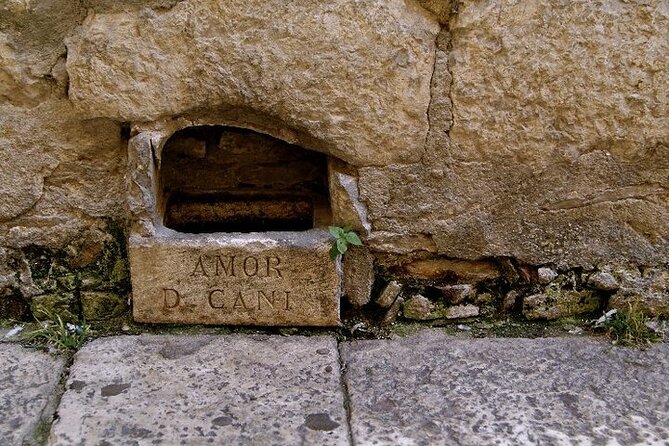
Trg Republike Hrvatske, or Republic Square, opens the story beyond individual buildings. Here your guide explains what mattered to the medieval commune and points out the surrounding structures.
This is a key urban stop because squares show how a city functioned. You can connect the churches, civic buildings, and public spaces you have already seen, then understand how they worked together as part of communal life.
The tour spends about 10 minutes here. That is enough for a clear explanation, but the square may also tempt you to pause for photographs. Since this is a private walk, you can ask whether there is time for a quick picture, but remember that lingering at every stop may shorten the final part of the route.
Saint Barbara’s bells and the final streets
The Church of Saint Barbara offers a small detail with a practical hook: why does it have four bells, and when do they ring? It is the kind of question that makes the building easier to remember later.
The final listed stop is Trg palih šibenskih boraca, where your guide reveals several additional local details. By this point, the tour has moved from the waterfront through royal, religious, cultural, practical, and civic parts of Šibenik.
The activity ends back at the meeting point, with cafes and restaurants nearby for you to explore independently. One guide recommended a pleasant restaurant after the walk, so it is worth asking your guide for a lunch suggestion if you want to continue the local experience.
What the private price means for your group
The cost is $192.25 per group of up to 10 people. That is not the cheapest way to see Šibenik if you are traveling alone, as the full charge applies to the group rather than to each person. For a group of four, five, or more, the price becomes easier to justify because you are paying for a dedicated guide.
A group of 10 should also consider the walking experience itself. You get a private tour, but a larger private group can still move more slowly through narrow streets. The route includes many brief stops, and the guide may need to position everyone so the explanation can be heard.
The strongest value comes from the local interpretation. You are not paying only to be led from one building to another. You are paying for the connections between places, the explanations of churches that may otherwise seem alike, and the chance to ask questions as you go.
The cathedral entrance fee is extra, and gratuity is not included. Pickup is offered, but the stated start and end point is Parking Mulo Krke, so confirm the pickup arrangement when booking if you need something other than meeting at the waterfront.
The pace, comfort, and fit
The pace can be adjusted because this is a private activity. That is useful if one person in your group needs more time, if children lose interest, or if you want to spend longer at the cathedral.
Still, the timing is not unlimited. One account describes a slow-moving walk that did not cover the full route, with more attention than expected given to plants. That is a fair reminder to tell your guide early if your priority is completing every historic stop.
A private tour also works well for mixed groups. A family group with adults, teenagers, and a 10-year-old found the storytelling engaging across ages, which suggests the guide’s style can hold attention better than a dry sequence of dates.
The tour is a good match for you if:
- You want an introduction to Šibenik before exploring independently.
- You prefer a private guide to a large group.
- You enjoy churches, architecture, civic history, and local stories.
- You have a limited amount of time in the city.
- You want restaurant advice after the walk.
- You can manage old-town walking at a moderate level.
You may want a different plan if you need a slow, highly detailed architectural study, want to visit every interior, or dislike paying extra for the cathedral entrance.
Booking, cancellation, and practical details
Confirmation is provided when you book. The tour is offered in English, mobile tickets are available, and service animals are allowed. The meeting point is near public transportation, and the activity ends where it begins.
You can cancel for a full refund up to 24 hours before the start time. Changes or cancellations made less than 24 hours before the start time are not accepted for a refund, and the cut-off uses Šibenik local time.
The tour is often reserved well ahead, with an average booking lead time of 97 days. That does not guarantee a date will sell out, but it is a useful sign to plan ahead, especially if you are visiting during a busy coastal or cruise season.
Should you book this Šibenik walking tour?
I would book it if you want to understand Šibenik quickly and prefer personal explanation over a self-guided stroll. The cathedral is the star, but the smaller churches, Four Wells, theater, royal monument, and civic squares give the walk its real shape.
The price makes the most sense for a group sharing the fee. Choose it for the local stories, flexible pace, and guide connection. Skip it if you want a long, unhurried architectural tour or if your group is likely to move so slowly that the planned route becomes difficult to complete.
For most first visits, this is a practical way to get oriented, see the old center, and leave with enough context to explore the cafes, restaurants, and waterfront on your own.
FAQ
How long does the private walking tour last?
The tour lasts approximately 1 hour 30 minutes to 2 hours.
How many people can join the private tour?
The price covers one private group of up to 10 people.
Is admission to St. James Cathedral included?
No. Admission to the Cathedral of St. James is not included in the tour price.
Is the tour offered in English?
Yes. The experience is offered in English.
Where does the tour begin and end?
It begins at Parking Mulo Krke, Obala hrvatske mornarice 1, Šibenik, and ends back at the meeting point.
Is pickup available?
Pickup is offered, although the stated meeting point is Parking Mulo Krke. Confirm the pickup details when booking.
Can I cancel for a full refund?
Yes. You can cancel at least 24 hours before the start time for a full refund. Cancellations or changes made less than 24 hours before the start time are not accepted for a refund.
Just added around Sibenik
- Kayaking & Zipline Šibenik – Čikola Canyon★ 5.0 · 3 reviews
- Krka National Park & Zipline Šibenik – Čikola Canyon★ 5.0 · 3 reviews
- Zipline Šibenik★ 5.0 · 3 reviews
- Panorama Tour – Eco City Tour Šibenik★ 4.5 · 4 reviews
- Panorama & Wine tour – Eco City Tour Šibenik★ 5.0 · 4 reviews
- Kayaking Sunset Tour★ 5.0 · 4 reviews
- Private tour Sibenik full day★ 5.0 · 5 reviews
- From Sibenik: Private Skradinski buk waterfall in Krka NP★ 5.0 · 5 reviews
Walking Tours, compared.


Walking Tour of Split and Diocletian’s Palace
Read our review →
Krka Waterfalls tour with Trogir Walking tour and Krka panoramic boat cruise
Read our review →

Walking Tour of Split with a ‘Magister’ of History
Read our review →

Diocletian Palace & Old Town Guided Walking Tour
Read our review →
Browse the lists this tour appears in