
Reviewed · SPLIT FOOD TOURS
Split: Historical & Gastro Treasures Tour with Green Market
Split’s best introduction may begin with a plate of prosciutto rather than a map. This three-hour tour pairs the Green Market with Diocletian’s Palace, then settles you into a konoba for seafood, pasta, black risotto, and Croatian wine. Come hungry. The portions are generous.
I like the way food and history take turns here: you taste soparnik and peka bread, then walk through Peristil, the Golden Gate, and Pjaca. I also like the local angle. Guides such as Hani, Olga, Christina, Vicky, and Lucija explain how Split is lived in today, not just how it looked under Roman rule.
The main consideration is the price, $135 per person. That is a serious outlay for three hours, especially if you do not drink alcohol, though the included food and wine make the value stronger than a simple walking tour. The afternoon option also skips the Green Market because it is closed then.
In This Review
- Key points at a glance
- Start at Hrvojeva Street with an appetite
- The Green Market brings Dalmatia to the table
- Diocletian’s Palace is more than a monument
- A konoba turns the walk into lunch
- Dessert changes with the season
- Guides shape the experience
- Is $135 a fair price?
- Who will enjoy this Split tour most?
- Small practical details that matter
- Should you book it?
- FAQ
- How long does the tour last?
- What food is included?
- Is wine included?
- Does the tour visit Diocletian’s Palace?
- Does every tour visit the Green Market?
- Is hotel pickup included?
- Where does the tour begin?
- What language is the tour offered in?
- Can I report food allergies or dietary restrictions?
Key points at a glance
- A full Dalmatian meal: Expect market tastings, seafood, two pasta dishes, black risotto, wine, grappa, and dessert.
- Three major Split settings: The route includes the Green Market, Diocletian’s Palace, and the medieval Venetian square Pjaca.
- Local guides make the difference: Hani, Olga, Christina, Vicky, Lucija, Darko, Ana, Maria, Ella, and other guides bring their own style to the walk.
- A generous pace: The tour is designed for conversation and eating, not for racing between stops.
- Best booked early in your stay: You receive food tips, restaurant ideas, and a useful first look at Split.
- Tell the operator about restrictions: Food allergies and diet needs should be provided before the tour.
Start at Hrvojeva Street with an appetite
The meeting point is at Hrvojeva 1, although the exact starting place can vary with the option you book. The tour ends back at the meeting point, so you will not need to arrange a taxi from a distant neighborhood.
From the beginning, this feels less like a formal lecture and more like a guided walk with a long lunch built into it. Your English-speaking local guide leads the way, explains what you are eating, and connects each dish to Dalmatian daily life.
That personal touch is important in Split. The old center can seem like a maze of stone lanes, courtyards, and cafés. A good guide helps you see how the ancient palace became a living town, with homes, shops, restaurants, and public spaces tucked into Roman walls.
The pace is relaxed. Several guides, including Christina, Olga, Vicky, and Lucija, are praised for drawing everyone into the conversation rather than speaking only to the most outgoing person in the group. That makes this a good choice if you want to ask questions without feeling you are interrupting a scripted tour.
More food tours in Split:
- From Split: Krka Waterfalls, Food & Wine Tasting Tour
★ 5.0 · 9,326 reviews - From Split: Krka Waterfalls, Food & Wine Tasting Tour
★ 4.9 · 6,598 reviews - Split: Blue Lagoon and 3 Island Cruise with Food and Drinks
★ 4.8 · 1,969 reviews
The Green Market brings Dalmatia to the table
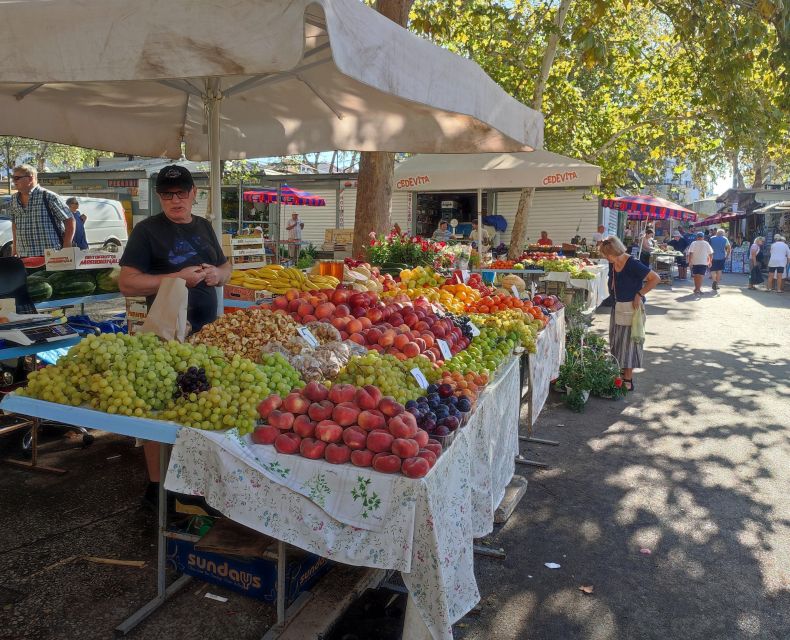
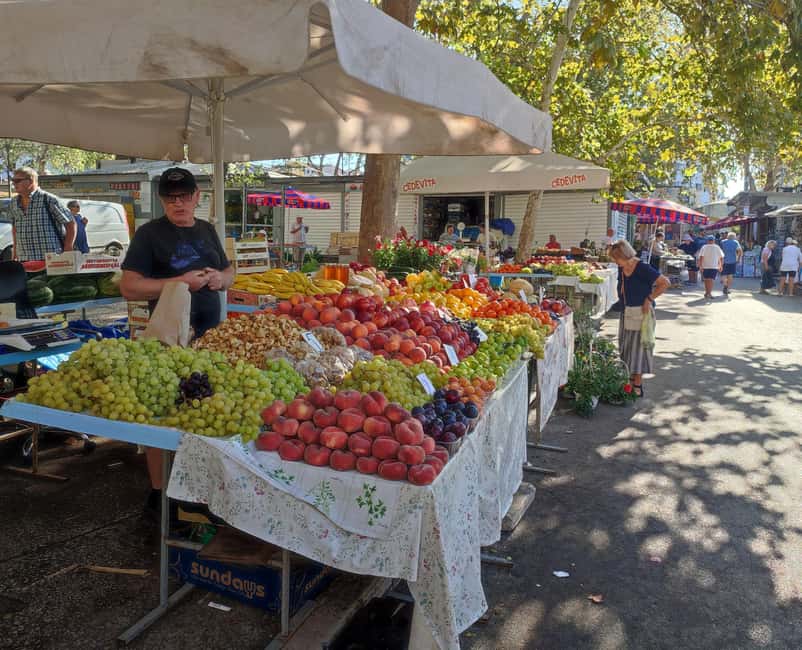
The morning route begins at Split’s Green Market, known locally as the Pazar. This is the most distinctive part of the experience because it gives you a look at food before it has been turned into a restaurant dish.
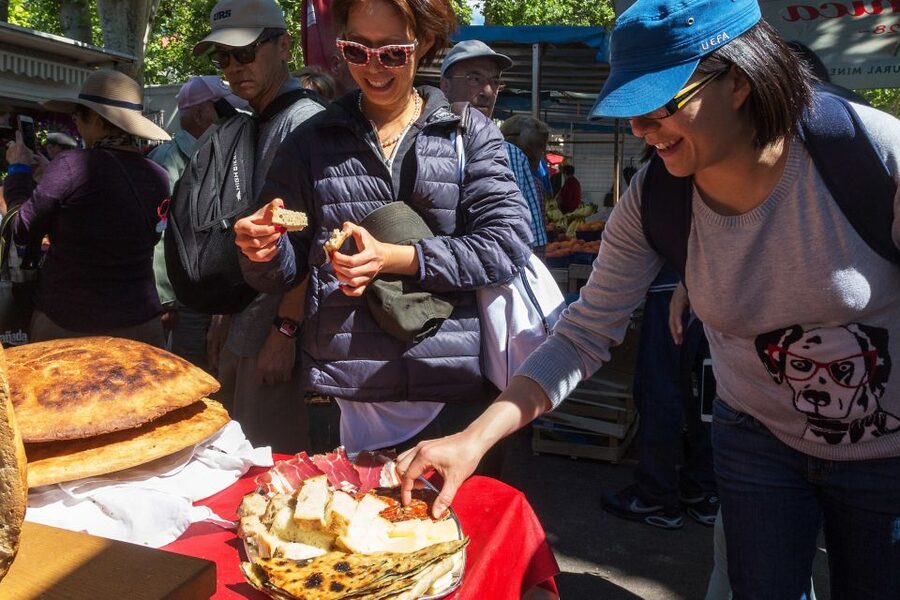
You will have a Mediterranean-style brunch featuring prosciutto, cheese, peka bread, soparnik pie, and grappa. These are not tiny decorative samples. The food is described as generous, so pace yourself from the first bite. The full meal is still ahead.
Prosciutto and cheese offer an easy introduction to local flavors, while soparnik gives you something more specific to Dalmatia. This traditional savory pie is associated with the region around Poljica, and its presence helps show that Croatian food is not only grilled fish and generic Mediterranean fare.
Peka bread adds another local reference. The name peka is tied to a traditional method of cooking under a bell-like lid, although here the bread is part of the market brunch rather than a full peka meal. Grappa, or rakija-style fruit brandy, supplies the sharp local punctuation. If spirits are not your thing, tell your guide early so you can make sensible choices.
I especially like this market stop because it gives you something to watch as well as something to eat. You are not simply seated and served. You walk through a place where local produce is sold and where Split residents shop, while your guide explains the foods and answers questions.
The Green Market is also the section most affected by timing. The morning tour includes it. The afternoon option does not, since the market is not open during those hours. Instead, similar foods are tasted at a local tavern. If the market matters to you, choose the morning departure.
Diocletian’s Palace is more than a monument
After the market, the tour moves into the old center and the UNESCO-listed Diocletian’s Palace. The palace is one of Split’s defining sights, but the useful part of this visit is understanding that it is not an isolated ruin.
The structure was built for the Roman emperor Diocletian, who chose the area near his birthplace for his retirement residence. Over the centuries, the palace changed, filled in, and became part of the city. Today, daily life continues inside and around its ancient walls.
Your guide covers Peristil Square, the Golden Gate, and Pjaca. Peristil is the grand central square, with monumental stone architecture and a strong sense of the palace’s original power. The Golden Gate shows the scale and formal planning of the Roman complex, while Pjaca brings in the later Venetian period.
This combination keeps the history from becoming a list of dates. You see Roman planning, medieval adaptation, and Venetian influence in a compact walk. Guides such as Olga, Darko, and Hani have been particularly praised for explaining how Split changed through time and how the palace is used today.
You may also hear local music or see ordinary city life unfolding in these spaces. That matters because Split’s old center is not merely a backdrop for photographs. It is part of the working city. The tour helps you notice the overlap between old stone, modern homes, cafés, and neighborhood routines.
Do not expect an exhaustive palace tour. Three hours must cover both food and history, so this is an introduction rather than a full archaeological study. If your main goal is every underground chamber and architectural detail, a dedicated palace tour would give you more time. If you want the palace placed in the context of food and modern Split, the balance works well.
A konoba turns the walk into lunch

The next major stop is a konoba, a tavern-style restaurant with a traditional feel. Here, the tour shifts from grazing to a proper meal.
The first course is a seafood starter served with white wine. The exact preparation can vary, but the point is to introduce the Adriatic side of Dalmatian cooking in a setting where the food is paired with a local drink rather than treated as an isolated sample.
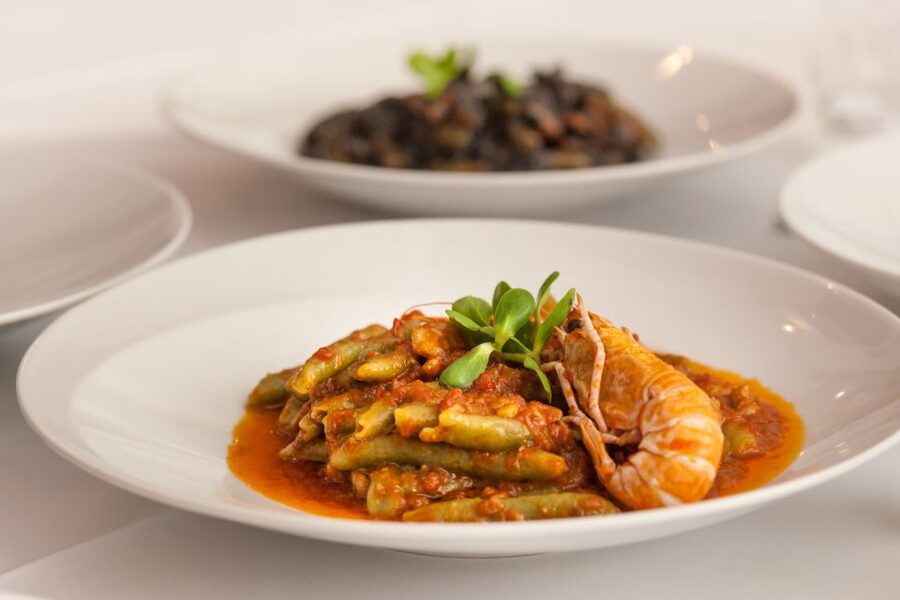
The second course is especially substantial. You will taste two types of traditional pasta and famous black risotto, accompanied by local red wine from Brač island. Black risotto is made with cuttlefish or squid ink, giving it a dark color and a strong marine character. It is one of the dishes many people would not think to order without encouragement, which is precisely why a food tour can be useful.
The pasta adds contrast. Instead of one large main course, you get a chance to compare different preparations and textures. Several guides explain how the dishes are prepared and what to notice, which makes lunch more engaging than simply eating a fixed menu.
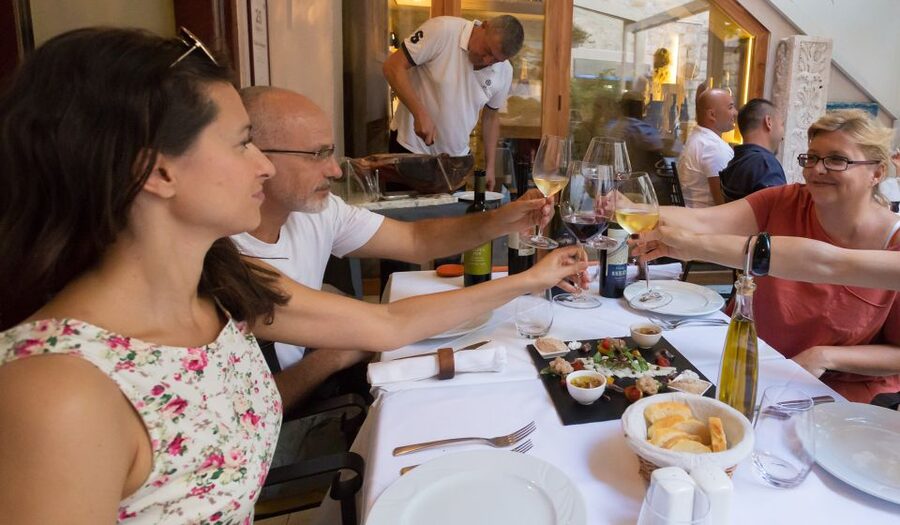
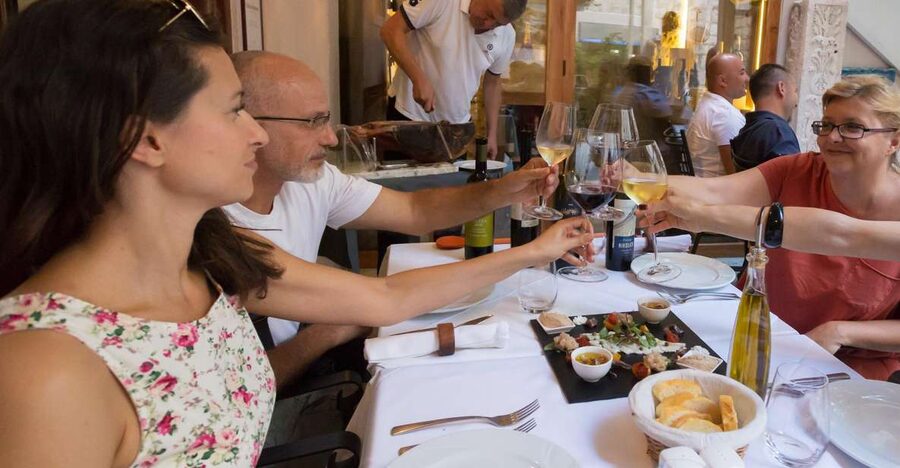
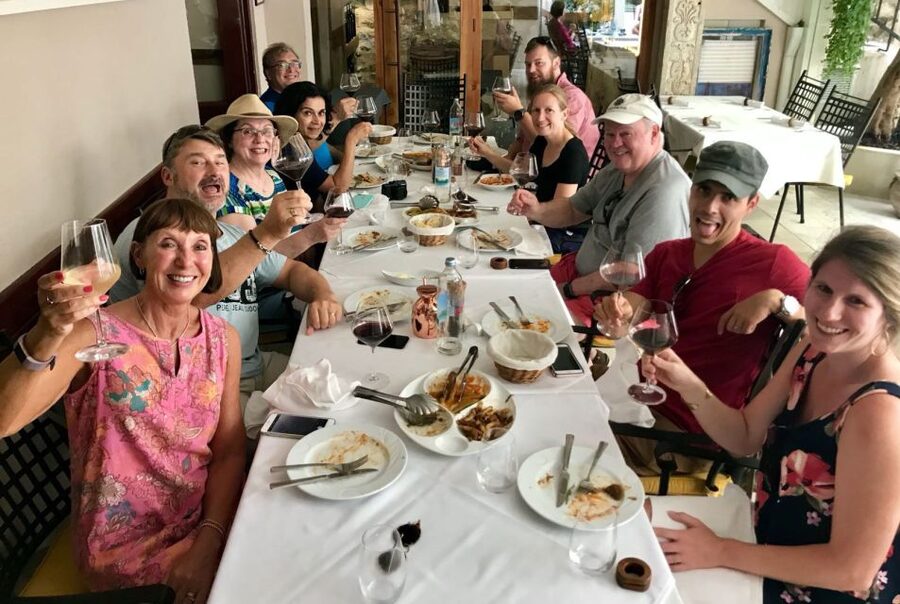
The meal is not rushed. That is a real advantage. You have time to talk with the guide and other people at the table, ask about restaurants, and decide which Croatian dishes you might want to seek out later. The social side is part of the value, especially for solo visitors or couples who enjoy meeting people over a shared meal.
There is one practical warning: do not eat a large lunch beforehand. The tour begins with brunch, continues through multiple savory courses, includes wine and spirits, and finishes with dessert. Several people have been very clear about this point. Come hungry, but do not confuse hungry with unprepared for a feast.
More old town history walks in Split:
- Split: Old Town and Diocletian Palace Walking Tour
★ 4.9 · 4,727 reviews - Walking Tour of Split with a ‘Magister’ of History
★ 5.0 · 1,122 reviews - Split Walking Tour with Professor of History
★ 5.0 · 926 reviews - Split: Diocletian Palace & Old Town Guided Walking Tour
★ 4.7 · 882 reviews
Dessert changes with the season
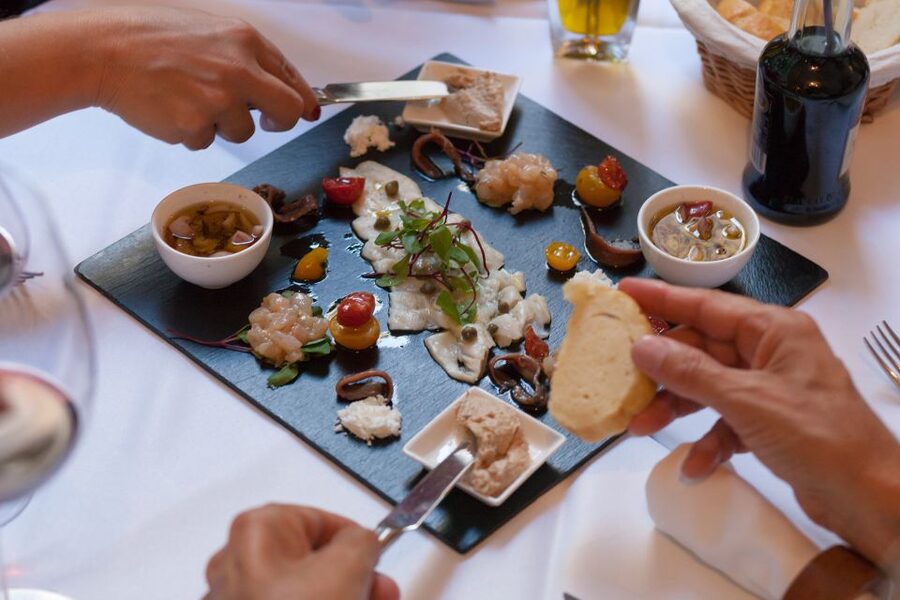
The final taste is a light gelato or a traditional dessert, depending on the season. This is a small detail, but it reflects the tour’s focus on local eating rather than a fixed international menu.
Some people would prefer the traditional cake or pastry over gelato. Gelato is easy to find elsewhere in Split, while a regional dessert can be harder to identify on your own. Since the final choice can depend on the season and group preference, you should tell the guide if trying a traditional sweet is important to you.
By this point, the dessert serves as a gentle finish rather than another major course. You have already had the main culinary lessons: market produce, cured meat, cheese, bread, savory pie, seafood, pasta, risotto, wine, and grappa.
Guides shape the experience
The guide roster varies, so you should not book this expecting one named host every time. Hani is praised for combining humor, food knowledge, and local insight. Olga is noted for her market explanations, historical background, and ability to answer questions. Christina is described as warm, energetic, and attentive to dietary needs.
Vicky brings a friendly, social style and explains food, wine, and Split culture with pride. Lucija and Lucia are praised for making people feel comfortable, while Darko gives a strong introduction to the city’s past. Other guides, including Ana, Maria, Ella, Doris, and Christian, are also described as clear, engaging, and well informed.
The variety means the tone may differ from one departure to another. One guide may lean more heavily into palace history, while another may spend more time on food preparation or local customs. That is not a flaw, but it is worth knowing if you prefer a highly uniform scripted tour.
The strongest common thread is personal explanation. You are not just handed a plate and told its name. You can ask why a food matters, how it is made, and where it fits into life in Dalmatia. One useful improvement would be more detail on why each dish is central to the region, especially for visitors who want the cultural meaning behind the meal as much as the taste.
Is $135 a fair price?

At $135 per person, this tour costs more than a standard walking tour and more than a casual self-guided market visit. The price includes all food, wine, grappa, and the licensed local guide, so you are paying for a meal as well as instruction.
The amount of food is the key value factor. You are not paying for one tasting plate. The experience includes a market brunch, a seafood starter, white wine, two pasta dishes, black risotto, red wine from Brač, and a seasonal dessert. At the end, you may have eaten enough for two ordinary meals.
The price makes more sense if you value convenience and context. You do not need to research which local dishes to order, find a suitable tavern, or guess whether a black risotto is worth trying. You receive a guided introduction and a substantial meal in one booking.
It is less appealing if you do not drink, have a very limited appetite, or mainly want a historical walking tour. Alcohol is included, and one person specifically felt the cost was high for a non-drinker. You should also factor in the cost of any later meal, though you may find you need only something light after this tour.
Who will enjoy this Split tour most?
I would recommend it most strongly for first-time visitors who want to get their bearings fast. The combination of the Green Market, palace, restaurant, and local food gives you a useful first-day orientation.
It also suits people who normally hesitate at unfamiliar dishes. Cuttlefish risotto, soparnik, grappa, and local pasta can be easier to try when someone explains what you are eating and why it matters.
Food-focused couples, small groups, and solo visitors who enjoy shared tables should find the format comfortable. The relaxed meal creates space for conversation, and the guides make an effort to engage the whole group.
It may be less suitable for a very selective eater, someone avoiding alcohol, or anyone seeking a quiet, private tasting. You must state allergies and dietary restrictions in advance. The tour can accommodate some restrictions, but the supplied details do not promise every dietary need can be met, so ask before booking.
Small practical details that matter
Book the morning option if you want the real Green Market visit. The afternoon route substitutes a tavern tasting, which preserves the food element but loses the market atmosphere.
Wear comfortable shoes for the palace walk and market streets. The route is on foot, and the old center has stone paving. The available information does not specify accessibility arrangements, so ask the operator if you have mobility concerns.
The meeting point may vary depending on the option you choose. Check your booking details carefully, and remember that hotel pickup and drop-off are not included.
The tour is offered in English and lasts three hours. You can reserve now and pay later, and cancellation up to 24 hours in advance allows a full refund. Those terms are useful if your Split plans may shift, but the main decision remains the food and timing.
Should you book it?
Book this tour if you want one generous introduction to Split’s food and old center. It gives you a market, major palace sights, a local-style restaurant, several traditional dishes, and a guide who can connect the meal to Croatian life.
I would choose the morning departure, take it near the start of your stay, and arrive genuinely hungry. I would skip it if you want a narrowly focused palace tour, do not eat much, or would feel frustrated paying for included wine you will not drink. For most food-curious visitors, the combination is well planned and unusually filling, with the Green Market providing the most memorable sense of place.
FAQ
How long does the tour last?
The tour lasts three hours.
What food is included?
The morning route includes prosciutto, cheese, peka bread, soparnik pie, a seafood starter, two types of traditional pasta, black risotto, and a seasonal gelato or traditional dessert.
Is wine included?
Yes. Food and wine are included in the price. The experience also includes grappa at the Green Market brunch.
Does the tour visit Diocletian’s Palace?
Yes. The historical walk covers Peristil Square, the Golden Gate, and the medieval Venetian square Pjaca within the old center.
Does every tour visit the Green Market?
No. The afternoon option does not include the Green Market because it is closed during afternoon hours. Similar foods are tasted at a local tavern instead.
Is hotel pickup included?
No. Hotel pickup and drop-off are not included. The activity begins and ends at the designated meeting point.
Where does the tour begin?
The listed meeting location is Hrvojeva 1 street, but the exact meeting point may vary depending on the option booked.
What language is the tour offered in?
The tour is offered in English with a licensed local guide.
Can I report food allergies or dietary restrictions?
Yes. You should provide details about any allergies or dietary restrictions when booking so the operator can prepare appropriately.
Just added around Split
- Kayaking & Zipline Šibenik – Čikola Canyon★ 5.0 · 3 reviews
- Krka National Park & Zipline Šibenik – Čikola Canyon★ 5.0 · 3 reviews
- From Split: Krka National Park & Waterfalls Private Day Trip★ 5.0 · 3 reviews
- Split: Small-Group Half Day Sailing Trip★ 5.0 · 3 reviews
- Rafting River Cetina from Makarska Riviera including transfer★ 5.0 · 3 reviews
- Split Bike and Wine Experience★ 5.0 · 3 reviews
- Split and Salona Cultural Heritage Day Tour from Trogir★ 4.0 · 3 reviews
- Private transfer from Split to Dubrovnik with 2h sightseeing stop in Ston★ 5.0 · 3 reviews
Split Food Tours, compared.

Blue Lagoon and 3 Island Cruise with Food and Drinks
Read our review →
Full-Day Catamaran Cruise to Hvar & Pakleni Islands with Food and free Drinks
Read our review →
Split Food Tour: Discover Split One Bite At A Time
Read our review →
Split History and Gastro Small-Group Tour with Food and Drinks
Read our review →
All-inclusive Gastro Blue Cave Tour from Split
Read our review →
Blue Lagoon, Shipwreck and Šolta with Food and Drinks
Read our review →Browse the lists this tour appears in