
Reviewed · SPLIT FOOD TOURS
Split: Food Tasting Walking Tour
Split’s food traditions make the perfect key to Diocletian’s Palace, where Roman walls, medieval lanes, market stalls, and modern cafés all share the same tight city center. This two-hour walk takes you from the Green Market to the Fish Market, with stops for arancini, soparnik, prosciutto, sweets, and salted anchovies along the way.
I like two things right away: the mix of food and local history, and the chance to see where people in Split buy everyday ingredients rather than simply eating in a restaurant. Guides including Marta, Jakov, Slavko, Antonia, and Ina have been praised for their humor, warmth, and local insight. The main drawback is that the tour moves quickly, and one tasting is not always guaranteed. A guest specifically expected local wine but did not receive it.
In This Review
- Key points to know before booking
- Why food is the best way to read Split
- Arancini and the Green Market
- Soparnik, wine, and the taste of Dalmatia
- Prosciutto through palace streets
- Chocolate, the record-sized bar, and rafiol
- The Fish Market and Dalmatian marenda
- Bars, restaurants, and local recommendations
- What $51 buys you in two hours
- Who will enjoy this Split food walk
- Timing, meeting point, and booking details
- Should you book this food tour?
- FAQ
- How long does the Split Food Tasting Walking Tour last?
- Where does the tour begin?
- Where does the tour end?
- What foods are included?
- Does the tour include wine?
- Are market purchases included?
- Is a guide included?
- Is the tour private?
- Can children join the tour?
- Is the tour wheelchair accessible?
- What should I bring?
- Can I cancel for a refund?
- Can I reserve now and pay later?
Key points to know before booking
- Start at the Golden Gate: Meet by the statue of Gregory of Nin, under the blue umbrella.
- Taste food with a local story: Arancini, soparnik, prosciutto, rafiol, chocolate, and salted anchovies are part of the food trail.
- Visit both major markets: The Green Market and Fish Market add the daily life and shopping side of Split.
- Walk through a Roman palace: The route uses the old streets of Diocletian’s Palace and medieval Split.
- Expect a light meal, not a full lunch: Tastings are spread across several stops during two hours.
- Best for small groups: Private and small-group options are available, with an English-speaking guide.
Why food is the best way to read Split
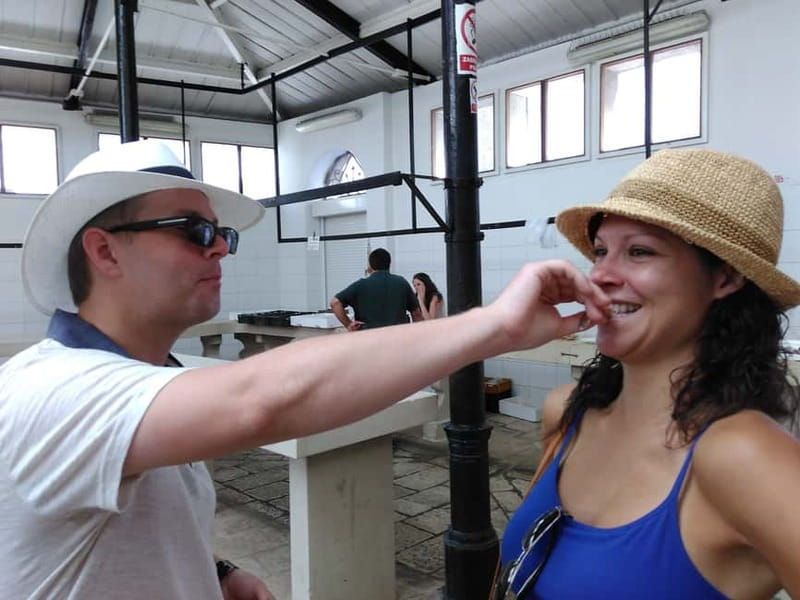
Split is not a city where the old sights and modern life sit in separate zones. Diocletian’s Palace is still part of the working city, so a short walk can take you from a Roman entrance to a bakery, from a medieval lane to a market stall, or from an old fish market to a chocolate shop.
That is the real strength of this experience. You are not only shown the palace. You are given a reason to pay attention to what people eat, buy, preserve, and serve. A guide can explain how a dish fits into Dalmatian life, then place it in front of you to taste.
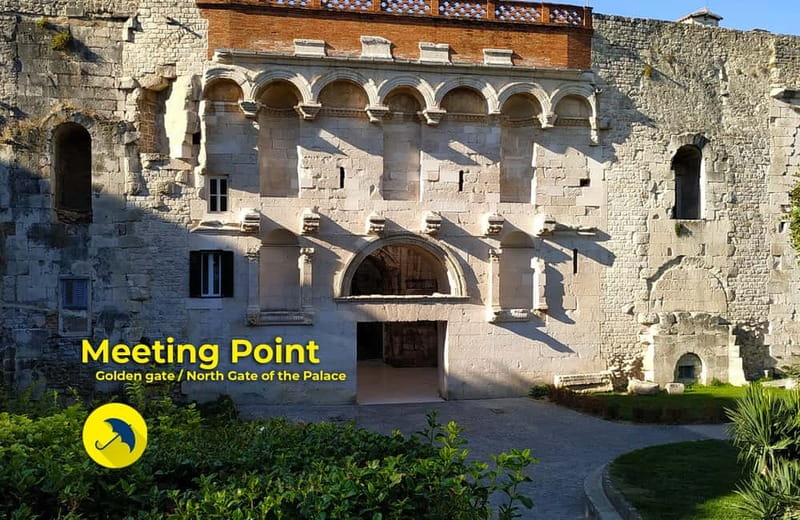
The tour begins at the Golden, or North, Gate. Look for the statue of Gregory of Nin and the blue umbrella. This is a useful place to start because you are already at one of the palace’s major entrances, and the guide can set the scene before the food stops begin.
You will spend about 15 minutes at some tasting stops and about 30 minutes at each market. That rhythm keeps the walk moving, but it also means you should not expect long meals or unlimited portions. Think of the experience as a guided introduction to Dalmatian food, with enough samples to help you decide what to seek out later.
More food tours in Split:
- From Split: Krka Waterfalls, Food & Wine Tasting Tour
★ 5.0 · 9,326 reviews - From Split: Krka Waterfalls, Food & Wine Tasting Tour
★ 4.9 · 6,598 reviews - Split: Blue Lagoon and 3 Island Cruise with Food and Drinks
★ 4.8 · 1,969 reviews
Arancini and the Green Market
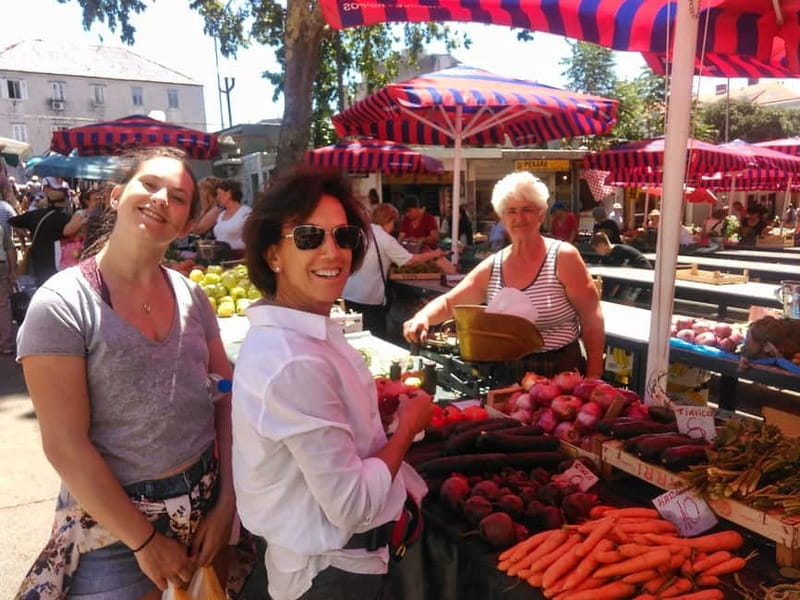
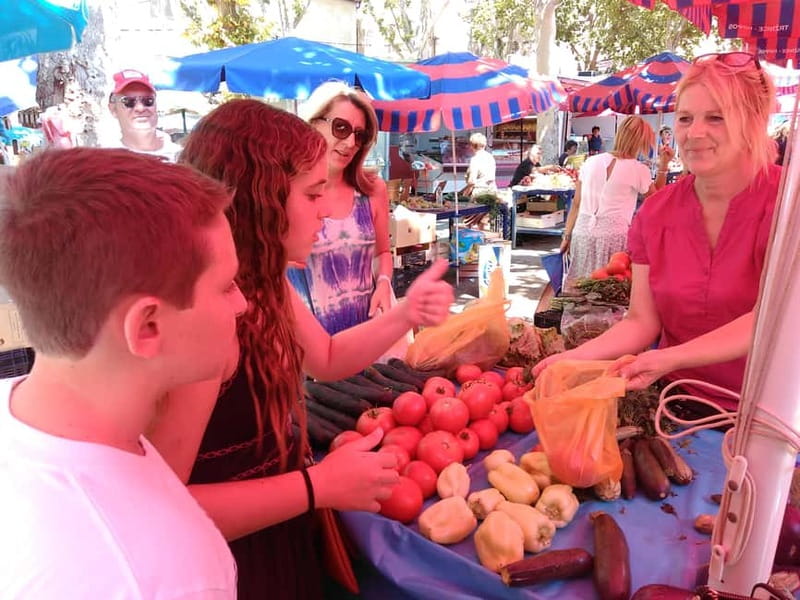
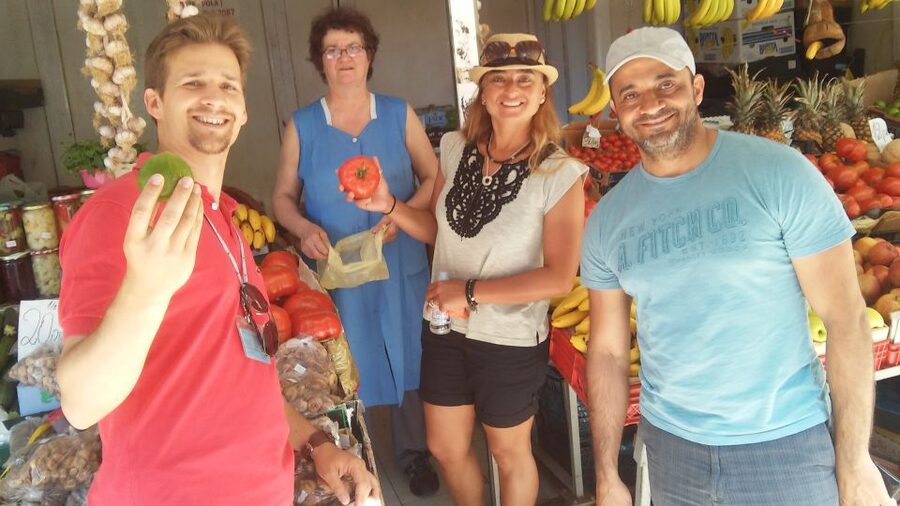
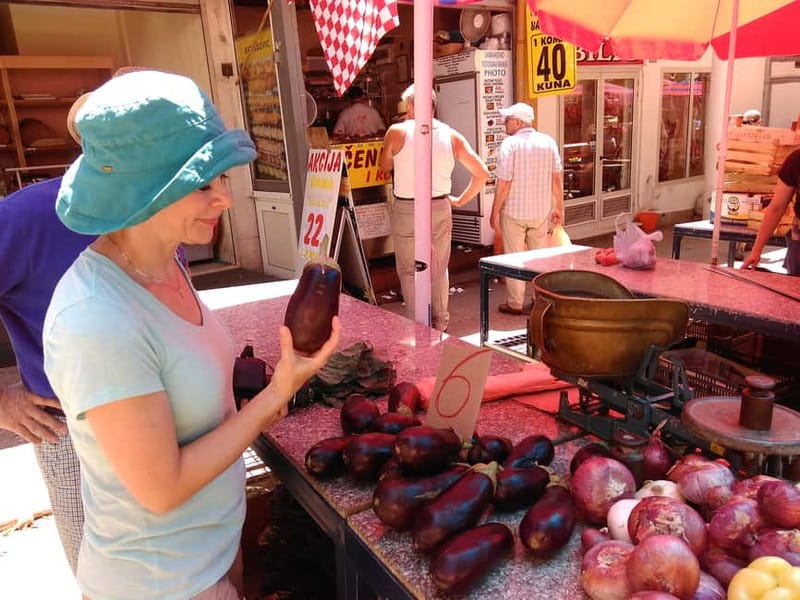
The first major food setting is Pazar, Split’s Green Market. This is where the tour begins to feel like more than a sightseeing walk. Produce, local goods, and everyday shopping give you a look at the practical side of city life.
You begin with arancini, almonds coated in sugar. They are a small sweet, but a useful introduction to the way Dalmatian food often balances simple ingredients with strong tradition. You may also taste candied orange and lemon peel, which several food stops and guide explanations connect with local tastes.
The Green Market visit lasts around 30 minutes. That is enough time to learn what the market sells and to see the stalls at a relaxed walking pace, though not enough for a long independent shopping trip. Extra purchases are not included in the $51 price, so bring money if you want to buy ingredients or snacks for later.
One particularly useful part of the market visit is the chance to ask about local groceries. A guide can help you understand what you are looking at and how it fits into Croatian cooking. If you are planning to return to the market on your own, this early orientation can save you from wandering past unfamiliar foods without knowing what to try.
Soparnik, wine, and the taste of Dalmatia
After the market, the food trail includes soparnik, a traditional flatbread associated with Dalmatia. It is described as a dish protected by UNESCO, which gives the tasting more context than a generic pastry stop. You are not just sampling something local. You are learning about a food with a recognized place in regional heritage.
The experience also describes soparnik being served with a glass of local wine. However, you should treat the wine as a possible part of the stop rather than the main reason to book. At least one person did not receive local wine during the tour, so the food tastings are more dependable than any particular drink.
Soparnik is one of the tour’s more useful samples because it shows a savory side of Dalmatian cooking. The route does not focus only on sweets and easy-to-like snacks. It gives you a range of flavors, from sugared almonds to flatbread, cured meat, and fish.
That variety matters. A food tour can feel thin when every stop is another small dessert. Here, the food is tied to markets, bakeries, bars, and local customs, so you get a broader picture of what people eat across the day.
Prosciutto through palace streets
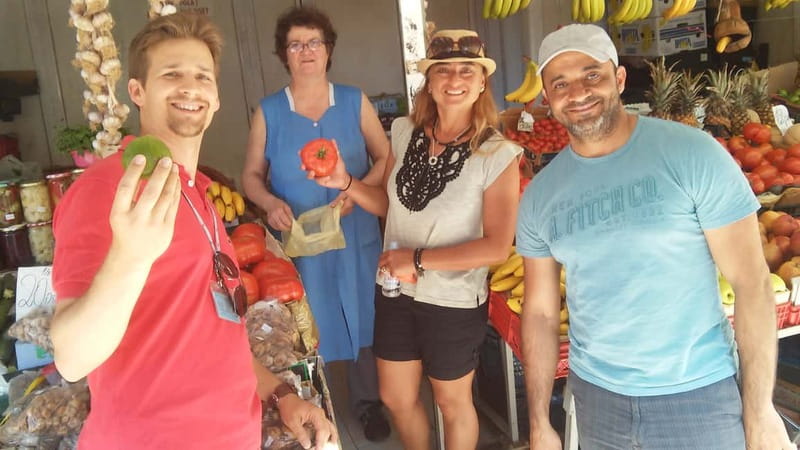
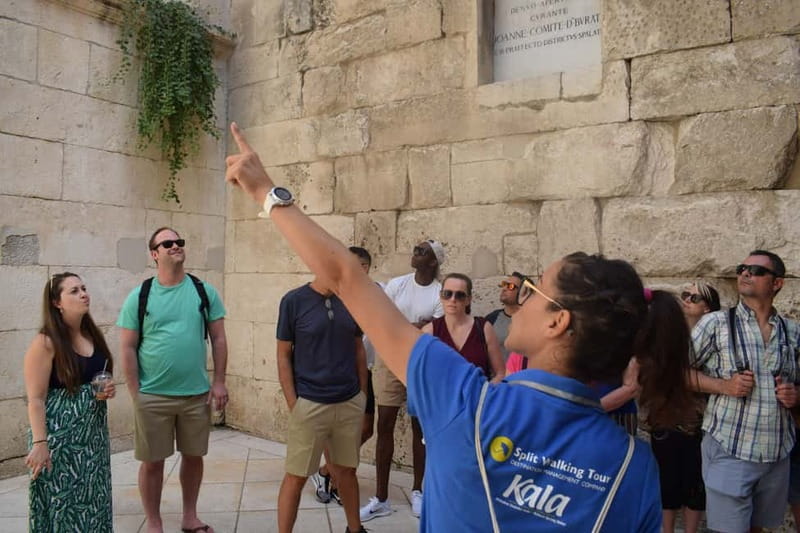
As you walk through the old city, you will taste traditionally made prosciutto. The setting matters. The tasting does not happen in a distant dining room, but along streets that run through a city center built around a 1,700-year-old Roman palace.
This part of the route combines the strongest sightseeing and food elements. Your guide can explain Split’s past while pointing out the way the palace has changed into a living neighborhood. The walk through medieval streets keeps the historical material connected to things you can see around you.
The guides are a major part of the experience. Marta is described as warm, friendly, and proud of her home city. Jakov has been praised for adapting the tour to the group, answering questions patiently, and linking food with the life of people on the Dalmatian coast. Slavko is known for a funny, personable approach, while Ina is described as attentive to everyone in the group.
Those details are important if you are choosing between a food tour and a standard history walk. You are paying for interpretation as much as for the food. The guide’s personality can turn a sequence of small tastings into a conversation about local customs, family meals, and daily routines.
More walking tours in Split:
- Split: Old Town and Diocletian Palace Walking Tour
★ 4.9 · 4,727 reviews - Walking Tour of Split and Diocletian’s Palace
★ 5.0 · 2,588 reviews - Krka Waterfalls tour with Trogir Walking tour and Krka panoramic boat cruise
★ 5.0 · 1,659 reviews - Split & Diocletian’s Palace Walking Tour
★ 5.0 · 1,125 reviews
Chocolate, the record-sized bar, and rafiol
The route includes a visit to a chocolate shop with a Guinness record for the largest chocolate bar in the world. That is a playful stop, and it breaks up the older, more traditional food themes with something modern and easy to enjoy.
The chocolate tasting lasts about 15 minutes. It is not presented as a full chocolate workshop, so you should expect a sample and a short visit rather than hands-on preparation. Still, the stop suits families and anyone who wants a sweet pause during the walk.
Next comes the oldest bakery on the route, where you try rafiol cake. Rafiol gives the tour another traditional dessert, but it is different from the sugared almonds and candied peel you taste earlier. Several guides have been praised for explaining the background of the dishes instead of simply handing out food, and this is where those explanations add value.
The sweet stops are also a reminder that this is a tasting walk rather than a restaurant crawl. Portions are designed to let you keep moving and sample many foods. If you arrive expecting a large meal, you may want to schedule lunch afterward.
The Fish Market and Dalmatian marenda
Peškarija, Split’s Fish Market, is one of the most distinctive stops. It is described as the second-oldest fish market in Europe, with original benches more than 120 years old. That age gives the place a strong sense of continuity, but the real value is seeing a market that still connects food with local routines.
Here, the guide teaches you how to eat salted anchovies. This is linked to marenda, a Dalmatian brunch or mid-day meal tradition. That small lesson gives you something practical to remember. You are not just told that anchovies are important in coastal cooking. You are shown how a preserved fish fits into the local day.
The Fish Market visit takes about 30 minutes. It is long enough for an explanation and a tasting, but you should not expect the guide to turn the tour into a full seafood lesson. The stop works best for people who enjoy seeing ingredients before they reach the plate.
It is also the part of the walk that may appeal most to food-focused visitors. The Green Market shows produce and groceries. Peškarija shows the coastal side of Dalmatian cooking. Together, the two markets give the tour a useful balance.
Bars, restaurants, and local recommendations
The itinerary includes a local bar and a local restaurant, each with about 15 minutes devoted to tasting. These stops round out the experience by showing how local foods appear in places where people actually eat and drink.
The tour does not provide a full restaurant meal, and the exact tasting at each business can vary. What you gain is a short introduction and a chance to ask your guide where to return. Several guides have offered restaurant recommendations, and some people wished they had received even more specific advice for traditional places.
That is why I would schedule this tour early in your Split stay. You can use the guide’s suggestions for later dinners, market visits, and food shopping. If you take it on your final day, the recommendations are still interesting, but you lose the chance to act on them.
The local bar stop may also be where the wine element appears, but do not book solely for alcohol. The advertised food experience is the safer expectation. If wine is important to you, ask about it when booking or at the start of the tour.
What $51 buys you in two hours
At $51 per person, this is not the cheapest way to have a snack in Split. You are paying for several tastings, a guide, market visits, historical explanation, and access to small food businesses along a carefully planned route.
The value depends on how you use it. If you only want the equivalent amount of food, you could likely spend less on your own. If you want to understand what to order, where locals shop, and why certain dishes matter, the price is easier to justify.
You also avoid the common problem of ordering unfamiliar items at random. A guide introduces foods in a clear sequence, explains the setting, and gives you a starting point for the rest of your time in Croatia. The combination of food, palace sightseeing, and recommendations makes the tour especially useful at the beginning of a trip.
Keep your expectations realistic. The tastings are spread over eight stops, but several stops are only 15 minutes. This is a compact sampler, not a long lunch. You may leave satisfied but still ready for a proper meal, especially if you have a large appetite.
Who will enjoy this Split food walk
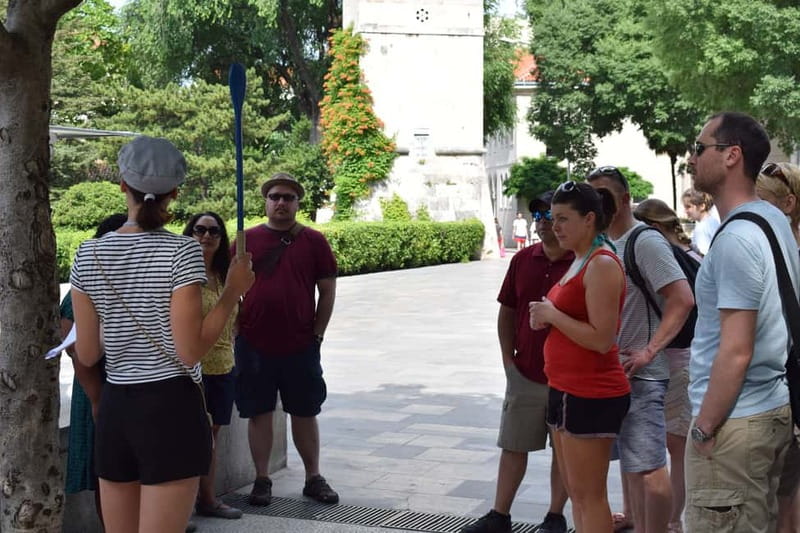
I would choose this experience if you want food and history in the same package. It suits first-time visitors who want to get their bearings in the old city, as well as returning visitors who want more contact with markets and everyday food.
It is a good fit for:
- Couples who want a relaxed introduction to Dalmatian cuisine
- Families with older children who can manage two hours of walking
- Small groups who prefer conversation over a large commercial tour
- Food-focused visitors curious about markets and traditional dishes
- Anyone who wants restaurant and shopping suggestions before the rest of the trip
Children must be accompanied by an adult, and unaccompanied minors are not allowed. Comfortable shoes, sunglasses, and a sun hat are sensible choices because the route involves walking outdoors through the old city.
The tour is not suitable for wheelchair users. Narrow historic streets, market areas, and the walking format may make access difficult. You should also consider the pace if anyone in your group has trouble standing or walking for two hours.
Private and small-group options are available. A smaller format can be worthwhile if you want more time for questions, food preferences, or market advice. The tour is offered in English with a live guide.
Timing, meeting point, and booking details
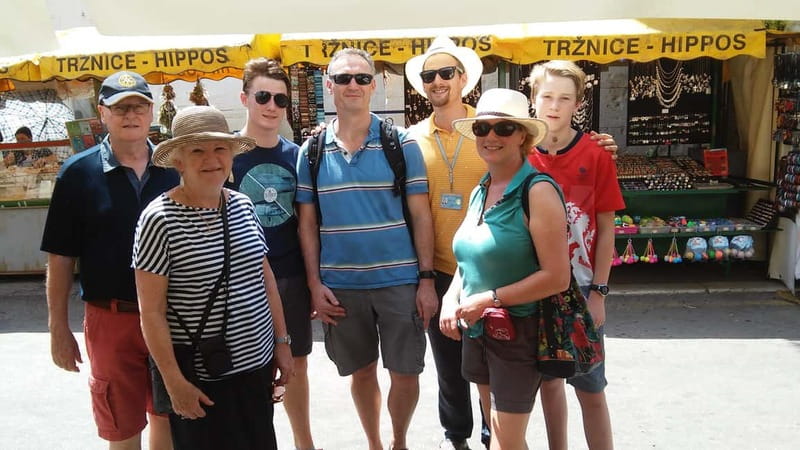
The tour lasts two hours, and you need to check availability for the starting time. Meet at the Golden or North Gate, near the statue of Gregory of Nin, and look for the blue umbrella.
The activity finishes back at the same meeting point. That makes it easy to continue exploring Diocletian’s Palace afterward, return to your hotel, or use the guide’s restaurant advice for lunch.
Food tastings and traditional recipes are included. Extra purchases at the markets are not included, so optional shopping is your own expense. Confirmation arrives when you book, and you can reserve now and pay later. Cancellation is free up to 24 hours before the tour for a full refund.
Should you book this food tour?
Book it if you want a compact, personal introduction to Split that combines Roman and medieval streets with foods you might not choose on your own. The Green Market, Peškarija, soparnik, salted anchovies, rafiol, and local guide stories give the walk a clear sense of place.
I would book it near the start of your stay, when restaurant advice and market tips can shape the rest of your trip. Choose it with the understanding that it is a tasting route, not a full meal, and that a local wine sample may not always appear.
At $51, the best value comes from the guide’s explanations and recommendations, not just the quantity of food. If you want a friendly small-group walk through Split’s food culture and palace streets, this is a sensible choice. If you need a wheelchair-accessible route, a long sit-down meal, or a guaranteed wine tasting, choose another experience.
FAQ
How long does the Split Food Tasting Walking Tour last?
The tour lasts two hours.
Where does the tour begin?
It begins at the Golden or North Gate, near the statue of Gregory of Nin. Look for the blue umbrella.
Where does the tour end?
The tour ends back at the meeting point by the Golden Gate.
What foods are included?
Tastings can include arancini, candied citrus peel, soparnik, prosciutto, chocolate, rafiol cake, and salted anchovies. The experience also includes visits to local food businesses, a bar, and a restaurant.
Does the tour include wine?
The tour description includes a glass of local wine with soparnik, but this may not always be provided. One person specifically noted not receiving local wine.
Are market purchases included?
No. Optional purchases at the Green Market or Fish Market are extra.
Is a guide included?
Yes. The tour includes a live English-speaking guide.
Is the tour private?
Private and small-group options are available.
Can children join the tour?
Children can join when accompanied by an adult. Unaccompanied minors are not allowed.
Is the tour wheelchair accessible?
No. The tour is not suitable for wheelchair users.
What should I bring?
Bring comfortable shoes, sunglasses, and a sun hat.
Can I cancel for a refund?
Yes. You can cancel up to 24 hours in advance for a full refund.
Can I reserve now and pay later?
Yes. You can reserve your place and pay nothing at the time of booking.
Just added around Split
- Kayaking & Zipline Šibenik – Čikola Canyon★ 5.0 · 3 reviews
- Krka National Park & Zipline Šibenik – Čikola Canyon★ 5.0 · 3 reviews
- From Split: Krka National Park & Waterfalls Private Day Trip★ 5.0 · 3 reviews
- Split: Small-Group Half Day Sailing Trip★ 5.0 · 3 reviews
- Rafting River Cetina from Makarska Riviera including transfer★ 5.0 · 3 reviews
- Split and Salona Cultural Heritage Day Tour from Trogir★ 4.0 · 3 reviews
- Split Bike and Wine Experience★ 5.0 · 3 reviews
- Split: Jewish Heritage & Diocletian’s Palace Walking Tour★ 5.0 · 3 reviews
Split Food Tours, compared.
Blue Lagoon and 3 Island Cruise with Food and Drinks
Read our review →
Full-Day Catamaran Cruise to Hvar & Pakleni Islands with Food and free Drinks
Read our review →
Split Food Tour: Discover Split One Bite At A Time
Read our review →
Split History and Gastro Small-Group Tour with Food and Drinks
Read our review →
All-inclusive Gastro Blue Cave Tour from Split
Read our review →
Blue Lagoon, Shipwreck and Šolta with Food and Drinks
Read our review →Browse the lists this tour appears in