
Reviewed · CITY TOURS
Trogir 1.5-Hour City Tour
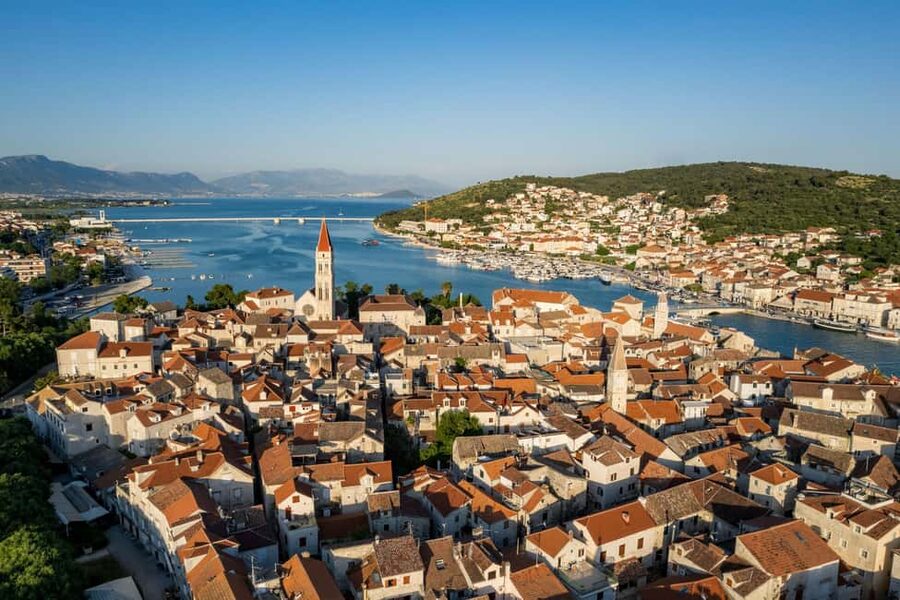
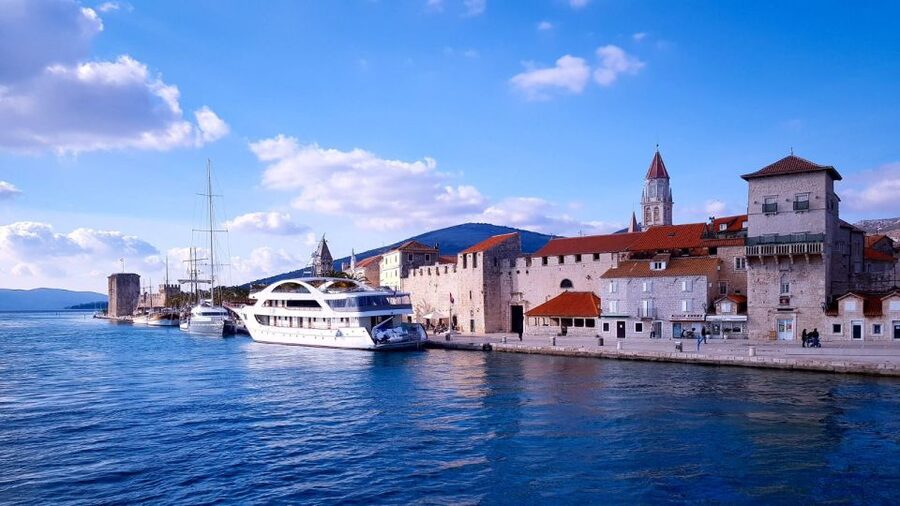
Trogir’s best feature is its size. This old town sits on a small island between mainland Dalmatia and Čiovo, so you can cross centuries of history without wearing out your shoes. The route slips through Romanesque courtyards, narrow lanes, and grand Venetian spaces before reaching the magnificent portal of St. Lawrence Cathedral, carved by the mysterious master Radovan.
I like the tour’s close look at Trogir’s tucked-away corners, places you could easily pass without a guide. I also like its human scale: 90 minutes gives you a useful first picture without swallowing half your day. The main caution is the $47 price. Since entrance fees, food, drinks, and transfers are extra, the value depends heavily on how engaging your guide is and how much historical explanation you want.
In This Review
- Key points to know before you book
- Why Trogir works so well on foot
- Starting at South Tours Travel Agency
- St. Mark’s Fortress and the first look at Trogir’s defenses
- Glorijet maršala Marmonta and a change of mood
- Kamerlengo Castle and Venetian power
- St. Dominic’s Church and the quiet side of the old town
- Benedictine Monastery of St. Nicholas
- City Loggia and the public life of Trogir
- Chapel of St. Sebastian and the details around the square
- Knežev dvor and the center of authority
- St. Lawrence Cathedral and Radovan’s remarkable portal
- Trogir North Gate and the final orientation
- What $47 gets you in practical terms
- Who will get the most from this walk
- Timing, language, and booking details
- Should you book the Trogir city tour?
- FAQ
- Where does the Trogir city tour start?
- How long does the tour last?
- What language is the tour conducted in?
- What landmarks are included?
- Is the Cathedral of St. Lawrence included?
- Are entrance fees included?
- Are food and drinks included?
- Does the tour include transportation?
- Can I cancel the booking?
Key points to know before you book
- Radovan’s cathedral portal is the artistic centerpiece, filled with finely carved figures and detail.
- Kamerlengo Castle and St. Mark’s Fortress show how Trogir defended itself and controlled its approaches.
- The route stays inside the historic core, making this a practical orientation walk for a first visit.
- Guides speak English, and Sandra has been singled out for her warmth and experience.
- The listed price is $47 per person, with admission tickets and transfers not included.
- The walk is scheduled for 90 minutes, so expect a brisk introduction rather than a full-day archaeological study.
Why Trogir works so well on foot
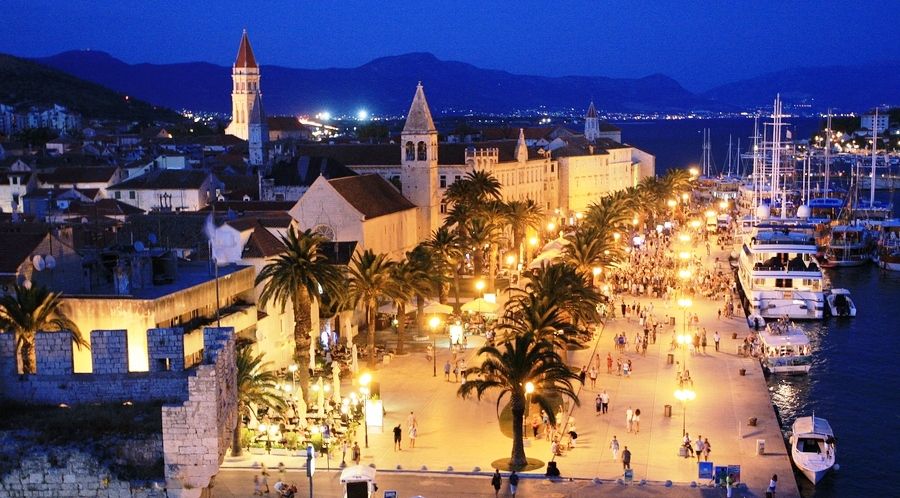
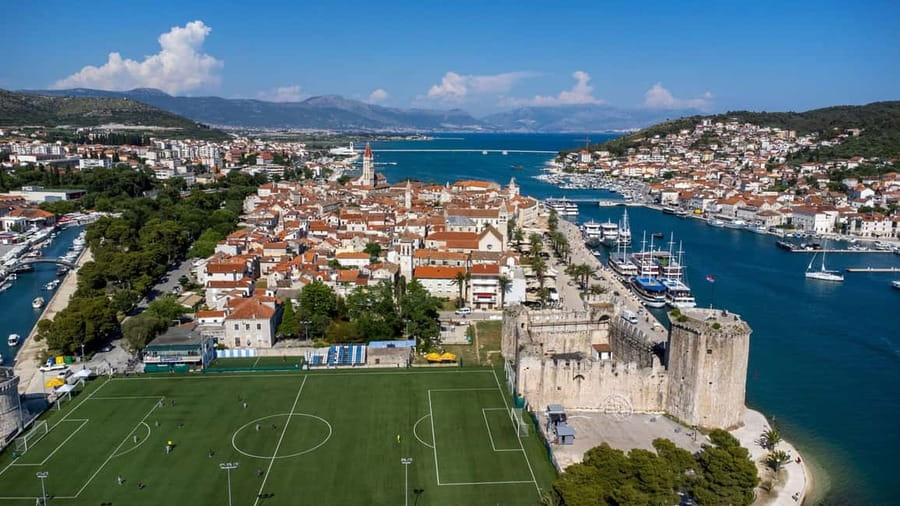
Trogir is the kind of place that rewards slow looking. Its historic center is concentrated on an island, and the streets are close enough together that a guide can connect Romanesque churches, Venetian defenses, civic buildings, and small chapels in one continuous walk.
That compact setting is a real advantage. You are not spending the morning loading onto a bus or walking between distant monuments. Instead, the guide can point from one building to the next and explain how the pieces fit together.
The town’s appeal is also visual. You will see worn stone, carved doorways, enclosed courtyards, and lanes that bend just enough to hide the next square. The mix is not limited to one period. Romanesque forms sit near Renaissance details, while later and modern interiors show how the old town has continued to function rather than becoming only a museum set.
I would book this as an introduction. It gives you a framework for returning on your own, perhaps to spend more time inside the cathedral or to inspect the fortifications at a slower pace.
A few more Trogir half-days to weigh up
- Blue cave, Mama Mia and Hvar, 5 island speedboat tour from Trogir
★ 5.0 · 2,861 reviews - From Trogir: Three Islands Half-Day Speedboat Tour
★ 4.8 · 804 reviews - From Trogir or Split: Full-Day Blue Cave & Hvar Island Tour
★ 4.7 · 413 reviews
Starting at South Tours Travel Agency
The meeting point is the South Tours Travel Agency office at Hrvatskih Mučenika 28 in Trogir. From there, the walk moves into the historic center and follows a sequence of major landmarks.
The published schedule assigns about ten minutes to many stops, although the stated tour length is 90 minutes. Treat those figures as a guide to the pace, not as a promise that every monument receives a full ten-minute talk. The route is designed to keep moving, and that is sensible in a small old town where the streets themselves are part of the experience.
You will want comfortable shoes. The supplied information does not specify the exact walking surface or group size, so I would plan for ordinary old-town conditions and a fairly active stroll.
St. Mark’s Fortress and the first look at Trogir’s defenses
The walk begins with St. Mark’s Fortress, one of the stops that gives Trogir a military frame. Before you focus on elegant portals and courtyards, it helps to remember that this island town needed protection.
The fortifications tell part of the story of conflict in Dalmatia. Your guide is expected to connect the walls and towers with the battles and political changes that shaped the town. That context can make later stops more meaningful, particularly Kamerlengo Castle.
Do not expect a long fortress visit with extensive interior time. The tour is a walking overview, and entrance fees are not included. If access inside the fortress is offered or desired, confirm the ticket arrangements before paying at the gate.
Glorijet maršala Marmonta and a change of mood
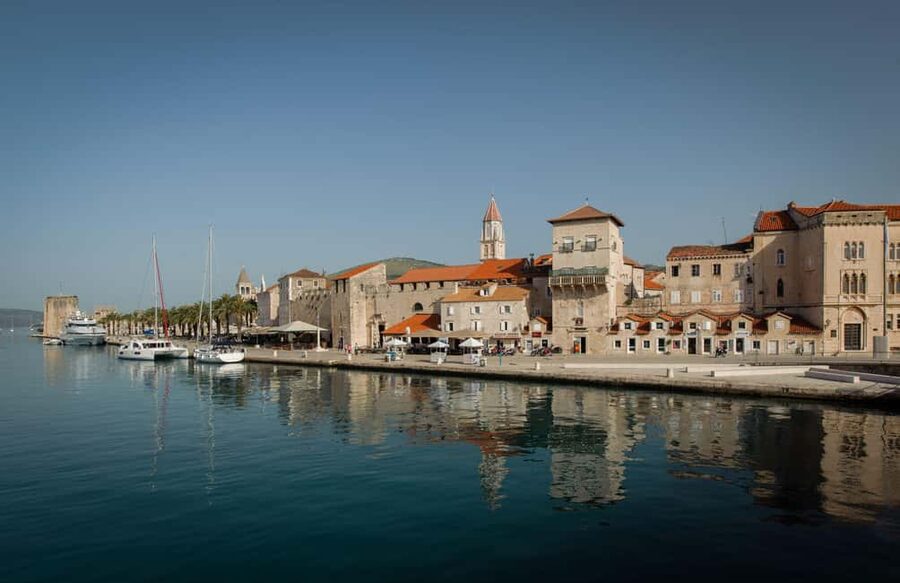
Glorijet maršala Marmonta brings the route into a more civic and architectural part of Trogir. The stop helps break up the military story with a look at how public spaces and buildings changed as the town developed.
This is the sort of place where a guide adds value by identifying details that can otherwise seem like ordinary stonework. You may hear about the people connected with the space, the forces that shaped Trogir, and the way later periods were layered onto the medieval core.
The stop is brief, so listen for the main idea rather than trying to memorize every date. A good guide will help you see the town as a living place with several chapters, not a row of unrelated monuments.
Same coast, a completely different day out:
- Half Day Speedboat Tour to Three Islands from Trogir
★ 5.0 · 401 reviews - Blue Lagoon & Šolta Island from Trogir LUNCH & DRINKS INCLUDED
★ 4.5 · 374 reviews - Trogir, Žedno: Čiovo Island 100% Off-Road Quad ATV Tour
★ 4.9 · 331 reviews - Trogir: Blue Lagoon and 3 Islands Speedboat Tour
★ 4.8 · 263 reviews
Kamerlengo Castle and Venetian power
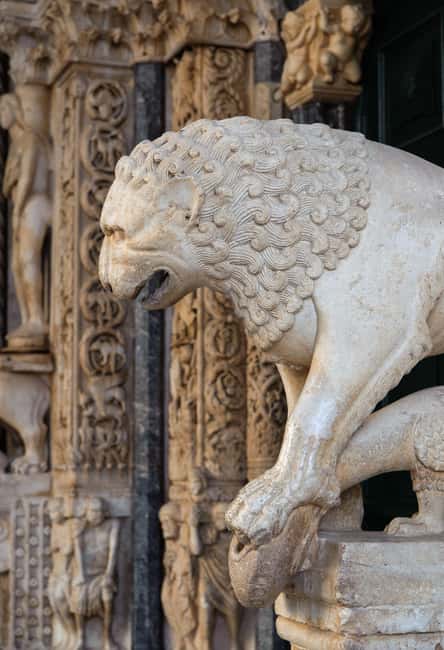
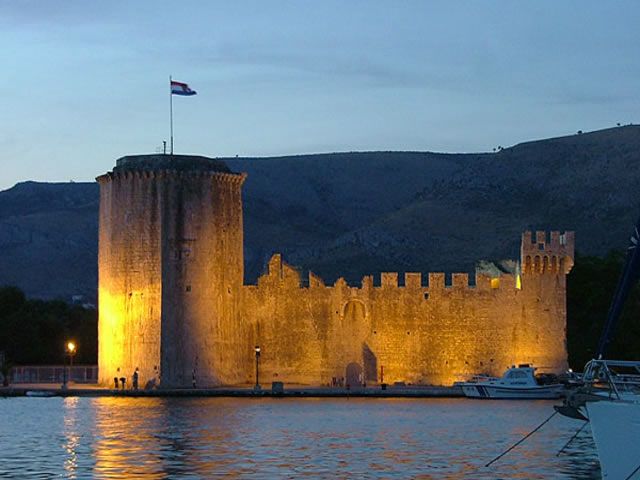
Kamerlengo Castle is one of the route’s most recognizable sights. Its walls and defensive shape offer a clear picture of Trogir’s strategic importance under Venetian rule.
The castle also gives the tour a useful visual anchor. After hearing about battles and political power, you can see how those concerns were built into the town itself. The guide’s story should help explain why such a small island needed serious defenses and how the castle relates to the wider waterfront setting.
Admission is not included, so this portion is mainly an exterior visit unless you choose to pay separately. At $47, that matters. The tour price buys the guide and the organized walk, not entry to every paid monument.
St. Dominic’s Church and the quiet side of the old town
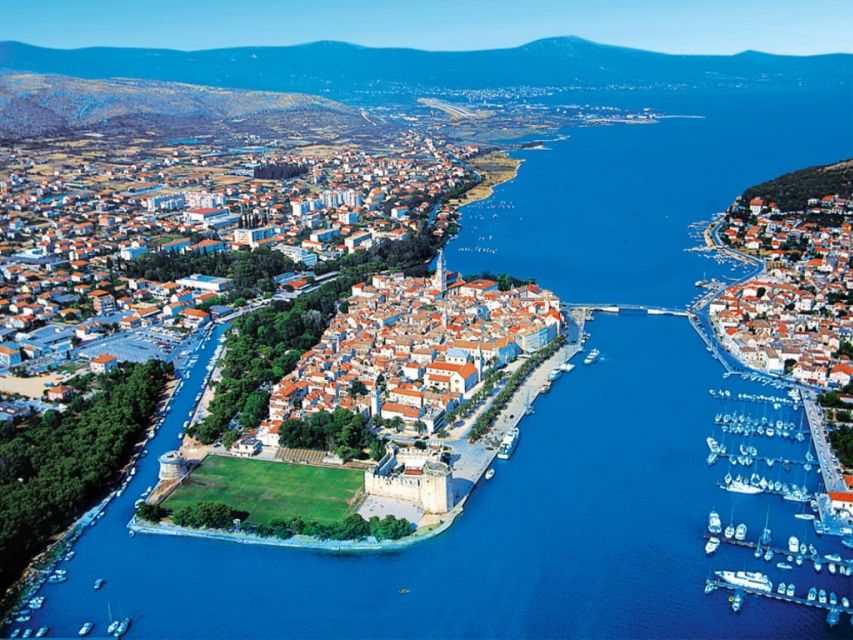
St. Dominic’s Church shifts the focus from defense to religious architecture. It is one of the stops where Trogir’s layered appearance becomes clear, with medieval forms and later changes close together.
I like having a church of this sort on the route because it gives the walk a pause. Castles tell you about power and conflict. A church can show how art, worship, local wealth, and craftsmanship shaped daily life.
The exact amount of interior access is not specified, so you should not assume a long visit inside. The guide will provide the historical setting, while the short schedule keeps the group moving toward the Benedictine monastery and the central civic sights.
Benedictine Monastery of St. Nicholas
The Benedictine Monastery of St. Nicholas is one of the more rewarding stops for anyone interested in art and religious life. It adds another layer to Trogir’s story and helps explain why the town has such a dense concentration of sacred buildings.
The monastery is also connected with one of Trogir’s most memorable artistic ideas, the relief of Kairos. Kairos is associated with a fleeting moment of opportunity, and its presence has attracted attention from visitors for centuries. That small detail gives the tour a personal touch: alongside fortresses and grand churches, you encounter a work that speaks to luck, timing, and the passing moment.
Because entrance fees are separate, ask the guide what you can see as part of the walk and what requires an additional ticket. If the interior is important to you, budget extra time and money for a later return.
City Loggia and the public life of Trogir
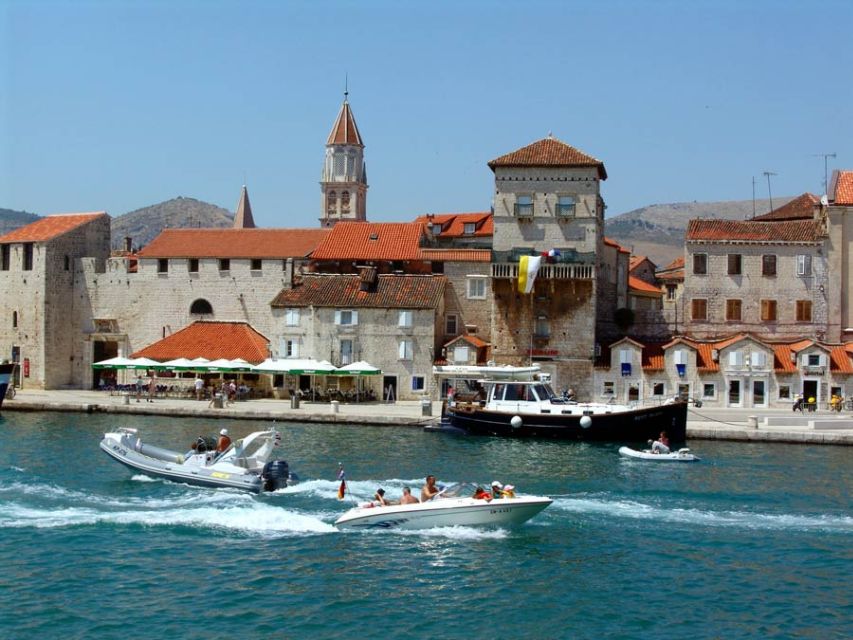
The City Loggia shows Trogir in its role as a place of public business and ceremony. This is where the tour moves from private religious spaces to the civic life of the town.
A loggia can look simple at first glance, but its purpose makes it valuable. It was a public setting, and the guide can connect its architecture with local government, legal matters, and communal life. This is also a good point to notice how open spaces contrast with Trogir’s tight lanes.
The stop should suit you if you enjoy understanding how buildings were used, not just photographing them. If you prefer grand interiors and lengthy art talks, the quick pace may feel limited.
Chapel of St. Sebastian and the details around the square
The Chapel of St. Sebastian is a smaller sight, but that is part of its appeal. Trogir’s character comes from the alternation between major monuments and modest structures tucked into the town’s fabric.
A short explanation here can help you read the surrounding square. Look for carved details, changes in stone, and the way the chapel fits against nearby buildings. In a 90-minute walk, these smaller pauses keep the route from becoming a parade of only headline attractions.
This is also where a guide’s style matters. The most praised guides have been described as warm, engaged, and able to draw attention to places you might otherwise overlook. Sandra, in particular, has been noted for her friendly and experienced approach.
Knežev dvor and the center of authority
Knežev dvor, or the Duke’s Palace, brings political authority back into the story. It helps show how Trogir was governed and how the town’s civic identity developed alongside its religious and military structures.
The value here is connection. By this point, you have seen defenses, churches, public spaces, and a monastery. The palace helps you place those pieces within a system of rule, with Venetian influence forming an important part of the story.
The walk will likely focus on the exterior and historical setting rather than a long palace visit, since entrance fees are not part of the package. Still, it is a useful stop for understanding why Trogir’s center has such a formal architectural presence.
St. Lawrence Cathedral and Radovan’s remarkable portal
The Cathedral of St. Lawrence, also called St. Lovro, is the artistic high point of the tour. Its Romanesque portal was created by the Dalmatian architect and sculptor Radovan, an elusive figure whose wider career is not well documented.
That mystery adds interest, but the carvings are the real reason to stop. The portal is filled with relief work, figures, and scenes that reward close attention. Your guide can help you notice details that are easy to miss when you are looking from a distance.
The cathedral also gives you a chance to think about the difference between seeing and understanding. You can admire the stonework on your own, but knowing something about Radovan and the tradition behind the portal makes the visit more satisfying.
Admission is extra, and the tour does not promise a full interior visit. If you want to explore the cathedral thoroughly, consider treating this walk as your introduction and returning afterward with a separate ticket.
Trogir North Gate and the final orientation
The route ends at Trogir North Gate, a practical place to finish an old-town circuit. The gate completes the defensive story begun at St. Mark’s Fortress and Kamerlengo Castle.
By the end, you should have a clear mental map of the historic center. You will have moved through its military edges, religious buildings, civic spaces, and main artistic landmark. That orientation is one of the tour’s strongest benefits, especially if Trogir is one stop in a larger Dalmatian trip.
The final stop also leaves you well placed to continue exploring independently. The tour does not include transfers, so you are responsible for getting to and from the meeting point and deciding what to do next.
What $47 gets you in practical terms
At $47 per person, this is not the cheapest way to walk around Trogir. The town is compact, and you can see many exteriors without paying for a tour. You are paying for structure, explanation, and the chance to have a local guide connect details across several centuries.
That value rises when the guide is energetic and clear. One guide extended the walk by 30 minutes, and another, Sandra, has been praised for her warmth and experience. The strongest feedback also points to guides who kept children interested and showed participants places they would not have noticed alone.
The value drops if you want a tightly organized lecture or extensive interior access. One account found the information scattered rather than connected, while another felt the tour was not complete enough for the cost because Trogir is small. Those are fair concerns.
I would compare this price with your priorities. If you want a quick, guided introduction and prefer not to research the town beforehand, it can be worthwhile. If you are happy reading a guidebook and wandering independently, you may prefer to spend the $47 on admission tickets, a meal, or another activity.
Who will get the most from this walk
This tour suits first-time visitors who want a clear overview of Trogir without committing to a long excursion. It also works well for anyone who enjoys architecture but wants the history explained in plain language.
Families may find the 90-minute length manageable. A guide who tells stories about battles and mysterious characters can hold attention better than a list of dates, and one particularly enthusiastic guide kept children engaged.
Art lovers should pay special attention to the cathedral portal and the Kairos relief. You will not get an extended art seminar in 90 minutes, but the tour points you toward the works most worth revisiting.
Independent explorers should think of the experience as a briefing. You can use the walk to identify what deserves a second look, then return to the cathedral, monastery, castle, or other sites at your own pace.
Timing, language, and booking details
The tour lasts 90 minutes and is conducted in English with a live guide. Starting times depend on availability, so check the date and time before booking.
The operator allows free cancellation up to 24 hours in advance for a full refund, and you can reserve now while paying later. That flexibility is useful when your Dalmatian plans may change.
Food and drinks are not included. Transfers are not included either, so make your way to the South Tours Travel Agency office at Hrvatskih Mučenika 28 in Trogir.
Should you book the Trogir city tour?
Book it if you want a short, guided introduction to Trogir’s architecture, defenses, churches, and Venetian past. The route covers the city’s main landmarks, and the best guides add warmth, stories, and useful details about places you might otherwise walk past.
Skip it if you already know Trogir well, plan to enter several monuments on your own, or want a slow and highly detailed study of each site. At $47, the walk depends on the guide’s ability to create a clear story rather than simply point out buildings.
For a first visit, I see it as a sensible orientation tour, with one important tip: leave time afterward for the cathedral and any other paid interior that catches your eye. The walk gives you the map. Your own wandering supplies the extra detail.
FAQ
Where does the Trogir city tour start?
It starts at the South Tours Travel Agency office at Hrvatskih Mučenika 28 in Trogir.
How long does the tour last?
The tour lasts 90 minutes.
What language is the tour conducted in?
The live tour is conducted in English.
What landmarks are included?
The route includes St. Mark’s Fortress, Glorijet maršala Marmonta, Kamerlengo Castle, St. Dominic’s Church, the Benedictine Monastery of St. Nicholas, the City Loggia, the Chapel of St. Sebastian, Knežev dvor, the Cathedral of St. Lawrence, and Trogir North Gate.
Is the Cathedral of St. Lawrence included?
The cathedral is included as a guided sightseeing stop. Entrance fees are not included in the tour price.
Are entrance fees included?
No. Entrance fees must be paid separately.
Are food and drinks included?
No. Food and drinks are not included.
Does the tour include transportation?
No. Transfers are not included. You must make your own way to the meeting point.
Can I cancel the booking?
Yes. You can cancel up to 24 hours in advance for a full refund. You can also reserve now and pay later.
Just added around Trogir
- Split and Salona Cultural Heritage Day Tour from Trogir★ 4.0 · 3 reviews
- Split and Trogir private tour *ideal for cruise ship guests*★ 5.0 · 3 reviews
- Trogir; Private walking tour of higlights of Trogir★ 4.7 · 3 reviews
- Trogir to Krka Waterfalls – Full Day Private Tour Including Free Detour★ 5.0 · 3 reviews
- From Trogir Day sailing (private tour)★ 5.0 · 4 reviews
- Private Transfer from Split Croatia Airport to Hotel★ 5.0 · 4 reviews
- Split (airport) – Hvar (town) sea transfer★ 5.0 · 4 reviews
- Private speedboat tour to Blue Cave and visit Island Hvar★ 4.0 · 4 reviews
City Tours, compared.

Split Tour by Electric Tuk-Tuk: Top City Highlights
Read our review →
Browse the lists this tour appears in