Reviewed · PRIVATE
Semi-Private Balkans Tour; Split to Athens or Corfu in 14 Days
The big appeal here is the sheer range: in 14 days, you cross seven Balkan countries, from Split to Mostar, Sarajevo, Kotor, Kosovo, Albania, Lake Ohrid, and northern Greece. You finish in Athens or take a ferry from Igoumenitsa to Corfu, so this is both a sightseeing tour and a useful one-way route through southeastern Europe.
I like the small maximum group of 10, which should make border days and town walks easier than on a large coach. I also like the mix of famous sights and everyday places: Mrizi i Zanave farm, a byrek breakfast in Tirana, local coffee, Albanian qofte, Kosovo bazaars, and family-run accommodation with breakfast.
The main caution is pace. You cover a great deal of ground by road, with several border crossings and short visits of about an hour. The advertised price is also high, and lunches, dinners, drinks, and personal spending are extra.
In This Review
- Key points before you book
- What this 14-day Balkans route really offers
- Mostar and Blagaj: a strong first day
- Sarajevo and the story of the Latin Bridge
- Kotor, Budva, and the Adriatic coast
- Northern Albania and Kosovo by local roads
- Kruja and Tirana: Albania beyond the coast
- Lake Ohrid and the road back into Albania
- Berat and Gjirokaster, Albania’s stone towns
- Meteora and the final choice of Athens or Corfu
- What the $5,153.85 price includes
- Who should book, and who should think twice?
- FAQ
- Where does the tour begin?
- Where does the tour end?
- How many people can join the tour?
- Are hotels and breakfast included?
- Are lunches and dinners included?
- Is ferry travel included?
- My booking advice
Key points before you book
- Seven-country route: Croatia, Bosnia and Herzegovina, Montenegro, Albania, Kosovo, North Macedonia, and Greece are packed into one trip.
- Small group travel: The tour accepts a maximum of 10 people and uses private transportation.
- Two possible endings: Finish with hotel drop-off in Athens, or continue to Igoumenitsa for the included ferry to Corfu.
- Local food stops: Try byrek, Albanian coffee, qofte, gjize, raki, regional wines, and farm products at Mrizi i Zanave.
- Major UNESCO sights: Mostar, Kotor, Ohrid, Berat, Gjirokaster, and Meteora all appear on the route.
- Early start and border days: Pickup is at 7:30 in Split, and several days require long drives across international borders.
What this 14-day Balkans route really offers
This is not a slow holiday based in two or three towns. It is a moving tour for someone who wants a broad first look at the Balkans and accepts that transport is part of the experience.
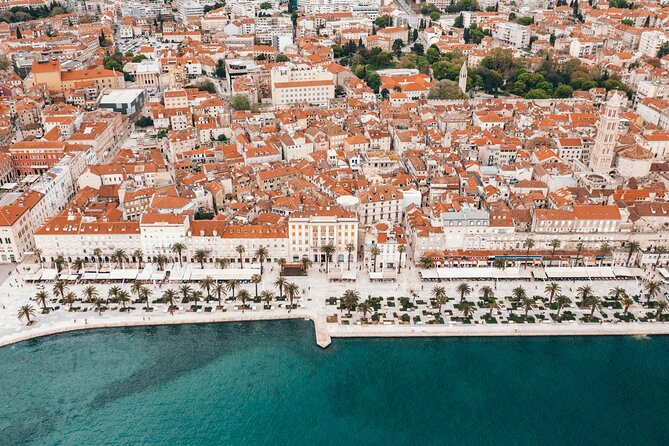
You begin in Split, Croatia, but Split itself is not included in the guided program. You are expected to explore the medieval city on your own before pickup. At 7:30 in the morning, a local driver collects you from your hotel and takes you to the border, where you meet the tour leader.
That arrangement is practical, but you should plan your Split stay carefully. The tour begins early, and the first day is already a full one. You will want to be ready with breakfast, water, and the documents needed for your journey.
The tour includes private transportation, road charges, fuel, international vehicle insurance, tourist taxes, and entry tickets for the scheduled sights. Those inclusions remove many small expenses, but the price does not cover meals apart from breakfast or anything bought for yourself.
A few more Split half-days to weigh up
- Split: Krka Waterfalls Trip with Boat Cruise and Swimming
★ 4.8 · 10,519 reviews - From Split: Krka Waterfalls, Food & Wine Tasting Tour
★ 5.0 · 9,326 reviews - Blue cave, Mamma Mia and Hvar, 5 islands speedboat tour
★ 5.0 · 7,150 reviews
Mostar and Blagaj: a strong first day
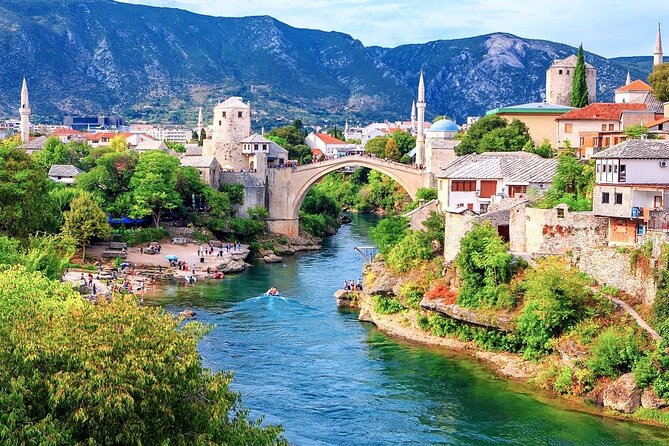
Crossing into Bosnia and Herzegovina, you head for Mostar. The Old Bridge, or Stari Most, is the day’s main sight. Its Ottoman design and famous arch make it one of the most recognizable monuments in the region, but the bridge is only part of the appeal.
The surrounding Old Bazaar is made for walking. Cobbled lanes, small shops, mosques, and old stone buildings show how Mostar connects Ottoman, Balkan, and modern influences. You will also notice the repeated words Don’t Forget around town, a reminder that Mostar’s beauty sits alongside a painful recent past.
The schedule gives about 30 minutes at the bridge, one hour in the old city, and another hour of free time. That is enough for a first look, but not enough for a relaxed exploration of every lane or museum. If you want photographs without a crowd, use the free period wisely.
Blagaj adds a quieter setting. The tekija, a historic Dervish monastery, sits beneath a cliff beside the blue-green source of the Buna River. The combination of rock, water, and Ottoman architecture gives you a change of mood after Mostar’s busy center.
The first day is attractive, but it is also demanding. You have an early transfer, a border crossing, several stops, and a full arrival day. Think of it as an introduction rather than a deep visit.
Sarajevo and the story of the Latin Bridge
Day two takes you to Sarajevo, Bosnia and Herzegovina’s capital. The guided walk covers the Ottoman and Austria-Hungarian sections of the city, along with mosques, churches, synagogues, markets, and bazaars.
Sarajevo is one of the most rewarding stops on this route because different eras sit close together. You can move from Islamic architectural details to Austro-Hungarian facades within a short walk. The tour also explains the city’s origins, the medieval Bosnian kingdom, and the effects of the Yugoslav War.
The walk includes uneven ground and visits to wartime ruins. Bring shoes with a firm sole, and do not expect a polished museum-only experience. Bullet holes and cannon marks remain visible in parts of the city, so Sarajevo asks you to pay attention to the recent past as well as the older monuments.
At the Latin Bridge, you learn how the assassination of Archduke Franz Ferdinand helped trigger the First World War. The bridge itself is modest, but the location gives a useful lesson in how a local event became a world-changing one.
You also get free time for Bosnian food in the old town. Meat dishes and desserts are local specialties, and this is a good place to spend some of your meal budget. Breakfast is included each morning, but lunch and dinner are not, so food is an important extra cost throughout the trip.
Kotor, Budva, and the Adriatic coast
Montenegro brings a different feel. Kotor’s old town is enclosed by walls and filled with narrow, twisting streets. The confusing layout was designed to make the town harder for attackers to navigate, and today it gives the center a strong medieval character.
The route includes Saint Luke’s Church, a place valued locally for its connection with unity. You then have much of the afternoon to explore on your own, which is welcome after the guided visits in Bosnia.
Kotor is one of the places where the schedule works well. Three hours gives you time to wander, pause for coffee, and look at the dated plaques on old buildings and churches. You can enjoy the town without needing every minute filled by a guide.
The following day starts in Budva, a coastal resort with a modern section and a walled old town. The historic center includes Saint Ivan Church, Saint Mary’s Church, and medieval streets. The visit lasts about an hour, so your time is focused on the old town rather than the beaches or newer shopping areas.
At Sveti Stefan, you stop at a viewpoint. The former fishing village now operates as an exclusive residential resort, and the island is not open for ordinary sightseeing. That makes this a photo stop, not a full visit.
Rozafa Castle near Shkoder provides wide views toward the lake and the rivers flowing toward the Adriatic. The castle is included, and the stop gives you a useful first taste of northern Albania before continuing into the city of Shkoder.
Same coast, a completely different day out:
- From Split: Krka Waterfalls, Food & Wine Tasting Tour
★ 4.9 · 6,598 reviews - Split/Trogir: Blue Cave, Mamma Mia, Hvar and 5 Island Tour
★ 4.6 · 6,320 reviews - Blue Lagoon & 3 Islands Cruise with Lunch from Split
★ 4.5 · 5,756 reviews - Split: Old Town and Diocletian Palace Walking Tour
★ 4.9 · 4,727 reviews
Northern Albania and Kosovo by local roads
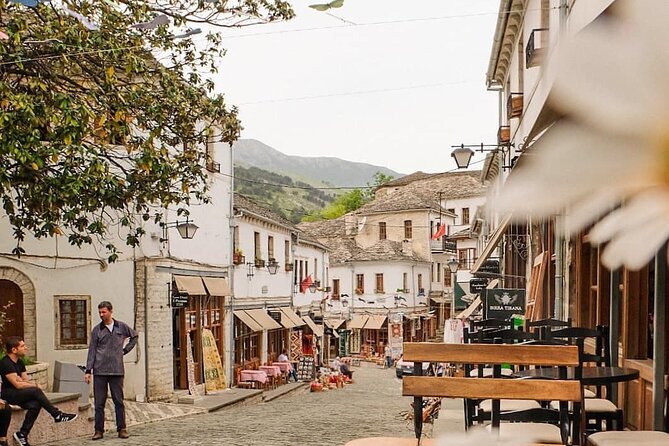
Shkoder is one of Albania’s oldest cities, with strong Venetian influence and a long connection to Lake Shkoder. The itinerary repeats Rozafa Castle in the Shkoder section, so do not be surprised if the castle is the main historical visit and the city walk is shorter than expected.
Day five offers one of the more distinctive food stops at Mrizi i Zanave, an agricultural tourism farm. You can tour the property, learn how local products are collected and preserved, and see how older communist-era buildings were adapted for storage. The farm’s work has created jobs in the surrounding area, giving this stop more substance than a simple restaurant break.
Lunch is not included, but this is one place where paying extra may be worthwhile if you want to sample regional food or buy local products. The stop also gives you a break from city monuments and vehicle time.
Prizren, in Kosovo, is reached later that day. Its old town follows the river, with stone bridges, religious buildings, and Ottoman-era streets. The Sinan Pasha Mosque is included, and its painted decoration gives you a strong example of Islamic art in the region.
You also walk up toward the fortress for a wide view over Prizren. The town is a pleasant place to explore on foot, but the hill and cobbled streets require sensible shoes.
Gjakova follows on day six. Its large old bazaar has been destroyed and rebuilt several times, and today it offers shops selling handmade crafts and traditional goods. It is a useful stop for browsing rather than a major monument visit.
The Decan Monastery is another key sight. Orthodox monks still live there, and the monastery is known for its 14th-century frescoes and religious art. Access to religious sites can depend on local conditions, so follow the tour leader’s instructions and dress respectfully.
The day ends in Rahovec Valley, Kosovo’s wine country. Grape growing here goes back to Illyrian times, and the hills sit at an altitude suited to vineyards. The annual wine festival takes place in September, but wine tasting is not specifically included in the tour, so treat this as a scenic and cultural stop rather than a guaranteed tasting.
Kruja and Tirana: Albania beyond the coast
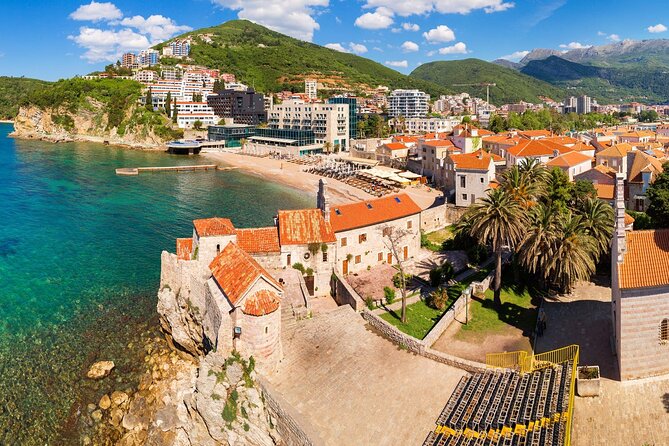
Kruja is tied to Albania’s resistance against Ottoman expansion in the 15th century. Its position on a rocky mountain slope gives the town a dramatic setting, while the old bazaar is the practical highlight.
The narrow market streets are lined with wooden houses and shops selling carpets, jewelry, and other handmade goods. You get time for both the bazaar and Kruja Castle, including paths once used to leave the fort without being seen. This is one of the better places on the tour for souvenirs, especially if you prefer locally made objects to standard tourist goods.
Tirana is approached through food and daily life rather than a long list of grand monuments. With a local companion, you stop at Tregu Çam for byrek, a pastry filled with cheese, meat, or spinach. You then visit markets, a pastry shop, a cafe for traditional Albanian coffee, and the New Bazaar.
The lunch tasting includes qofte, bread, and Albanian raki. Vegetarians can have bread with gjize, a local cottage cheese. These tastings are a real strength of the program because they show you what people eat during an ordinary day, not just what appears on a formal restaurant menu.
Bunk’Art 2 closes the Tirana visit. The museum occupies a former Cold War nuclear bunker built to shelter Enver Hoxha and senior party members. Its exhibits cover Albania’s communist army and everyday life during the regime.
The listed visit times for several Tirana food stops are extremely brief, so the actual flow may depend on the guide and local timing. The important point is that Tirana is treated as a lived-in city, with food, coffee, markets, and difficult political memory.
Lake Ohrid and the road back into Albania
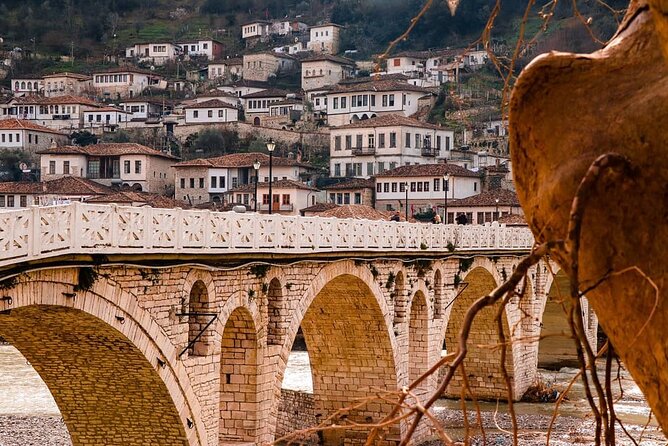
Day nine crosses into North Macedonia. In Struga, you stop for a drink near the source of the Drini River. The stop is short, but it breaks up the drive before Ohrid.
Ohrid and Lake Ohrid are UNESCO-listed, and the town has long been an important Orthodox center. You visit viewpoints and churches, including Saint John and Saint Nicholas, along with the Halveti Hayati Tekke. This is a particularly scenic part of the route, but two hours in Ohrid is not enough for every church, museum, and lakeside walk.
The next morning takes you to Saint Naum Monastery, located near the source of the Black Drin. The complex sits within Galicica National Park, beside clear spring water and mountain views. The monastery is included, and this is one of the tour’s more peaceful stops.
After crossing back into Albania, you visit Tushemisht and Drilon National Park. Drilon has springs, a small lake, and willow trees around the water. The short visit offers calm scenery after several days of cities and border roads.
These days show the value of the route, but also its limitation. You see places that would take much longer to understand on separate trips. The reward is variety; the cost is limited free time.
Berat and Gjirokaster, Albania’s stone towns
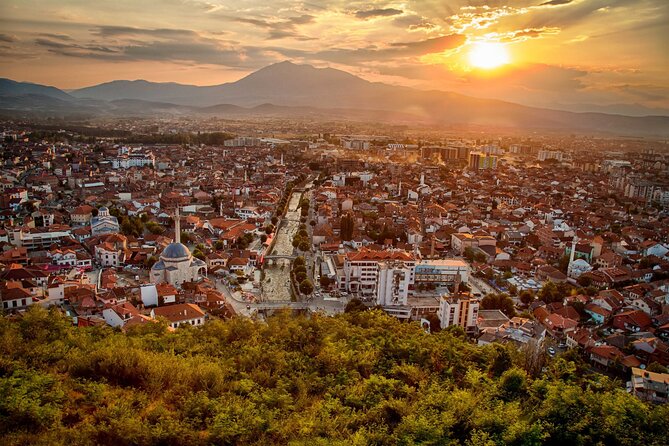
Berat is known as the town of 1,001 windows. Its old houses climb steep hillsides, and the windows seem stacked above one another. Residents still live inside the castle area, which makes the site feel like a neighborhood as well as a monument.
The castle, included in the tour, contains churches, mosques, old homes, and museums. The National Iconographic Museum Onufri focuses on the work of the famous church painter associated with Berat. His distinctive reddish color is one reason the museum is worth your time.
You also visit the Gorica neighborhood across the old stone bridge. Berat is a good place to slow your pace for a few hours, although the stone streets and slopes can be tiring.
Gjirokaster, the Stone City, is another UNESCO-listed town built on steep ground. Houses resemble small fortresses, and the castle sits above the old bazaar. The castle visit includes a broad look at the town’s defensive past and local culture.
The bazaar is lined with narrow stone streets and craft shops. You also visit a well-preserved traditional house with original furnishings. Gjirokaster is visually powerful, but it is not flat or easy to navigate, so pack footwear suited to hard stone surfaces.
Meteora and the final choice of Athens or Corfu
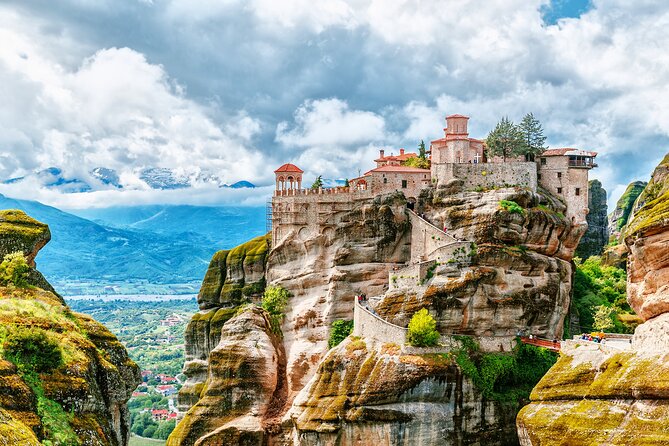
Day 13 crosses into Greece, beginning in Ioannina. The old town and Byzantine-era castle offer a compact introduction to the city, with cafes and traditional Greek food available during free time.
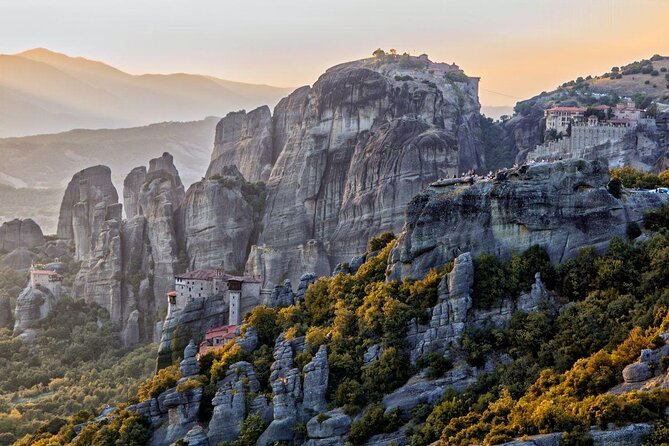
Then comes Meteora, one of the most dramatic places on the entire route. Monasteries sit atop tall rock formations, and the visit is timed to include sunset. The scenery is the payoff for the long road days, though the stop is listed at about an hour, so timing and weather will matter.
On day 14, you choose the tour’s ending. One option is transfer to Athens, where the activity finishes with hotel drop-off. The other takes you to Igoumenitsa Port, with ferry tickets included for the crossing to Corfu Port.
The Corfu option is useful if your next trip is to the Ionian islands. The Athens option is more direct if you are continuing through mainland Greece. Confirm the exact ending you want before booking, since these are different final transfers.
What the $5,153.85 price includes
At $5,153.85 per person, this is a major travel purchase. The value depends on how much you would otherwise spend arranging transport, hotels, border connections, sightseeing tickets, and a one-way route across seven countries.
Included are 13 nights with breakfast in three-star hotels, private transportation, a professional tour leader, Split pickup, Athens drop-off or Igoumenitsa transfer, ferry tickets to Corfu when that ending is chosen, entrance fees, tourist taxes, fuel, and road costs.
The price is calculated around double, twin, triple, or quadruple room occupancy. Solo travelers should clarify any single-room supplement before paying. Group discounts are offered, but the amount is not specified.
You still need to budget for 13 lunches or dinners, drinks, snacks, souvenirs, and personal purchases. The food stops in Tirana and the farm visit are useful, but they do not remove the need to pay for most meals.
For value, I would choose this tour if you want convenience and breadth more than independence. If you already enjoy arranging buses, hotels, and border routes yourself, the price may feel steep. If you want one booking to connect places that are awkward to link independently, private transport and a maximum of 10 people carry real value.
Who should book, and who should think twice?
Book this if you want a guided first look at the Balkans, enjoy historical towns, like trying local food, and do not mind changing hotels almost every night. The tour suits active adults who can manage uneven streets, castle paths, and long vehicle days.
It also works well for solo participants who prefer a small social group, couples who want a one-way route, and people who value a guide’s help at borders and historical sites. The supplied feedback repeatedly praises friendly, helpful guides, comfortable vehicles, strong organization, and energetic leadership.
Think twice if you want long beach stays, late mornings, or several free days in each city. You should also be comfortable with the non-refundable booking terms and carry your own health and travel insurance. Tips are optional, but a gratuity for good service is customary.
FAQ
Where does the tour begin?
The tour begins in Split, Croatia, with hotel pickup at 7:30 am.
Where does the tour end?
You can finish with drop-off in Athens, or transfer to Igoumenitsa Port and take the included ferry to Corfu Port.
How many people can join the tour?
The maximum group size is 10 participants.
Are hotels and breakfast included?
Yes. Accommodation and breakfast are included for all overnights in three-star hotels, with 13 breakfasts provided.
Are lunches and dinners included?
No. Lunches, dinners, drinks, snacks, souvenirs, and personal spending are not included.
Is ferry travel included?
The ferry from Igoumenitsa to Corfu Port is included when you choose the Corfu ending. The ferry tickets are not relevant to the Athens ending.
My booking advice
I would book this for the route, not for a relaxed holiday. You get Mostar, Sarajevo, Kotor, Prizren, Tirana, Ohrid, Berat, Gjirokaster, Ioannina, and Meteora in one carefully connected journey, with the hardest transport work handled for you.
The strongest parts are the small group, local food visits, private vehicle, and mix of major monuments with ordinary markets and farms. The tradeoff is a high price, short stops, border crossings, and many hours on the road.
If that balance sounds right, this is an efficient and culturally broad introduction to the Balkans. If you want to know one country well, choose a slower trip instead.
Just added around Split
- Kayaking & Zipline Šibenik – Čikola Canyon★ 5.0 · 3 reviews
- Krka National Park & Zipline Šibenik – Čikola Canyon★ 5.0 · 3 reviews
- From Split: Krka National Park & Waterfalls Private Day Trip★ 5.0 · 3 reviews
- Split: Small-Group Half Day Sailing Trip★ 5.0 · 3 reviews
- Rafting River Cetina from Makarska Riviera including transfer★ 5.0 · 3 reviews
- Split Bike and Wine Experience★ 5.0 · 3 reviews
- Split and Salona Cultural Heritage Day Tour from Trogir★ 4.0 · 3 reviews
- Private transfer from Split to Dubrovnik with 2h sightseeing stop in Ston★ 5.0 · 3 reviews
Private, compared.

Private Krka Waterfalls tour with 30min Boat Cruse
Read our review →
Split by Private Electric Rickshaw – Palace & Hidden Gems
Read our review →
Private Blue cave, Mamma Mia and Hvar, 5 islands tour from Split
Read our review →
Private Boat Tour by local expert – Create Your Itinerary
Read our review →