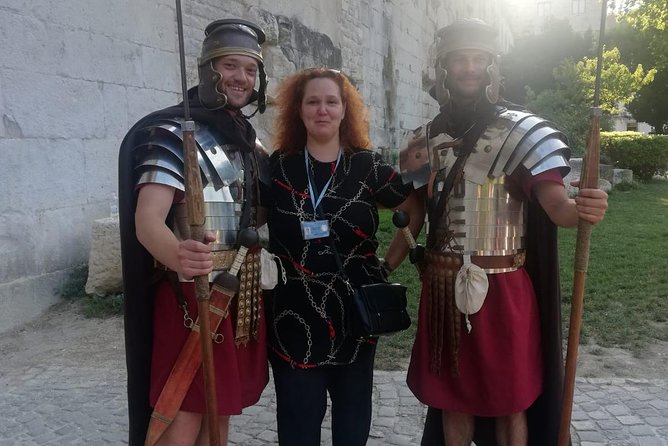
Reviewed · SPLIT TOURS
Walk through Split with an archeologist
Split’s old center is not a museum behind glass. It is a Roman palace still used as the city’s streets, squares, shops, and homes. This two-hour walk with an archeologist helps you read that unusual setting instead of simply wandering through it.
I like the small maximum of 10 people, since it gives you a better chance to hear explanations and ask questions. I also like the route’s mix of major Roman spaces and a medieval square, which shows how Split changed over time. The main consideration is that the tour is fairly short, and admission is not included at the Peristyle or Vestibulum.
In This Review
- Key points to know before booking
- Why Diocletian’s Palace rewards a guided walk
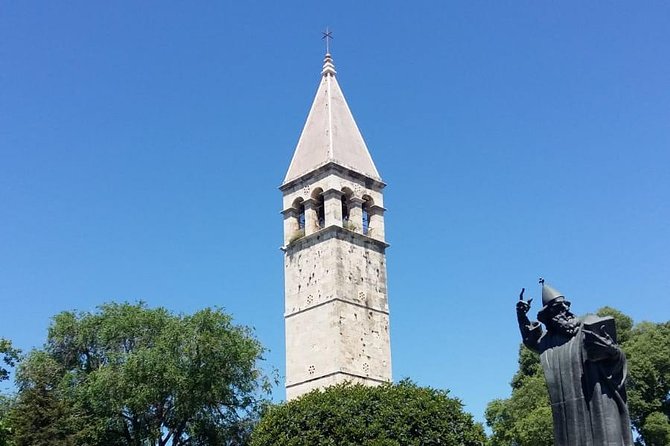
- Starting at the Gregory of Nin Statue
- The Peristyle: Split’s grand Roman stage
- The Vestibulum and the approach to the emperor’s quarters
- The palace substructures and the shape of ancient Split
- Narodni Trg and the medieval layer of Split
- What a maximum group of 10 means
- How the guide’s style may shape the experience
- Price, admissions, and overall value
- Who will get the most from this walk
- Booking, timing, and cancellation details
- Should you book this Split walking tour?
- FAQ
- Where does the walking tour start?
- Where does the experience end?
- How long does the tour last?
- What language is the tour offered in?
- How many people can join the tour?
- Are admission tickets included?
- What is the cancellation policy?
Key points to know before booking
- Roman palace and living city: See major parts of Diocletian’s Palace while walking through Split’s active historic center.
- Four focused stops: The route includes the Peristyle, Vestibulum, palace substructures, and Narodni Trg.
- Small group format: A maximum of 10 participants keeps the walk more personal than a large city tour.
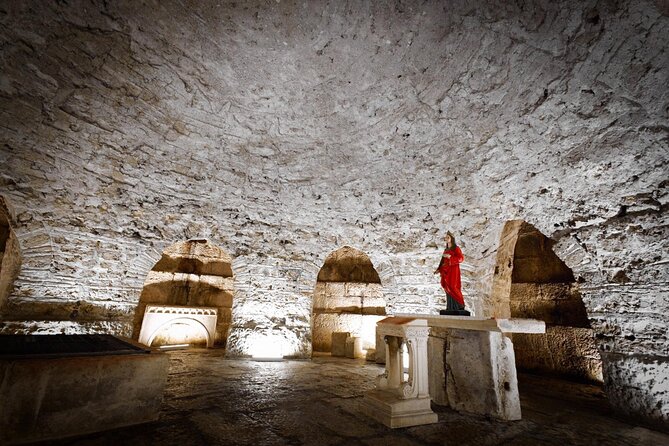
- Archeology at street level: The substructures help explain how the upper palace and modern city fit together.
- English-language walk: The experience is offered in English with a mobile ticket.
- Good value for history lovers: At $23.67 per person, you are paying for context and orientation rather than transportation or included admissions.
Why Diocletian’s Palace rewards a guided walk
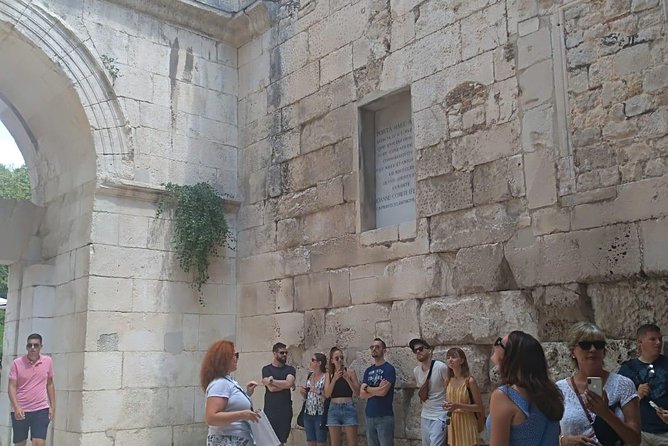
The best feature of this experience is its setting. Diocletian’s Palace is not an isolated ruin outside town. It forms the core of Split, so you move through a place where ancient walls and ordinary city life share the same space.
That can be confusing at first. You may see a Roman column beside a café, an old stone passage opening into a busy lane, or a modern doorway set into an ancient structure. A guide can point out what belongs to the palace, what was added later, and why the city developed inside and around the Roman complex.
I like this approach because it gives you a framework early in your visit. After the walk, you can return to the palace on your own and notice details you might otherwise pass without a second thought.
The tour is also a good match for people who prefer cultural context to a quick photo stop. Its four named locations are close enough to connect into one story, yet varied enough to show several layers of Split’s past.
A few more Split half-days to weigh up
- Split: Krka Waterfalls Trip with Boat Cruise and Swimming
★ 4.8 · 10,519 reviews - From Split: Krka Waterfalls, Food & Wine Tasting Tour
★ 5.0 · 9,326 reviews - Blue cave, Mamma Mia and Hvar, 5 islands speedboat tour
★ 5.0 · 7,150 reviews
Starting at the Gregory of Nin Statue
The meeting point is the Gregory of Nin Statue, at Ul. kralja Tomislava 12, 21000, Splitska, Croatia. Starting here gives you a clear landmark in the center of the city and avoids the problem of trying to find a small office or tour bus.
You should arrive with your mobile ticket ready. Confirmation is provided at booking, and the tour is offered in English.
The statue itself is a useful place to gather, but the main value of the starting point is practical. Split’s historic center has many lanes and stone passages that can look alike, especially on a first visit. Meeting at a prominent statue makes the beginning less stressful.
The activity ends back at the same meeting point. That matters if you are fitting the walk between a hotel check-in, a meal, or another appointment. Since the tour lasts about two hours, you can plan around it without giving up an entire morning or afternoon.
The Peristyle: Split’s grand Roman stage
The first stop is the Peristyle of Diocletian’s Palace, with about 10 minutes set aside for the visit. This is the kind of place that can look simple in a photograph but makes more sense when someone explains its role within the palace.
The Peristyle was a formal Roman court leading toward the emperor’s quarters. Here, scale and ceremony mattered. The space connected the public side of the palace with the more private areas used by Diocletian and his court.
I would pay attention to how the surrounding buildings frame the square. The experience is not just about spotting old stones. It is about seeing how an imperial space was later absorbed into the city.
The short stop should keep the walk moving, but it also means you will not get a long, unhurried visit at this point. Admission is not included, so check the booking details and be prepared for any applicable entrance cost. The supplied information does not give a separate admission price.
For first-time visitors, this is an important orientation stop. Once you understand the Peristyle as a central part of the palace plan, the nearby Vestibulum and substructures become easier to place.
The Vestibulum and the approach to the emperor’s quarters
The Vestibulum is the second stop, also planned for about 10 minutes. It served as an entrance area to the emperor’s quarters, so it adds a more private and ceremonial side to the story.
This stop works well after the Peristyle because the two spaces can be understood together. The Peristyle presents the palace’s formal public face, while the Vestibulum helps you see how movement into the emperor’s quarters was controlled and staged.
A guide with an archeology background can make a difference here. You are not simply looking at a circular or stone-built space and moving on. You are considering how people entered, where they were allowed to go, and how architecture expressed rank.
Again, admission is not included. That is worth noting when comparing this experience with a ticketed palace visit. The $23.67 fee covers the guided walk, not every possible entrance charge.
The brief timing is both a strength and a limit. You get a clear explanation without spending the whole day indoors, but you should not expect a long lecture or extensive time for independent examination at each site.
Same coast, a completely different day out:
- From Split: Krka Waterfalls, Food & Wine Tasting Tour
★ 4.9 · 6,598 reviews - Split/Trogir: Blue Cave, Mamma Mia, Hvar and 5 Island Tour
★ 4.6 · 6,320 reviews - Blue Lagoon & 3 Islands Cruise with Lunch from Split
★ 4.5 · 5,756 reviews - Split: Old Town and Diocletian Palace Walking Tour
★ 4.9 · 4,727 reviews
The palace substructures and the shape of ancient Split
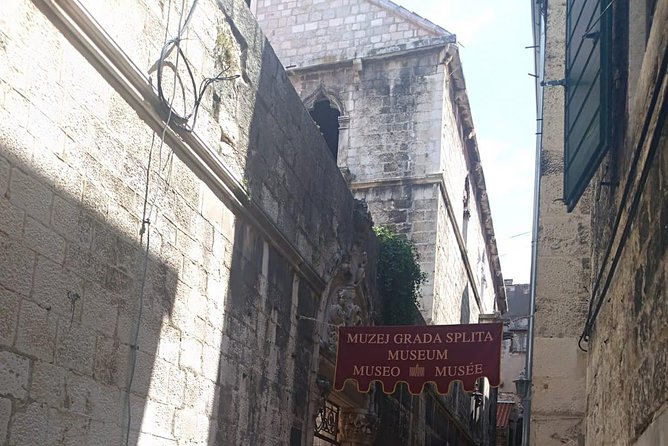
The third stop is the substructures of Diocletian’s Palace. Admission is listed as free, which makes this part especially useful from a value point of view.
The substructures are important because they help you understand the building above them. They preserved the basic arrangement of the palace and supported the upper areas, so their walls and passages offer a physical guide to the original plan.
This is where the archeological angle becomes most useful. Above ground, later changes can make the palace difficult to read. Below ground, the structure gives you a clearer sense of how the Roman complex was organized.
You may find this stop more rewarding than a quick look at a single monument because it explains construction and layout. It links the palace to the city you are walking through, rather than treating Roman Split as a separate chapter.
The planned visit is about 10 minutes. That is enough for a focused explanation, but not enough for an exhaustive examination of every corridor. If underground spaces are a major priority for you, treat this tour as an introduction rather than a full specialist visit.
Narodni Trg and the medieval layer of Split
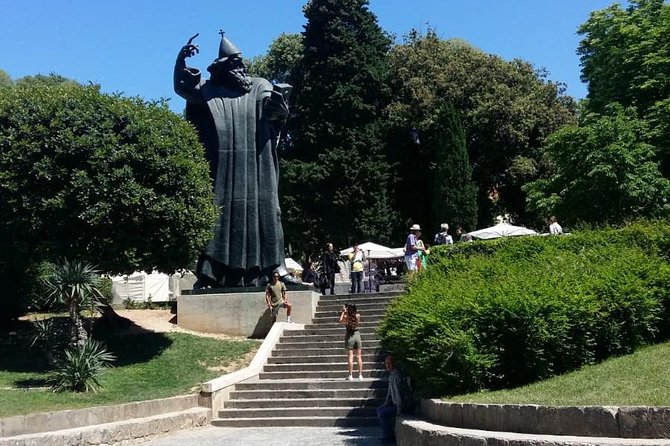
The final listed stop is Narodni Trg, a medieval square known for its attractive historic setting. This changes the rhythm of the walk. Instead of focusing only on the imperial Roman period, you see how Split continued to develop long after Diocletian’s time.
That change is valuable because Split is not only an ancient site. Its identity comes from many periods sharing the same compact center. A medieval square helps you see that the city was adapted again and again as needs changed.
I like the inclusion of Narodni Trg because it keeps the tour from becoming too narrow. If every stop focused only on Roman architecture, you could leave with an incomplete picture of the city. This square shows the later urban life that grew around and within the old palace.
Admission here is free. The stop lasts about 10 minutes, and the activity then returns to the original meeting point.
What a maximum group of 10 means
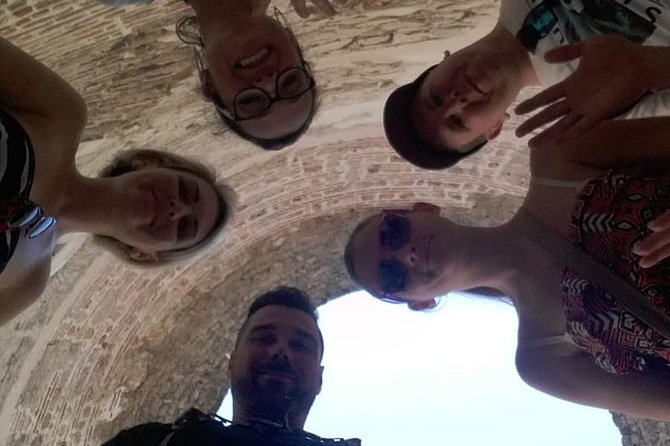
The group limit is one of the strongest practical features. With no more than 10 people, the guide can keep the walk together without the feel of a large procession.
A small group also helps in places where sound can be difficult. Historic stone spaces can carry echoes, and narrow lanes can make it hard to stay close to a guide. A smaller party gives you a better chance of hearing the explanation and asking about a detail that catches your eye.
It does not guarantee a private tour. The experience is still shared, and the exact group size can vary up to the stated maximum. Still, 10 is a reasonable ceiling for an urban walking tour that depends on conversation.
The named provider is Antonjeta Vulić Bilobrk. One of the supplied comments specifically refers to Antonjeta guiding a group through the palace and explaining many details. That is useful if you value a personal, story-led approach, though the information does not promise that Antonjeta will personally lead every departure.
How the guide’s style may shape the experience
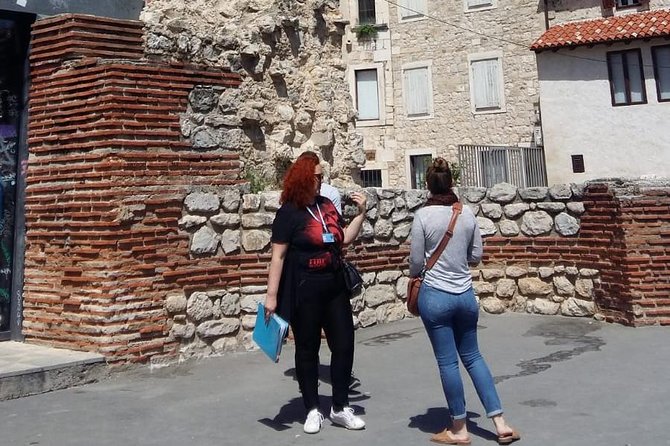
The strongest praise centers on the guide’s warmth and detailed explanations. One note describes Antonjeta as taking the group through the palace while sharing many details, and gives the experience a clear recommendation. Another describes a guide who walked and talked through the route in a friendly way.
That suggests a tour built around conversation rather than a rigid audio-guide script. I would expect the best moments to come from being able to ask why a wall, passage, or square matters.
The information also includes a note about an off-season outing with a guide who was able to give the group more time and space around the route. That comment mentions a waterfall excursion, so it does not clearly describe this palace walk. Still, the practical lesson is sound: quieter periods can make any walking visit more relaxed, while busy dates may feel more crowded.
Do not book this expecting a long museum-style presentation. The duration is approximately two hours, and the stops are short. The appeal is a well-shaped introduction to Split’s central historic sites, with enough explanation to help you keep exploring afterward.
Price, admissions, and overall value
The listed cost is $23.67 per person. For that price, you receive a roughly two-hour guided walking experience in English, a mobile ticket, and a small group capped at 10.
The value depends on what you want from a city tour. If you only need directions between famous squares, you can walk through the area on your own. If you want to understand how the Roman palace, underground structure, and medieval city fit together, the guide adds something you cannot get from simply following a map.
The fact that the substructures and Narodni Trg are listed with free admission improves the value. You should budget separately for any entrance charges at the Peristyle and Vestibulum, since those admissions are not included.
There is no transport, meal, or full-day activity included in the information provided. That is not a flaw, but it helps set a fair expectation. You are buying a compact history walk, not a broad sightseeing package.
For couples, solo visitors, and families interested in the past, the price is reasonable if the guide gives you the context you came for. It is less compelling if your priority is a long, slow visit inside paid sites.
Who will get the most from this walk
I would choose this experience if you are visiting Split for the first time and want an overview before exploring on your own. It should also suit anyone drawn to Roman architecture, palace planning, archaeology, and the way old cities keep changing.
The route is especially useful for:
- Visitors who want to get oriented without navigating the old center alone
- People who prefer a small group to a large city walk
- History and culture fans who want more than photo stops
- Families and couples looking for a manageable two-hour activity
- Anyone who wants Roman and medieval Split in one outing
The short format may not suit you if you want extensive time at every monument or a specialist lecture on one period. The experience is also not presented as a private tour, so people seeking a fully custom route should compare other options.
Most participants can take part, and service animals are allowed. The meeting point is near public transportation, which helps if you are not staying in the immediate center.
Booking, timing, and cancellation details
Confirmation is received when you book, and the mobile ticket means you do not need a printed voucher. The activity is offered in English and returns to the starting point.
Free cancellation is available if you cancel at least 24 hours before the local start time. Cancellations made within 24 hours are not refunded, and changes during that period are not accepted.
The experience also requires a minimum number of participants. If the provider cancels because that minimum is not reached, you will be offered another date or experience, or receive a full refund.
Should you book this Split walking tour?
Book it if you want a short, focused introduction to Split’s Roman and medieval center, especially with a small group and an archeology-led explanation. The combination of the Peristyle, Vestibulum, substructures, and Narodni Trg gives you a useful outline of the city’s past without taking over your day.
I would be less quick to book if you expect every admission to be covered or want long stretches of free time at each site. Plan for possible entrance fees at the Peristyle and Vestibulum, and think of the walk as a strong first look rather than the final word on Diocletian’s Palace.
At $23.67, the decision comes down to context. If you want Split to make sense as more than a collection of old stones, this compact tour is a sensible choice.
FAQ
Where does the walking tour start?
The tour starts at the Gregory of Nin Statue, Ul. kralja Tomislava 12, 21000, Splitska, Croatia.
Where does the experience end?
The activity ends back at the meeting point near the Gregory of Nin Statue.
How long does the tour last?
The tour lasts approximately two hours.
What language is the tour offered in?
The tour is offered in English.
How many people can join the tour?
The maximum group size is 10 participants.
Are admission tickets included?
Admission is not included for the Peristyle of Diocletian’s Palace or the Vestibulum. Admission is listed as free for the palace substructures and Narodni Trg.
What is the cancellation policy?
You can cancel at least 24 hours before the local start time for a full refund. Cancellations or changes made within 24 hours are not accepted for a refund.
Just added around Split
- Kayaking & Zipline Šibenik – Čikola Canyon★ 5.0 · 3 reviews
- Krka National Park & Zipline Šibenik – Čikola Canyon★ 5.0 · 3 reviews
- From Split: Krka National Park & Waterfalls Private Day Trip★ 5.0 · 3 reviews
- Split: Small-Group Half Day Sailing Trip★ 5.0 · 3 reviews
- Rafting River Cetina from Makarska Riviera including transfer★ 5.0 · 3 reviews
- Split and Salona Cultural Heritage Day Tour from Trogir★ 4.0 · 3 reviews
- Split Bike and Wine Experience★ 5.0 · 3 reviews
- Private transfer from Split to Dubrovnik with 2h sightseeing stop in Ston★ 5.0 · 3 reviews
Split Tours, compared.
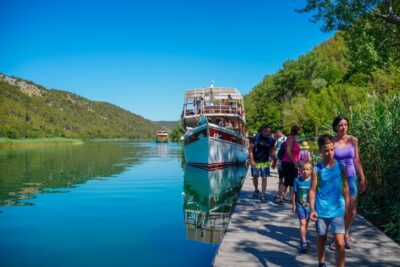
Krka Waterfalls Trip with Boat Cruise and Swimming
Read our review →
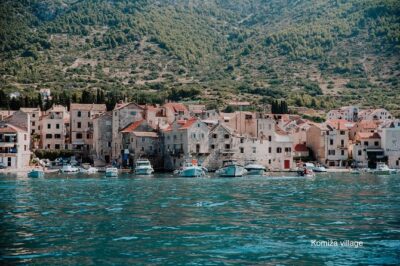
Blue cave, Mamma Mia and Hvar, 5 islands speedboat tour
Read our review →
Blue Cave, Mamma Mia, Hvar and 5 Island Tour
Read our review →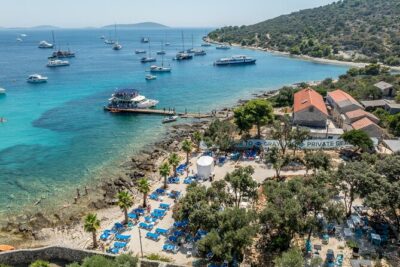
Blue Lagoon & 3 Islands Cruise with Lunch from Split
Read our review →