Reviewed · TOURS
Storytelling World War II in Split Tour
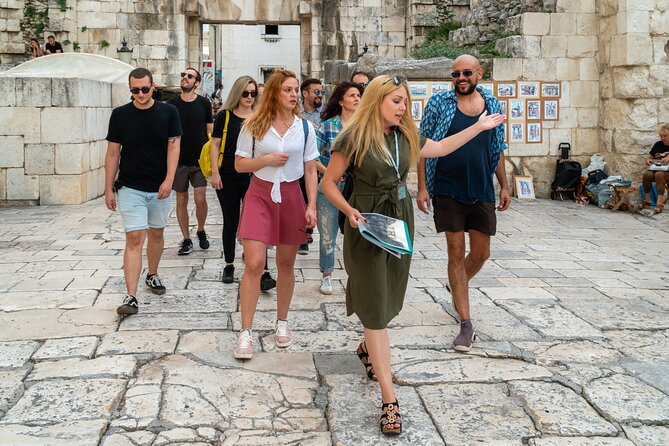
Split’s ancient center hides a surprisingly modern story. On this focused walk, Ina Nikolic uses archival photographs from the Museum of the City of Split to show how familiar streets looked during World War II, then explains the bombings, arrests, prisons, and executions tied to each place.
I like the way the tour connects local events to the wider war, rather than treating Split as a footnote. I also like its small maximum of 15 people and flexible central meeting arrangements. The main drawback is that the two-hour route includes plenty of standing and listening, with less continuous walking than you might expect.
In This Review
- Key points to know before you book
- Why Split’s wartime story deserves two hours
- Starting on the Split Riva
- The Green Market and Split’s worst bombing
- Entering through the Eastern Silver Gate
- Diocletian’s Palace and the Peristyle
- Narodni Trg and the city’s public tragedies
- Marmontova Ulica and the cost of standing still
- Prokurative, prisons, and executions
- Ina Nikolic’s storytelling and visual material
- Is $60.01 a fair price?
- Who will get the most from this walk?
- Planning the morning or evening route
- Should you book the Storytelling World War II in Split Tour?
- FAQ
- How long does the Storytelling World War II in Split Tour last?
- Where does the tour start?
- Where does the tour end?
- What language is the tour offered in?
- How many people can join the tour?
- What is included in the experience?
Key points to know before you book
- Rare wartime photographs: Ina has permission to use old images held in the Museum of the City of Split archive, and she compares them with the streets you see today.
- Seven central locations: The route links the Riva, Green Market, Diocletian’s Palace, Narodni Trg, Marmontova Ulica, and Prokurative.
- A local viewpoint: The focus is Split during World War II, including Jewish history, prisons, executions, bombings, and the city’s changing political setting.
- Small group format: The tour accepts no more than 15 people, which gives you a better chance to ask questions.
- Useful for history-minded families: One detailed account specifically describes a parent and 16-year-old enjoying the tour together.
- Easy old-town finish: You end at Republic Square, also called Prokurative, near Split’s promenade and historic center.
Why Split’s wartime story deserves two hours
Most first-time walks through Split concentrate on Roman ruins, medieval lanes, and seaside views. Those subjects matter, but they can leave you with a thin understanding of the city’s 20th-century experience.
This tour changes the angle. You begin with the question of when, where, and why the war started in Split, then follow its effect through public squares, market streets, palace entrances, and major roads. The setting remains familiar, but the meaning of each place changes.
That is the tour’s strongest idea: you do not study World War II in a museum room. You stand in the locations where events unfolded. The old stones of Diocletian’s Palace become part of a modern wartime story, while busy city spaces reveal episodes that are easy to miss if you only admire the architecture.
Ina also places local events in a wider context. The tour is not limited to military movements or dates. It includes the experience of Jewish residents, civilian suffering, imprisonment, executions, and the physical damage caused by bombing. She has also been known to connect the story to the wars of the 1990s, giving you a wider view of Split’s recent past.
The rating is 5 out of 5 from 21 published ratings, and every published rating recommends the experience. That is a small sample, but the pattern is clear: the guide’s storytelling, personal interest in the subject, and use of images are the main reasons this tour works.
A few more Split half-days to weigh up
- Split: Krka Waterfalls Trip with Boat Cruise and Swimming
★ 4.8 · 10,519 reviews - From Split: Krka Waterfalls, Food & Wine Tasting Tour
★ 5.0 · 9,326 reviews - Blue cave, Mamma Mia and Hvar, 5 islands speedboat tour
★ 5.0 · 7,150 reviews
Starting on the Split Riva
The walk begins on the Riva, Split’s famous waterfront promenade. The exact starting address is Obala Hrvatskog narodnog preporoda 27, and pickup is also offered at Split’s ferry port on Obala kneza Domagoja.
The opening stop lasts about 15 minutes. This is where Ina lays out the basic timeline and explains when, where, and why the war began in Split. That foundation matters because the rest of the walk moves through individual places and incidents.
The Riva is a practical place to start. It is easy to find, close to the old center, and near public transport. If you are arriving by ferry, ask about the pickup option when you book. The supplied details also describe a flexible meeting point for groups in central Split, so confirm the exact arrangement within the booking confirmation.
Expect to stand while Ina talks. This is not a ride or a fast-paced route. The opening works best if you want a clear narrative before moving into specific sites.
The Green Market and Split’s worst bombing
From the waterfront, the tour continues to the Green Market, the town’s produce market. Ina spends about 15 minutes here discussing what is described as the most horrific bombing in Split.
This is a useful stop because a market is an everyday place. You can picture the city not as a collection of monuments, but as a living community where ordinary people shopped, worked, and faced wartime danger. The contrast between the market’s normal purpose and its wartime story gives this section emotional force without needing elaborate staging.
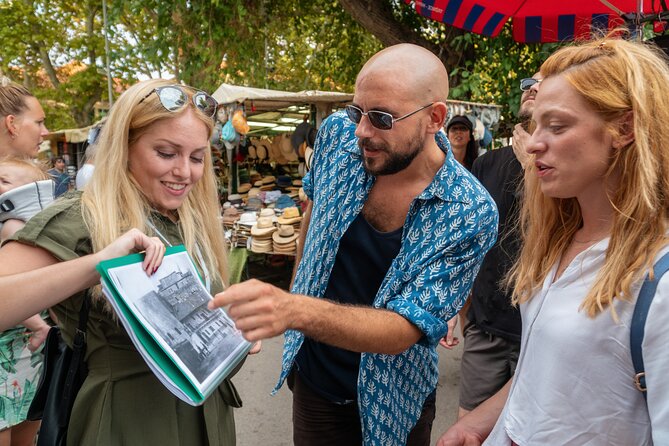
This is also one of the points where the old photographs matter most. The images help you compare the place you see now with Split during the war. Several comments about the tour single out the photographs and aerial maps as especially helpful, since they make the past easier to connect with the present street plan.
The route does not require an admission ticket at any stop. You remain in public streets and squares, so the value comes from the guide’s research and explanation rather than from entry to a separate attraction.
Entering through the Eastern Silver Gate
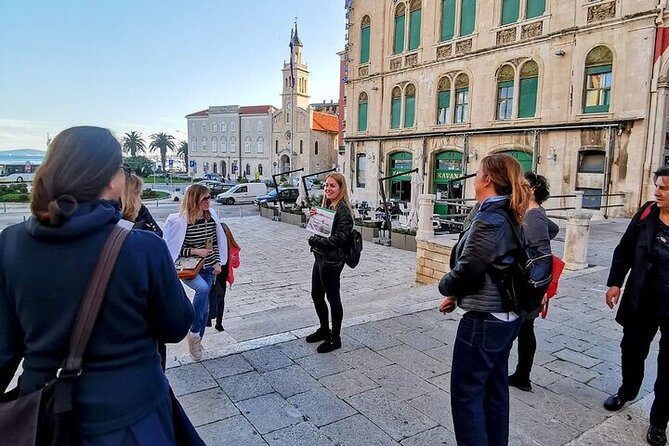
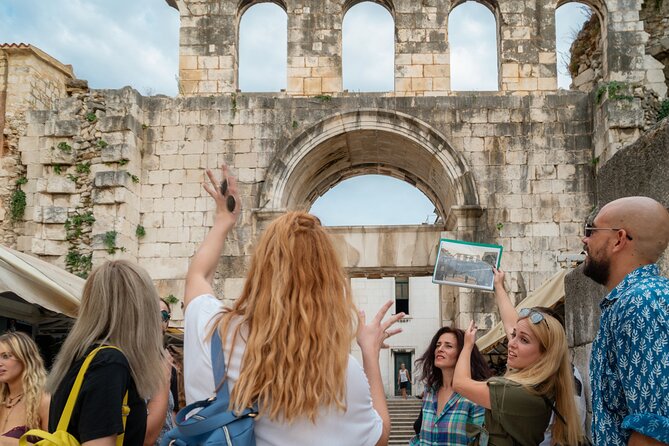
The next stop is the Eastern, or Silver, Gate of Diocletian’s Palace. The visit lasts about five minutes, so this is a short link in the route rather than a long lecture.
The gate gives Ina a chance to explain how an entrance to the Roman palace figured in the wartime story. You are still seeing one of Split’s best-known ancient structures, but the subject shifts from imperial Roman power to the damage and pressures of the 20th century.
This quick stop should suit you if you enjoy layered history. You can look at the masonry, the passage, and the surrounding old-town movement while listening to a story from a very different period. If you want a detailed architectural lesson about the gate itself, this tour is not designed for that. Its purpose is to show how the palace was used and affected during World War II.
Same coast, a completely different day out:
- From Split: Krka Waterfalls, Food & Wine Tasting Tour
★ 4.9 · 6,598 reviews - Split/Trogir: Blue Cave, Mamma Mia, Hvar and 5 Island Tour
★ 4.6 · 6,320 reviews - Blue Lagoon & 3 Islands Cruise with Lunch from Split
★ 4.5 · 5,756 reviews - Split: Old Town and Diocletian Palace Walking Tour
★ 4.9 · 4,727 reviews
Diocletian’s Palace and the Peristyle
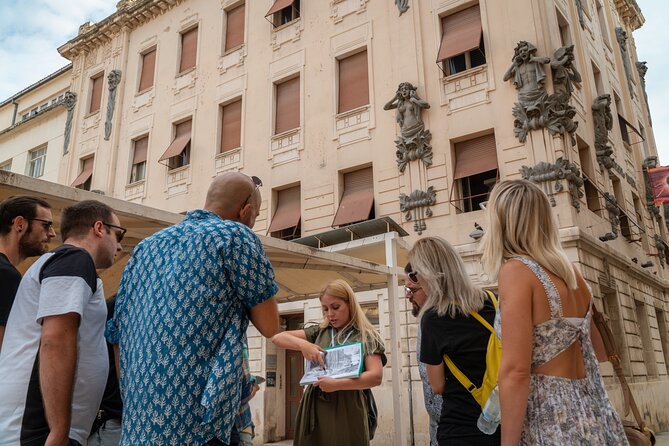
The Peristyle is the most visually impressive location on the route. This is the formal central courtyard of Diocletian’s Palace, and Ina spends about 15 minutes explaining which parts of the palace were attacked during the war.
Here the tour makes a strong connection between ancient construction and modern conflict. Split’s Roman center is often treated as something untouched by time. The wartime account corrects that impression and shows that even this old core faced danger and damage.
The photographs add a valuable before-and-after element. You see the present-day courtyard and nearby structures, then study images from the war period. That comparison helps you notice damage, changes, and surviving features that would otherwise blend into the scenery.
A parent who took the tour with a 16-year-old found it especially effective because Ina shared details that were not easily found in standard history books or online searches. That is a useful clue about the level of the experience. It is accessible enough for a teenager, but it also gives adults more than a basic timeline.
The Peristyle is likely to be one of the busiest points on your walk simply because it is a central Split sight. You may need to listen closely if the square is active. A small group helps, but you should still stay near Ina and keep the photographs visible to those behind you.
Narodni Trg and the city’s public tragedies
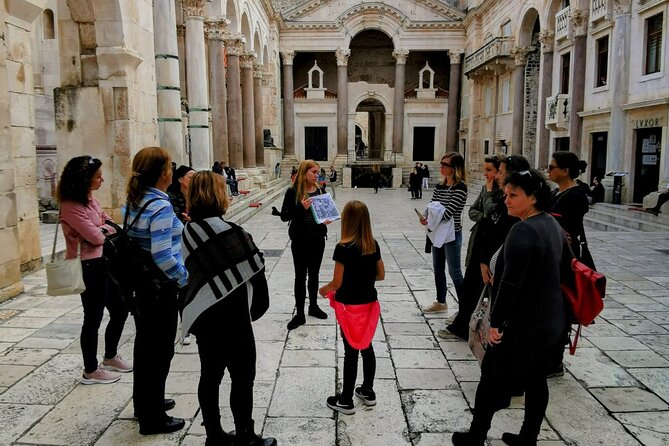
Narodni Trg, the main city square, is the next major stop. The tour allows about 15 minutes here to discuss terrible events that took place during the war.
This is where the walk’s public-history approach becomes clear. A main square is not only a place for cafés, photos, and old façades. It can also be a place where power was displayed, rules were enforced, and people suffered in full view of the city.
Ina’s method is to give each location a story rather than simply point out a building. That approach helps you remember the information after the tour ends. You are more likely to recall a specific square and what happened there than a long list of dates delivered without a physical reference.
The square also gives you a chance to ask questions. Ina is described as friendly and willing to discuss details, and the small group limit should make it easier to pause. If you have a particular interest in civilian life, Jewish history, or political changes, this is a good place to raise it.
Marmontova Ulica and the cost of standing still
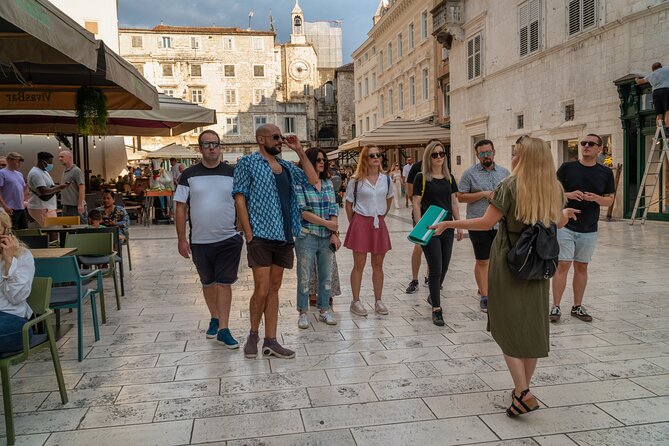
Marmontova Ulica is Split’s main street and receives a short five-minute stop. It is another reminder that wartime history is not confined to monuments or official buildings.
This part of the route is brief, but its position between Narodni Trg and Prokurative keeps the story moving through the city’s ordinary public spaces. You see a major street as both a modern shopping route and a witness to wartime events.
Here you will notice the tour’s physical rhythm. Much of the experience consists of walking a short distance, stopping, standing, looking at photographs, and listening. One comment specifically described the tour as involving a lot of standing rather than continuous walking, while still finding it worthwhile.
That is not a serious problem for most people, but it is worth planning for. Wear comfortable shoes, bring water, and consider the time of day. The experience is offered in English, and some sessions take place in the evening, according to the available comments. A cooler evening may make the standing easier than a hot afternoon.
Prokurative, prisons, and executions
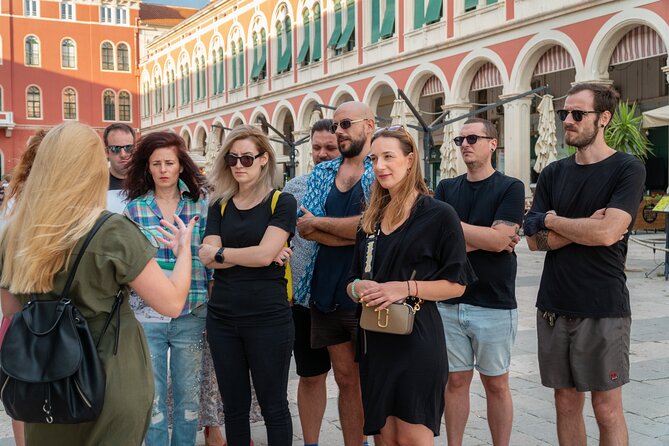
The final stop is Republic Square, known locally as Trg Republike or Prokurative. The tour spends about 15 minutes here, discussing prisons and executions during the war.
This ending is fitting because Prokurative is a large, memorable public space near the promenade. You finish in the old historical center rather than at an outlying site, so you can easily continue with dinner, a waterfront walk, or another Split activity.
The subject is also serious. This is not a cheerful sightseeing finish, and you should book the tour expecting difficult material. Ina’s style is passionate and personal, but the topic includes violence, imprisonment, and death. If you prefer light sightseeing, this walk may feel heavy.
For anyone interested in how war changes a city, the ending brings together many of the tour’s main themes. Public places can become sites of fear. Historic buildings can suffer modern damage. Streets used for daily errands can become part of a political and military story.
Ina Nikolic’s storytelling and visual material
The guide is the center of this experience. Ina Nikolic is a licensed local guide, and the strongest praise focuses on her ability to tell a story clearly and connect one event to the next.
The old photographs are not generic images pulled from a standard travel brochure. They come from the Museum of the City of Split archive, are not on permanent display, and are used with permission. That gives the tour something you are unlikely to get from simply walking the route with a guidebook.
Ina also uses aerial maps, according to the available tour accounts. These can help you understand the scale and direction of bombing or see how the old center has changed. A photo taken at street level shows one moment. An aerial image helps you understand the broader shape of the city.
Her interest extends beyond a military chronology. Jewish history receives special attention, and the tour can include links to the wars of the 1990s. You should not expect a complete course in all of Croatia’s modern history in two hours, but you will get a local frame for subjects often presented from a national or European viewpoint.
The 5/5 score from 21 published ratings supports the idea that Ina’s presentation is the key strength. I would choose this tour for the guide and her archive material, not because the route includes entry to a famous monument.
Is $60.01 a fair price?
The cost is $60.01 per person for roughly two hours. At first glance, that is more than a basic old-town orientation walk, especially since all stops have free admission.
But admission is not what you are paying for here. The price covers a licensed guide, a small group capped at 15 people, access to archival photographs, and a specialist subject that is not usually part of a standard Split sightseeing route.
Value depends on your interests. If you want the cheapest way to see Diocletian’s Palace, this is not the right choice. You can visit the palace area without paying for a tour. If you want someone to explain what happened to Split during World War II and bring out details you would likely miss, the price is easier to justify.
The tour is also a good use of limited time. It lasts about two hours and ends near the center, so it does not consume an entire day. Group discounts are available, which may improve the cost for families or larger parties.
I would be less willing to pay this price if the group were large or if the guide only repeated broad textbook facts. The small capacity and unusual image archive help distinguish it from a general city walk.
Who will get the most from this walk?
You are a strong match if you enjoy:
- Local wartime history rather than only famous battles and leaders
- Jewish history and the experiences of communities during World War II
- Comparing old photographs with present-day streets
- Roman and modern history in the same setting
- Guided storytelling with time for questions
- Serious subjects presented by a passionate local guide
Families with older children and teenagers may also find it worthwhile. The experience has enough visual material to hold attention, and the route gives young people a physical sense of where history happened. A 16-year-old was specifically described as enjoying it.
You may want to skip it if you dislike standing, have little interest in 20th-century history, or want a tour centered mainly on Roman architecture. The walking distance is not the main challenge. The issue is the amount of listening at each stop and the serious nature of the material.
Most people can participate, service animals are allowed, and the route is near public transportation. The tour is offered in English only, so you should be comfortable following a detailed historical explanation in that language.
Planning the morning or evening route
The start is in central Split, with pickup available at the ferry port. The end is at Prokurative, close to the waterfront and historic center. That makes the tour easy to fit into a day of sightseeing.
Because the meeting point may be arranged flexibly for groups in the center, check the final confirmation rather than relying only on a general map pin. Confirmation is sent within 48 hours of booking, subject to availability.
The tour is often booked about 35 days ahead. That does not mean you must reserve that far in advance, but it is a useful signal for summer planning. If your Split schedule is tight, book early enough to secure a suitable time.
You can cancel for a full refund up to 24 hours before the start time. Changes or cancellations made inside that 24-hour window are not accepted for a refund, and the cut-off follows local time.
Bring a phone or camera if you want to compare the displayed photographs with the streets around you, but the guide’s supplied images are the important visual tool. Wear shoes suited to old-town paving and prepare for repeated stops rather than a brisk march.
Should you book the Storytelling World War II in Split Tour?
Book it if you want to see Split through a local wartime lens, especially if you value personal stories, Jewish history, archival images, and places that connect the past to the streets around you.
I would choose it early in a Split visit if modern history matters to you. Afterward, the Riva, Green Market, palace gates, and public squares will carry more meaning than they did on your first walk through town.
Skip it if your main goal is Roman architecture, a fast overview, or a low-cost stroll with little standing. For the right audience, though, Ina Nikolic’s photographs and storytelling offer a strong reason to spend $60.01 on two serious, well-focused hours.
FAQ
How long does the Storytelling World War II in Split Tour last?
The tour lasts approximately two hours.
Where does the tour start?
The listed starting point is Obala Hrvatskog narodnog preporoda 27, 21000, Split, Croatia. Pickup is also offered at Split’s ferry port on Obala kneza Domagoja.
Where does the tour end?
The tour ends at Republic Square, also called Trg Republike or Prokurative, in Split’s old historical center near the promenade.
What language is the tour offered in?
The tour is offered in English.
How many people can join the tour?
The maximum group size is 15 people.
What is included in the experience?
The price includes a licensed local guide and old World War II photographs from the Museum of the City of Split archive, used with permission. Admission tickets are free at all listed stops.
Just added around Split
- Kayaking & Zipline Šibenik – Čikola Canyon★ 5.0 · 3 reviews
- Krka National Park & Zipline Šibenik – Čikola Canyon★ 5.0 · 3 reviews
- Split: Small-Group Half Day Sailing Trip★ 5.0 · 3 reviews
- Rafting River Cetina from Makarska Riviera including transfer★ 5.0 · 3 reviews
- From Split: Krka National Park & Waterfalls Private Day Trip★ 5.0 · 3 reviews
- Split Bike and Wine Experience★ 5.0 · 3 reviews
- Split and Salona Cultural Heritage Day Tour from Trogir★ 4.0 · 3 reviews
- Krka Waterfalls, Lake Cruise & Skradin★ 5.0 · 3 reviews
Tours, compared.
Blue cave, Mamma Mia and Hvar, 5 islands speedboat tour
Read our review →
Blue Cave, Mamma Mia, Hvar and 5 Island Tour
Read our review →