Reviewed · TOURS
Split Rock Climbing Tour
Marjan Hill gives you a very different view of Split: not from a palace alley or waterfront café, but from a limestone cliff above the Adriatic. The short drive from the center leads to more than 80 climbing routes, with old churches and hermit settlements from the 15th century close by. I especially like the small group limit of 10 and the fact that full equipment, insurance, and a guide are included.
I also like the range of routes. A beginner can learn the basics under close supervision, while an experienced climber can tackle routes up to 7a. The main consideration is the weather: this is an outdoor climbing session, and the midday sun can be fierce. A later start may be arranged when conditions are too hot, as happened for one evening outing with guide Gorana.
In This Review
- Key points before you book
- From Split’s center to Marjan Hill
- Limestone cliffs, sea views, and old stone shelters
- What the first climb feels like for a beginner
- How experienced climbers can use the session
- Why the small group matters
- Heat, timing, and the practical side of climbing
- What the $77 price includes
- Who will get the most from this outing
- Should you book the Split Rock Climbing Tour?
- FAQ
- Where does the Split Rock Climbing Tour start?
- How long does the climbing tour last?
- Is climbing equipment included?
- What climbing levels are available?
- Is transport included?
- What happens if bad weather cancels the tour?
Key points before you book
- Marjan Hill sits close to central Split: You get a quick escape to cliffs, pine-covered paths, and sea views without committing to a full-day trip.
- More than 80 routes serve different abilities: Climbing grades run from 4c to 7a, with routes about 10 to 25 meters high.
- A licensed guide teaches beginners from the ground up: You receive climbing gear and safety instruction rather than being left to work things out alone.
- Historic sites add character: You climb near churches and hermit settlements dating from the 15th century.
- The group is capped at 10 people: That leaves room for personal help, though a very small booking gives you the most individual attention.
- The $77 price covers the practical essentials: Guide, equipment, insurance, taxes, and shared transport are included.
From Split’s center to Marjan Hill
The meeting point is Plinarska ul. 25, in central Split, with a stated start time of 10:00 a.m. From there, shared transport takes you a short distance toward Marjan Hill. That transfer matters more than it may seem: you do not need to arrange a taxi or work out how to carry climbing equipment across the city.
Marjan is a peninsula in the middle of Split, so this is not a remote mountain outing. You stay close to the city while gaining trees, rock, and open views toward the surrounding islands. It is a useful choice when you want an active morning without giving up most of your day.
The tour lasts about three hours, including transport and the climbing session. That is long enough to learn, climb several routes, and enjoy the setting, but short enough to fit around a lunch reservation or an afternoon visit to Diocletian’s Palace.
You should arrive ready to move. Sport shoes are required for the approach to the rock, and you should bring water and a snack. Food and drinks are not included, so do not expect a catered outing or a stop built into the schedule.
A few more Split half-days to weigh up
- Split: Krka Waterfalls Trip with Boat Cruise and Swimming
★ 4.8 · 10,519 reviews - From Split: Krka Waterfalls, Food & Wine Tasting Tour
★ 5.0 · 9,326 reviews - Blue cave, Mamma Mia and Hvar, 5 islands speedboat tour
★ 5.0 · 7,150 reviews
Limestone cliffs, sea views, and old stone shelters
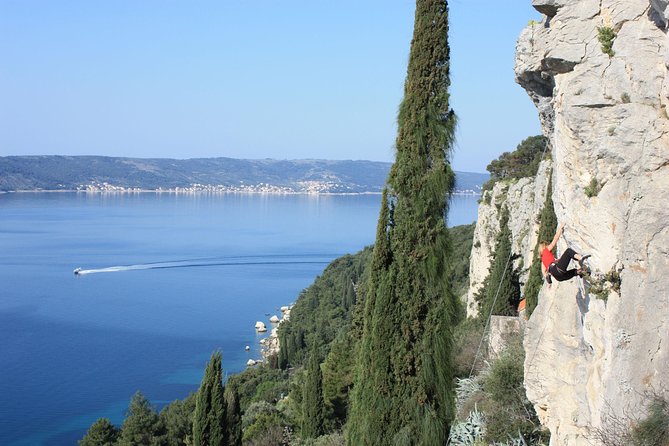
The setting is the strongest reason to choose this outing over an indoor climbing session. Marjan’s pale limestone cliffs rise among green woodland, with the Adriatic and nearby islands spreading out beyond them. You get a physical challenge and a sense of place at the same time.
The historic details are not a separate sightseeing stop. Instead, they form part of the climbing area. Churches and hermit settlements dating from the 15th century sit near the routes, giving the cliffs a human story as well as a natural one.
That combination makes the climb feel tied to Split rather than pasted onto your holiday. You are not simply exercising beside a generic rock wall. You are using an old local setting that has long been connected with solitude, worship, and life on Marjan.
The views also give you a good reason to pause between climbs. From the rock, you can look across the clear blue Adriatic and the surrounding islands. The scenery is a bonus, but it also helps break up the effort if you are new to climbing.
What the first climb feels like for a beginner
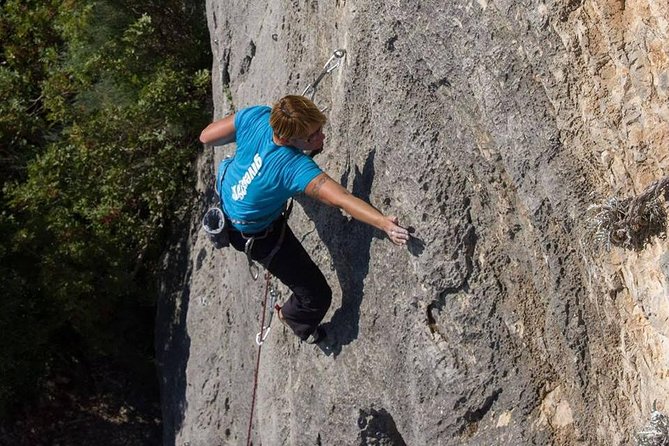
The guides work with people of different ages and experience levels. If you have never climbed outdoors, the key benefit is close supervision from a licensed, experienced guide. You learn basic climbing techniques and how to use the supplied equipment before tackling the rock.
The listed routes range from grade 4c to 7a. In plain terms, that gives the guide room to start you on a more manageable climb and move up only if your ability and confidence allow it. You should not assume that every route will suit every beginner, but the range makes it possible to adjust the session.
The routes are approximately 10 to 25 meters high. That is high enough to feel like a real outdoor climb, not a small practice wall. If you are uneasy with heights, tell the guide early and ask for a route that matches your comfort level.
The important point is that you are not expected to arrive already knowing climbing technique. The tour is built to teach you while keeping safety in view. You still need a moderate level of physical fitness, and you need to be willing to follow instructions carefully.
How experienced climbers can use the session
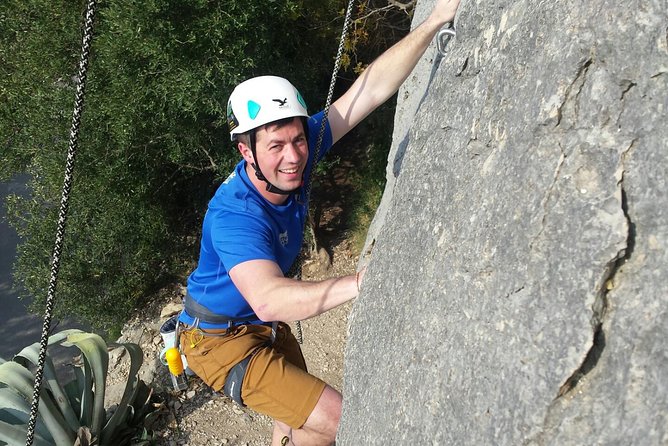
This is not only a first-climbing lesson. Stronger climbers can use the time to work on their level and select harder routes within the 4c to 7a range. The area has more than 80 routes, so the guide has options rather than one fixed climb for the whole group.
The exact amount of climbing you get will depend on the group and the pace of instruction. A mixed group may mean more waiting between turns, particularly if several people are learning for the first time. The maximum group size is 10, which is still fairly contained, but it is not the same as a private climbing day.
You may want to ask about a private arrangement if you are an advanced climber looking for a very specific route or a fast session. The available information confirms small groups and personal guidance, but it does not promise a private guide or a particular route.
For most capable climbers, the appeal is the setting and the chance to climb outdoors near Split. This is a compact outing, not a technical expedition. It can add a memorable active morning to a city break without taking you far from your base.
Same coast, a completely different day out:
- From Split: Krka Waterfalls, Food & Wine Tasting Tour
★ 4.9 · 6,598 reviews - Split/Trogir: Blue Cave, Mamma Mia, Hvar and 5 Island Tour
★ 4.6 · 6,320 reviews - Blue Lagoon & 3 Islands Cruise with Lunch from Split
★ 4.5 · 5,756 reviews - Split: Old Town and Diocletian Palace Walking Tour
★ 4.9 · 4,727 reviews
Why the small group matters
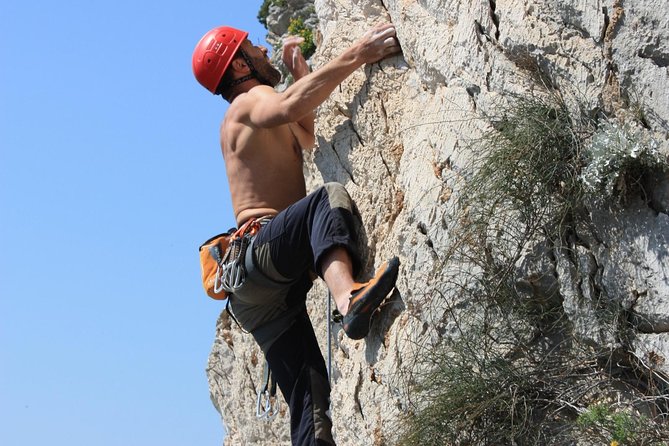
A group of no more than 10 gives the guide a better chance to watch each person. That is especially useful when the session includes first-time climbers who need help with foot placement, movement, harness use, or general climbing habits.
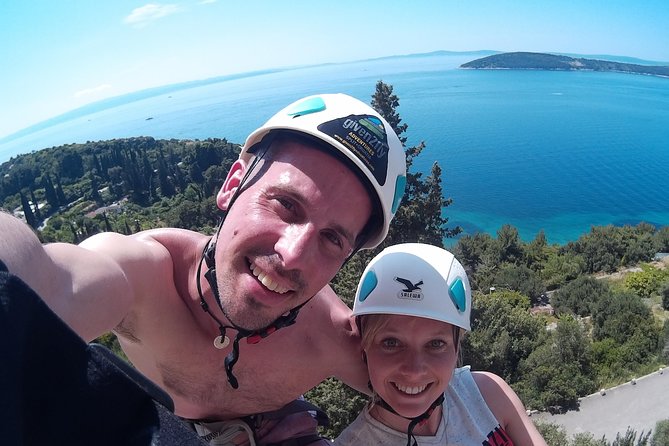
The most personal experience may come when the booking is well below the maximum. One outing had only two participants, with Gorana providing instruction and care throughout the session. A tiny group can make the day feel less like a scheduled activity and more like a private lesson shared with a friend.
At the full group limit, expect less one-to-one time. You may spend part of the session watching others climb, which is not necessarily wasted time, but it affects the pace. I would see this as a normal tradeoff for the $77 price rather than a flaw.
The guides are described as welcoming and attentive, and the session is designed around safety. Still, outdoor climbing always requires your cooperation. Listen closely, use the gear as instructed, and speak up if you feel uncertain.
Heat, timing, and the practical side of climbing
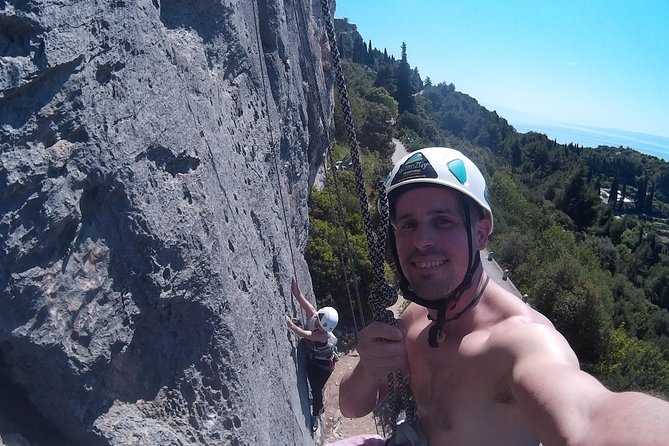
The advertised start is 10:00 a.m., but weather can affect the final timing. In hot conditions, the company may sensibly move the session later in the day. One outing was shifted to the evening, which made the heat easier to manage.
That flexibility is useful in Split’s warmer months. Limestone can feel exposed, and climbing in direct sun takes more energy than you may expect. Bring water even if you normally get by with little during sightseeing, and pack a snack for before or after the climb.
Wear sport shoes for the approach to the rock. The supplied climbing equipment covers the technical side of the activity, but you still need suitable clothing and footwear for walking over uneven ground.
The tour is weather dependent. If rain or other poor conditions force a cancellation, you are offered another date or a full refund. You can also cancel for a full refund if you do so at least 24 hours before the local start time. Inside that window, the payment is not refunded, and changes are not accepted.
What the $77 price includes
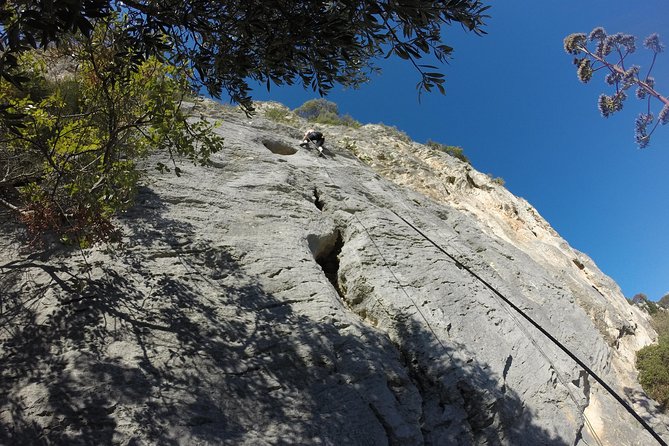
At $77, the tour is priced as a compact guided outdoor activity rather than a simple visit to a climbing area. The fee includes a professional guide, all climbing equipment, insurance, taxes, handling charges, and shared round-trip transport from central Split.
That bundle makes the price easier to judge. If you had to rent gear, arrange transport, and hire instruction separately, the total would be less predictable. Here, the main costs are gathered into one booking.
The value is best for a beginner or a visitor who does not own climbing equipment. You get access to a proper route area and instruction without needing to buy or carry specialist gear around Croatia.
Experienced climbers should look at the price differently. If you already have equipment and know the local climbing area, a guided tour may not be the cheapest way to climb. You are paying for convenience, local route choice, safety support, and the chance to fit the activity neatly into a short stay.
Food and drinks are not included. That is a small point, but it affects your planning. Bring your own water and snack rather than counting on a café or meal during the session.
Who will get the most from this outing
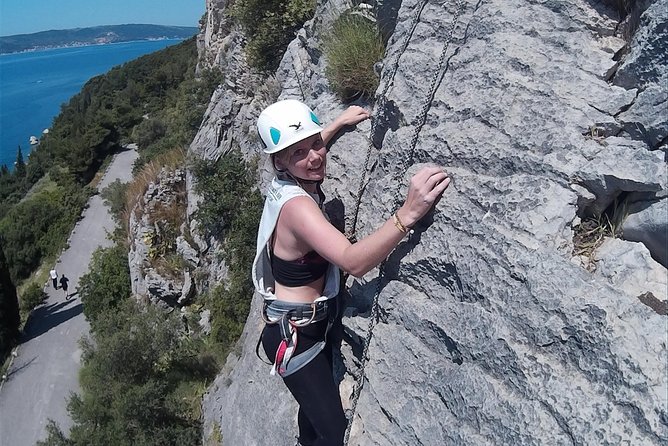
I would recommend this for first-time climbers who want proper instruction in a striking setting. It is also a good match for active couples or friends who want one memorable break from museums, beaches, and old-town walks.
Families can take part, but children must be accompanied by an adult. The activity requires moderate physical fitness, so it is not a passive sightseeing trip. You will approach the rocks, climb routes up to 25 meters high, and remain active for much of the three-hour session.
Experienced climbers can also enjoy it, especially if they want to climb outdoors while staying close to Split. The route range gives the guide flexibility, though advanced climbers may want to confirm the best arrangement if they need difficult climbs or uninterrupted climbing time.
I would be cautious about booking this if you dislike heights, struggle with moderate physical activity, or have a tightly fixed schedule with no room for weather changes. The activity ends back at the original meeting point, but the actual timing may shift when conditions are too hot or unsuitable.
Should you book the Split Rock Climbing Tour?
I would book this if you want more than a standard Split city tour and like the idea of learning a new skill beside the sea. The best features are the short transfer, full gear, licensed instruction, and the unusual setting near old churches and hermit shelters.
The experience earns its strongest praise for its views, friendly guidance, and range of routes. Guide Gorana is one name associated with careful instruction, and a small booking can give you especially close attention.
At $77, it is a fair package for beginners and visitors without equipment. Just plan for heat, bring water, wear sport shoes, and accept that weather may change the schedule. If that sounds like a good use of three hours, Marjan Hill offers a memorable way to see Split from above.
FAQ
Where does the Split Rock Climbing Tour start?
The tour starts at Plinarska ul. 25, 21000 Split, Croatia. The stated start time is 10:00 a.m.
How long does the climbing tour last?
The activity lasts approximately three hours and ends back at the meeting point.
Is climbing equipment included?
Yes. All climbing equipment is included, along with a professional guide and insurance.
What climbing levels are available?
The routes range from difficulty grade 4c to 7a, with route heights of approximately 10 to 25 meters. The tour is designed for beginners and more experienced climbers.
Is transport included?
Yes. Round-trip shared transport from the Split city center is included.
What happens if bad weather cancels the tour?
You will be offered an alternative date or a full refund. You can also cancel at least 24 hours before the start time for a full refund. Cancellations within 24 hours are not refunded.
Just added around Split
- Kayaking & Zipline Šibenik – Čikola Canyon★ 5.0 · 3 reviews
- Krka National Park & Zipline Šibenik – Čikola Canyon★ 5.0 · 3 reviews
- From Split: Krka National Park & Waterfalls Private Day Trip★ 5.0 · 3 reviews
- Split: Small-Group Half Day Sailing Trip★ 5.0 · 3 reviews
- Rafting River Cetina from Makarska Riviera including transfer★ 5.0 · 3 reviews
- Split Bike and Wine Experience★ 5.0 · 3 reviews
- Split and Salona Cultural Heritage Day Tour from Trogir★ 4.0 · 3 reviews
- Private transfer from Split to Dubrovnik with 2h sightseeing stop in Ston★ 5.0 · 3 reviews
Tours, compared.
Blue cave, Mamma Mia and Hvar, 5 islands speedboat tour
Read our review →
Blue Cave, Mamma Mia, Hvar and 5 Island Tour
Read our review →