
Reviewed · CITY TOURS
Split Quest Experience: Discover the City
Split Quest turns Split into a phone-guided mystery. You begin in Sustipan Park, walk along the waterfront and through old lanes, then finish inside the heart of Diocletian’s Palace. Along the way, puzzles reveal clues about the Roman emperor behind the palace and point you toward details many people pass without noticing.
I like the low price of $5.97 per person, and I like the freedom to pause whenever you want. The open-air route also helps you avoid being tied to a group or guide. The catch is clear: this is not a guided walking tour, and one poor rating specifically complained about expecting a guide instead of an app-based game.
In This Review
- Key points to know
- Split’s Roman mystery begins at Sustipan Park
- From Obala kneza Branimira to the fishing harbor of Matejuška
- Small streets, a strange fountain, and a local rhythm
- Gregory of Nin and Marko Marulić, two very different figures
- Entering Diocletian’s Palace through its quieter details
- Papalić Palace and the head on the wall
- Jupiter’s Temple and the final approach to the Peristyle
- How the Questo app changes the experience
- Is $5.97 a fair price for two hours in Split?
- Who should choose this Split walk?
- Should you book Split Quest?
- FAQ
- Is Split Quest guided by a person?
- How long does the experience take?
- Where does Split Quest start?
- Where does the route finish?
- What do I need before starting?
- Can several people share one phone?
- Can I cancel for a refund?
Key points to know
- Fourteen stops connect modern Split with Roman monuments, beginning at Sustipan Park and ending at the Peristyle.
- The Questo app supplies directions and puzzles, so you need a charged phone, an account, and the app ready before starting.
- The route takes about 1 hour 30 minutes to 2 hours, with roughly seven minutes allocated to each stop.
- You explore at your own pace, taking breaks whenever you like instead of keeping up with a scheduled group.
- The route includes free-access sights, such as Matejuška, the Gregory of Nin Statue, Jupiter’s Temple, and the Silver Gate.
- The biggest drawback is the lack of a human guide, so this works best if you enjoy solving clues and reading directions on your phone.
Split’s Roman mystery begins at Sustipan Park
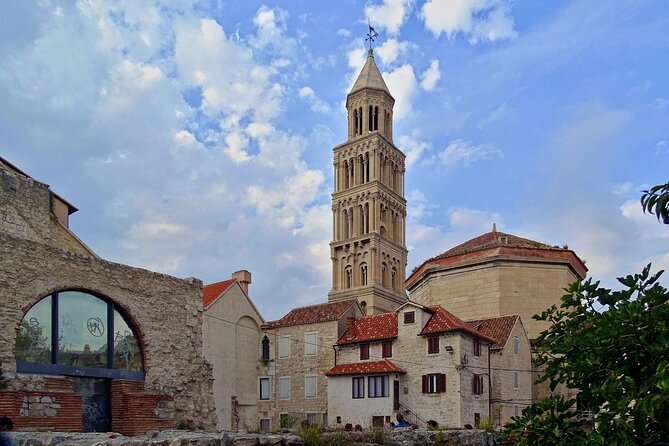
The experience starts at Sustipanski put in Sustipan Park, west of the old center. This is a sensible opening point because it gives you a quieter start before the route moves into Split’s tighter streets and major monuments.
Sustipan is known for greenery, walking paths, benches, and sea views. You do not need to pay an admission fee, and you can take a few minutes to settle in before opening the next clue. The first stop has an unusual name in the route instructions, Sjaš svijetliš svemiriš me, so check the exact starting point in your confirmation and map app.
The story centers on one of Rome’s greatest emperors and what happened to him. The material provided does not identify the emperor by name in advance, which is part of the mystery. You learn the answer as you work through the challenges rather than receiving a standard history talk at the beginning.
That format changes how you look at the city. Instead of simply walking from one famous sight to another, you search for details, read the prompt, and use the answer to reach the next place. It is a small but useful shift for anyone who prefers active sightseeing to a set lecture.
More City Tours in Split
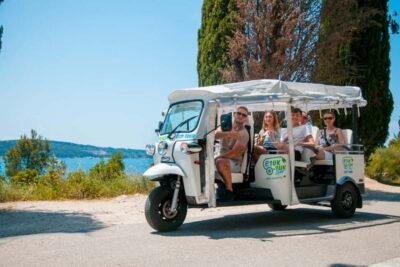
- Split: City Highlights Electric Tuk-Tuk Tour
★ 4.9 · 1,317 reviews - Split Game of Thrones Tour: City of Dragons
★ 4.7 · 556 reviews - Eco City Tour Split
★ 5.0 · 538 reviews
From Obala kneza Branimira to the fishing harbor of Matejuška
The second stop takes you to Obala kneza Branimira, a waterfront promenade. This section gives the route some breathing room. You can pause beside the water, look back toward the city, and continue only when you are ready.
Next comes Matejuška, a small fishing harbor and marina on the western side of the Split Peninsula. It is close to the historic center but has a different feel from the grand stone spaces farther inland. The harbor has retained its traditional character, making it one of the more useful stops for seeing a working part of Split rather than only its monuments.
The app allows you to spend as much time as you wish at each location. That matters here. If you want a quick puzzle route, seven minutes per stop may be enough. If you want to pause at the waterfront or examine the harbor, the advertised 90 to 120 minutes is only a guide.
The route is self-guided and private to your group. You are not waiting for strangers, and nobody is urging you onward. On the other hand, there is no guide to point out a detail you miss or explain a confusing answer in person.
Small streets, a strange fountain, and a local rhythm
After Matejuška, the route heads to Neretvanska ulica. The description gives this as an ordinary Split street, with the mix of homes, shops, restaurants, and other local businesses you might expect in the city. That is useful because the experience is not limited to postcard sights.
A self-guided game can make an unremarkable street feel purposeful. You arrive with a question to solve, so you pay closer attention to walls, corners, signs, and the shape of the surrounding buildings. The tradeoff is that the route information does not promise a major monument at every stop.
The fifth stop is at Ul. kralja Tomislava 2, home to the Weird Fountain, known locally as Prva voda. The quirky name gives the stop some personality. It also shows the kind of detail this activity is built around: not only the obvious Roman remains, but curious objects that can be easy to walk past.
You receive directions on your phone as the story develops. If you like puzzle games, that structure should make the walk more engaging. If you want a traditional guide to explain the city in a clear, uninterrupted sequence, the app may feel thin.
Gregory of Nin and Marko Marulić, two very different figures
The sixth stop brings you to the Gregory of Nin Statue, made by Croatian sculptor Ivan Meštrović and erected in 1929. It is a major historical monument in Split, and the route uses it as one of its central clues.
The supplied information does not state which part of the statue you must examine or what answer you will enter. Still, the stop gives the game a strong cultural anchor. You are no longer only following streets. You are meeting figures connected with Croatian religious and artistic life.
The route then continues along Marulićeva ulica, named for Marko Marulić, a Renaissance poet and author from Split. He is often called the father of Croatian literature. A nearby statue honors him, making stops seven and eight work as a pair.
This pairing is one of the better ideas in the route. Gregory of Nin represents a prominent historical monument, while Marulić connects the city with literature. You get two different kinds of local context without needing to enter a museum or buy another ticket.
The route assigns about seven minutes to each stop. That is enough for a clue and a quick look, but not necessarily enough for a long visit. You should treat the timing as a rough puzzle rhythm, not a strict schedule.
A few more Split half-days to weigh up
- Split: Krka Waterfalls Trip with Boat Cruise and Swimming
★ 4.8 · 10,519 reviews - From Split: Krka Waterfalls, Food & Wine Tasting Tour
★ 5.0 · 9,326 reviews - Blue cave, Mamma Mia and Hvar, 5 islands speedboat tour
★ 5.0 · 7,150 reviews - From Split: Krka Waterfalls, Food & Wine Tasting Tour
★ 4.9 · 6,598 reviews
Entering Diocletian’s Palace through its quieter details
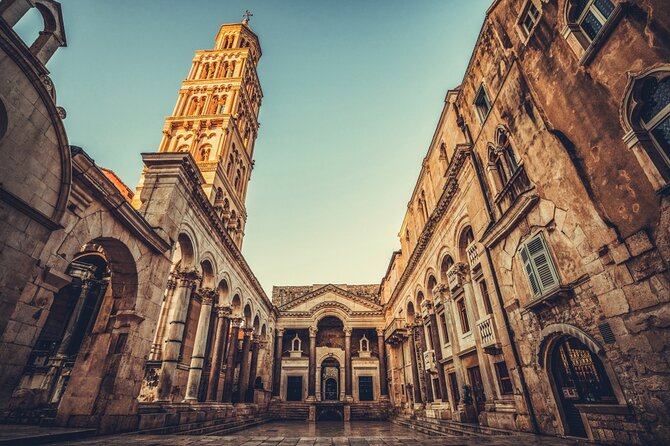
Stop nine takes you to Ul. Iza Vestibula 3 and Diocletian’s Palace. This is the point where the experience moves firmly into Split’s best-known historic core.
The palace combines Roman, Hellenistic, and Byzantine elements. Its walls, gates, columns, courtyards, and passageways are not locked away in one isolated monument. They form much of the old center, with modern life woven through the ancient structure.
That makes the palace especially well suited to a walking game. You can encounter the architecture as part of the city rather than as a single room-by-room visit. The challenge is that busy streets, changing light, and other activity around the old center can make it harder to concentrate on your phone.
The tenth stop is labeled Iron Gate in the route details, while the explanation identifies the Silver Gate, also called Porta Orientalis or the Eastern Gate. That inconsistency is worth noting. You should follow the app’s live directions rather than relying only on the stop names in your booking details.
The Silver Gate is one of the four main entrances to Diocletian’s Palace. It gives the mystery a clear Roman setting and helps you understand how the palace was organized around entrances and movement.
Papalić Palace and the head on the wall
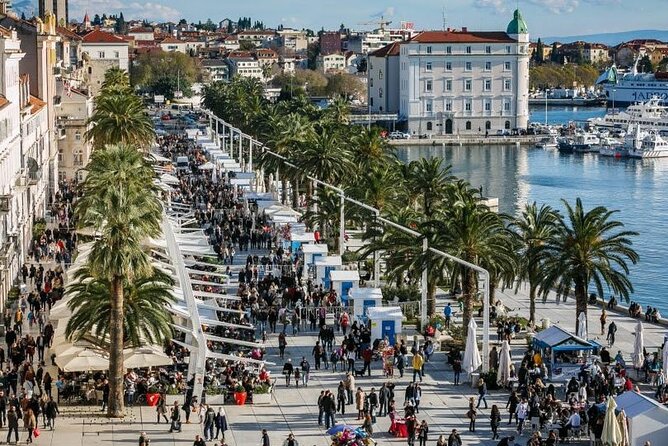
Papalićeva ulica brings you to the Large Papalić Palace, a historic building associated with the Papalić family. The information describes it as an example of Baroque architecture dating to the 18th century.
This stop adds a later layer to the old center. Split is not only a Roman site. Buildings and streets changed over time, and the route places a Baroque palace among the imperial remains. That contrast is valuable if you want more than a single-period view of the city.
Next comes Dominisova ulica and the Head on the Wall, locally called Glava na Zidu. It is a human-head sculpture fixed to the wall of a building. The name tells you what to look for, but the game still gives the stop a sense of discovery.
This is exactly the sort of small feature a standard route might skip. You are unlikely to need a ticket for it, and you can stop briefly without committing to a long indoor visit. Keep your phone charged and your surroundings in view, since the app requires attention while you walk.
The route’s free access is a real advantage. You are paying for the game and its directions, not a series of entrance tickets. That keeps the total cost predictable, though it also means the value depends heavily on how much you enjoy the puzzle format.
Jupiter’s Temple and the final approach to the Peristyle
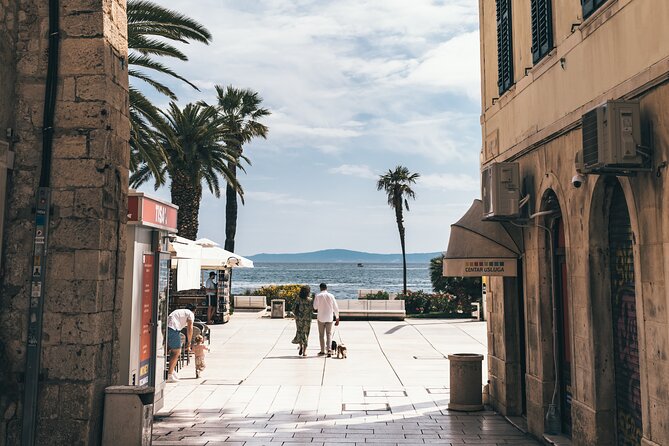
Jupiter’s Temple is the thirteenth stop. Built in the third century AD during construction of Diocletian’s Palace, it gives the story one of its clearest Roman landmarks.
The temple is important not only because it is old, but because it helps explain the palace as an imperial complex with religious spaces as well as residential areas. The app can turn that setting into a clue point rather than just another photograph.
The final stop is the Vestibul, the ancient entrance hall leading toward the emperor’s residential quarters. It was designed as a grand approach to the palace interior, so it is a fitting place to end the route.
The stated ending point is Peristil ulica, at the Peristyle. You reach it by following the app’s directions from the previous location. The route therefore finishes in one of the city’s major central spaces, rather than leaving you at a random street corner.
At the finish, you have crossed from a park and waterfront promenade into the Roman heart of Split. The route is not a full archaeological tour, and it does not promise extensive explanations at every sight. Its strength is the connection between places, clues, and movement through the city.
How the Questo app changes the experience
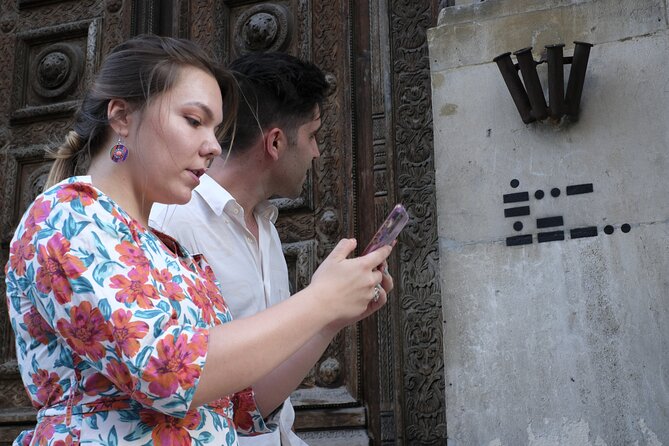
Before starting, download the Questo app and create an account using the same email address used for the purchase. This step matters. A charged phone is also essential, since the app provides both the instructions and the exact directions.
The experience includes 24/7 customer support, which is helpful if you have trouble accessing the game. Still, support is not the same as a guide standing beside you. You should prepare the app before arriving at Sustipan Park so you do not spend the opening minutes sorting out login details.
Each person is encouraged to buy a ticket for the best experience, although several people can share one phone. Sharing keeps the cost down, but it can make the route less comfortable. One person must hold the screen, read the prompt, and enter answers while the rest of the group looks on.
For couples or small groups, one phone may be workable. For a larger party, individual tickets and phones should make participation easier. Group discounts are available, but the supplied information does not state the exact discount or group size required.
The game is open air and self-guided. It does not put you in a fixed crowd, and you can take a break whenever you want. Service animals are allowed, the start is near public transportation, and most people can participate according to the provided details.
Is $5.97 a fair price for two hours in Split?
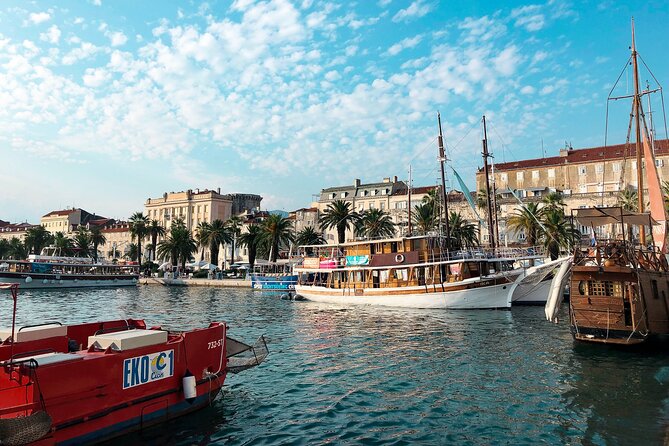
At $5.97 per person, the cost is modest for an activity that can occupy roughly 90 minutes to two hours. Since the stops are free to access, you do not face an additional admission bill along the route.
I see the price as good value if you already like app-based puzzles and want a reason to explore beyond the most obvious street. You get a planned route, a developing story, directions, and a set of challenges for less than the cost of many standard guided activities.
The value is weaker if you mainly want historical explanation. A live guide can answer questions, adjust the pace, and explain why a monument matters. This game cannot offer that personal exchange, and one very negative assessment focused on precisely that mismatch between expectations and the app format.
Read the experience description carefully before paying. It repeatedly presents itself as self-guided, and the included service is the Questo city game, not a person leading the walk. The low price makes the risk manageable, but only if the format suits you.
Who should choose this Split walk?
I would suggest Split Quest for independent visitors who enjoy riddles, short walking challenges, and flexible plans. It also suits anyone who has already seen the main center and wants a different reason to revisit streets, statues, and palace details.
Families and friends may like the shared problem solving, though young children will need an adult to manage the phone and directions. The supplied information says most people can participate, but it does not provide a specific child age range or accessibility assessment for every street.
This is also a practical option for a hot or busy day because you can stop when needed. The route includes open-air areas, waterfront space, narrow streets, and historic sites, so your pace can change from one section to the next.
I would not choose it if you want a formal lesson, a named local guide, or detailed answers to every historical question. The product has no live guide, and the app is the center of the experience from start to finish.
The activity is generally available from 8:00 AM to 6:00 PM, Monday through Sunday, for the stated operating period from September 16, 2023, through August 25, 2026. You can cancel for a full refund up to 24 hours before the start time. Inside that 24-hour window, cancellations and changes are not accepted for a refund.
Should you book Split Quest?
Book it if you want a cheap, flexible way to connect Sustipan Park, Matejuška, Split’s unusual street details, and Diocletian’s Palace through a mystery game. The 14-stop route gives you a clear plan, while the ability to pause prevents the walk from feeling like a race.
Skip it if the phrase self-guided app experience does not appeal to you. The one major warning is simple: do not expect a human guide. With a prepared phone, the right expectations, and an interest in solving clues, the $5.97 price is easy to justify.
FAQ
Is Split Quest guided by a person?
No. It is a self-guided city exploration game played through the Questo app. There is no live tour guide.
How long does the experience take?
The expected duration is about 1 hour 30 minutes to 2 hours. Each of the 14 listed stops has an approximate seven-minute timing, but you can spend longer at any location.
Where does Split Quest start?
The route starts at Sustipan Park, at Sustipanski put, 21000 Split, Croatia.
Where does the route finish?
It finishes at the Peristyle, on Peristil ulica in Split. You follow the app’s directions to reach the final stop.
What do I need before starting?
Bring a charged phone, download the Questo app, and create an account using the same email address used for the purchase.
Can several people share one phone?
Yes. Several people can share a phone, although each person is encouraged to purchase a ticket for the best experience.
Can I cancel for a refund?
Yes. You can cancel at least 24 hours before the scheduled start time for a full refund. Cancellations or changes made less than 24 hours before the start time are not accepted for a refund.
Just added around Split
- Kayaking & Zipline Šibenik – Čikola Canyon★ 5.0 · 3 reviews
- Krka National Park & Zipline Šibenik – Čikola Canyon★ 5.0 · 3 reviews
- Split: Small-Group Half Day Sailing Trip★ 5.0 · 3 reviews
- Rafting River Cetina from Makarska Riviera including transfer★ 5.0 · 3 reviews
- From Split: Krka National Park & Waterfalls Private Day Trip★ 5.0 · 3 reviews
- Split Bike and Wine Experience★ 5.0 · 3 reviews
- Split and Salona Cultural Heritage Day Tour from Trogir★ 4.0 · 3 reviews
- Krka Waterfalls, Lake Cruise & Skradin★ 5.0 · 3 reviews
City Tours, compared.
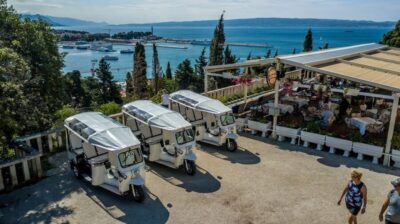
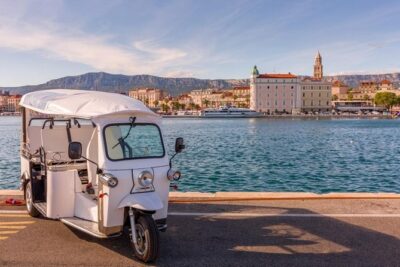
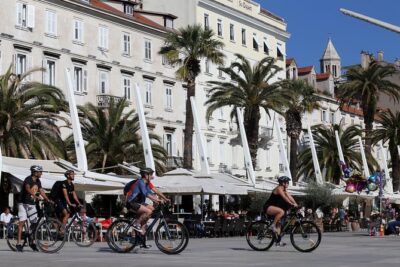

Split Tour by Electric Tuk-Tuk: Top City Highlights
Read our review →


Browse the lists this tour appears in