Reviewed · TOURS
Split and Trogir Half Day Tour from Split (with port pickup)
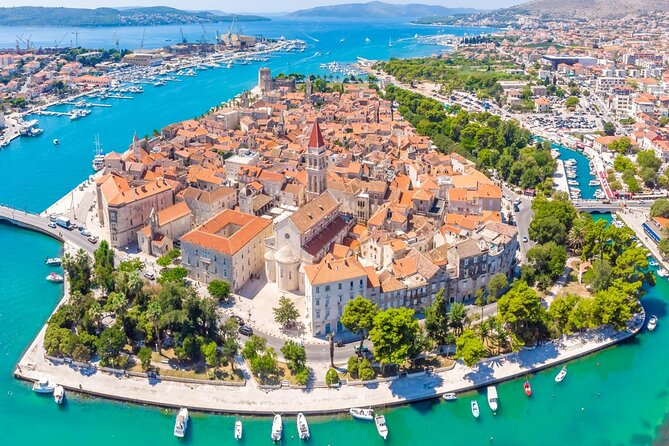
Split and Trogir give you two very different views of Dalmatia in one morning. Trogir is a compact medieval island town shaped by Greek, Roman, and Venetian rule. Split is a living city built around Diocletian’s Palace, where ancient stone forms the walls of cafés, shops, and homes.
I like the port pickup, since it removes the usual cruise-day scramble. I also like the efficient pairing of Trogir and Split, especially with guides such as Tina, Sandra, and Roko bringing local stories to the monuments. The main catch is time: four hours goes quickly, and the tour includes plenty of walking, while entry fees and your return to the ship are your responsibility.
In This Review
- Key points at a glance
- Why Trogir and Split work well together
- Meeting your guide at Split’s cruise terminal
- Trogir: a small town with 2,300 years of layers
- Saint Lawrence’s Cathedral and Trogir’s stonework
- Kula Kamerlengo and Trogir’s defensive edge
- Free time for gelato, shops, and local tastes
- Returning to Split and entering Diocletian’s Palace
- Saint Domnius Cathedral and the Roman mausoleum
- Prokurative and Split’s Venetian echoes
- What the guides add to a fast tour
- Timing, walking, and the final drop-off
- Who should book this Split and Trogir tour?
- Should you book it?
- FAQ
- How long does the Split and Trogir tour last?
- Where does the tour start?
- Where does the tour end?
- How far is the cruise terminal from the final meeting point?
- Is transportation included?
- Are entrance fees included?
- Is the tour suitable for cruise ship passengers?
- What happens if I need to cancel?
Key points at a glance
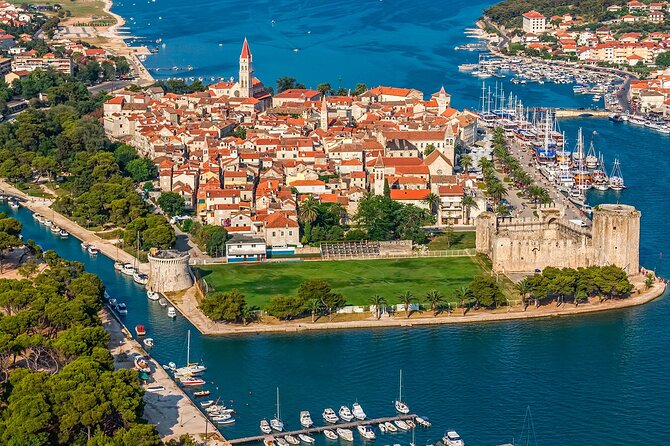
- Two UNESCO-listed old towns in one morning: See Trogir’s Romanesque and Venetian core, then walk through Split’s palace quarter.
- Cruise-friendly pickup: Meet at the terminal entrance near the red hop-on, hop-off buses, with a Croatian Trails sign.
- Local guides make the difference: Tina, Sandra, Roko, Hrvoje, Josipa, and Tia have led tours, with especially strong praise for their history and storytelling.
- Four hours, with little wasted time: An air-conditioned coach handles the transfer between the port, Trogir, and Split.
- Plan for walking: The physical level is described as moderate, and one traveler compared it to Level 2 walking.
- You finish in central Split: The Riva is about a 20-minute walk from the cruise terminal, or you can ask the guide to help arrange a taxi.
Why Trogir and Split work well together
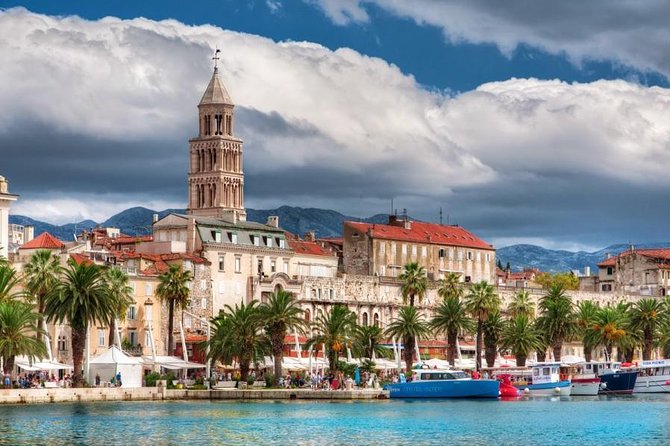
This tour succeeds because the two towns complement each other. Trogir is small and concentrated. You can cross much of its historic center on foot and quickly see how Greek foundations, Roman planning, medieval churches, and Venetian buildings overlap.
Split feels less like a preserved monument and more like a city that grew inside one. The palace of the Roman emperor Diocletian forms much of the old center, but it is not fenced off as a silent archaeological site. People live and work among its ancient walls.
That contrast gives the outing a useful rhythm. Trogir feels like a town-sized history lesson. Split gives you the larger urban setting and the famous Roman palace. You get a taste of both without arranging separate transport.
The tour costs $78.61 per person. That is not the cheapest way to see either town, but the value is reasonable if you are arriving by cruise ship and want one organized transfer, a professional guide, and commentary in English. A private taxi or private guide would likely cost more, while a self-guided visit would cost less but require you to manage port timing, transport, and the history on your own.
A few more Split half-days to weigh up
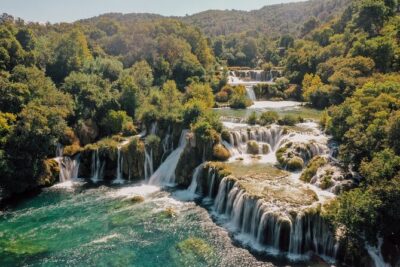
- Split: Krka Waterfalls Trip with Boat Cruise and Swimming
★ 4.8 · 10,519 reviews - From Split: Krka Waterfalls, Food & Wine Tasting Tour
★ 5.0 · 9,326 reviews - Blue cave, Mamma Mia and Hvar, 5 islands speedboat tour
★ 5.0 · 7,150 reviews
Meeting your guide at Split’s cruise terminal
The start is at the New Split Berth for Cruise Ships, Obala kneza Domagoja 16. If your ship arrives early, between 7:00 and 8:30 AM, pickup is scheduled for 9:00 AM. If you arrive later, the exact meeting details are sent through Viator messaging one week before the tour.
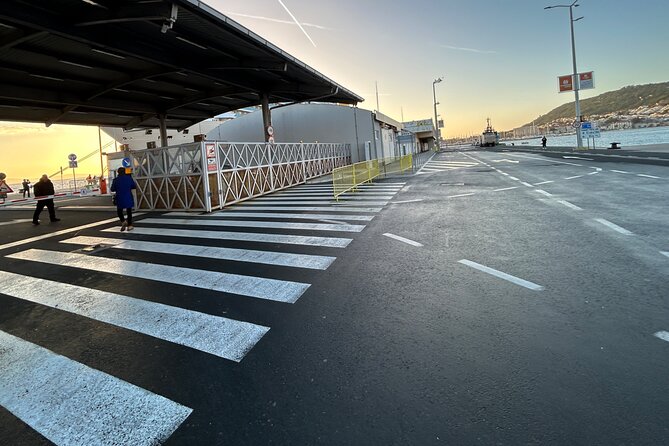
Look for the guide at the entrance to the terminal, next to the red hop-on, hop-off buses, past the fence as you leave the ship. The sign says Croatian Trails. This detail matters. The instructions specifically warn you not to ask random people for directions, since you may be sent to the wrong place.
Cruise passengers must provide the ship name, docking time, disembarkation time, and re-boarding time when booking. Read the final pickup message carefully. One poor experience came from a timing mix-up, with the passenger expecting a 9:00 AM start while the operator had adjusted the departure to 10:30 AM based on the stated disembarkation time.
The operator does not refund a missed tour caused by a late or non-arriving ship. That is standard cruise-excursion risk, but it makes accurate ship information especially important.
Trogir: a small town with 2,300 years of layers
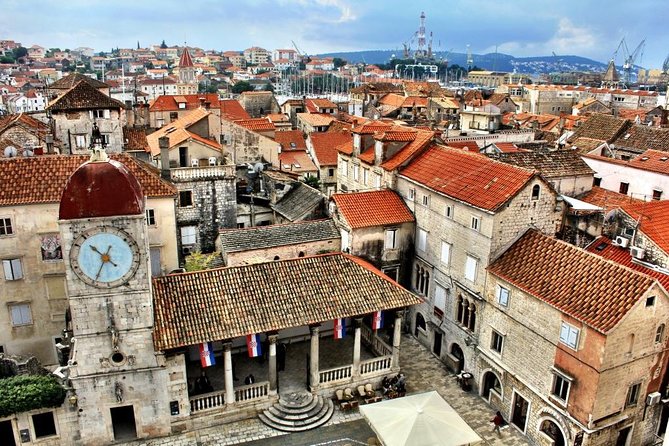
The day generally begins with a short coastal drive to Trogir. The exact transfer time depends on traffic, so do not treat the four-hour duration as a promise of four full sightseeing hours. The air-conditioned vehicle is a welcome feature in hot weather, and it also makes the trip easier after an early cruise arrival.
Trogir has a continuous urban tradition reaching back 2,300 years. Greek colonists founded it in the third century BC, and later Roman, medieval, and Venetian periods left their mark. Because the historic core is compact, your guide can connect these periods while you walk rather than sending you between distant monuments.
The main guided visit lasts about one hour. That is enough to get oriented and see the key streets, but not enough for a slow museum visit or a detailed look at every church. If you want to photograph doorways, browse shops, or stop for a drink, use the free time wisely.
Trogir’s appeal is its mixture of styles. Romanesque churches sit near Renaissance and Baroque buildings from the Venetian period. The result is not a single grand sight but a tight collection of streets and façades that reward close attention.
Saint Lawrence’s Cathedral and Trogir’s stonework

Saint Lawrence’s Cathedral is the most imposing monument in Trogir. It is a triple-naved basilica built in Romanesque-Gothic style, though its construction lasted for several centuries. That long building period means you can see different phases of Dalmatian architecture in one structure.
The tour information lists the cathedral as a free stop, but the broader tour does not include entry fees. If you want to go inside any paid area, confirm the current charge with your guide before entering. The scheduled time here is about 15 minutes, so the visit is an introduction rather than a full architectural study.
I would pay attention to the way the guide explains the building’s changes over time. That is where a local guide adds real value. Without context, an old church can blur into the next old church. With context, the layers become easier to read.
Same coast, a completely different day out:
- From Split: Krka Waterfalls, Food & Wine Tasting Tour
★ 4.9 · 6,598 reviews - Split/Trogir: Blue Cave, Mamma Mia, Hvar and 5 Island Tour
★ 4.6 · 6,320 reviews - Blue Lagoon & 3 Islands Cruise with Lunch from Split
★ 4.5 · 5,756 reviews - Split: Old Town and Diocletian Palace Walking Tour
★ 4.9 · 4,727 reviews
Kula Kamerlengo and Trogir’s defensive edge
Kula Kamerlengo is a 15th-century fortress built by Marin Radoj as part of an expansion of the Veriga Tower. The fortress reflects Trogir’s need for coastal defenses during the Venetian period.
The castle is also used for summer performances, giving it a modern role beyond its military past. The scheduled stop is about 20 minutes, and admission is not included. Depending on the day’s timing and the guide’s plan, you may see the exterior and hear its story without having time to explore every corner.
The name comes from camerlengo, an administrative title meaning chamberlain. It is a small detail, but it helps show how Trogir’s political history was tied to Venetian government.
Free time for gelato, shops, and local tastes
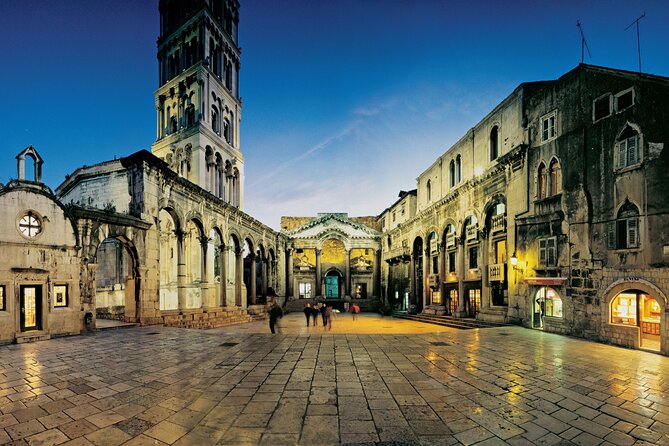
The free time in Trogir is one of the tour’s practical strengths. A guided walk can show you the bones of the town, then you have room to choose your own pace.
One guide, Tina, is specifically praised for recommending gelato. Other useful suggestions included restaurants and shops. Some outings also included sampling local liquor and cheese, though you should not assume those tastings are guaranteed on every departure.
This is a good moment to buy a small souvenir, take photographs, or pause in a café. Keep an eye on the clock. Trogir is easy to wander, and its compact streets can make a short break disappear quickly.
Returning to Split and entering Diocletian’s Palace
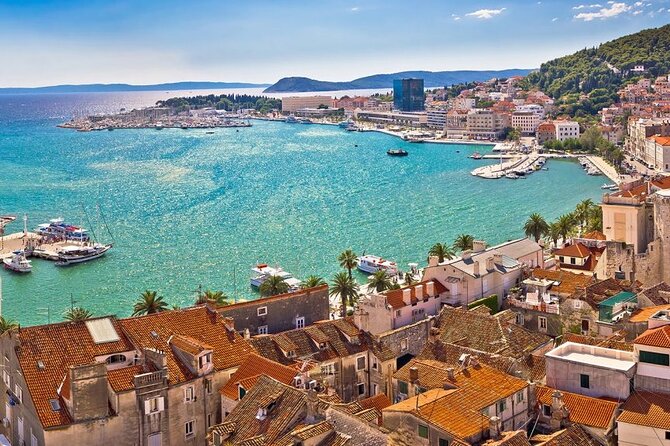
After Trogir, the coach returns to Split for the palace portion of the tour. The supplied stop times place the Diocletian’s Palace visit at about 20 minutes, though the actual sequence can vary with traffic, crowds, and the group’s start time.
Diocletian built the palace at the turn of the fourth century AD. He was a Roman emperor who chose this part of the Adriatic for his retirement residence. Today, the palace makes up roughly half of Split’s old town and city center.
That description understates what makes the site special. You are not simply looking at ruins beside a modern city. You are walking through a working neighborhood whose walls, gates, courtyards, and underground spaces grew from a Roman imperial complex.
The guide’s role is important here. A short visit can otherwise feel like a fast walk past old stones. Guides Tina and Sandra are repeatedly praised for clear explanations, energy, and an ability to answer questions. Roko is also singled out for making the history entertaining and easy to follow.
Admission to palace areas is not included. The listed tour time may cover an exterior orientation or selected public areas rather than every paid section. Ask what is included on the day, especially if you have your heart set on a particular interior.
Saint Domnius Cathedral and the Roman mausoleum
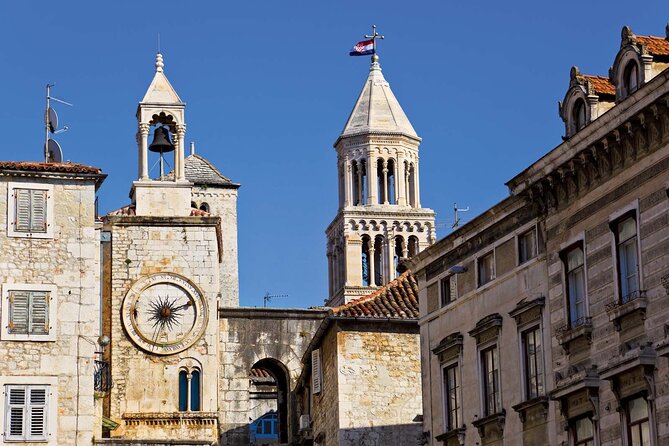
The Cathedral of Saint Domnius is one of Split’s clearest examples of old and new occupying the same space. The church complex was formed from Diocletian’s imperial Roman mausoleum, with a bell tower added to the site.
Strictly speaking, the church is dedicated to the Virgin Mary, while the bell tower is dedicated to Saint Domnius. Together they are known as the Cathedral of St. Domnius.
The scheduled stop is about 20 minutes, and entry is not included. That is enough for a guided explanation and perhaps a look at the exterior, but a full visit to the cathedral, mausoleum, or tower would need extra time and possibly separate admission.
This is one of the stops where you should listen closely rather than rush for photographs. The building’s identity changed over centuries, and that change tells you more about Split than a single date or architectural label.
Prokurative and Split’s Venetian echoes
Prokurative, officially linked with the 19th-century development of Split, was built under the supervision of General Marmont and promoted by Split mayor Antonio Bajamonti. Its design draws heavily from Italian architecture and resembles St. Mark’s Square in Venice.
The square’s Venetian look makes sense once you know that its architect came from Venice and wanted to recreate something that reminded him of home. This is a useful stop because it moves the story beyond Roman antiquity. Split is also a city shaped by 19th-century ambition, politics, and personal taste.
The visit lasts about 15 minutes and is free. It works well as a short orientation stop before you continue through the city center. Do not expect a long stay here, but do take a moment to compare its formal façades with the more irregular stone lanes of the palace quarter.
What the guides add to a fast tour
The strongest part of this experience is the human guide. Tina is praised for exceptional English, strong organization, humor, and care in hot weather. She is also described as a local schoolteacher, which helps explain the clear, structured way she presents the material.
Sandra receives similar praise for her passion, friendly manner, restaurant and shopping suggestions, and willingness not to rush the group. Roko is praised for combining professionalism with humor, while Hrvoje is noted for making Trogir and Split interesting even in pouring rain. Josipa handled a rain and traffic-shortened day with patience and apology, though weather and traffic still limited the sightseeing.
Guide assignments can change, so you cannot book a specific person based on these names. Still, the pattern is clear: this is a history-focused tour, and the quality of the day depends heavily on who leads it.
The group can include up to 50 people. Some departures have been much smaller, including a group of seven, but you should book expecting a group tour rather than a private outing. If you want complete control over the pace, this is not the right format.
Timing, walking, and the final drop-off
The tour lasts about four hours and operates in all weather. Wear shoes suited to stone streets and bring protection from sun or rain. The physical requirement is moderate, with one account classifying it as Level 2 walking.
The tour ends at Split Riva, in the city center. There is no included drop-off at the cruise terminal. The walk back to the ship is about 20 minutes, and the guide can help you get a taxi if needed.
That ending is both useful and limiting. Finishing on the Riva puts you in a good place for lunch, coffee, or more independent sightseeing. It also means you must leave enough time to walk back, pass through port security, and re-board your ship.
Traffic can affect the transfer and reduce time at the sights. Heavy rain has also shortened at least one outing. If your ship has a tight departure schedule, build in a generous buffer and confirm the re-boarding deadline before you book.
Who should book this Split and Trogir tour?
I would choose this tour if you have one cruise stop in Split and want a guided introduction to two major historic centers without handling transport yourself. It is especially useful if you want context, not just photographs, and if you prefer an English-speaking guide to lead the way.
It also suits first-time visitors who want help sorting out the many periods of Dalmatian history. The combination of a Roman palace, a medieval town, Venetian defenses, and later Italian-inspired architecture gives you a strong first look at the region.
I would hesitate if you want long museum visits, unstructured wandering, or a guaranteed private group. Four hours is compact, paid entries are extra, and the group may be larger than the small groups described by some participants.
At $78.61, the tour earns its price through the port pickup, air-conditioned transport, live commentary, and efficient use of a short shore visit. You pay less for independence, but you gain a simpler day and a guide who can explain what you are seeing.
Should you book it?
Book this tour if your priority is seeing both Trogir and Split in one organized half-day, especially from a cruise ship. The guides are the major strength, and Tina, Sandra, and Roko have all been praised for making complicated history clear, personal, and fun.
Skip it if you need a private schedule or want to spend most of the day inside paid monuments. Confirm your pickup message, allow 20 minutes to walk back to the ship from the Riva, and budget separately for food, drinks, and entry fees. Cancel at least 24 hours before the local start time for a full refund, since later cancellations and changes are not refunded.
FAQ
How long does the Split and Trogir tour last?
The experience lasts approximately four hours. Transfer times can change with traffic and the time of day.
Where does the tour start?
The tour starts at the New Split Berth for Cruise Ships, Obala kneza Domagoja 16, Split.
Where does the tour end?
The tour ends at Split Riva in the city center. Drop-off at the cruise terminal is not included.
How far is the cruise terminal from the final meeting point?
The walk from Split Riva back to the ship’s terminal is about 20 minutes. The guide can help you arrange a taxi if needed.
Is transportation included?
Yes. The tour includes an air-conditioned vehicle and port pickup. The transfer duration is approximate.
Are entrance fees included?
No. Entry fees are not included. Food and drinks are also excluded.
Is the tour suitable for cruise ship passengers?
Yes. Cruise passengers can be picked up at the terminal, but they must provide their ship name, docking time, disembarkation time, and re-boarding time when booking.
What happens if I need to cancel?
You can cancel for a full refund up to 24 hours before the experience’s local start time. Cancellations or changes made less than 24 hours before departure are not refunded.
Just added around Split
- Kayaking & Zipline Šibenik – Čikola Canyon★ 5.0 · 3 reviews
- Krka National Park & Zipline Šibenik – Čikola Canyon★ 5.0 · 3 reviews
- From Split: Krka National Park & Waterfalls Private Day Trip★ 5.0 · 3 reviews
- Split: Small-Group Half Day Sailing Trip★ 5.0 · 3 reviews
- Rafting River Cetina from Makarska Riviera including transfer★ 5.0 · 3 reviews
- Split Bike and Wine Experience★ 5.0 · 3 reviews
- Split and Salona Cultural Heritage Day Tour from Trogir★ 4.0 · 3 reviews
- Private transfer from Split to Dubrovnik with 2h sightseeing stop in Ston★ 5.0 · 3 reviews
Tours, compared.
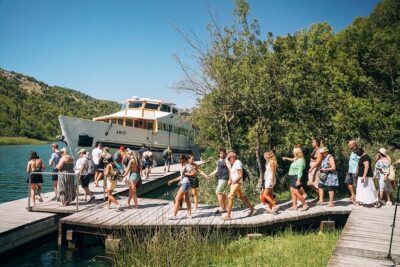
Blue cave, Mamma Mia and Hvar, 5 islands speedboat tour
Read our review →
Blue Cave, Mamma Mia, Hvar and 5 Island Tour
Read our review →