Reviewed · SPLIT TOURS
Secret Split: Socialist Architecture & brutalism – Urban Utopia
Split’s most famous buildings are ancient, but its most revealing city plan may be modern. Split 3 was a 1970s socialist experiment in urban life, built around pedestrian paths, shared spaces, children, and the daily needs of residents. Its raw concrete forms later appeared in a Museum of Modern Art exhibition in New York.
I like that this walk shows you a part of Split most sightseeing routes skip, and I like that it treats brutalism as more than a style of gray concrete. You’ll hear about the architects, their social aims, and the people using the neighborhood today. The main drawback is simple: if you want Roman ruins, sea views, or a classic old-town stroll, this is not that tour. Its appeal depends on your interest in architecture, planning, and modern Croatian life.
In This Review
- Key points to know before you book
- Why Split 3 is worth your time
- Papandopulova ulica and the concrete utopia
- The 25-minute story of an unfinished plan
- Art activism and Split’s present-day voice
- A private walk with a local guide
- What the $113.90 price means
- Who should book this walk
- Practical details that affect the decision
- Should you book Secret Split?
- FAQ
- Where does the tour begin?
- Where does the tour end?
- How long does the tour last?
- Is this a private tour?
- What is included?
- Are admission tickets included?
- Can I cancel for a full refund?
Key points to know before you book
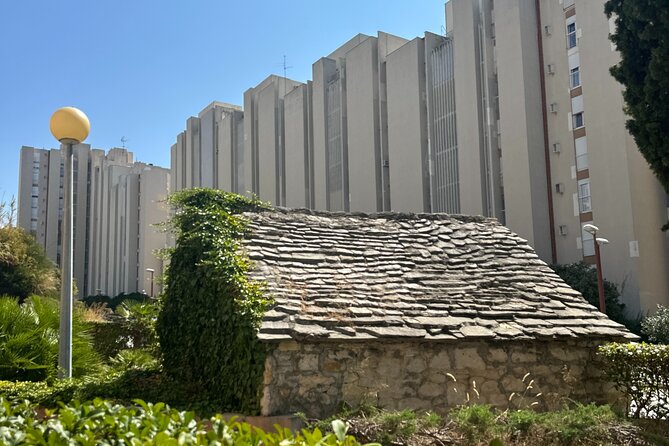
- Split 3 was built as a socialist urban experiment: Learn how a large postwar expansion tried to organize homes, movement, community, and public life.
- The architecture reached New York’s Museum of Modern Art: Split 3 appeared in the 2018 exhibition Toward a Concrete Utopia.
- The walk goes beyond the historic center: You visit residential streets and pedestrian areas that most short city tours leave out.
- A local perspective shapes the experience: The tour includes a licensed guide and certified heritage interpreter, with Mirjana specifically praised for her passion for Split.
- You may meet a local artist or activist: This adds a present-day voice to the discussion of architecture and public space.
- It is a private activity: Only your group participates, with group discounts available and a mobile ticket for booking convenience.
Why Split 3 is worth your time
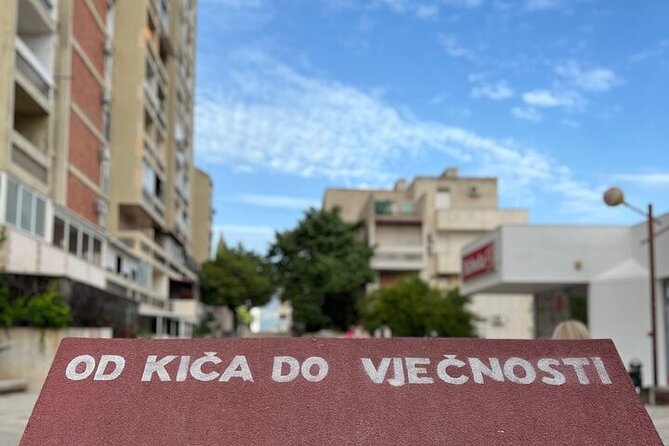
Most first visits to Split begin in Diocletian’s Palace and stay close to the Roman core. That makes sense, but it also leaves out the city’s 20th-century story: rapid population growth, socialist planning, new housing, and a serious attempt to build a better everyday city.
Split 3 grew from that pressure. The project was designed as an answer to demographic growth, with large residential areas arranged around movement and community. It was never fully completed, but the ideas behind it were strong enough to earn international attention.
I find the unfinished quality important. You are not walking through a perfect model city preserved behind glass. You are seeing a real neighborhood, with raw buildings, open spaces, pedestrian routes, and ordinary daily life. The plan was idealistic, but its success has to be judged by how the place functions for residents.
That gives the tour a useful balance. You learn what the planners wanted, then look at what was actually built. The discussion is not simple nostalgia for the socialist period. It asks harder questions about public housing, shared space, architecture, and whether a city can encourage people to live together well.
A few more Split half-days to weigh up
- Split: Krka Waterfalls Trip with Boat Cruise and Swimming
★ 4.8 · 10,519 reviews - From Split: Krka Waterfalls, Food & Wine Tasting Tour
★ 5.0 · 9,326 reviews - Blue cave, Mamma Mia and Hvar, 5 islands speedboat tour
★ 5.0 · 7,150 reviews
Papandopulova ulica and the concrete utopia
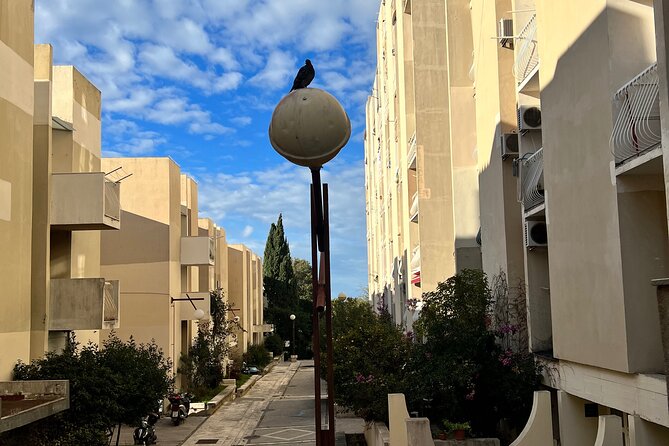
The walk begins at Ul. Šime Ljubića 3 and moves toward Papandopulova ulica, one of the key places for understanding Split 3. The first section lasts about 38 minutes and focuses on the architecture that gained international attention through the Museum of Modern Art’s 2018 exhibition Toward a Concrete Utopia.
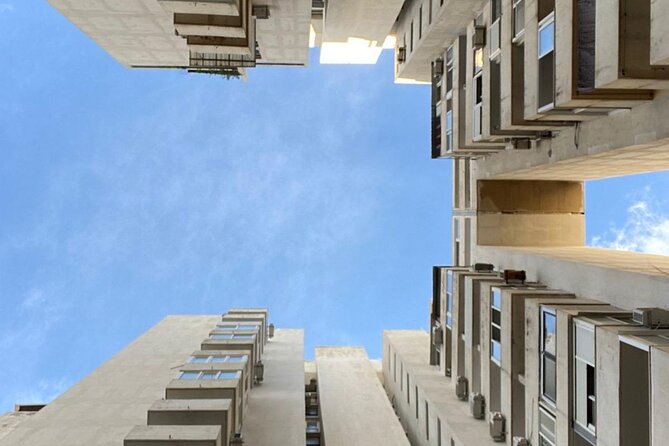
You can expect to examine the buildings at street level rather than merely hear a quick description from a bus window. The point is to notice the geometry, scale, open areas, and relationship between buildings and pedestrian movement.
The term brutalism can make people picture forbidding blocks and little else. Here, the guide places the concrete in its social setting. The buildings were part of a wider attempt to provide housing and organize daily life, not just an exercise in dramatic form.
That context matters. Concrete can look severe when viewed as an isolated object. It looks different when you consider the paths between buildings, the spaces intended for children, and the effort to keep much of the area free from traffic. The tour helps you judge the architecture by both appearance and purpose.
Papandopulova ulica is also a good reminder that Split 3 was not built as a monument. People live here. You are seeing a functioning residential area, not a staged architectural display. Be respectful with photographs and keep the focus on the neighborhood rather than treating homes as museum pieces.
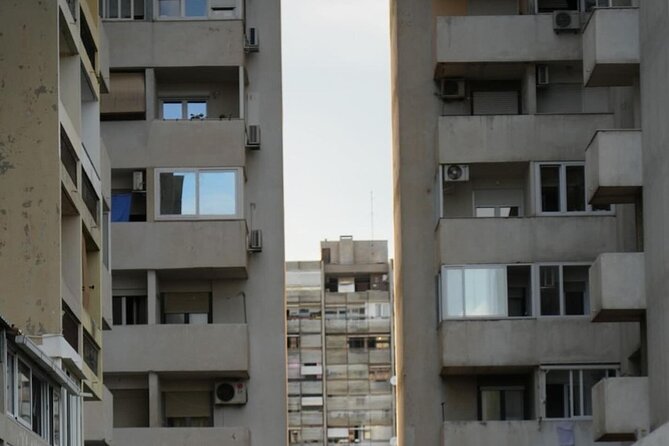
If you enjoy taking pictures, bring a phone or camera, but do not expect a polished collection of postcard views. The visual interest comes from angles, repetition, concrete surfaces, open walkways, and the contrast between a grand plan and normal life.
The 25-minute story of an unfinished plan
The second section lasts about 25 minutes and places Split 3 in the wider story of 20th-century urbanism. The project was ambitious, but it was never fully realized. That gap between the plan and the finished city is one of the most useful parts of the experience.
A city plan can look convincing on paper. The harder test is construction, funding, political change, population needs, and the ordinary habits of residents. Split 3 gives you a chance to think about all of those pressures without needing a technical background in architecture.
The guide explains how the expansion responded to rapid demographic growth. That makes the neighborhood easier to read. Large housing areas were not simply dropped onto empty land for visual effect. They were part of a serious attempt to handle a growing population and create a modern urban district.
I like this part because it moves the conversation away from labels. You do not need to decide if you love brutalism before the tour begins. Instead, you can ask practical questions. Does the pedestrian design feel welcoming? Do the open spaces work? Does the scale feel human or overwhelming? What happens when an ideal plan meets decades of ordinary use?
The project’s international recognition also becomes clearer here. Split 3 entered wider architectural discussion because it captured a particular moment in modern planning: confidence in large-scale design, public investment, and the idea that the built environment could shape social life.
The walk does not turn that past into a perfect success story. Its value is in showing both the ambition and the limits. If you enjoy architecture but dislike tours that only list dates and names, this section should give you more to think about.
Art activism and Split’s present-day voice
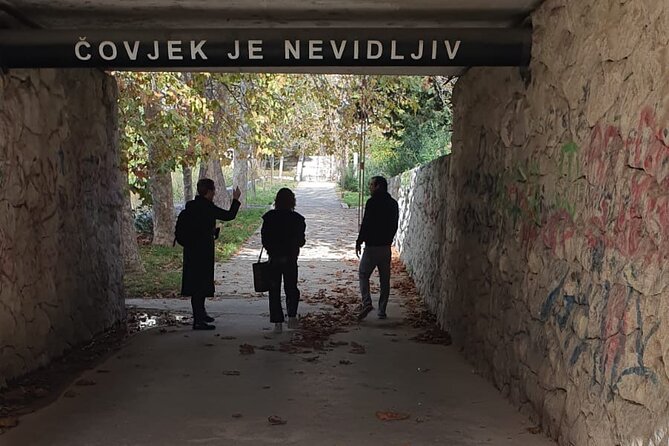
The third section lasts about 35 minutes and turns toward art activism in Split. This is where the walk connects buildings and planning with critical communication in public life.
The exact shape of the artist or activist meeting is not specified, so you should think of it as a planned part of the experience rather than a guaranteed performance or workshop. What is clear is that the tour includes contact with local artistic or activist work, giving the discussion a current voice.
That matters because architecture is never only about the original designers. A neighborhood changes as people use it, question it, decorate it, challenge it, and create new meanings in shared spaces. Art and activism can show where residents feel heard, ignored, protected, or frustrated.
This final section also keeps the walk from becoming a purely historical lecture. You begin with a 1970s plan, examine its built results, and then consider how people communicate and respond in the city today.
The tour’s description connects this work with the need for explicit critical communication. In plain terms, you may look at how art can say what official planning does not. That makes the ending more active and less predictable than a final stop at another building.
For me, this is likely the strongest part for anyone interested in contemporary culture. It gives the concrete architecture a human voice. If your main interest is building design, the first two sections may be enough to justify the booking. If you care about how cities are debated and used now, the art and activism portion adds real value.
Same coast, a completely different day out:
- From Split: Krka Waterfalls, Food & Wine Tasting Tour
★ 4.9 · 6,598 reviews - Split/Trogir: Blue Cave, Mamma Mia, Hvar and 5 Island Tour
★ 4.6 · 6,320 reviews - Blue Lagoon & 3 Islands Cruise with Lunch from Split
★ 4.5 · 5,756 reviews - Split: Old Town and Diocletian Palace Walking Tour
★ 4.9 · 4,727 reviews
A private walk with a local guide
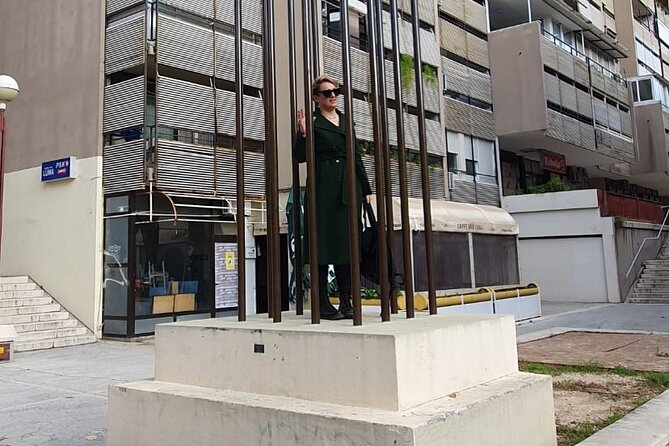
This is a private tour, so only your group participates. That is useful for a subject that can lead in several directions. You can ask about architecture, socialist history, planning, public art, or everyday life without being limited to a large group’s pace.
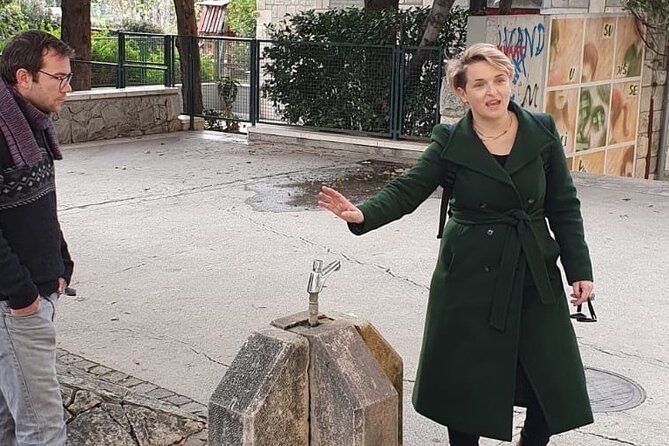
The listed guide is a licensed tourist guide and certified heritage interpreter. Mirjana is specifically named in the available feedback, and she is described as passionate about Split and able to personalize the walk. You should not assume she leads every departure, but her role gives you a good idea of the intended tone: informed, local, and personal rather than a standard script.
The walk returns to its starting point. Its official duration is about 1 to 3 hours, while the three listed sections add up to roughly 98 minutes of scheduled discussion. Allow extra time for walking, questions, and the local art or activism portion.
The meeting point is Ul. Šime Ljubića 3 in Split. The activity is near public transportation, and most people can participate. Service animals are allowed. No special physical demands are stated, so you should still be ready for an urban walk through residential streets rather than a seated presentation.
The operating schedule listed for this experience is Monday through Thursday, from 8:00 a.m. to 7:00 p.m., for the stated season dates. Check the available time when booking, since the day and start time can affect heat, light, and how lively the outdoor spaces feel.
What the $113.90 price means
At $113.90 per person, this is not a bargain-priced general city walk. The value depends heavily on your interests and on how many people are in your private group.
You are paying for a focused subject, a licensed guide, a heritage interpretation, access to residential parts of Split, and the chance to meet a local artist or activist. You are not paying for major admission tickets, since the stops are outdoor areas with free admission.
For someone who wants only a quick introduction to Split, the price may feel high. You can see the old center more cheaply, and this walk does not replace a standard introduction to Diocletian’s Palace.
For an architecture enthusiast, urban planner, design student, photographer, or repeat visitor, the calculation changes. The tour reaches a part of the city that is not covered by the usual Roman-era route and gives you a framework for understanding what you see. A private format can also make the price more reasonable if several people book together, especially since group discounts are available.
I would compare the price with the size of your party before deciding. A couple may find it a specialized splurge. A larger private group may get better value, particularly if everyone is genuinely interested in modern architecture and city life.
Who should book this walk
I would choose this experience if you want to understand Split beyond its ancient walls. It is especially suitable for you if you enjoy:
- Socialist-era architecture and brutalism
- City planning and public housing
- Modern Croatian history
- Photography based on form, texture, and geometry
- Art, activism, and public communication
- Local stories rather than a checklist of famous sights
It can also work well for repeat visitors who have already explored Diocletian’s Palace. Instead of seeing another familiar monument, you get a different way to read Split as a living city.
Families may find the pedestrian design and discussion of children’s spaces interesting, although the supplied information does not describe a child-specific program. The private format gives you more control over questions and pace, but the subject matter is best for people who enjoy thoughtful discussion.
I would skip it if your time in Split is very limited and this is your first visit. In that case, the Roman center is likely the priority. I would also skip it if you want a nature walk, a food experience, or a broad tour covering the city’s main attractions.
Practical details that affect the decision
You receive confirmation at booking, and the ticket is mobile, so there is no need to manage a printed voucher. Free cancellation is available if you cancel at least 24 hours before the start time. Inside that window, the payment is not refunded, and changes are not accepted.
The tour has a 5 out of 5 rating from 17 reviews, with 100 percent recommending it. The strongest praise centers on the personalized format, the guide’s passion for Split, and the combination of brutalist architecture, history, planning, community, and local knowledge.
Those points match the actual design of the experience. This is not a tour that tries to please everyone. It has a clear subject and follows that subject from buildings to urban ideals to present-day activism.
Wear comfortable walking shoes and bring water in warm weather. Those are sensible choices for any outdoor city walk, though the provided details do not specify the exact route length or shade. A mobile phone or camera can help you record the forms and details that make Split 3 worth seeing.
Should you book Secret Split?
Book it if you want the part of Split that explains modern life rather than ancient power. The tour offers a rare look at Split 3, a major socialist planning project that reached international architectural attention but remains a real residential neighborhood.
The best reason to go is the combination of architecture and community. You will not only look at concrete buildings. You will consider the hopes behind them, the compromises that shaped them, and the ways art and activism continue the conversation.
Skip it if you have no interest in postwar planning or if your short stay allows time for only the city’s essential historic sights. But if the idea of a city designed around pedestrians, shared life, and bold concrete sounds intriguing, this private walk offers a useful and unusual side of Split.
FAQ
Where does the tour begin?
The meeting point is Ul. Šime Ljubića 3, 21000 Split, Croatia.
Where does the tour end?
The activity ends back at the meeting point.
How long does the tour last?
The stated duration is approximately 1 to 3 hours. The three listed sections include 38 minutes, 25 minutes, and 35 minutes of scheduled time.
Is this a private tour?
Yes. Only your group participates in the activity.
What is included?
The tour includes a licensed tourist guide, a certified heritage interpreter, a visit to the residential area of Split, and a meeting with a local artist or activist.
Are admission tickets included?
The listed stops have free admission. Tips are not included.
Can I cancel for a full refund?
Yes, if you cancel at least 24 hours before the experience start time. Cancellations or changes made within 24 hours are not refunded or accepted.
Just added around Split
- Kayaking & Zipline Šibenik – Čikola Canyon★ 5.0 · 3 reviews
- Krka National Park & Zipline Šibenik – Čikola Canyon★ 5.0 · 3 reviews
- From Split: Krka National Park & Waterfalls Private Day Trip★ 5.0 · 3 reviews
- Split: Small-Group Half Day Sailing Trip★ 5.0 · 3 reviews
- Rafting River Cetina from Makarska Riviera including transfer★ 5.0 · 3 reviews
- Split Bike and Wine Experience★ 5.0 · 3 reviews
- Split and Salona Cultural Heritage Day Tour from Trogir★ 4.0 · 3 reviews
- Private transfer from Split to Dubrovnik with 2h sightseeing stop in Ston★ 5.0 · 3 reviews
Split Tours, compared.
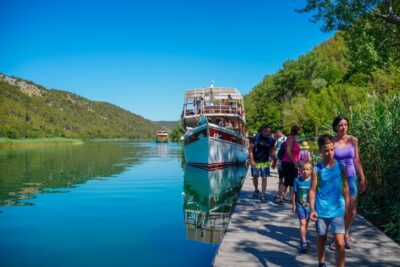
Krka Waterfalls Trip with Boat Cruise and Swimming
Read our review →
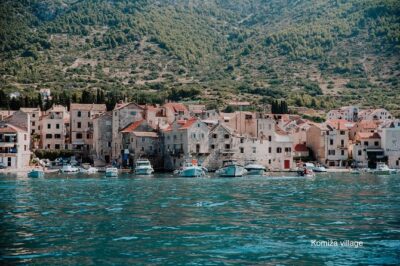
Blue cave, Mamma Mia and Hvar, 5 islands speedboat tour
Read our review →
Blue Cave, Mamma Mia, Hvar and 5 Island Tour
Read our review →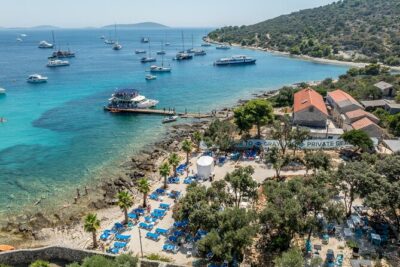
Blue Lagoon & 3 Islands Cruise with Lunch from Split
Read our review →