Reviewed · SPLIT TOURS
People of Split – meet the locals
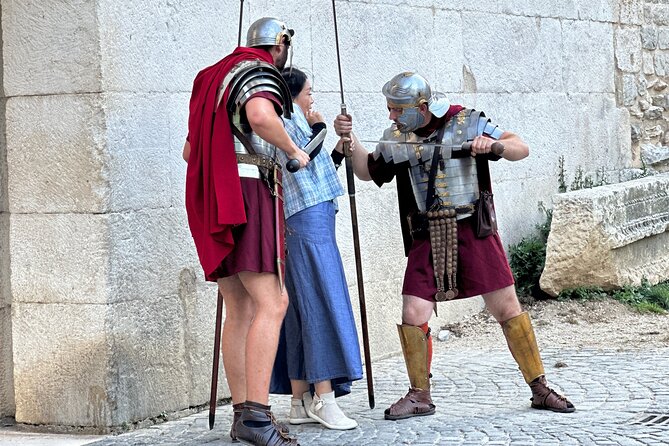
Split’s old center is not a museum sealed behind glass. It is a living neighborhood built inside and around a 1,700-year-old Roman palace. This private walk with local guide Mirjana takes you from Riva Harbor through Diocletian’s Palace, then into the small lanes, squares, crafts, and daily habits that give the city its character.
I like two things right away: the focus on ordinary local life, not just emperors and columns, and the personal storytelling from a guide who grew up in Split. The route also includes useful photo stops, small snacks, and a chance to see old trades and local vendors.
The main consideration is time. At roughly 80 to 95 minutes, this is a compact introduction rather than a long, detailed archaeological tour. The price is $258.88 per group of up to eight, so it makes the most sense for a family or small group that values a private guide.
In This Review
- Key points at a glance
- Why this Split walk feels different
- Starting at the Split sign on Riva Harbor
- Entering the palace substructures
- The Peristyle, where Roman power meets daily life
- Dominisova ulica and the art of looking up
- Rubbing the toe of Gregory of Nin
- Pjaca, Split’s first square outside the ancient city
- Mirjana’s storytelling style
- What the private format means for value
- Timing, walking, and practical details
- Who should book this walk
- Final call: a personal introduction to Split
- FAQ
- How long does the People of Split tour last?
- How much does the private tour cost?
- What language is the tour offered in?
- Where does the tour begin?
- Where does the tour end?
- What places are included?
- Are admission tickets included?
- Can I cancel for a refund?
Key points at a glance
- A private walk for up to eight people: You receive a guide’s full attention rather than joining a large crowd.
- Mirjana’s local storytelling: Her approach links Roman history with Split’s customs, family life, culture, and more recent Croatian events.
- A living Roman palace: Diocletian’s Palace is still part of the city, with residents, shops, craftsmen, and everyday life inside its ancient walls.
- Six central Split stops: The route covers Riva Harbor, the palace substructures, the Peristyle, Dominisova Street, Gregory of Nin, and Pjaca.
- Practical extras: You receive snack samples and suggestions for the best photo spots in town.
- Simple cancellation terms: Cancel at least 24 hours before the start time for a full refund.
Why this Split walk feels different
Many first visits to Split center on Diocletian’s Palace, quite rightly. The Roman emperor built it as a retirement home in the fourth century, but the important point is what happened afterward. The palace did not become a dead ruin. It became the core of the modern city.
That is the idea behind this experience. You will hear about Roman power and palace architecture, but you will also pause for details such as laundry hanging from windows, residents looking out into the lanes, and people using old squares as part of their daily routine. I like that balance. It helps you understand Split as a place where the past is still being used.
Mirjana is presented as a native of Split and a heritage interpretation guide. Her style is story-led rather than date-led. She can connect Diocletian’s rule to later Croatian history, local customs, traditional work, and the conflicts that shaped the country in the 1990s.
That makes the walk a good match for you if dry lists of rulers and building dates quickly lose your attention. It also works well if you want more context before exploring Split on your own. The guide can point out photo locations and explain why a plain-looking lane or square matters.
A few more Split half-days to weigh up
- Split: Krka Waterfalls Trip with Boat Cruise and Swimming
★ 4.8 · 10,519 reviews - From Split: Krka Waterfalls, Food & Wine Tasting Tour
★ 5.0 · 9,326 reviews - Blue cave, Mamma Mia and Hvar, 5 islands speedboat tour
★ 5.0 · 7,150 reviews
Starting at the Split sign on Riva Harbor
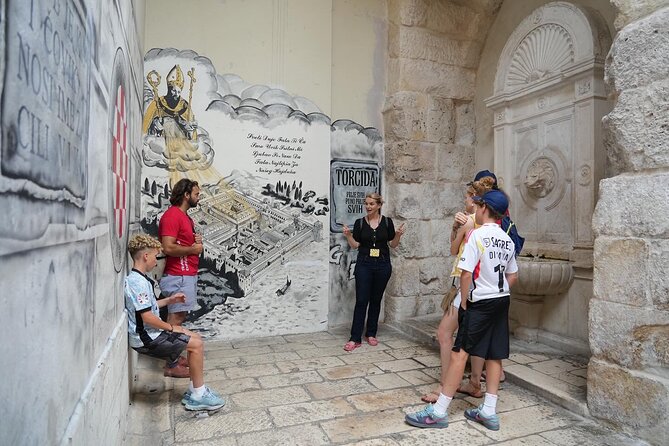
The meeting point is in front of the Split sign at Riva Harbor. This is a practical place to begin because Riva is one of the city’s most recognizable public spaces, and the sign gives you an easy landmark for finding your guide.
The opening stop lasts about 15 minutes. You will take a photo at the sign, then begin looking toward the old city and its long connection to the waterfront. I appreciate this kind of start because it is relaxed and easy to identify, especially if you are meeting the guide after arriving by public transport or walking from another part of central Split.
Riva is also a useful orientation point. From here, the palace is close, but the shift from the open harborfront into the narrow old lanes is part of the experience. You get a quick sense of how Split changes from a broad public promenade to a compact historic center.
Do not expect a long harbor walk at this stage. The value is the welcome, the group photo, and the first explanation of how the old city fits together.
Entering the palace substructures
The next stop takes you into the substructures of Diocletian’s Palace. The structure is about 1,700 years old and still in use today, an important detail that shapes the entire walk.
The substructures also have a popular film connection. Parts of Game of Thrones were filmed here, so this stop will appeal to anyone interested in seeing one of the series’ Split locations. Still, the filming link is only one small part of the setting. The larger story is how these lower spaces helped preserve the shape of the palace above.
The stop is scheduled for about 10 minutes, so expect a focused explanation rather than an extended underground visit. That short timing is useful if you want a quick introduction, but it may leave you wanting more if Roman engineering is your main reason for booking.
I would pay close attention to how Mirjana explains the difference between a monument and a working part of town. The palace is not simply something you look at and leave. It forms the structure of central Split, and the substructures help you see why.
The Peristyle, where Roman power meets daily life
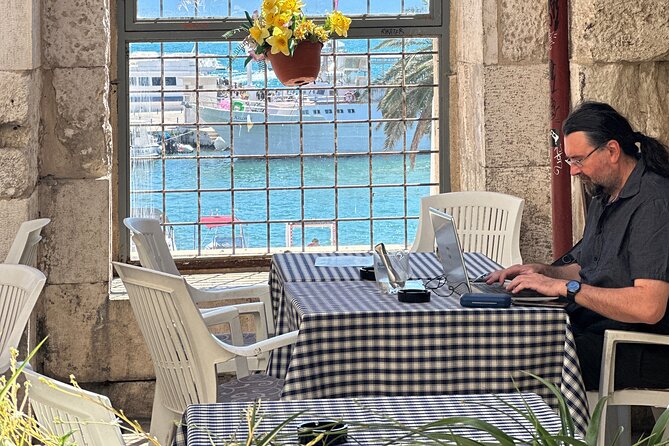
The Peristyle is the center of the tour, with about 35 minutes planned here. This was the ceremonial heart of Diocletian’s palace, built in the fourth century for an emperor preparing for retirement. Today, it is one of the most important public spaces in the old city.
You will stop for photographs and hear myths, legends, and stories tied to the palace. This is where Mirjana’s approach matters most. Instead of treating the Peristyle as a list of stones and dates, she can use it to explain how the palace developed and how people in Split relate to it now.
The tour also takes you toward less obvious corners around the palace. You may see local vendors selling fresh produce and meet artisans whose crafts have been passed down through generations. The information provided does not promise a formal workshop or a set shopping stop, so think of this as a chance to observe local activity rather than a guaranteed hands-on class.
That distinction is useful. You are not booking a craft course or a market tour. You are getting a short look at the human side of the palace, with snacks included along the way.
The Peristyle is likely to be the busiest part of the route. The area is central and popular, and the compact stone setting can make it harder to hear if several groups gather nearby. A private tour helps because Mirjana can focus on your group, but you should still stay close and listen carefully.
Same coast, a completely different day out:
- From Split: Krka Waterfalls, Food & Wine Tasting Tour
★ 4.9 · 6,598 reviews - Split/Trogir: Blue Cave, Mamma Mia, Hvar and 5 Island Tour
★ 4.6 · 6,320 reviews - Blue Lagoon & 3 Islands Cruise with Lunch from Split
★ 4.5 · 5,756 reviews - Split: Old Town and Diocletian Palace Walking Tour
★ 4.9 · 4,727 reviews
Dominisova ulica and the art of looking up
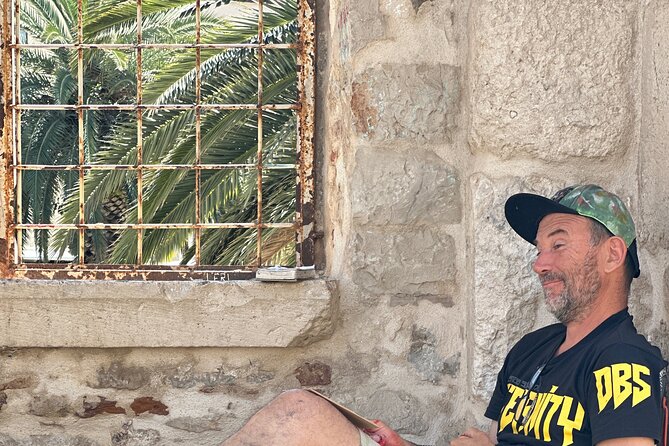
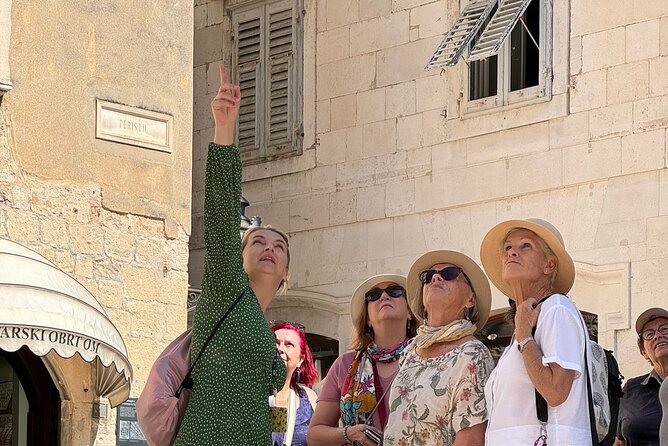
Dominisova Street is one of the tour’s most revealing stops because there is no grand monument to tick off. You will walk for about 10 minutes and look at how people live inside the palace walls.
Residents lean from windows for fresh air. Laundry hangs overhead. Small signs of home life appear beside ancient stone. These details can be easy to miss when you are rushing from one famous building to the next, but they explain what makes Split different from an open-air archaeological park.
I especially like the instruction to pause and observe. It is sound travel advice. You learn more about a place when you notice how residents use it, not just what happened there hundreds of years ago.
Be respectful here. This is a residential lane, not a stage set. Keep voices reasonable, avoid blocking doorways, and ask before taking close photographs of people. The supplied details do not state specific photography rules, but basic courtesy is essential in a neighborhood where people actually live.
This stop may be less exciting for anyone looking only for dramatic architecture. For me, that is exactly its strength. It turns the palace from a Roman monument into a town.
Rubbing the toe of Gregory of Nin
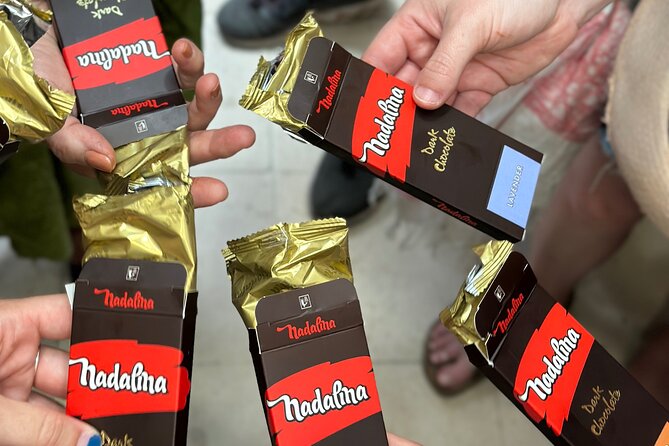
The next stop is the statue of Grgur Ninski, or Gregory of Nin. You will hear why the statue is in Split and have the chance to rub one of its toes.
The shiny toe is one of the city’s best-known small rituals. It gives the tour a light, physical moment after the heavier palace stories. It also helps connect a named figure from Croatian religious and cultural history to something visitors can see and do immediately.
The stop lasts about 10 minutes. That is enough time for the explanation, photographs, and the toe-rubbing tradition without turning the moment into a long lecture.
Because this is a popular photo point, you may need to wait briefly for a clear view. The tour does not promise a quiet private setting, but the guide can explain the statue’s place in Split while you take your turn.
Pjaca, Split’s first square outside the ancient city
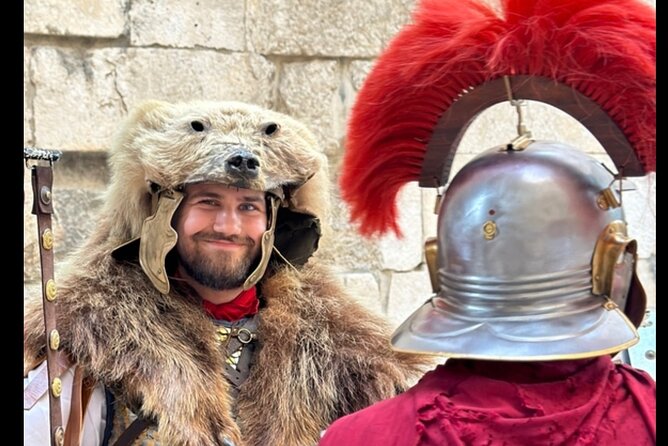
Narodni Trg, usually called Pjaca, is described as the first square built outside the ancient city. It offers a different view of Split from the palace interior.
Here, the emphasis shifts to public life. Pjaca is a place for meeting, walking, people-watching, romance, and civic activity. The stop also covers old trades and traditional craftsmen working in Split.
I like the way this section broadens the story. The palace explains the city’s Roman foundation, while Pjaca shows how Split expanded beyond those original walls and developed a public center of its own.
The stop lasts about 10 minutes, so you will not have an entire afternoon to sit and watch the square. Still, Mirjana can give you the context you need to return later with a better eye. If you enjoy people-watching, Pjaca may become one of your favorite places to revisit after the walk.
The tour ends at the Golden Gate, at Dioklecijanova 7. This is a practical finish in the old center, close to one of the palace’s major entrances. You can continue exploring from there, though the experience itself does not include further guided time after the endpoint.
Mirjana’s storytelling style
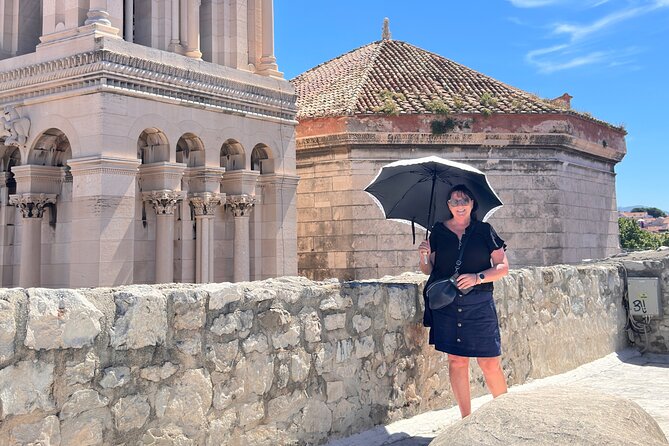
The strongest part of this experience is the guide. Mirjana’s style combines local affection with broad historical context. She has been praised for explaining Split’s daily life as well as its monuments, and for adjusting her approach to what the group wants to understand.
Her English is described as impressive, and she has been able to speak clearly to larger groups. That matters even on a private walk because Split’s stone lanes can carry sound in odd ways, and a guide who speaks with confidence is easier to follow.
You can expect anecdotes rather than a nonstop string of dates. The stories may range from the Roman Empire and Diocletian to Dalmatian customs, old trades, local culture, and Croatia’s path through the former Yugoslavia and the war of the 1990s.
That wider frame is a real benefit if you want to understand Croatia beyond postcard views. At the same time, the short duration means the guide cannot give equal weight to every period. If you want a specialist study of Roman architecture, ask about that focus when booking or consider pairing this walk with a longer palace tour.
What the private format means for value
The price is $258.88 per group of up to eight people. That is not a low-cost walking tour for a solo visitor, but the comparison changes if you are traveling with family or friends.
At the full group limit, the cost works out to about $32.36 per person. For four people, it is about $64.72 each. For two people, the price feels much steeper. I would consider this format most attractive to a small group that wants its own pace, direct questions, and a guide focused only on them.
The private setup is also useful for families, mixed-age groups, or anyone who does not want to keep up with a large crowd. You can ask Mirjana to spend more time on local life, Roman Split, film locations, Croatian culture, or photo stops, though the information supplied does not promise a customized route.
Snacks are included, along with heritage interpretation, local guiding, and photo suggestions. Tips and gratuities are not included, so plan to handle those separately if you feel the service deserves it.
Timing, walking, and practical details
The advertised duration is approximately one hour and 20 minutes to one hour and 35 minutes. That makes this easy to fit into a day of sightseeing, especially if you are using it as an introduction early in your stay.
The route stays within central Split and ends at the Golden Gate. No transportation is provided or needed for the listed route. The start and finish are different, so note both locations when planning your day.
The experience is offered in English and uses a mobile ticket. Confirmation is provided at booking. Service animals are allowed, and the activity is near public transportation.
Most people can participate, but you should expect a walking tour through old streets and historic spaces. The provided information does not give details about step-free access, seating, restroom stops, or the exact condition of every surface. If those points matter to you, ask the operator before reserving.
The opening hours shown for the experience run Monday through Sunday from 8:00 a.m. to 6:00 p.m. The exact start time still depends on the booking you choose.
Who should book this walk
I would choose this tour if you want Split explained by someone tied to the city, rather than a guide who only recites palace facts. It suits first-time visitors who want quick orientation and small groups who value conversation.
It is also a good choice for you if you enjoy:
- Local customs and everyday details
- Stories about people as well as buildings
- Photo opportunities built into the route
- Traditional crafts and old trades
- A private guide for your own group
- A short activity that leaves room for other plans
Families may like the statue ritual, film connection, snacks, and short stops. History fans will appreciate the palace, Peristyle, and substructures, though the pace is too brief for a full Roman archaeology lesson.
I would be less inclined to book it if you want a long walking tour, formal access to major paid attractions, or a detailed study of every architectural feature. The listed stops are central and compact, and admission tickets are shown as free, so the value comes from Mirjana’s interpretation rather than from entry to a special attraction.
Final call: a personal introduction to Split
Book this tour if you want to understand how Split works as a city, not just photograph Diocletian’s Palace. The mix of Roman remains, local homes, produce sellers, craftspeople, public squares, Croatian stories, and photo advice gives you a useful first look at the place.
The private price is easiest to justify for four to eight people. Solo visitors and couples may find a group tour cheaper, but they would give up the private format.
For the best fit, think of this as a lively orientation with a local storyteller. You will leave with a better sense of the palace, the old center, and the people who still use both. If you want a longer archaeological examination, add another activity. If you want a warm introduction to Split’s character, this is a strong choice.
FAQ
How long does the People of Split tour last?
The tour lasts approximately one hour and 20 minutes to one hour and 35 minutes.
How much does the private tour cost?
The price is $258.88 per group, with up to eight people included.
What language is the tour offered in?
The tour is offered in English.
Where does the tour begin?
The meeting point is in front of the Split sign at Riva Harbor, Split, Croatia.
Where does the tour end?
The tour ends at the Golden Gate at Dioklecijanova 7 in Split.
What places are included?
The route includes Riva Harbor, the substructures of Diocletian’s Palace, the Peristyle, Dominisova ulica, the statue of Gregory of Nin, and Narodni Trg, also called Pjaca.
Are admission tickets included?
The listed stops have no admission ticket charge. The experience includes a heritage interpretation guide, a native local guide, photo-spot suggestions, and snacks.
Can I cancel for a refund?
You can cancel at least 24 hours before the experience start time for a full refund. Cancellations or changes made less than 24 hours in advance are not accepted for a refund.
Just added around Split
- Kayaking & Zipline Šibenik – Čikola Canyon★ 5.0 · 3 reviews
- Krka National Park & Zipline Šibenik – Čikola Canyon★ 5.0 · 3 reviews
- Split: Small-Group Half Day Sailing Trip★ 5.0 · 3 reviews
- Rafting River Cetina from Makarska Riviera including transfer★ 5.0 · 3 reviews
- From Split: Krka National Park & Waterfalls Private Day Trip★ 5.0 · 3 reviews
- Split and Salona Cultural Heritage Day Tour from Trogir★ 4.0 · 3 reviews
- Split Bike and Wine Experience★ 5.0 · 3 reviews
- Krka Waterfalls, Lake Cruise & Skradin★ 5.0 · 3 reviews
Split Tours, compared.
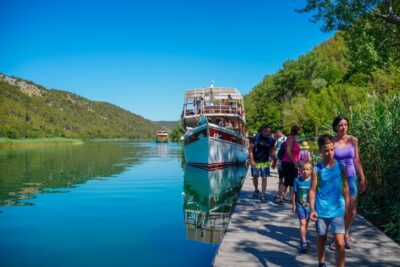
Krka Waterfalls Trip with Boat Cruise and Swimming
Read our review →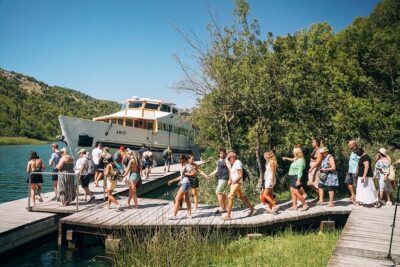
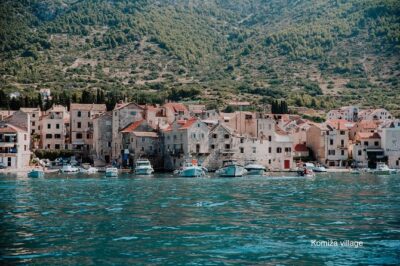
Blue cave, Mamma Mia and Hvar, 5 islands speedboat tour
Read our review →
Blue Cave, Mamma Mia, Hvar and 5 Island Tour
Read our review →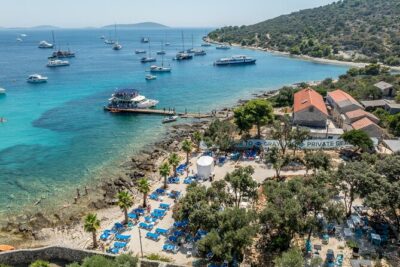
Blue Lagoon & 3 Islands Cruise with Lunch from Split
Read our review →