
Reviewed · SIBENIK TOURS
The beauty of the Middle Ages-Šibenik
The heart of this tour is St. James Cathedral, a remarkable stone-built church assembled without mortar and filled with details that are easy to miss on your own. I like the way the walk reaches it only after taking you through monastery rooms, noble streets, old wells, and local customs. I also like the small group size, which gives Dario Mikulandra room to explain the city rather than simply point at buildings.
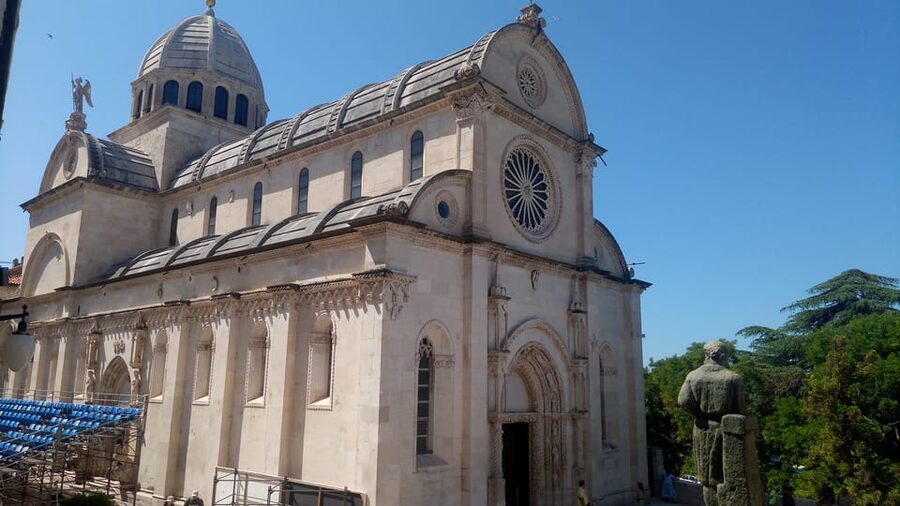
The main caution is the route. You will handle quite a few steps and narrow, old streets, especially around Gorica and the Four Wells Square. The meeting point also needs care: use the cathedral’s west-facing main portal, opposite the statue of sculptor Juraj Dalmatinac, not the cathedral doors with the lions.
In This Review
- Key points to know before booking
- Why this 90-minute walk works
- Starting beside the waterfront and St. Michael’s Fortress
- St. Francis Monastery and the Nakić organ
- Palaces, portals, and the noble quarter
- Gorica, St. Luca, and the May wedding custom
- Four Wells Square and the city’s water supply
- St. James Cathedral, the final prize
- Dario’s guiding style and group size
- Who should book this Šibenik experience
- Timing, cancellations, and pickup
- Should you book The Beauty of the Middle Ages?
- FAQ
- How long does The Beauty of the Middle Ages tour last?
- How much does the tour cost?
- Is admission to St. James Cathedral included?
- Where is the meeting point?
- What languages are available?
- How large is the group?
- Can I cancel for a full refund?
Key points to know before booking
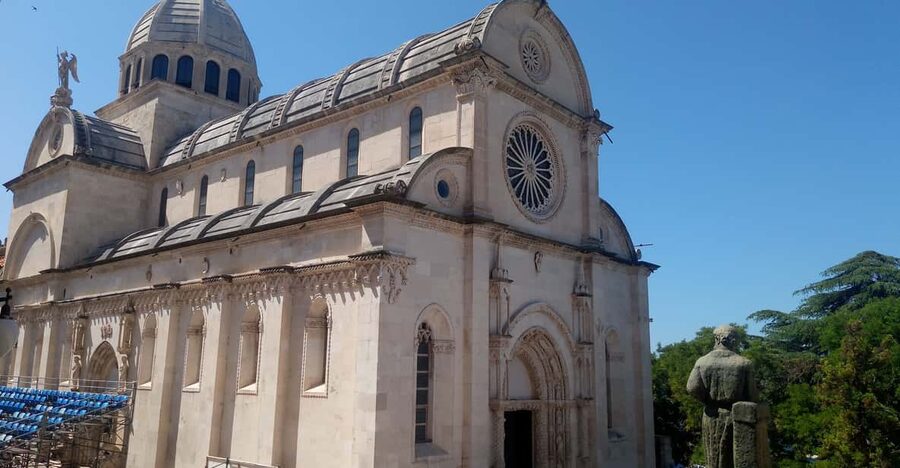
- St. James Cathedral is the finale: The tour saves Šibenik’s grandest sight for the end and includes the cathedral entrance.
- Dario Mikulandra leads the walk: He is described as a history enthusiast and sacred-art specialist who explains the city with clear personal enthusiasm.
- The 1762 Nakić organ is a special stop: You visit St. Francis Monastery and see an important instrument built by Petar Nakić.
- You explore the noble quarter: Expect palaces, carved portals, family coats of arms, and an explanation of Šibenik’s four main medieval fraternities.
- There are plenty of stairs: This is a walking tour through an old hill town, not a flat promenade.
- The group is capped at 10 people: That suits anyone who prefers questions and conversation over a large crowd.
Why this 90-minute walk works
Šibenik can feel confusing at first. Its old center rises from the waterfront in a web of stairs, lanes, churches, and stone passages. A short guided walk helps you read the city instead of seeing it as a pretty collection of old buildings.
The route has a sensible shape. It begins beside the water, gives you a view toward the old town and St. Michael’s Fortress, then enters through the eastern gates. From there, the walk moves through religious sites and the former noble quarter before reaching St. James Cathedral.
That order matters. You get a broad view first, then the details become more specific. The churches explain the city’s religious life. The palaces show how wealthy families shaped the streets. The fraternities and waterworks add everyday human detail. By the time you reach the cathedral, you have some context for why it matters.
At $32 per person, the value depends on what you want from Šibenik. If you only need a quick orientation, you may find the price high for 90 minutes. If you want the cathedral explained properly and prefer a specialist guide to a large group, the admission ticket and focused route make the cost easier to justify.
A few more Sibenik half-days to weigh up
- From Split: Krka National Park Tour
★ 4.7 · 2,359 reviews - Vodice: Krka Waterfalls National Park Boat Tour
★ 4.6 · 250 reviews - Split: Krka Waterfalls Guided Day Trip with Swim & Boat Tour
★ 4.5 · 170 reviews
Starting beside the waterfront and St. Michael’s Fortress
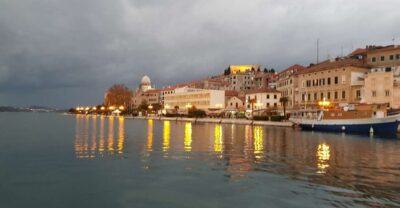
The opening view gives you your bearings. From the coast, you look toward the old town and St. Michael’s Fortress before walking uphill into the medieval center.
This is a useful beginning because Šibenik’s shape makes more sense from outside the walls. You can see how the historic core rises above the water, then follow the route into the city through the eastern gates.
The walk does not treat the waterfront as the main event. It uses the view as an introduction, then quickly gets you into the older streets. That suits you if you want history and architecture rather than a long scenic stop.
Expect a walking pace rather than a photo-tour schedule. You will pause for explanations, but this is still a compact route with several sites packed into a short time.
St. Francis Monastery and the Nakić organ
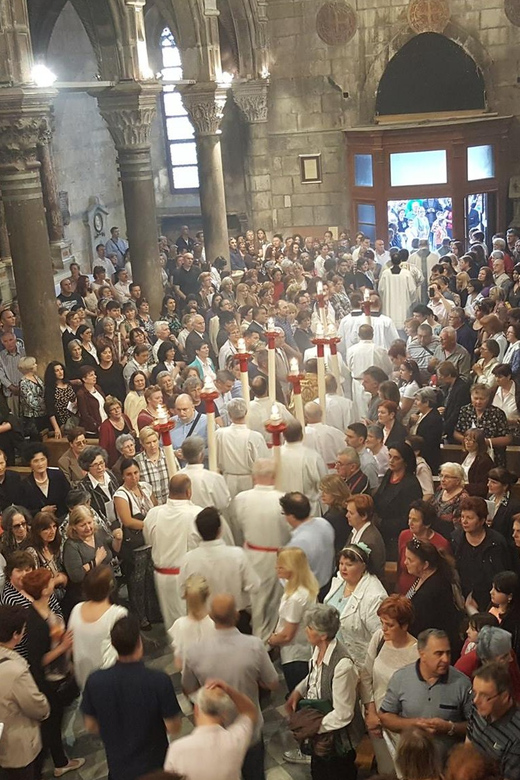
The first major stop is the monastery of St. Francis. This nearly seven-century-old religious complex gives the walk an early sense of age and continuity.
One of the clearest highlights is the organ built by Petar Nakić in 1762. The tour presents it as one of the most valuable organs in the area, and it gives you a specific object to look for rather than a general lesson about church interiors.
Dario’s background in sacred art is especially useful here. Churches can blur together when you visit several in one day. A guide who draws attention to an instrument, a hidden detail, or the purpose of a space can make the stop much more memorable.
The monastery is also where the tour begins to show that medieval Šibenik was more than a defensive town. Religious institutions shaped its culture, sound, daily routine, and public life. You get a glimpse of those connections before moving into the secular streets.
Palaces, portals, and the noble quarter
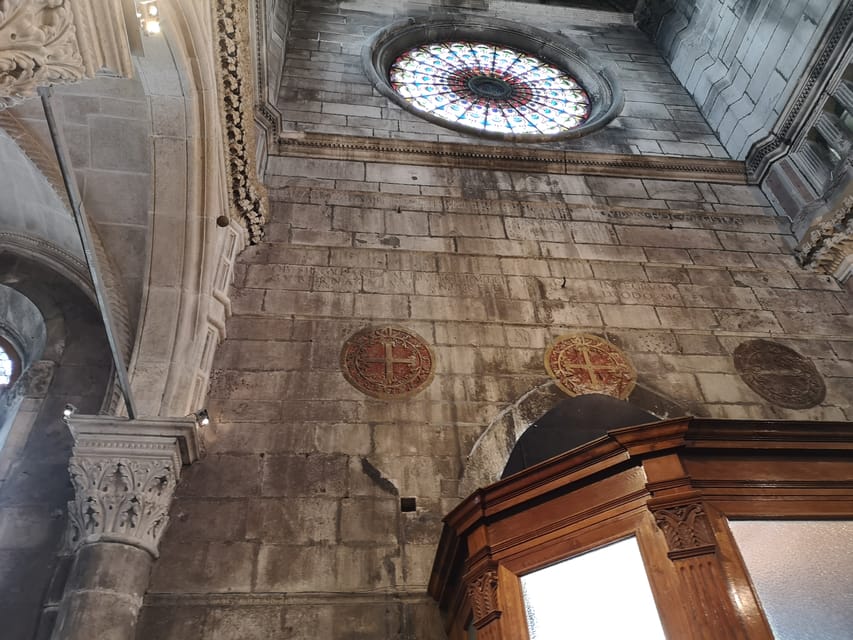
Next, you walk through the part of Šibenik associated with noble families. The route focuses on old palaces, carved doorways, and coats of arms set into the stone.
This section works best if you like details at eye level. Grand buildings are easy to notice, but a portal or family emblem can tell you who had status and how that status was displayed. The narrow streets also make the old center feel personal. You are not looking at the city from a bus window. You are close enough to inspect the masonry.
The tour includes the unusual Šibenik meter, an object that connects the city’s past to practical systems of measurement. It is exactly the sort of small local detail that you might miss without a guide.
You also learn about Šibenik’s four most important medieval fraternities. That topic adds social texture to the architecture. The old center was shaped not only by rulers and wealthy families, but also by organized religious and civic groups.
This part of the walk may appeal most to anyone who enjoys symbols, urban details, and the story behind a building’s front door. If you prefer only major monuments, it may feel slower than expected. The reward is a better sense of how people used and organized the city.
Same coast, a completely different day out:
- Split: Krka National Park Full-Day Tour with Wine Tasting
★ 4.9 · 142 reviews - Private Sibenik Walking Historical Morning or Evening Tour
★ 5.0 · 93 reviews - Kornati Experience small group (12 pax) boat tour
★ 5.0 · 89 reviews - Šibenik Riviera boat tour: Zlarin + Prvić + Tijat
★ 4.5 · 71 reviews
Gorica, St. Luca, and the May wedding custom
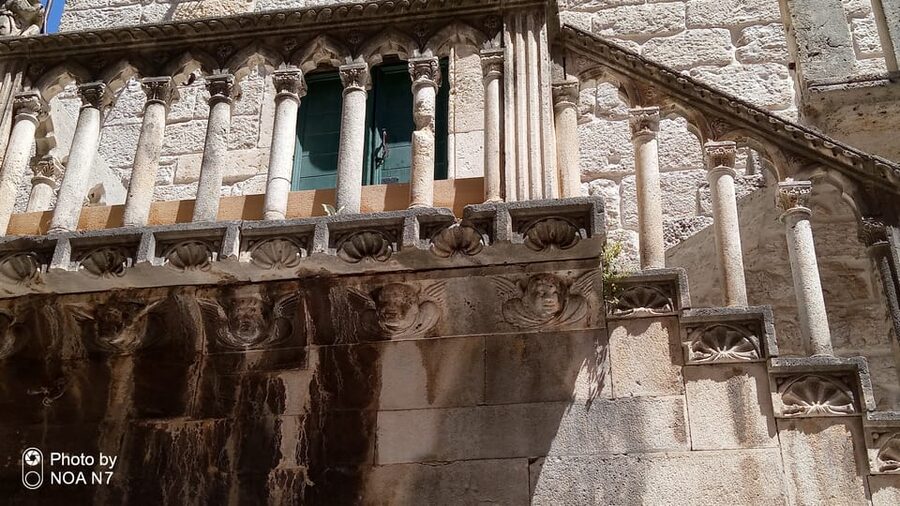
The route then climbs through Gorica. Here, the focus shifts again, this time to the Benedictine monastery of St. Luca and local customs tied to Šibenik.
One memorable question concerns why there are no weddings in Šibenik in May. The supplied tour information does not give the answer in advance, so you will hear the local explanation during the walk. That kind of detail gives the city a human voice. It is less formal than a list of dates and rulers, and it may be one of the stories you remember later.
Gorica also brings a view of the Lurd cliff in the middle of the city. This is a reminder that the old center is not laid out on level ground. You move through changes in height, with views opening between the buildings.
The stairs are part of the experience, but they are also the main physical issue. One participant specifically warned that there are quite a few to negotiate. If you have difficulty with steps, you should think carefully before booking. The tour description does not promise a step-free route or an alternative path.
Wear sensible shoes and keep the pace comfortable. The experience lasts only 90 minutes, but the route makes active use of Šibenik’s old streets.
Four Wells Square and the city’s water supply
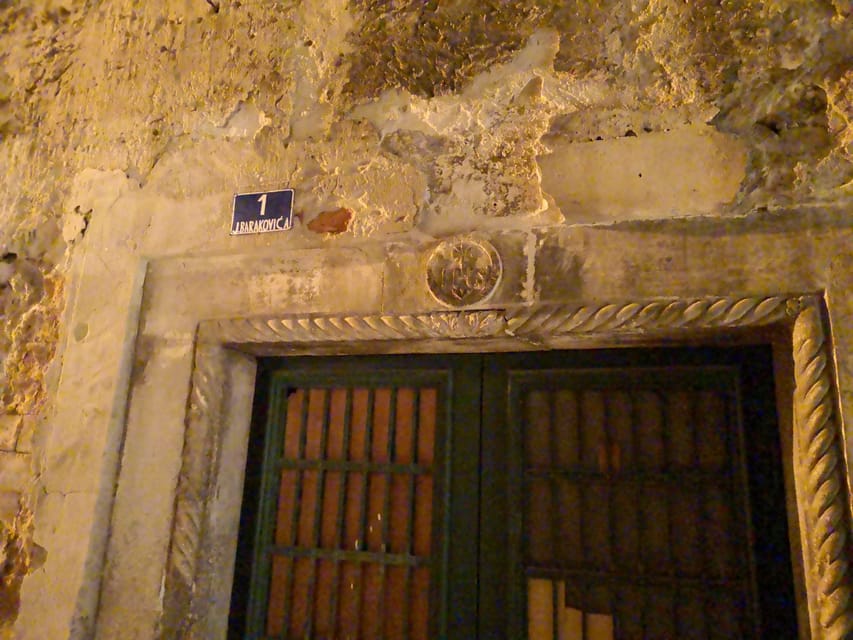
After Gorica, you slowly descend toward Four Wells Square. The square is connected with the city’s water system, and the tour takes you into the largest cistern.
This stop broadens the story beyond churches and aristocratic homes. Water supply is one of those practical subjects that explains how a historic city functioned. A cistern may not have the visual drama of a cathedral, but it tells you about daily needs, planning, and the work required to support life inside the old walls.
The descent toward the square also changes the rhythm of the walk. You have been climbing and examining upper streets, then you move down through stairs toward a space linked to essential infrastructure.
The cistern may be less exciting for anyone interested only in monuments. I would treat it as a useful pause before the grand finale. It makes the tour feel like an account of a living city, not just a procession from one church to the next.
St. James Cathedral, the final prize
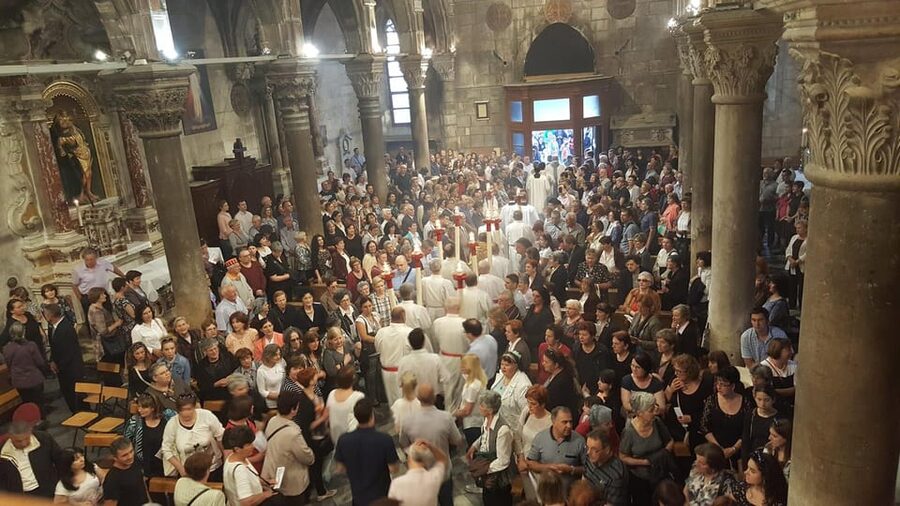
The cathedral is the tour’s centerpiece and its final stop. Entry is included in the $32 price, which is important because the cathedral is the one site you most want to understand rather than merely photograph.
The tour promises the secrets, beauty, and details of St. James Cathedral. That focus is well judged. The building is widely presented as Croatia’s most beautiful cathedral, but a slogan alone does not explain its appeal. The value comes from learning how to look at the stonework, the sculpture, and the way the cathedral fits into Šibenik’s civic identity.
You spend a fair amount of the 90 minutes inside or around the cathedral. One participant considered that amount of time appropriate, while also noting that the cathedral is clearly the center of the experience. If you want equal time at every church and street, this may feel cathedral-heavy. If St. James is your main reason for visiting Šibenik, the emphasis is a strength.
The meeting point is at the cathedral’s main entrance portal facing west. It is opposite the statue of Juraj Dalmatinac, the sculptor connected with the cathedral. Do not wait at the doors with the lions, since those are not the stated meeting point.
The cathedral also provides a strong ending because the earlier stops prepare you for it. You have seen sacred spaces, noble symbols, local institutions, and the practical side of the medieval town. The final explanation then gathers those threads around Šibenik’s most important church.
Dario’s guiding style and group size
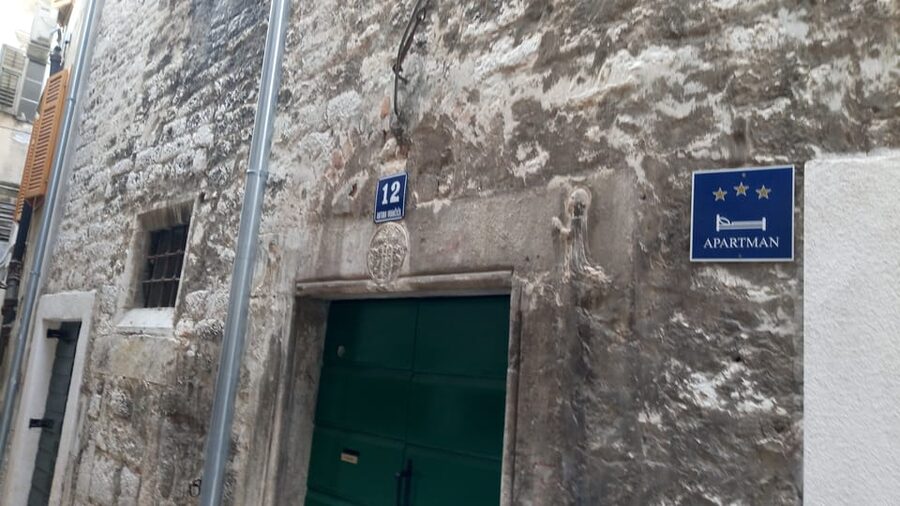
Dario Mikulandra is identified as the owner of Magnificat and the guide for this experience. The description presents him as a history enthusiast and specialist in sacred art.
The strongest pattern in the feedback is his enthusiasm and thorough explanations. One person described hearing how much he loves Šibenik, while another praised the way he took time to explain things. That matters on a walking tour with many stops. You need a guide who can connect small objects and local customs to the larger story.
The language options are English and Croatian. The group is limited to 10 people, a useful middle ground. You get more personal attention than on a large group walk, but the tour remains social rather than private.
There is one serious service warning. One booking resulted in a one-star rating because the guide did not appear at the meeting point and the person waited for half an hour. The other listed ratings are strongly positive, with an overall score of 4.7 from seven ratings, but this incident should not be ignored. Confirm the meeting details carefully and arrive at the correct cathedral portal.
Who should book this Šibenik experience
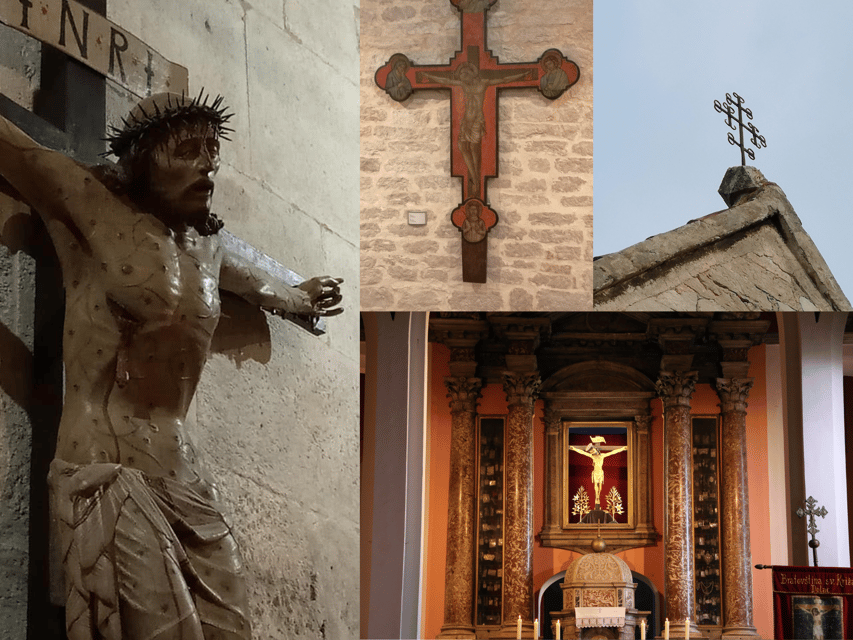
I would choose this tour if you want a compact introduction to Šibenik with a strong focus on sacred buildings and the cathedral. It suits first-time visitors who want the old center explained without spending half a day on a formal history walk.
It is also a good fit for anyone interested in church art, organs, monasteries, heraldry, and old urban customs. The Nakić organ, noble coats of arms, fraternities, St. Luca Monastery, and cistern give you more variety than a basic cathedral visit.
You should be comfortable walking uphill and down stairs. The route is not suitable for someone who needs an easily accessible path, at least based on the stated warning about steps. The duration is short, but the old city’s terrain still demands some effort.
Families with older children may find the stories and changing locations engaging, though the tour’s sacred-art focus may be less appealing to very young children. Couples and independent sightseers who want a small group will likely appreciate the pace.
Timing, cancellations, and pickup
The tour lasts 90 minutes, and starting times depend on availability. You can cancel up to 24 hours before the activity for a full refund, and the reserve-now, pay-later option lets you hold a place without paying immediately.
Hotel pickup may be arranged, but it is not presented as part of the standard included experience. Ask about it before booking if you do not want to make your own way to the cathedral.
The standard meeting point is simple once you know the landmark: the west-facing main portal of St. James Cathedral, across from the Juraj Dalmatinac statue. The warning about the lion doors is worth taking seriously, since a small mistake here could leave you waiting in the wrong spot.
Should you book The Beauty of the Middle Ages?
Book it if you want St. James Cathedral explained in context, not just checked off your list. The included cathedral entry, small group, and Dario’s strong interest in Šibenik make $32 a fair price for a focused 90-minute introduction.
Skip it if stairs are a serious problem, or if you prefer to explore at your own pace without a fixed route. Also keep the isolated no-show report in mind and double-check the meeting point.
For most able walkers with an interest in medieval churches, carved stone, and local stories, this is a smart way to make sense of Šibenik’s old center in a short amount of time.
FAQ
How long does The Beauty of the Middle Ages tour last?
The tour lasts 90 minutes.
How much does the tour cost?
The listed price is $32 per person.
Is admission to St. James Cathedral included?
Yes. Entry to St. James Cathedral in Šibenik is included.
Where is the meeting point?
Meet at the cathedral’s main entrance portal facing west, opposite the statue of sculptor Juraj Dalmatinac. This is not the cathedral entrance with the lions.
What languages are available?
The live tour is offered in English and Croatian.
How large is the group?
The tour is limited to 10 participants.
Can I cancel for a full refund?
Yes. You can cancel up to 24 hours in advance for a full refund.
Just added around Sibenik
- Krka National Park & Zipline Šibenik – Čikola Canyon★ 5.0 · 3 reviews
- Kayaking & Zipline Šibenik – Čikola Canyon★ 5.0 · 3 reviews
- Zipline Šibenik★ 5.0 · 3 reviews
- Panorama Tour – Eco City Tour Šibenik★ 4.5 · 4 reviews
- Panorama & Wine tour – Eco City Tour Šibenik★ 5.0 · 4 reviews
- Kayaking Sunset Tour★ 5.0 · 4 reviews
- Private tour Sibenik full day★ 5.0 · 5 reviews
- From Sibenik: Private Skradinski buk waterfall in Krka NP★ 5.0 · 5 reviews
Sibenik Tours, compared.
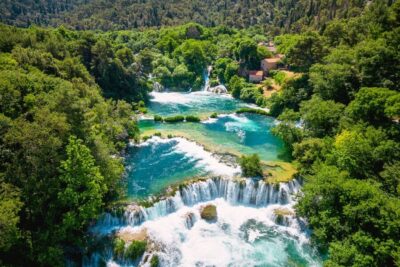
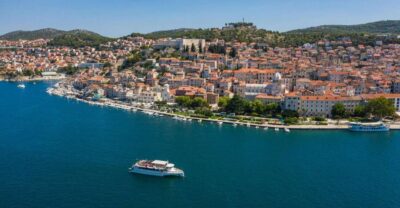
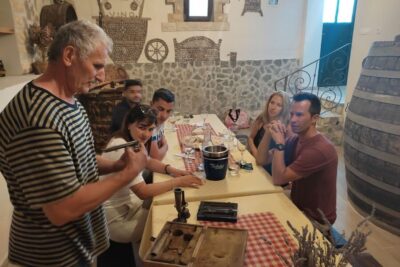
Krka National Park Full-Day Tour with Wine Tasting
Read our review →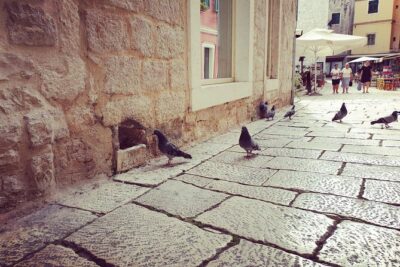
Private Sibenik Walking Historical Morning or Evening Tour
Read our review →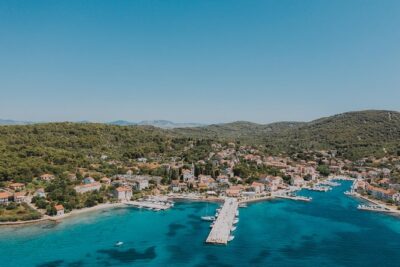
Šibenik Riviera boat tour: Zlarin + Prvić + Tijat
Read our review →
Browse the lists this tour appears in