
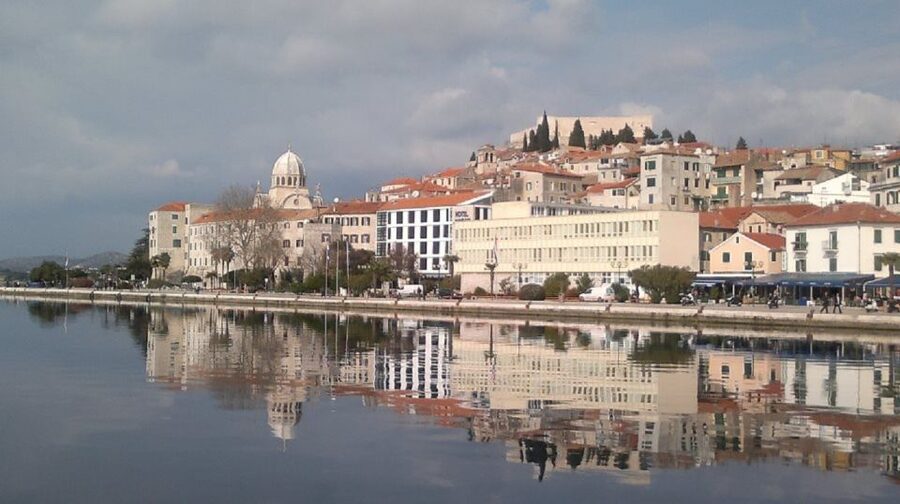
Reviewed · SIBENIK TOURS
From Sibenik: Private Walking Sibenik Sightseeing Tour
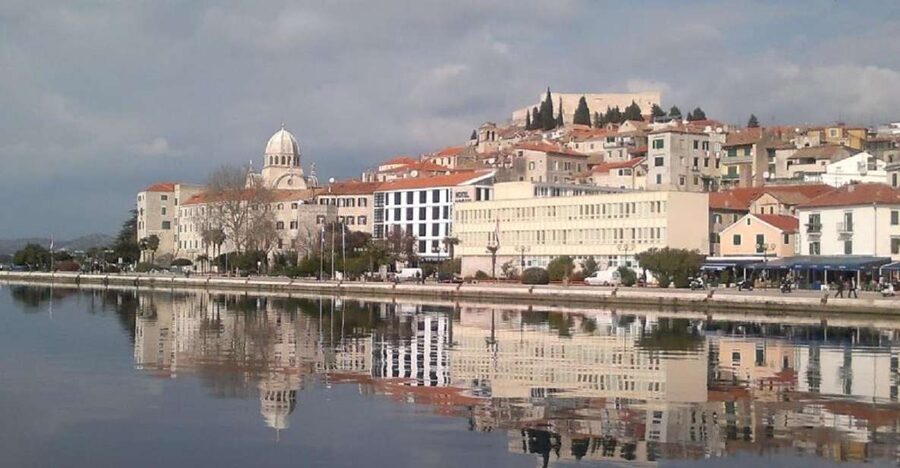
Šibenik reveals itself best on foot, one stone stairway and quiet square at a time. This private tour takes you through the old town’s medieval lanes to St. James Cathedral, historic churches, Four Wells, the Croatian National Theater, and corners that are easy to miss on your own.
I like the small private format, which lets Irena adjust the pace and answer your questions. I also like the local detail: you learn why Šibenik’s main square is not quite in the city, why Saint Barbara’s church has four bells, and how the city’s old cistern kept people supplied with water. The main consideration is time. The advertised tour lasts 90 minutes, so you’ll get a strong introduction rather than a full, slow visit to every sight.
In This Review
- Key points to know
- Why Šibenik makes a rewarding walking tour
- Meeting the old town by the waterfront
- St. James Cathedral and Šibenik’s boldest stonework
- Narrow lanes, attractive squares, and old city walls
- Churches with stories beyond their facades
- Four Wells and the practical side of medieval life
- The theater that brought early electric light
- What Irena adds to the experience
- Price, timing, and who gets the best value
- Should you book the Šibenik private walk?
- FAQ
- Where does the Šibenik walking tour meet?
- How long does the tour last?
- How much does the private tour cost?
- Is this a private group experience?
- Which languages does the guide speak?
- Who is the guide?
- What should I wear or bring?
- Are food and drinks included?
- Can I cancel the tour for a refund?
Key points to know
- St. James Cathedral is the centerpiece: See a remarkable stone-built church known for its unusual construction and trefoil facade.
- Irena brings local stories: Her tours cover history, daily life, church traditions, and practical suggestions for places to eat.
- The route uses narrow lanes and stairs: Comfortable shoes are important, and the old town is not a flat stroll.
- It is private for up to 20 people: The price is $188 per group, so the value improves sharply with a larger party.
- The tour reaches several historic churches: Learn the different roles of St. Francis, St. John the Baptist, St. Krševan, Saint Barbara, and the Assumption church.
- Religious dress rules apply: Cover your shoulders and knees when entering churches.
Why Šibenik makes a rewarding walking tour
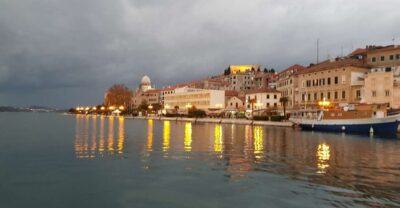
Šibenik is one of the oldest native Croatian cities on the Adriatic. Its protected harbor sits near the center of Croatia’s eastern Adriatic coast, and the old town rises above the waterfront in a maze of stone lanes, steps, and small squares.
That layout gives Šibenik a different feel from a planned modern city. You are not simply walking from monument to monument. You are turning a corner, climbing a staircase, passing a worn stone doorway, and then finding a square framed by buildings from another age.
Irena’s tour is built around that sense of discovery. Instead of giving you only dates and names, she explains why certain places mattered to the people who lived here. You hear about King Petar Krešimir and his link to Šibenik, the medieval role of the churches, and the practical problems that shaped the city.
The route also connects grand architecture with ordinary life. A public cistern tells you how residents managed water. A church bell tower raises questions about its builder. A theater points to Šibenik’s early use of electric lighting. These details make the town easier to understand after the walk ends.
A few more Sibenik half-days to weigh up
- From Split: Krka National Park Tour
★ 4.7 · 2,359 reviews - Vodice: Krka Waterfalls National Park Boat Tour
★ 4.6 · 250 reviews - Split: Krka Waterfalls Guided Day Trip with Swim & Boat Tour
★ 4.5 · 170 reviews
Meeting the old town by the waterfront
The proposed meeting point is a parking lot on the waterfront next to a gas station. This is a practical place to begin if you are arriving by car or starting near the harbor, but it is not one of Šibenik’s handsome historic squares. Look for your guide there before heading uphill into the old town.
The approach matters. From the waterfront, you move toward the stone core of the city and quickly leave behind the open harbor setting. The climb introduces the basic character of Šibenik: narrow passages, uneven paving, stone houses, and many stairs.
Wear shoes with a firm sole. You do not need special hiking footwear, but thin sandals or slippery soles will make the route less pleasant. The walk is only 90 minutes, yet the steps and hard paving can make it feel more active than the duration suggests.
The tour is private, with a maximum group size of 20. That is useful for families, couples, or a group of friends who want to ask questions without sharing the walk with strangers. A group of 20 is still fairly large for tight lanes, so the private format offers the most personal feel with a smaller party.
St. James Cathedral and Šibenik’s boldest stonework
St. James Cathedral, also called the Cathedral of St. James, is the chief architectural stop. It took about a century to build, which gives you a clear sense of how much patience and labor went into the church.
Its construction is the unusual part. The cathedral was made entirely of stone, without another building material forming the main structure. Its stone slabs and ribs were fitted into a daring design without binding material. That is not just a decorative choice. It is the reason the building feels so closely tied to Šibenik’s local stone-working tradition.
The front facade has a trefoil shape, another feature that sets it apart from many Renaissance churches. Irena can help you read the building as a work of structure, not just a pretty facade. You see how the shape, stone, and balance work together.
Give yourself time to look upward. The cathedral is easy to appreciate as a landmark, but the details reward a slower glance. The tour explains why this church matters to the people of Šibenik and why its construction became a point of pride across generations.
The practical limit is that the walking tour centers on the exterior and surrounding city rather than promising an extended interior visit. If entering the cathedral or another church is part of your plan, remember that shoulders and knees must be covered in religious venues.
Narrow lanes, attractive squares, and old city walls
After the cathedral, the route moves through the old town’s winding streets. This is where the tour feels less like a checklist and more like a walk through a living historic district.
Šibenik’s lanes are narrow, with stone houses pressed close together and staircases linking different levels. The remains of the city walls add to the old defensive character, while the squares offer sudden open spaces after the tight passages.
I like this part because it gives you a sense of how the city was built for earlier needs. The streets were not designed around cars or broad views. They follow the slope, connect homes and churches, and create shade and shelter in a warm Mediterranean setting.
The sun can be strong, especially in summer. One especially thoughtful feature of Irena’s guiding is her habit of stopping in the shade when explaining a sight. That matters on a stone route with little protection in some open areas.
The old town also gives you good orientation for later exploring. After the walk, you will know which lanes lead toward the waterfront and which squares are worth revisiting. The tour does not replace time spent wandering alone, but it gives that wandering a useful framework.
Same coast, a completely different day out:
- Split: Krka National Park Full-Day Tour with Wine Tasting
★ 4.9 · 142 reviews - Private Sibenik Walking Historical Morning or Evening Tour
★ 5.0 · 93 reviews - Kornati Experience small group (12 pax) boat tour
★ 5.0 · 89 reviews - Šibenik Riviera boat tour: Zlarin + Prvić + Tijat
★ 4.5 · 71 reviews
Churches with stories beyond their facades
Šibenik’s churches are not treated as a blur of similar stone buildings. Each one has a separate story, and the tour uses those differences to show how religion shaped the city.
At St. Francis Church, you learn what makes it special compared with other churches in Šibenik. That kind of comparison is useful because it keeps the stop from becoming a simple name-and-date explanation.
The Church of the Assumption of the Blessed Virgin Mary has its own unusual detail: you find out who uses it and who built its distinctive bell tower. Irena also shares a way to remember the artist’s name, a small teaching trick that can help the detail stay with you after the walk.
St. John the Baptist Church had special importance during the Middle Ages. The tour explains why and why the church later changed its patron saint. This is the sort of detail you are unlikely to notice from a quick photograph.
St. Krševan Church is identified as the oldest church in town. That claim gives the building a different weight, even if its exterior is modest compared with the cathedral.
Saint Barbara’s Church offers another memorable detail. Its four bells are not just a visual feature. You learn when they ring and what makes them worth noticing.
Together, these stops show why a guide adds value here. Without context, you could walk past several small churches and remember only that they were old. With the stories, each one gains a distinct place in Šibenik’s past.
Four Wells and the practical side of medieval life
The public cistern called Four Wells is one of the most useful stops on the route. It explains a basic fact of old-city life: water had to be collected, stored, and shared.
The cistern was built during the Middle Ages, and the tour explains why it was needed. This is a good counterpoint to the cathedral and churches because it deals with daily survival rather than ceremony or civic pride.
I find these practical details especially valuable. Grand monuments show what a city wanted to display, but a cistern shows what residents needed. Four Wells helps you picture how Šibenik functioned before modern water systems.
It also makes the old town easier to read. The steep lanes and dense houses were not random. The city developed around defense, limited space, access to water, religious institutions, and the harbor.
The theater that brought early electric light
The Croatian National Theater in Šibenik adds a different chapter to the walk. Once built, it was described as the largest and most beautiful theater in southern Europe.
Its most striking detail is technological. In 1896, the theater received electric lighting, making it one of the first theaters in the world to use it. That fact adds a modern edge to a city often associated with medieval and Renaissance stonework.
This stop helps prevent the tour from becoming stuck in the distant past. Šibenik is not only a city of old churches and defensive walls. It also took part in later cultural and technical change.
You may find the contrast memorable: a narrow old street leading to a theater connected with modern public life and early electricity. It is another reason the route works best as a story about a city rather than a parade of monuments.
What Irena adds to the experience
Irena is the guide most closely associated with this tour, and her strengths are warmth, humor, and a clear connection to Šibenik. She speaks Croatian, English, and German, so you can book the tour in any of those languages.
Her approach also suits families. She has been attentive to young children and can make the walk work for a family group rather than delivering a fixed speech at every stop.
You can expect history and culture, but also some connection to current life in the city. Practical restaurant suggestions are part of the useful local advice. One recommended lunch spot earned strong approval, so asking Irena where to eat afterward makes sense.
Her pacing is another plus. She has been careful about the heat and has used shaded places for explanations. In summer, that can make the difference between an enjoyable walk and a tiring one.
The tour’s strongest quality is personal attention. With a private group, you can ask about a church, a building detail, or a local custom without waiting for a large group to move on. If you are curious, use that freedom.
Price, timing, and who gets the best value
The price is $188 per group of up to 20 people. For one or two people, that is a significant cost for a 90-minute walk. For a family or group of friends, the per-person price becomes much more reasonable, especially if you want a private guide.
The advertised duration is 90 minutes. One booking was arranged for two hours and lasted one hour and 40 minutes, so timing can vary in practice. Still, you should plan around the stated 90 minutes and treat any extra time as a bonus rather than an expectation.
The route is a good fit for:
- First-time visitors who want an introduction before exploring alone
- Families who prefer a private pace
- Small groups interested in architecture and local stories
- People arriving in Šibenik for a short stop
- Anyone who wants restaurant suggestions from a local guide
- English- or German-speaking visitors who want a guided walk in their language
It is less suitable if you want a long museum visit, a relaxed meal, or a tour focused mainly on interiors. This experience is a brisk old-town orientation with plenty of historical detail.
Free cancellation is available up to 24 hours before the tour for a full refund, and you can reserve now and pay later. Meals, drinks, and gratuity are not included. Bring comfortable shoes, and cover your shoulders and knees for church visits.
Should you book the Šibenik private walk?
I would book this tour if you want to understand Šibenik quickly and prefer a local guide over a map. The cathedral, old lanes, churches, Four Wells, theater, and city walls give you a strong first look at the town, while Irena’s explanations add the details that make the sights stick.
The price works best when shared among several people. Couples should decide if private guiding is worth the higher cost, while families and groups can get good value from the fixed group rate.
Book it early in your Šibenik stay if possible. That way, you can return to the places you liked, follow Irena’s restaurant advice, and explore the lanes with a better sense of what you are seeing. If your main goal is a quick, personal, story-filled introduction to the old town, this is a smart choice.
FAQ
Where does the Šibenik walking tour meet?
The proposed meeting point is a parking lot on the waterfront next to a gas station.
How long does the tour last?
The advertised duration is 90 minutes. Timing may vary, but you should plan for an hour and a half.
How much does the private tour cost?
The price is $188 per group of up to 20 people.
Is this a private group experience?
Yes. The tour is offered as a private group experience.
Which languages does the guide speak?
The guide speaks Croatian, English, and German.
Who is the guide?
The guide is Irena, also written as Irene in some booking details.
What should I wear or bring?
Bring comfortable shoes for the narrow streets and staircases. Shoulders and knees must be covered when entering religious venues.
Are food and drinks included?
No. Meals and drinks are not included in the tour price.
Can I cancel the tour for a refund?
Yes. You can cancel up to 24 hours in advance for a full refund. You can also reserve now and pay later.
Just added around Sibenik
- Kayaking & Zipline Šibenik – Čikola Canyon★ 5.0 · 3 reviews
- Krka National Park & Zipline Šibenik – Čikola Canyon★ 5.0 · 3 reviews
- Zipline Šibenik★ 5.0 · 3 reviews
- Panorama Tour – Eco City Tour Šibenik★ 4.5 · 4 reviews
- Panorama & Wine tour – Eco City Tour Šibenik★ 5.0 · 4 reviews
- Kayaking Sunset Tour★ 5.0 · 4 reviews
- Private tour Sibenik full day★ 5.0 · 5 reviews
- From Sibenik: Private Skradinski buk waterfall in Krka NP★ 5.0 · 5 reviews
Sibenik Tours, compared.
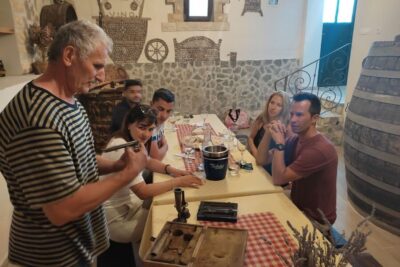
Krka National Park Full-Day Tour with Wine Tasting
Read our review →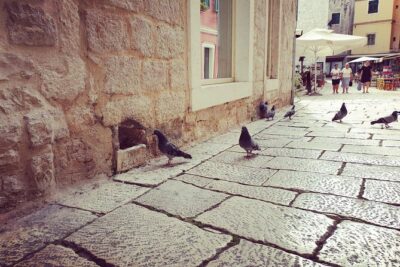
Private Sibenik Walking Historical Morning or Evening Tour
Read our review →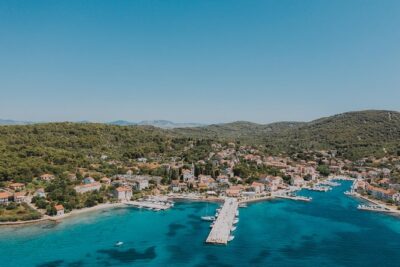
Šibenik Riviera boat tour: Zlarin + Prvić + Tijat
Read our review →
Browse the lists this tour appears in